
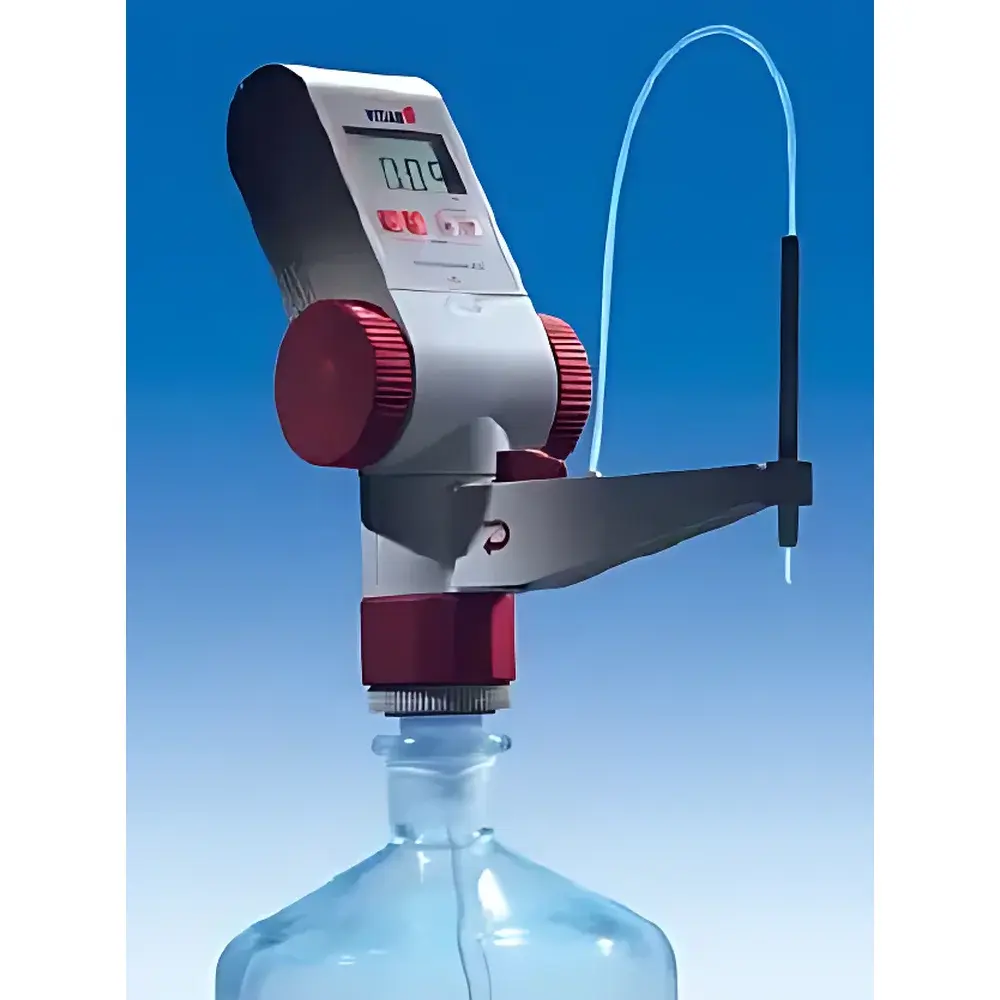
Vitlab E/RS Digital Burette
| Brand | Vitlab |
|---|---|
| Origin | Germany |
| Model | 1620506 / 1620507 |
| Volume Range | 25 mL (E) / 50 mL (RS) |
| Accuracy (at nominal volume) | ≤ ±0.2 % |
| Coefficient of Variation (CV) | ≤ 0.1 % (at 25 mL) |
| Compliance | DIN EN ISO 8655-3, DIN EN ISO 8655-5, DIN EN ISO 8655-6, DIN 12600 |
| Power | 2 × 1.5 V AAA (LR03) batteries |
| Material | PP adapters, chemically resistant housing |
| Delivery Includes | GL45 thread + GL32/GL38/S40 threaded adapters, telescopic dispensing tube (140–220 mm), telescopic aspiration tube (200–350 mm), calibration certificate, operating manual |
Overview
The Vitlab E/RS Digital Burette is a precision-engineered electronic burette designed for high-reproducibility volumetric titration in analytical chemistry, quality control, and regulated laboratory environments. Unlike conventional piston burettes or manual glass burettes, the E/RS employs a patented dual-piston positive-displacement pump system (EP 801 982) to deliver continuous, pulse-free liquid flow—eliminating the need for repeated refilling and minimizing operator-induced variability. Its operation is based on controlled rotational actuation of two ergonomically oversized handwheels, translating mechanical input into precise volumetric displacement with traceable metrological integrity. The instrument complies fully with DIN EN ISO 8655-3 (volumetric accuracy verification), DIN EN ISO 8655-5 (error limits at nominal volume), and DIN EN ISO 8655-6 (precision testing methodology), ensuring conformity with international standards for calibrated liquid handling equipment. Certified to DIN 12600 for general laboratory burette performance, it is suitable for use under GLP and GMP frameworks where audit-ready documentation and repeatable delivery are mandatory.
Key Features
- Patented dual-piston pump mechanism (EP 801 982) enabling smooth, non-pulsating continuous dispensing without priming or refill cycles
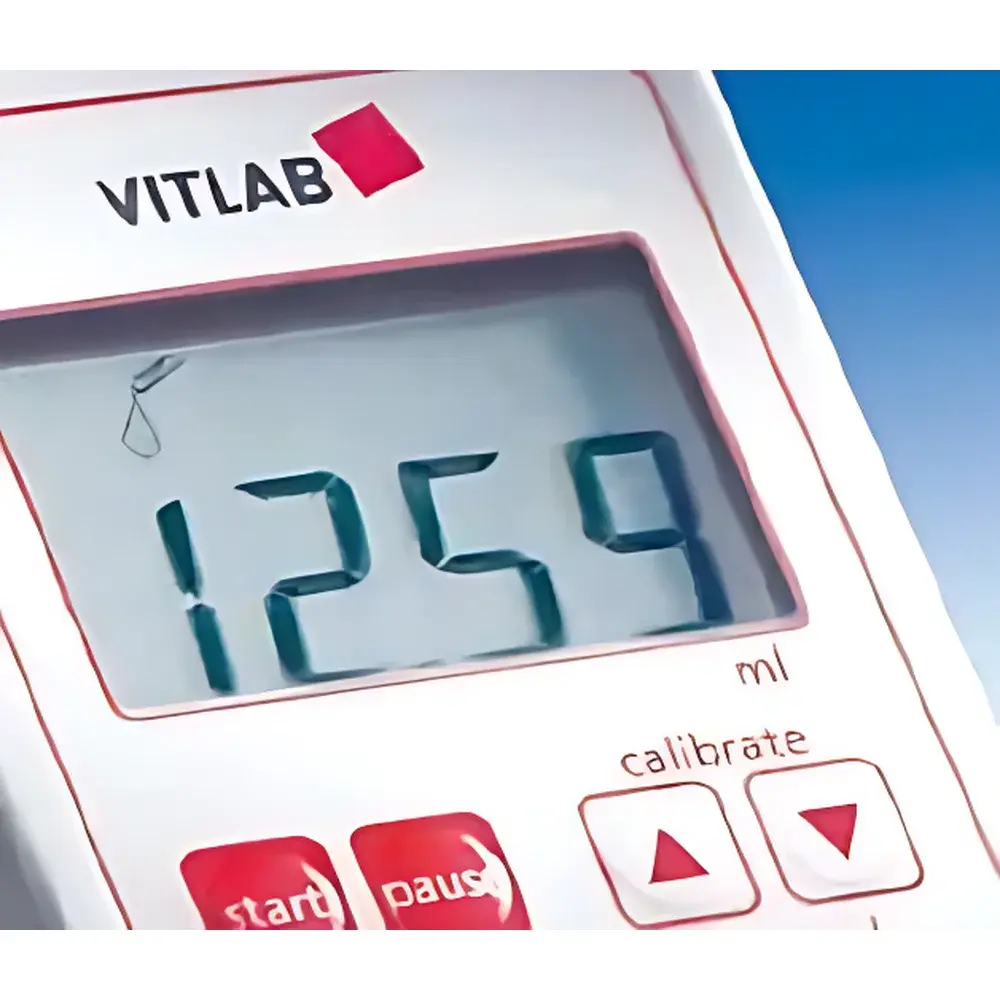
- Large 4-digit LED display with angular orientation for unambiguous volume readout—even during angled or confined workspace operation
- Telescopic dispensing tube (140–220 mm) and aspiration tube (200–350 mm), both height- and length-adjustable to accommodate vials, flasks, and narrow-neck containers
- 360° rotatable dispensing tip for precise alignment with vessel labels or sensor positions—critical for automated workflows and photometric endpoint detection
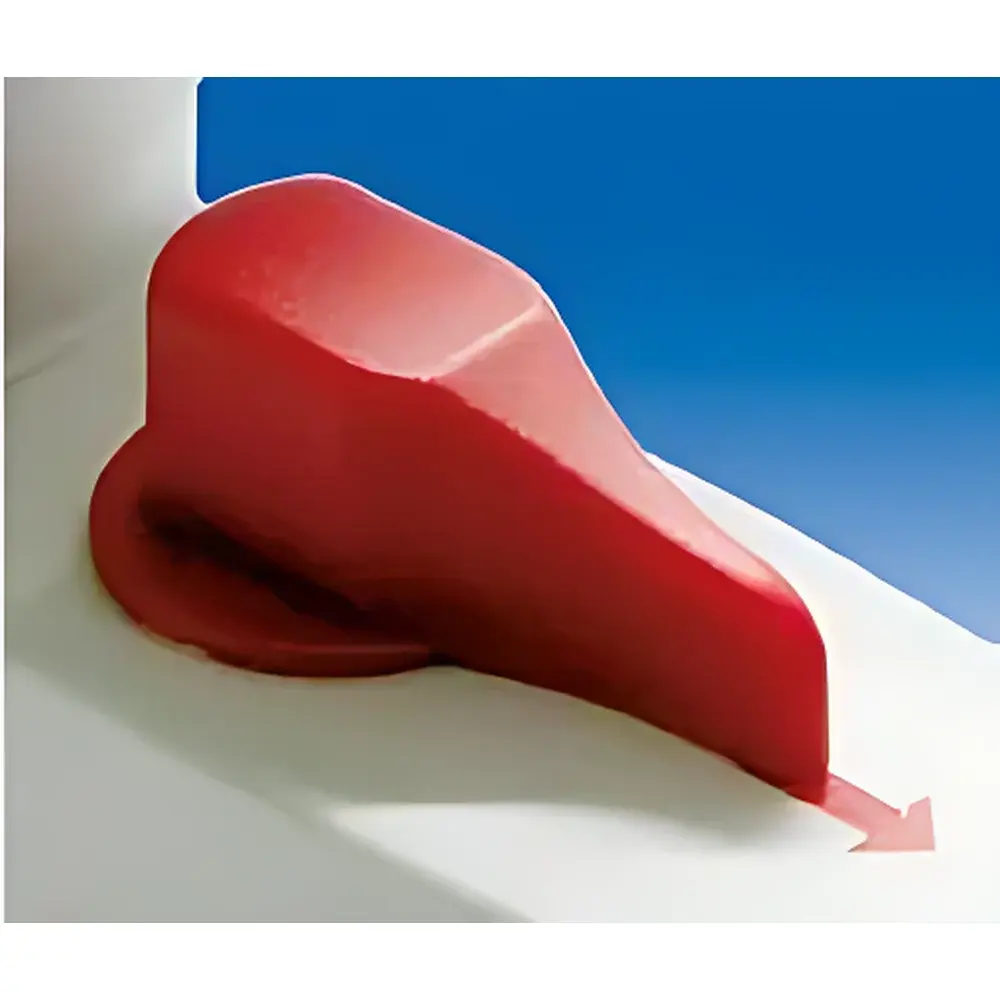
- Integrated recirculation valve (EP 542241) minimizing solvent waste and preventing splashing during back-titration or reagent recovery protocols
- Tool-free calibration via intuitive keypad interface; zero downtime between method changes or environmental recalibrations
- Low-center-of-gravity, compact chassis engineered to resist tipping—even when mounted on small-diameter sample bottles (e.g., 10–30 mL vials)
- Chemically resistant polypropylene (PP) threaded adapters included for universal compatibility with GL32, GL38, S40 (serrated), and GL45 bottle necks
Sample Compatibility & Compliance
The Vitlab E/RS supports aqueous, organic, and mildly aggressive reagents commonly used in acid-base, redox, complexometric, and precipitation titrations—including HCl, NaOH, EDTA, KMnO₄, AgNO₃, and iodine solutions. Its wetted components are constructed from inert, USP Class VI-compliant materials, ensuring minimal leaching and long-term stability across pH 1–12. Full compliance with DIN EN ISO 8655 series standards guarantees metrological traceability to national measurement institutes (e.g., PTB in Germany). The device meets essential requirements for inclusion in FDA 21 CFR Part 11–compliant workflows when paired with validated software platforms—particularly where electronic records, audit trails, and user access controls are enforced. It is routinely deployed in pharmaceutical QC labs (per ICH Q2(R2)), environmental testing (per EPA methods), and food safety laboratories adhering to ISO/IEC 17025 accreditation criteria.
Software & Data Management
While the E/RS operates as a standalone, self-contained instrument, its RS-model variant (1620507) features an RS-232 serial interface for integration into LIMS or ELN ecosystems. When connected to compliant laboratory software, full transaction logging—including volume dispensed, calibration timestamps, operator ID, ambient temperature, and error flags—is retained with immutable audit trail functionality. Calibration data is stored internally with versioned firmware support, enabling retrospective verification of measurement integrity. All firmware updates are delivered via secure, digitally signed packages aligned with IEC 62443-3-3 cybersecurity guidelines for laboratory instrumentation. No cloud dependency or external subscription is required for core operation or regulatory compliance.
Applications
- Standardization of titrants in pharmacopeial assays (USP , EP 2.2.20, JP 2.05)
- Acid number and saponification value determination in petrochemical and lubricant analysis
- Chloride quantification in water and wastewater per ISO 9297 and ASTM D512
- Residual titration of excess reagents in Karl Fischer moisture analysis preparation steps
- Endpoint refinement in potentiometric and photometric titrations requiring sub-10 µL incremental delivery
- Educational laboratories requiring robust, low-maintenance instruments with transparent metrological foundations
FAQ
What standards does the Vitlab E/RS comply with?
It conforms to DIN EN ISO 8655-3 (accuracy verification), DIN EN ISO 8655-5 (maximum permissible error), DIN EN ISO 8655-6 (precision evaluation), and DIN 12600 (general burette specifications).
Can the E/RS be used with corrosive solvents such as concentrated acids or bases?
Yes—its fluid path is compatible with common titration reagents across pH 1–12; however, prolonged exposure to >6 M H₂SO₄ or >10 M NaOH is not recommended without prior chemical compatibility verification.
Is calibration traceable to national standards?
Each unit ships with a manufacturer-issued calibration certificate referencing PTB-traceable reference standards at 20 °C, in accordance with ISO/IEC 17025 requirements.
How often must the E/RS be recalibrated?
Annual recalibration is recommended under routine use; more frequent verification is advised after mechanical shock, temperature excursions beyond 15–25 °C, or when performing critical GxP assays.
Does the instrument support GLP/GMP audit requirements?
Yes—when operated with documented procedures and integrated into validated software systems, it supports full audit trail generation, electronic signatures, and change control per FDA 21 CFR Part 11 and EU Annex 11.



