
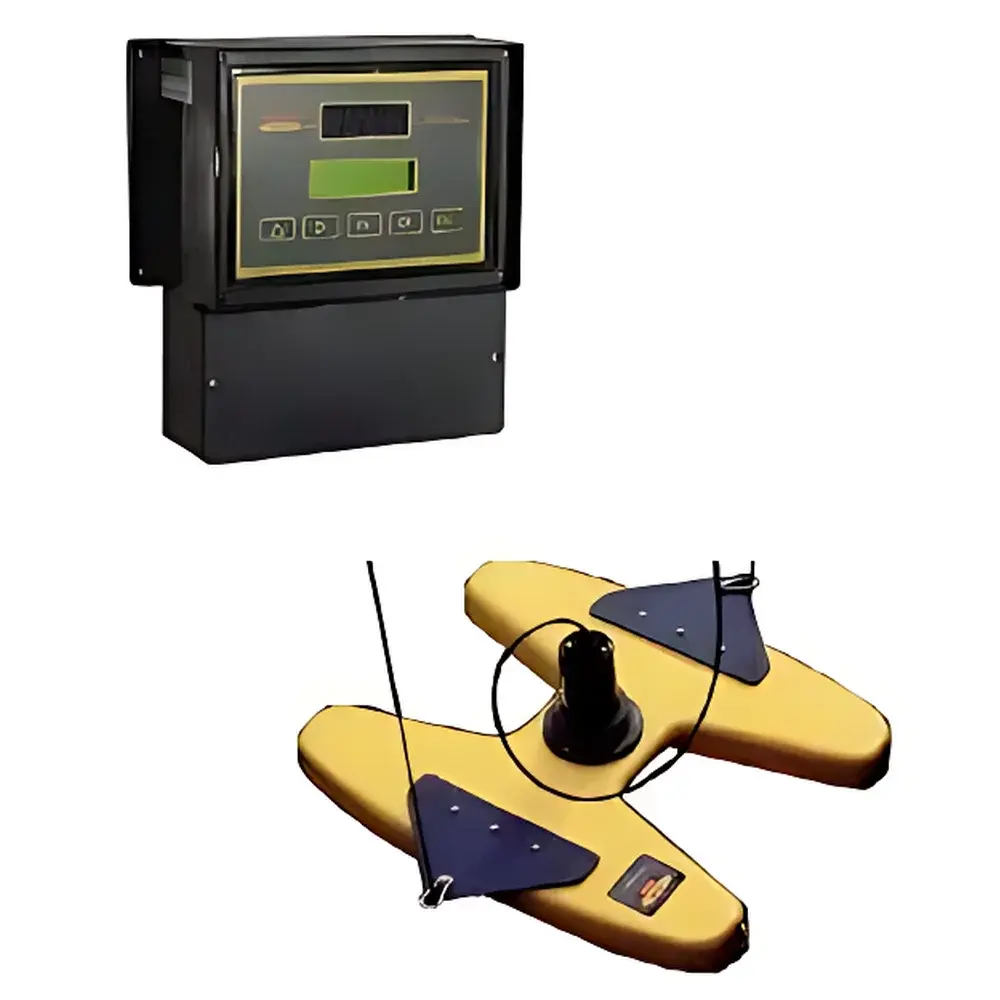
WaterWatch2920 Online Oil-in-Water Monitor
| Origin | UK |
|---|---|
| Manufacturer Type | Authorized Distributor |
| Origin Category | Imported |
| Model | WaterWatch2920 |
| Pricing | Upon Request |
Overview
The WaterWatch2920 Online Oil-in-Water Monitor is an industrial-grade, optically based surface oil detection system engineered for continuous, real-time surveillance of free-phase hydrocarbon films on quiescent or low-velocity water surfaces. Unlike laboratory-based extraction or gravimetric methods, the WaterWatch2920 employs a passive optical sensing principle—leveraging visible-light reflectance and spectral contrast between water and hydrophobic oil layers—to detect floating oil presence without physical sampling or reagent consumption. The system comprises two core components: a weatherproof, IP65-rated main unit housing signal processing electronics and power management, and a submersible, IP68-rated fiberglass-coated floating probe that remains buoyant and stable on the water surface. Designed for deployment in wastewater treatment outfalls, stormwater retention basins, cooling water intakes, and industrial effluent channels, the WaterWatch2920 delivers deterministic early-warning capability for accidental spills, process leaks, or illicit discharges—supporting regulatory compliance and operational risk mitigation.
Key Features
- Optical surface film detection with zero consumables and no moving parts—ensuring long-term reliability and minimal maintenance.
- Floating probe (150 × 485 × 600 mm, 2.2 kg) constructed from UV-stabilized fiberglass-reinforced polymer with marine-grade coating for corrosion resistance and stable orientation under variable wind/wave conditions.
- Main unit (222 × 214 × 92 mm, 2.2 kg) housed in ABS enclosure rated IP65 for indoor/outdoor mounting; integrated M13 (×5) and M20 (×1) cable glands for secure conduit entry.
- Dual-output interface: isolated 4–20 mA analog output (max. load 750 Ω) for integration into SCADA/DCS systems, plus PWM digital signal for direct event logging or PLC-triggered response.
- Configurable response window (0–120 s) to balance sensitivity and noise rejection—optimized for both rapid spill onset detection and sustained film tracking over time.
- Operating temperature range: −0 °C to +60 °C (measurement); −20 °C to +60 °C (storage); compatible with ambient humidity up to 95% non-condensing.
- Power supply: 115/230 VAC ±10/−15%, 50/60 Hz; typical power draw: 11 W.
Sample Compatibility & Compliance
The WaterWatch2920 is validated for detecting free-floating mineral oils, diesel, gasoline, lubricants, and other non-emulsified hydrocarbons on freshwater, brackish, and seawater surfaces. It does not measure dissolved or emulsified oil fractions (e.g., via UV fluorescence or TOC), nor does it quantify concentration in mg/L—its output reflects relative probability of surface oil presence, calibrated against standardized visual assessment protocols. The system meets EN 60529 (IP65/IP68), IEC 61000-6-2 (EMC immunity), and IEC 61000-6-4 (EMC emissions) requirements. While not certified to ISO 8573 or ASTM D7066, its detection logic aligns with EPA Method 1664A qualitative screening criteria for surface sheen identification and supports documentation required under EU Water Framework Directive (WFD) Article 11 monitoring obligations and US Clean Water Act Section 402 NPDES permit conditions.
Software & Data Management
The WaterWatch2920 operates as a standalone sensor node with embedded firmware—no proprietary software installation is required. Analog and PWM outputs enable seamless integration into existing facility data acquisition infrastructure. For trend analysis, users may log the 4–20 mA signal using third-party historian platforms (e.g., Siemens Desigo CC, Honeywell Experion, or Ignition SCADA). The PWM pulse width correlates linearly with oil presence likelihood (0–100%), allowing time-series reconstruction of event duration and spatial extent. All configuration parameters—including response delay, alarm thresholds, and output scaling—are set via DIP switches or external jumper settings, ensuring auditability and compatibility with GLP/GMP environments where software validation is constrained. No cloud connectivity or remote firmware updates are implemented—preserving data sovereignty and cybersecurity integrity.
Applications
- Real-time monitoring of final effluent discharge points at municipal and industrial wastewater treatment plants.
- Early detection of hydrocarbon contamination in stormwater detention ponds and combined sewer overflows (CSOs).
- Surveillance of cooling water reservoirs and condenser intake channels in power generation facilities.
- Perimeter monitoring around fuel storage areas, refueling stations, and railcar loading zones.
- Supporting ISO 14001 environmental management system (EMS) objectives through automated incident logging and reporting.
- Integration into automated valve actuation or pump shutdown sequences via PLC-triggered PWM signals.
FAQ
Does the WaterWatch2920 measure oil concentration in mg/L?
No. It detects the optical signature of surface oil films and reports presence probability—not quantitative concentration. For regulatory reporting requiring mg/L values, complementary lab analysis (e.g., EPA 1664B) is required.
Can it distinguish between different oil types (e.g., diesel vs. crude)?
No. Its optical method identifies hydrophobic surface films generically; spectral differentiation requires FTIR or GC-MS analysis.
Is calibration required during routine operation?
No field calibration is needed. The system is factory-set for baseline water reflectance; periodic visual verification of probe cleanliness and orientation is recommended.
What maintenance intervals are advised?
Biannual inspection of probe buoyancy, optical window clarity, and cable gland integrity; no scheduled replacement parts beyond standard industrial electrical safety checks.
Is the system suitable for tidal or high-flow applications?
It is intended for near-quiescent surfaces only (flow velocity < 0.1 m/s). In dynamic water, mechanical stabilization or alternative ultrasonic/oil-slick radar solutions should be evaluated.
Related Products







