
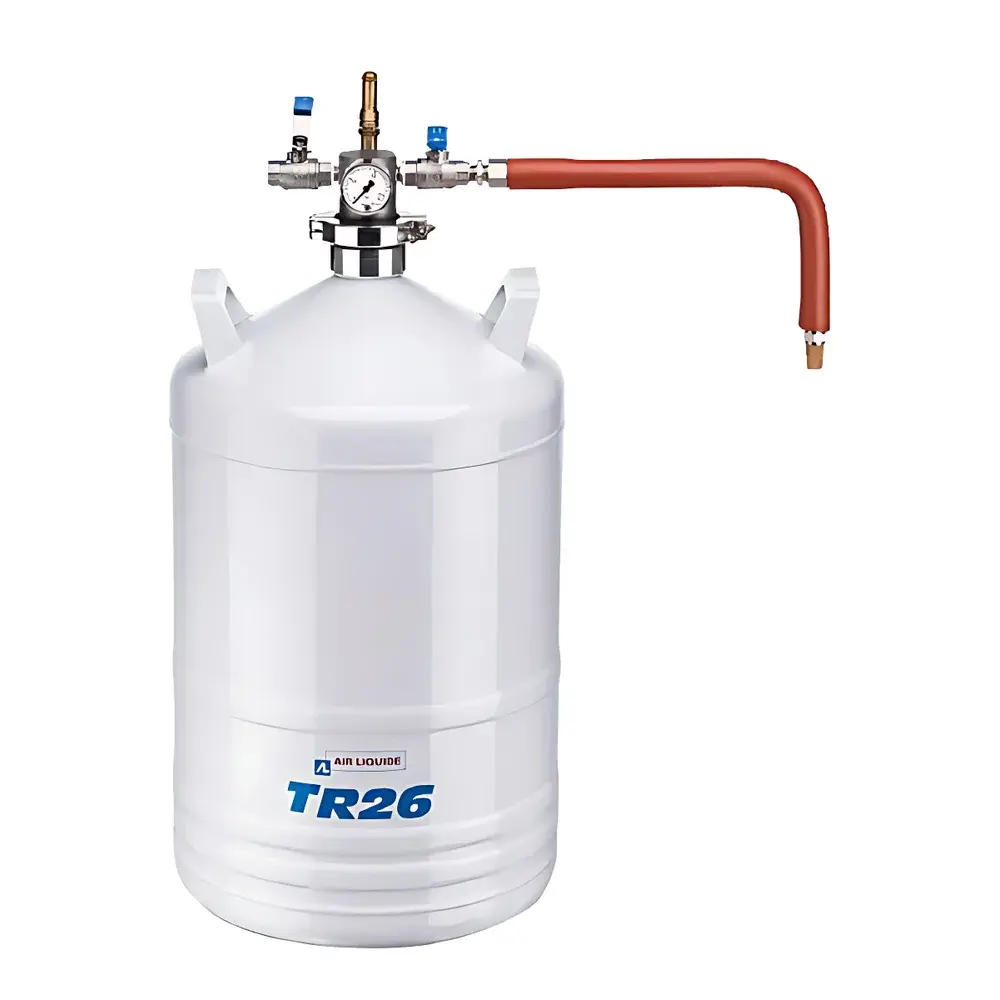
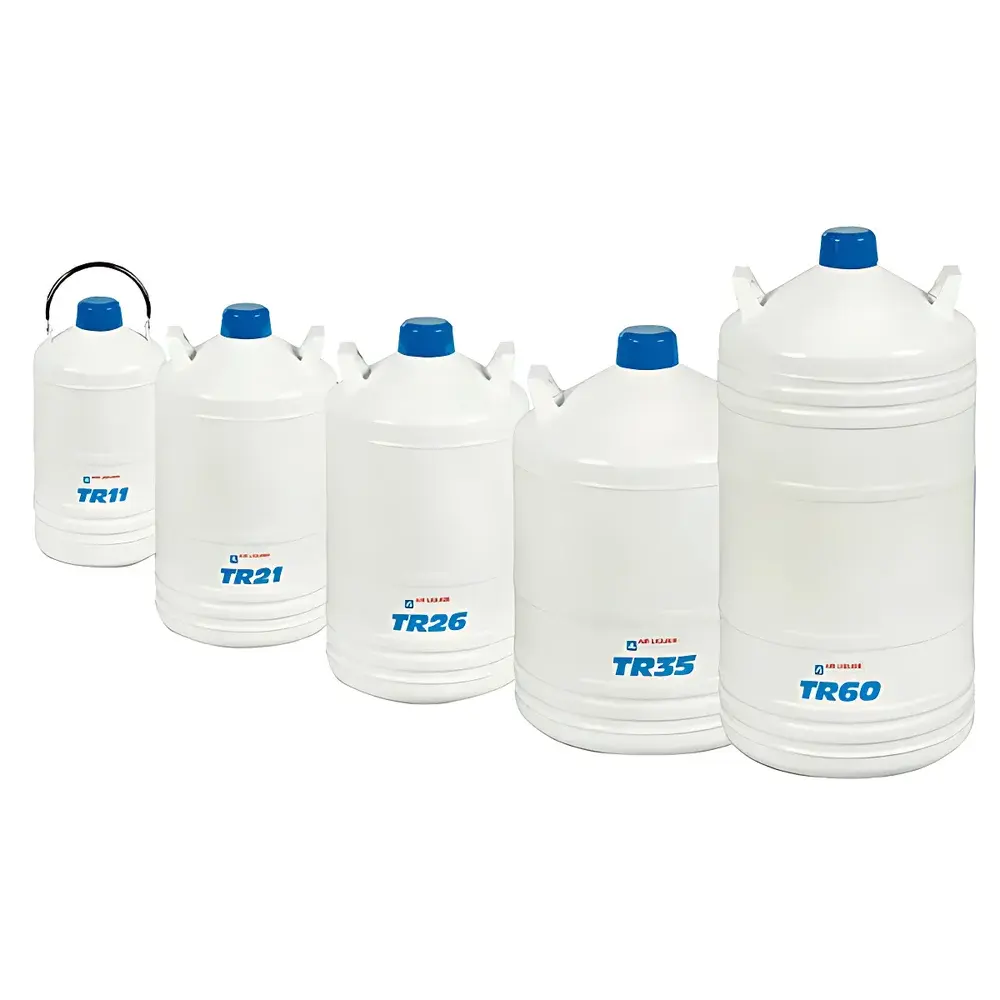
WIGGENS ALU Series Liquid Nitrogen Storage and Transport Dewars
| Brand | WIGGENS |
|---|---|
| Origin | Germany |
| Model | ALU |
| Type | Vacuum-Insulated Aluminum Alloy Cryogenic Dewar |
| Capacity Range | 10–100 L |
| Operating Pressure | 0.5 bar (gauge) |
| LN₂ Evaporation Rate | 0.18–0.56 L/day |
| Static Hold Time | 72–180 days |
| Construction | Multi-layer vacuum insulation with aluminum alloy composite shell |
| Compliance | Designed per ISO 21028-1 (cryogenic vessels for transport and storage), PED 2014/68/EU (pressure equipment directive) applicable to low-pressure cryogenic containers |
Overview
The WIGGENS ALU Series Liquid Nitrogen Storage and Transport Dewars are engineered for reliable, long-term containment and safe logistical handling of liquid nitrogen (LN₂) in life science laboratories, biobanks, clinical diagnostics facilities, and academic research environments. These dewars operate on the principle of high-vacuum multilayer insulation (MLI), where concentric aluminum-alloy shells are separated by evacuated annular spaces and reflective metallic foil layers to minimize conductive, convective, and radiative heat transfer. Unlike pressurized cryogenic tanks, the ALU series functions at near-ambient overpressure (0.5 bar gauge), eliminating risks associated with pressure buildup while maintaining ultra-low thermal conductivity—critical for preserving sample integrity during extended static storage or inter-facility transport. Each unit is fabricated from lightweight yet structurally robust aluminum alloy composites, offering superior corrosion resistance and mechanical stability under repeated thermal cycling between ambient and −196 °C.
Key Features
- Vacuum-insulated double-walled aluminum alloy construction ensures exceptional thermal efficiency and long-term structural integrity.
- Optimized multilayer insulation (MLI) system reduces heat ingress, achieving LN₂ evaporation rates as low as 0.18 L/day (ALU 20 model) and static hold times up to 180 days (ALU 100).
- Integrated safety architecture includes dual-stage venting pathways, pressure-relief-compatible NW50 KF flange interface, and fail-safe vapor-phase pressure regulation.
- Ergonomic handling design features reinforced side handles or top carry grips, plus optional bottom-mounted swivel casters (order code dependent) for controlled mobility across laboratory floors.
- Hermetically sealed, low-conductivity insulated lid minimizes boil-off during routine access and complies with ISO 21028-1 requirements for non-pressurized cryogenic storage.
- All models conform to European material traceability standards and undergo helium leak testing (<1×10⁻⁹ mbar·L/s) and vacuum decay validation prior to shipment.
Sample Compatibility & Compliance
The ALU dewars are designed exclusively for liquid nitrogen storage and do not support direct sample immersion without auxiliary cryoboxes or canister systems (e.g., Nunc™ or CryoBank™ compatible racks). They are routinely deployed in GLP- and GMP-aligned biorepositories where temperature stability, audit-ready documentation, and material compatibility with biological specimens are mandatory. Units meet essential requirements of ISO 21028-1 for low-pressure cryogenic vessels and are constructed using materials certified per EN 10204 3.1 for traceable metallurgical composition. While not classified as “medical devices” under MDR 2017/745, they serve as critical infrastructure in ISO 13485-certified diagnostic labs and support compliance with FDA 21 CFR Part 11 when integrated into validated cold chain workflows with electronic loggers.
Software & Data Management
The ALU Series is a passive, non-electronic storage system and does not incorporate onboard sensors, controllers, or digital interfaces. However, it is fully compatible with third-party LN₂ level monitoring systems (e.g., CRYOSENSE™ or Air Products CryoLog™) via standardized NW50 KF ports. When paired with external IoT-enabled temperature and fill-level transducers, data streams may be aggregated into LIMS or ELN platforms supporting 21 CFR Part 11-compliant electronic records—including user authentication, audit trails, and immutable timestamping. WIGGENS provides full dimensional drawings, material certificates, and vacuum performance test reports to facilitate IQ/OQ documentation during lab qualification.
Applications
- Long-term cryopreservation of cell lines, primary tissues, oocytes, and embryos in IVF and stem cell banking.
- Transport of LN₂-cooled instrumentation components (e.g., superconducting magnets, IR detectors) between cleanrooms or instrument service centers.
- Backup storage for ultra-low temperature freezers (−80 °C) during power outages or maintenance cycles.
- Field-deployable LN₂ supply for mobile sequencing units, point-of-care diagnostics, and veterinary field clinics.
- Calibration reference environment for cryogenic thermometers and heat flux sensors per ASTM E220 or IEC 60751.
FAQ
Are ALU dewars suitable for storing biological samples directly in liquid phase?
No—samples must be placed in vapor-phase compatible cryoboxes or metal canisters suspended above the LN₂ level. Direct immersion requires specialized high-pressure storage systems.
Can these dewars be used for liquid argon or oxygen?
Not recommended. The ALU series is specifically validated for liquid nitrogen use only; other cryogens impose different thermal contraction, embrittlement, and compatibility risks.
What maintenance is required to sustain vacuum integrity?
Vacuum lifetime exceeds 15 years under normal handling. Annual visual inspection of outer shell integrity and periodic verification of vacuum status using a handheld Pirani gauge are advised.
Is CE marking applied to all ALU models?
Yes—each unit carries CE marking under the Pressure Equipment Directive (PED 2014/68/EU) Annex II classification for Group 2 fluid category, reflecting conformity assessment by a Notified Body.
Do you provide custom labeling or integration with facility BMS systems?
Custom asset tagging and mounting brackets are available upon request. BMS integration requires external sensor add-ons, as the dewar itself contains no embedded electronics.
Related Products




