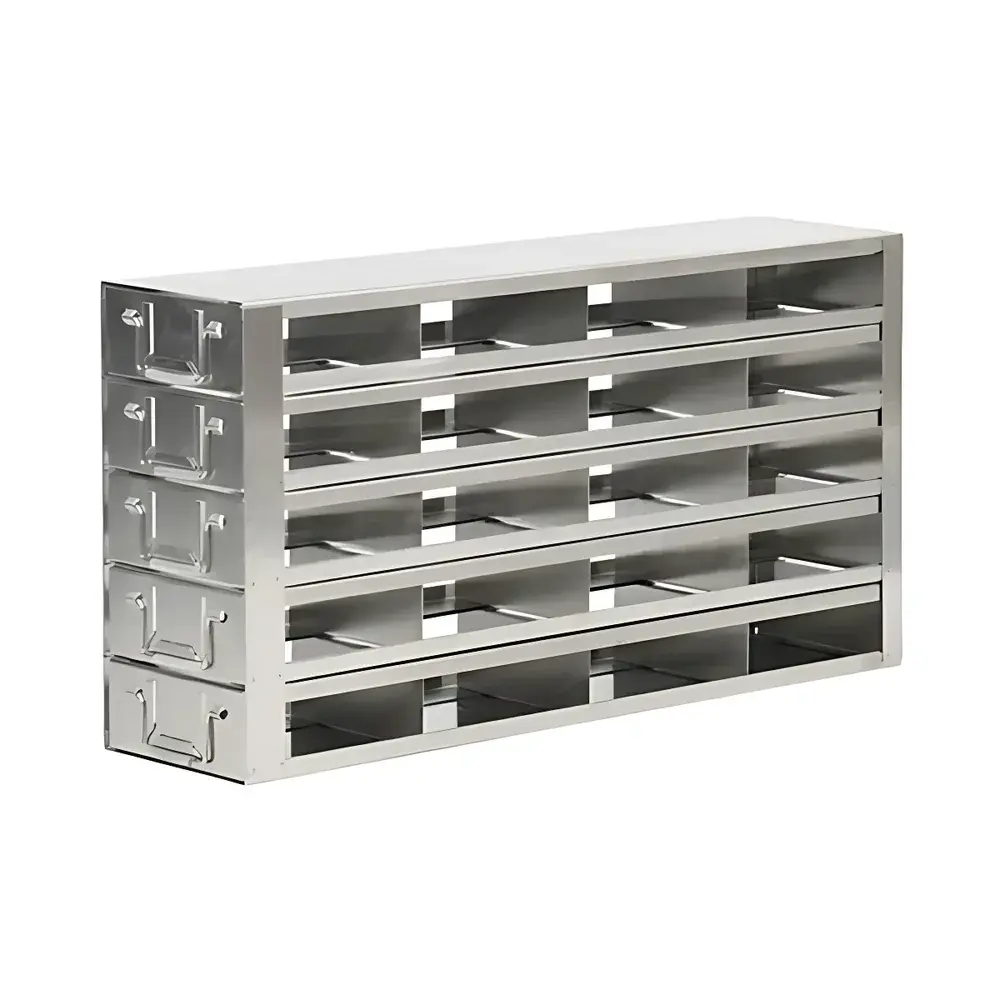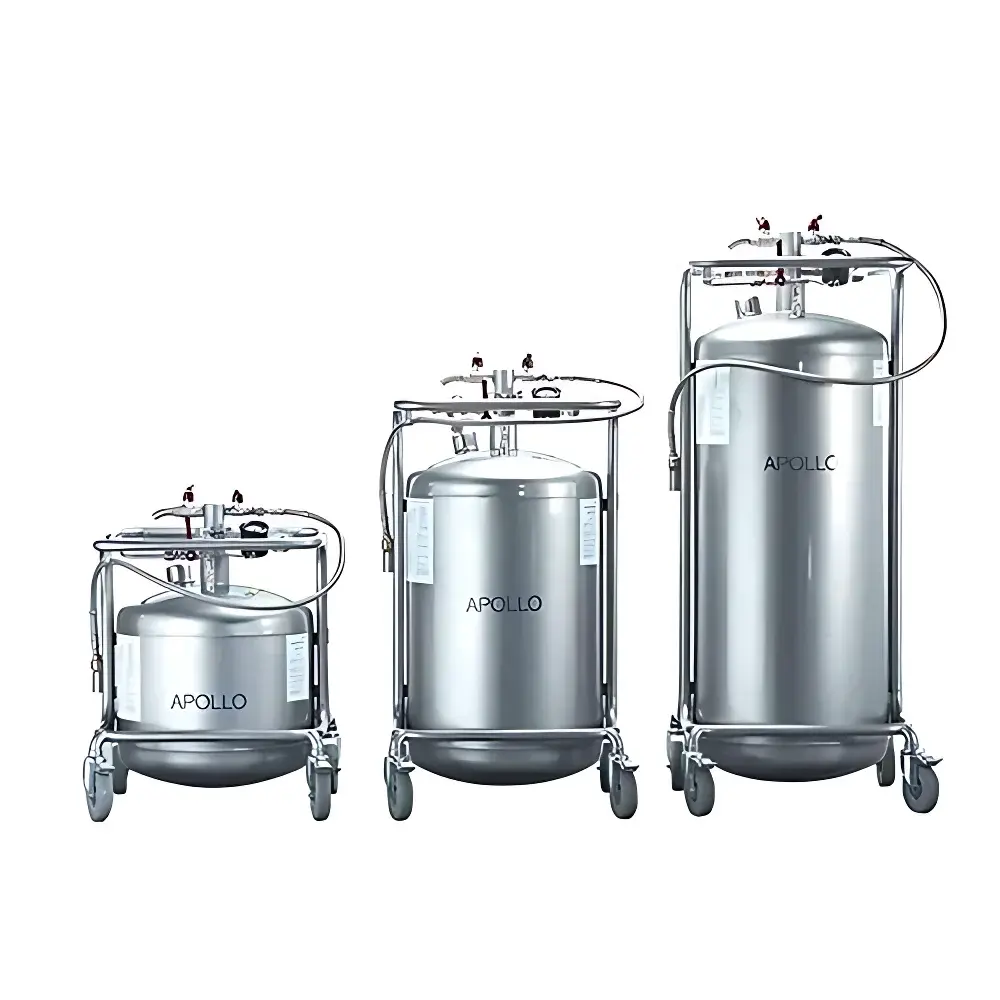
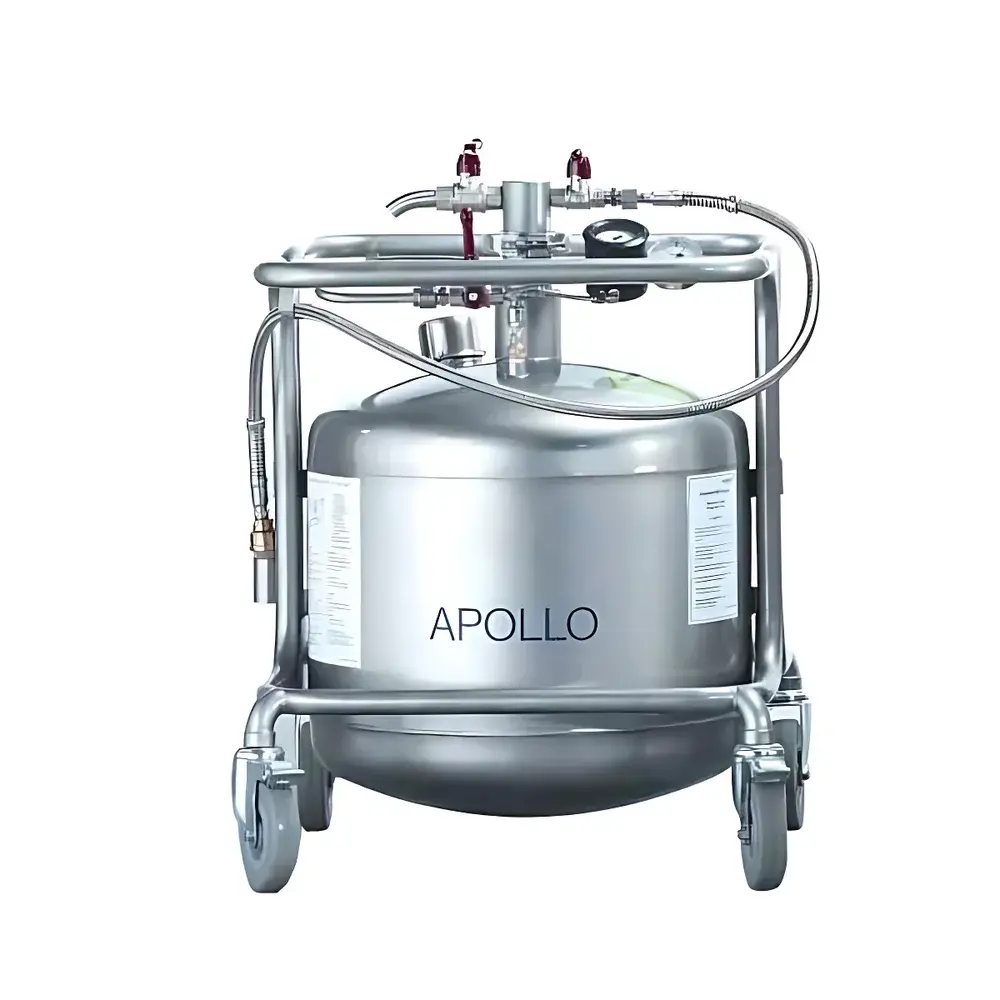
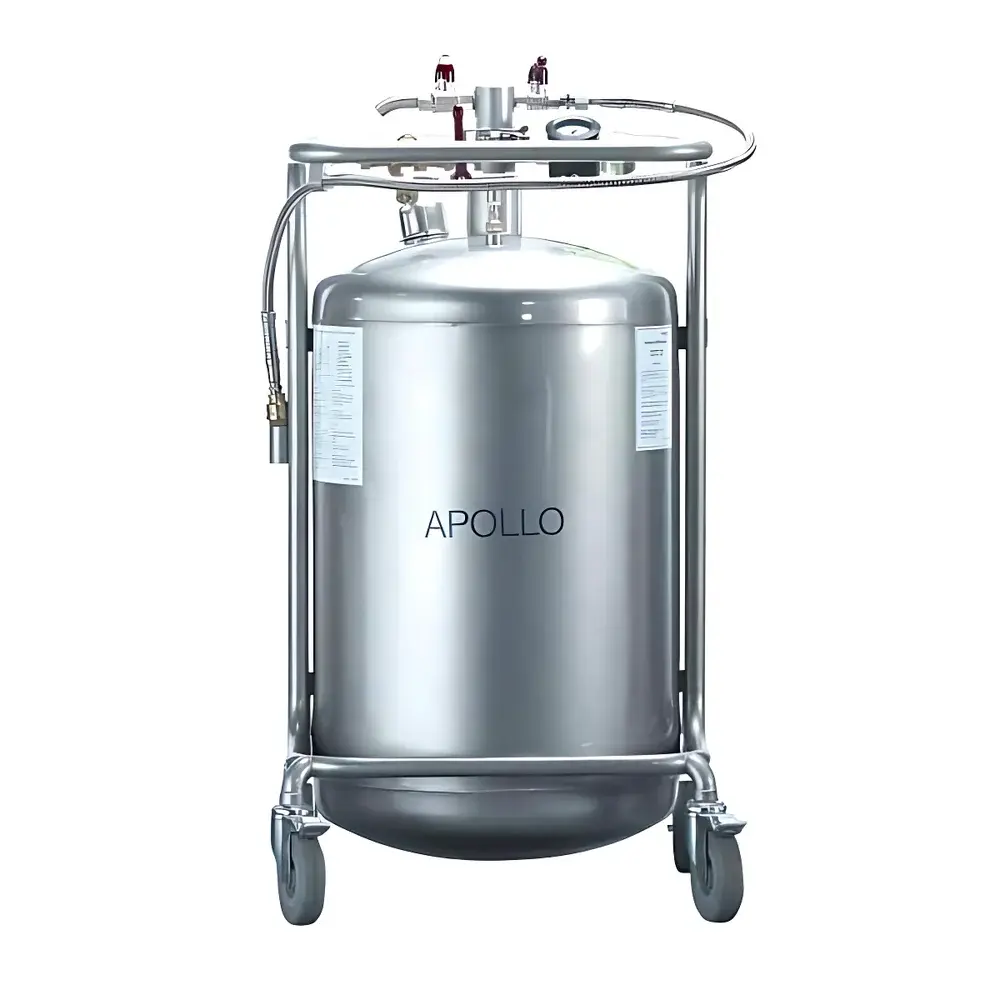
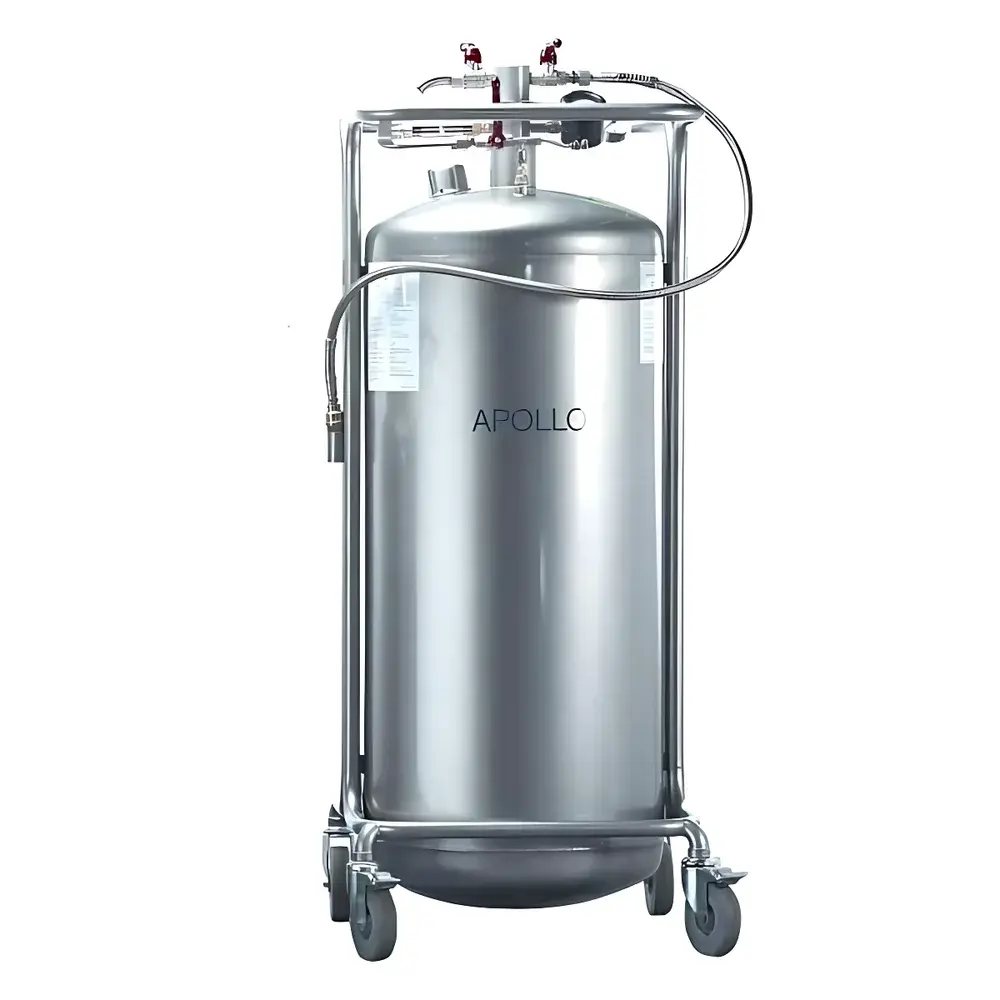
WIGGENS APOLLO Series Stainless Steel Liquid Nitrogen Storage and Transport Dewar
| Brand | WIGGENS |
|---|---|
| Origin | Germany |
| Model | APOLLO |
| Capacity Options | 49.5–348 L |
| Operating Overpressure | 1.3–2.0 bar |
| Static Evaporation Rate | 0.2–0.5 %/day |
| Vacuum Insulation | Multi-layer Cryogenic Vacuum Jacket |
| Construction | Austenitic Stainless Steel (ASTM A240 304/316) |
| Neck Opening | KF50 Flange |
| Compliance | Meets PED 2014/68/EU, EN 13445-3, ISO 21028-1 for Cryogenic Vessels |
| Standard Features | Integrated Safety Relief System, Vacuum-Lock Quick-Release Clamps, Pneumatic-Free Self-Pressurization Kit, Dual-Valve LN₂ Transfer Hose with Phase Separator & Exhaust Valve, Immersion Depth-Optimized Neck Geometry, Integrated Level Gauge with Mechanical Dial Indication |
| Mobility | Heavy-Duty Swivel Casters (125 mm or 160 mm), Reinforced Perimeter Frame |
Overview
The WIGGENS APOLLO Series is a high-integrity stainless steel liquid nitrogen (LN₂) storage and transport dewar engineered for long-term cryogenic containment under laboratory, biobanking, and clinical logistics conditions. Designed in accordance with the Pressure Equipment Directive (PED 2014/68/EU) and harmonized standards EN 13445-3 and ISO 21028-1, the APOLLO dewar employs a multi-layer high-vacuum insulation system—comprising concentric stainless steel shells, low-emissivity reflective foil, and getter-pumped vacuum maintenance—to achieve static evaporation rates as low as 0.2 %/day (for 50 L configuration) and up to 0.5 %/day across larger capacities (348 L). Its dual-wall austenitic stainless steel construction (ASTM A240 304/316) ensures mechanical robustness, corrosion resistance, and compatibility with repeated thermal cycling between ambient and −196 °C. Unlike passive storage vessels, the APOLLO integrates a self-pressurization module that enables controlled, electricity-free LN₂ transfer—critical for GMP-aligned sample handling where external power sources or compressed gas infrastructure are unavailable.
Key Features
- Mechanically stable, vacuum-jacketed double-walled construction with validated long-term vacuum retention (>15 years typical service life under proper handling)
- KF50 standardized neck flange (ISO-KF) enabling seamless integration with cryogenic accessories, vapor-phase storage racks, and automated filling systems
- Integrated safety architecture: dual-stage pressure relief valves (PRV), vacuum-lock clamps with visual engagement indicators, and fail-safe rupture discs compliant with PED Annex I requirements
- Self-pressurization kit includes regulated diaphragm valve, heat-exchange coil, and non-return check valve—operates solely via ambient heat exchange; no external power or gas supply required
- LN₂ transfer system comprises a flexible, vacuum-jacketed metal hose (stainless steel braid + multilayer insulation), integrated phase separator, overflow protection valve, and exhaust control port for safe venting of boil-off gas during filling
- Reinforced perimeter frame and heavy-duty swivel casters (125 mm or 160 mm diameter, brake-equipped) support ergonomic manual transport over level surfaces and laboratory flooring
- Mechanical level gauge with direct-reading dial calibrated for real-time volume estimation without electronic dependency or calibration drift
Sample Compatibility & Compliance
The APOLLO dewar is qualified for storage of biological specimens—including vials, straws, cryoboxes, and cryobags—in both liquid-phase (−196 °C) and vapor-phase (−150 °C to −190 °C) configurations. Its interior geometry supports standard Nunc™, Thermo Scientific™, and Corning™ cryovial racks (up to 25 mm diameter format). All wetted materials comply with USP Class VI biocompatibility testing and EU Regulation (EC) No 1935/2004 for food-contact materials. The vessel design adheres to ISO 20417:2021 (medical device labeling), ISO 13485:2016 (QMS for medical devices), and supports audit readiness for GLP, GCP, and AABB-accredited biorepositories. Documentation includes EU Declaration of Conformity, material traceability certificates (EN 10204 3.1), and vacuum integrity test reports per EN 13445-3 Annex C.
Software & Data Management
While the APOLLO operates as a fully autonomous mechanical system, optional digital add-ons enable traceable operation within regulated environments. An accessory Bluetooth-enabled temperature and level logger (WIGGENS CryoLog Pro) can be mounted on the neck flange to record continuous vapor-phase temperature profiles and relative fill-level trends. Data exports comply with FDA 21 CFR Part 11 requirements when paired with WIGGENS’ validated CryoTrack software—supporting electronic signatures, audit trails, and role-based access control. All firmware updates and calibration records are version-controlled and timestamped, ensuring full data integrity for regulatory submissions.
Applications
- Long-term cryopreservation of stem cells, PBMCs, oocytes, and embryos in IVF and regenerative medicine labs
- Transport of LN₂-cooled instrumentation (e.g., cryo-EM sample holders, superconducting magnet shims, quantum sensor dewars)
- Backup storage for ultra-low temperature freezers (−80 °C) during maintenance or power outages
- Cryogenic logistics between satellite biobanks and central repositories under ISO 20387:2018 biobanking standards
- On-site LN₂ supply for mass spectrometry ion sources, FTIR cryostats, and superconducting RF cavities
FAQ
What is the expected service life of the vacuum insulation?
Vacuum integrity is maintained for ≥15 years under normal handling and periodic visual inspection; annual vacuum decay testing is recommended for GxP environments.
Can the APOLLO be used for vapor-phase storage only?
Yes—the optimized neck geometry and immersion depth (B dimension) ensure stable vapor-phase temperature gradients; optional vapor-phase racks are available.
Is the self-pressurization system compatible with closed-loop transfer systems?
Yes—integrated non-return valves and pressure-regulated output allow connection to closed-fill manifolds meeting ISO 8573-1 Class 0 purity requirements.
Does the dewar require periodic recertification?
Per PED, periodic inspection (every 5 years) by a Notified Body is mandatory for vessels operating above 0.5 bar; documentation kits include inspection checklists and traceable test records.
Are custom neck configurations or internal partitions available?
Yes—WIGGENS offers OEM engineering support for KF40/KF63 variants, internal aluminum partitioning, and RFID-tagged rack integration upon request.