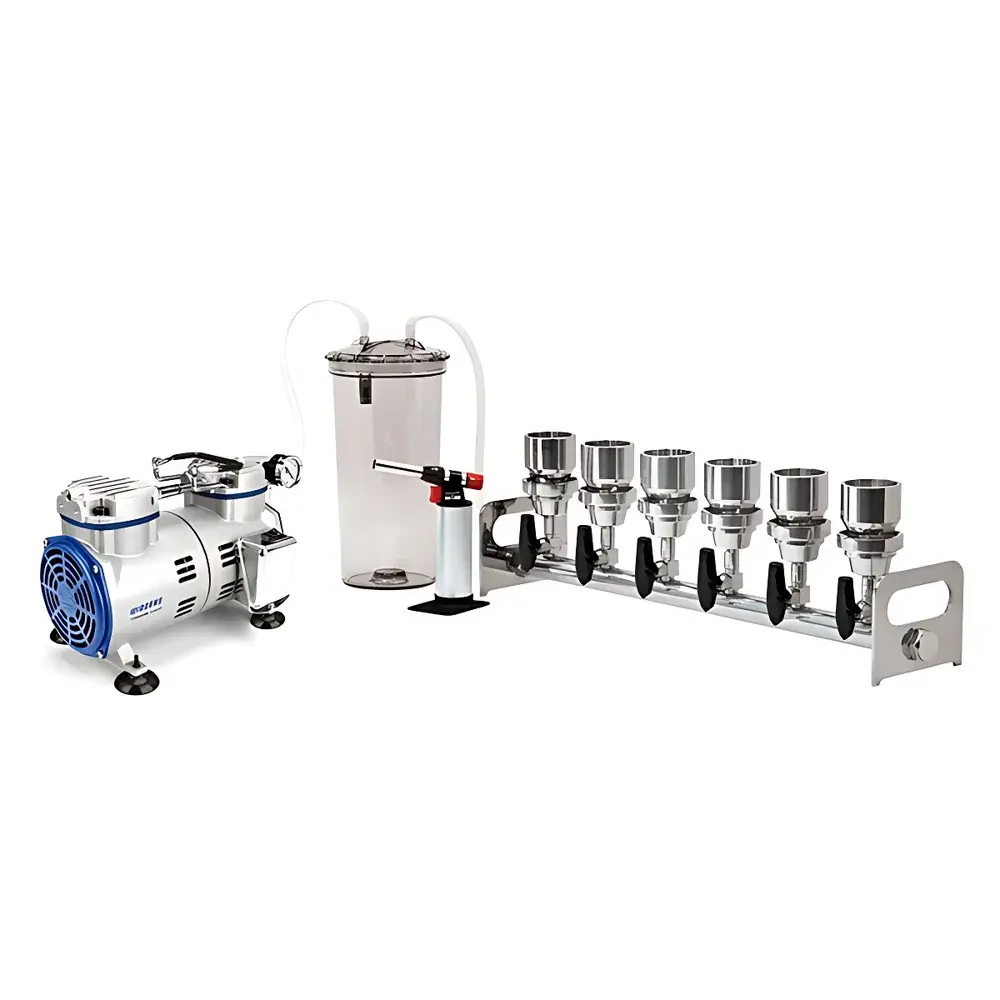
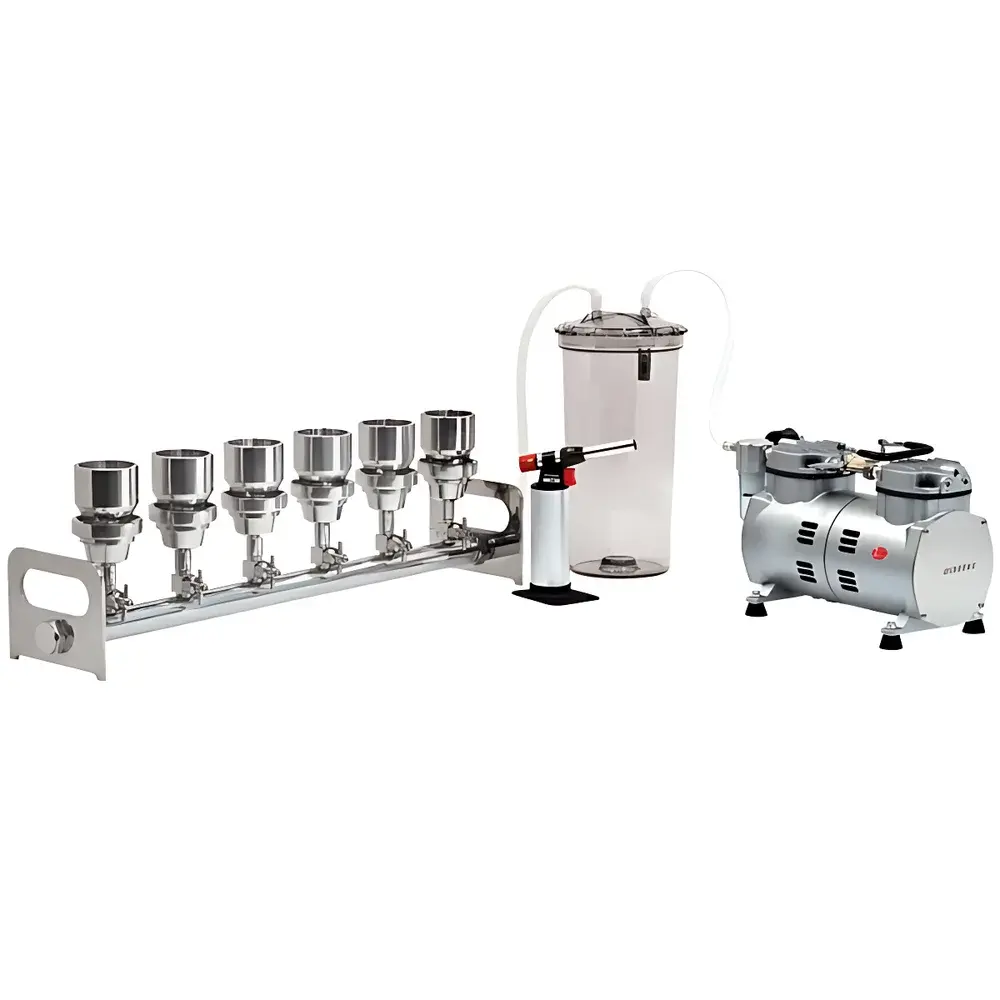
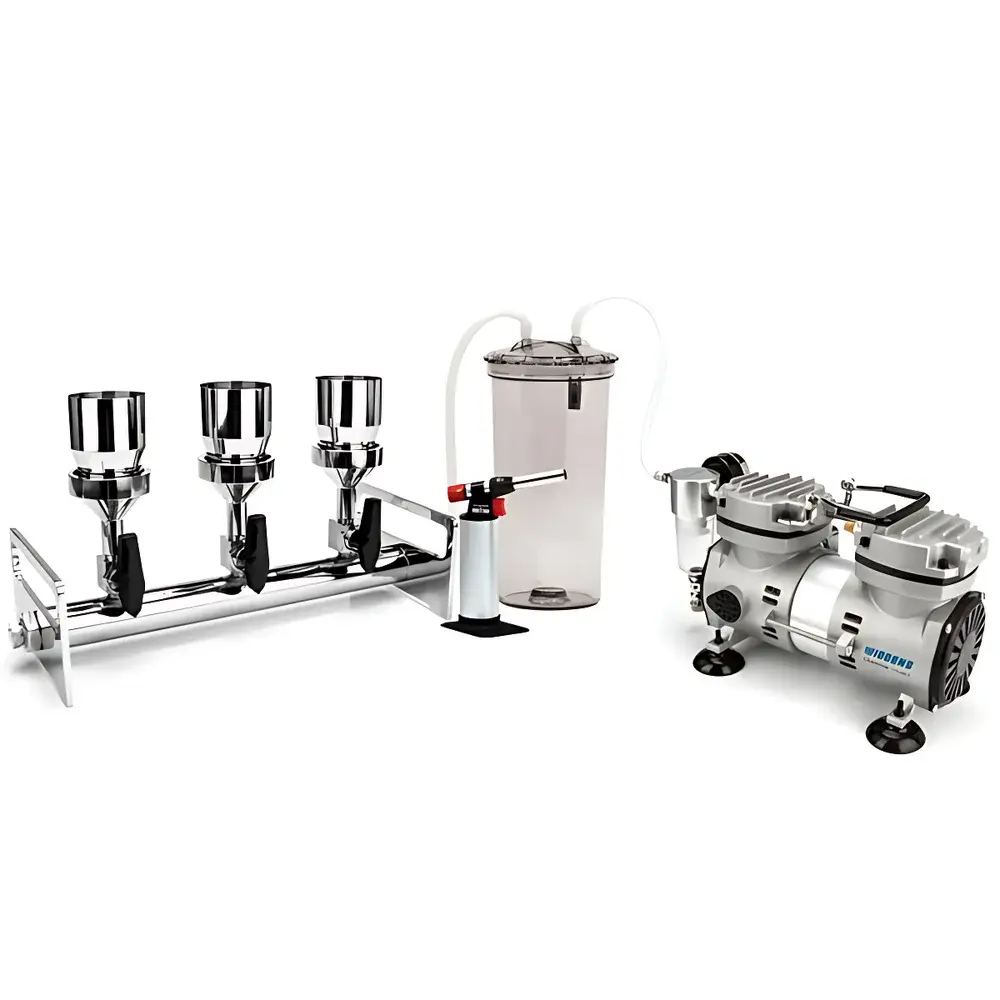
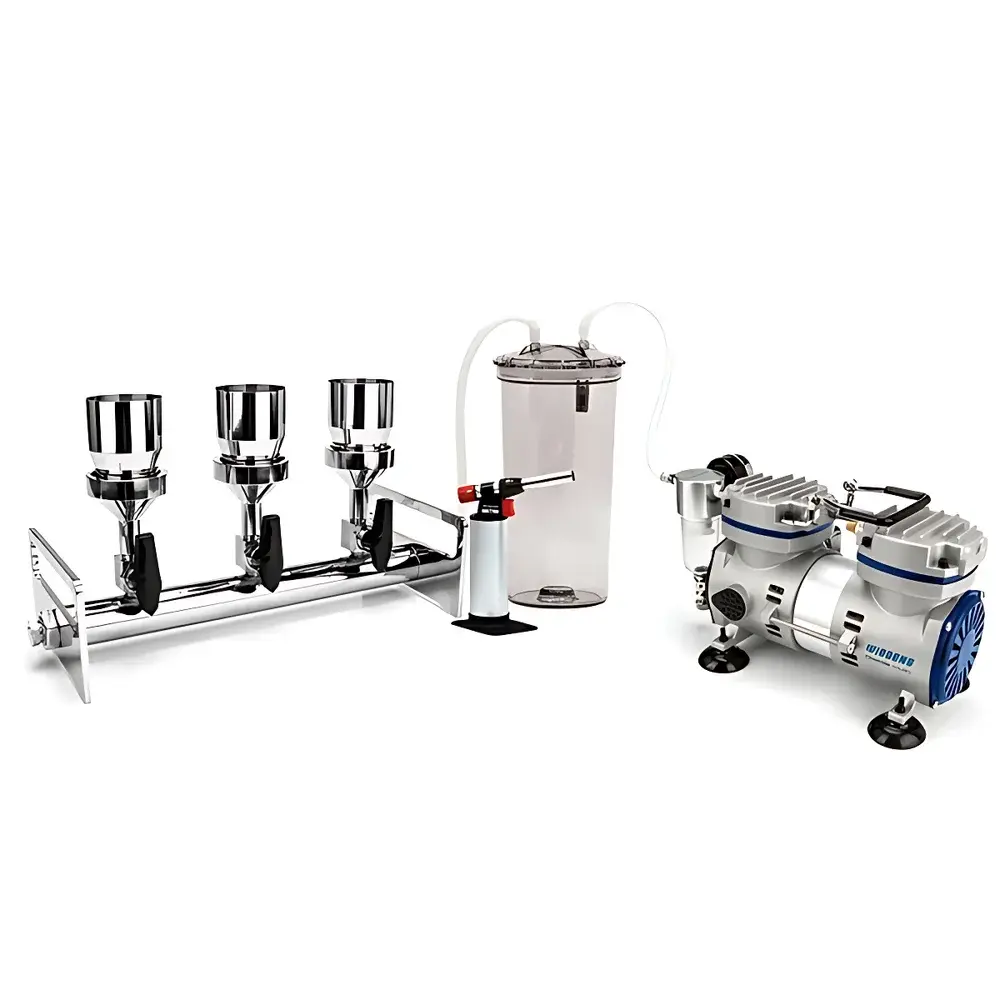
WIGGENS BioVac630B Multi-Position Vacuum Filtration System
| Brand | WIGGENS |
|---|---|
| Origin | Germany |
| Model | BioVac630B |
| Pump Flow Rate | 58 L/min |
| Ultimate Vacuum | ≤150 mbar |
| Filtration Positions | 6 |
| Filter Holder Material | SS316 Stainless Steel |
| Compatible Filter Diameters | 47 mm / 50 mm |
| Flask Capacity | 3000 mL (PC) |
| Filtration Area per Position | 9.6 cm² |
| Hose ID | 8 mm |
| Filter Cup Options | 100 mL stainless steel (standard) |
Overview
The WIGGENS BioVac630B Multi-Position Vacuum Filtration System is an engineered solution for high-throughput, sterile-compatible liquid filtration in life science laboratories. Designed around the principle of controlled vacuum-driven membrane filtration, the system enables parallel processing of up to six samples under consistent negative pressure conditions. Its core architecture integrates a high-capacity diaphragm vacuum pump (58 L/min free air flow, ≤150 mbar ultimate vacuum) with a precision-machined, six-position SS316 stainless steel filter manifold. This construction ensures chemical resistance across a broad pH range and compatibility with standard sterilization protocols—including autoclaving (121 °C, 20 min), dry-heat oven treatment (180 °C), and flame sterilization—making it suitable for aseptic microbiological assays, process validation, and quality control environments governed by ISO 13485 or FDA 21 CFR Part 820.
Key Features
- SS316 stainless steel filter manifold with individually controllable vacuum valves per position—enabling selective activation without cross-contamination or pressure imbalance.
- Rotary bayonet coupling mechanism eliminates need for clamps or tools during filter assembly; achieves leak-tight sealing in <3 seconds per position.
- Modular cup compatibility: accepts standardized 100 mL stainless steel filtration cups (included), with mechanical interchangeability verified for 300 mL and 500 mL variants (optional).
- Integrated 3000 mL polycarbonate waste reservoir with integrated liquid-level sensor and anti-suck-back check valve to prevent overflow-induced pump damage.
- Low-noise diaphragm pump (<52 dB[A] at 1 m) with oil-free operation and built-in thermal overload protection—designed for continuous duty cycles exceeding 8 hours/day.
- Compact footprint (280 × 220 × 340 mm) optimized for benchtop integration within biosafety cabinets or laminar flow hoods.
Sample Compatibility & Compliance
The BioVac630B supports all standard 47 mm and 50 mm diameter membrane filters—including mixed cellulose ester (MCE), polyethersulfone (PES), nylon, PVDF, and track-etched polycarbonate—across pore sizes from 0.1 µm to 8.0 µm. Its inert SS316 wetted path complies with USP Class VI biocompatibility requirements and resists corrosion from common laboratory solvents (e.g., ethanol, isopropanol, dilute acids/bases). The system meets IEC 61010-1 safety standards for electrical equipment used in laboratory environments and conforms to EN 61326-1 for electromagnetic compatibility. For regulated workflows, the absence of electronic data logging does not preclude use in GLP-compliant settings when paired with external audit-trail-capable vacuum controllers or manual logbook documentation per SOP.
Software & Data Management
The BioVac630B operates as a standalone hardware platform without embedded firmware or digital interfaces. It is intentionally designed for analog, operator-controlled operation—eliminating software validation burdens in GMP-regulated QC labs. All vacuum parameters are monitored via analog gauges (±2% FS accuracy), and flow regulation is achieved manually using individual needle valves per port. This architecture aligns with ALCOA+ principles for data integrity in non-automated systems: attributable (operator initials logged manually), legible (mechanical gauge readouts), contemporaneous (real-time observation), original (no secondary transcription), accurate (calibrated pressure indicators), complete (full six-port status visible simultaneously), consistent (identical valve design across positions), enduring (stainless steel construction ensures long-term dimensional stability), and available (no proprietary software dependencies).
Applications
- Microbiological analysis: membrane filtration of water, beverages, pharmaceuticals, and cosmetics per ISO 9308-1, USP , and ASTM D5465.
- Cell harvesting and clarification: gentle recovery of mammalian, bacterial, or yeast cells from culture supernatants prior to downstream lysate preparation or cryopreservation.
- Particle removal in reagent preparation: pre-filtration of buffers, media components, and HPLC mobile phases to prevent column fouling.
- Environmental monitoring: air sample collection on gelatin or PVC filters followed by gravimetric or microbial enumeration.
- Process development: scalability testing of filtration steps across 100–500 mL batch volumes prior to pilot-scale tangential flow filtration (TFF) implementation.
FAQ
Can the BioVac630B be autoclaved?
Yes—the entire SS316 filter manifold, including valves and sealing surfaces, is rated for repeated autoclaving at 121 °C for 20 minutes. Polycarbonate flasks and silicone tubing must be removed prior to sterilization.
Is the system compatible with aggressive solvents such as acetone or chloroform?
No. While SS316 offers excellent resistance to oxidizing acids and saline solutions, prolonged exposure to halogenated hydrocarbons or ketones may degrade elastomeric seals and compromise vacuum integrity. Consult the WIGGENS Chemical Compatibility Guide before solvent use.
What is the maximum recommended operating temperature for continuous filtration?
Ambient temperature must remain between 15–30 °C. Sample inlet temperature should not exceed 40 °C to prevent thermal deformation of PC flasks and premature membrane pore collapse.
How often should the vacuum pump maintenance be performed?
Diaphragm replacement is recommended every 12 months under standard lab usage (≤6 hrs/day); inlet filter elements require cleaning every 2 weeks in high-particulate environments.
Are replacement parts traceable to lot numbers for quality records?
Yes. All SS316 components carry engraved serial identifiers, and consumables (valve seals, tubing, flasks) are supplied with manufacturer lot codes compliant with ISO 9001 traceability requirements.