
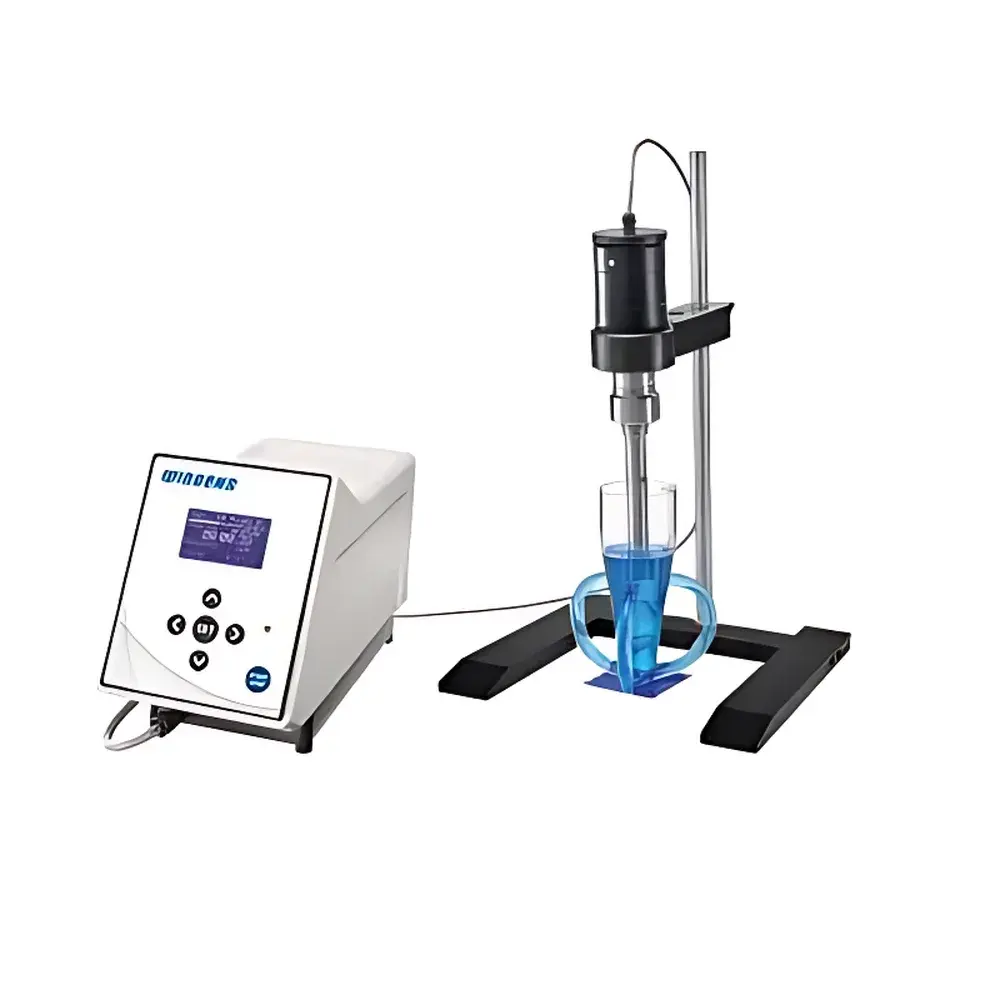
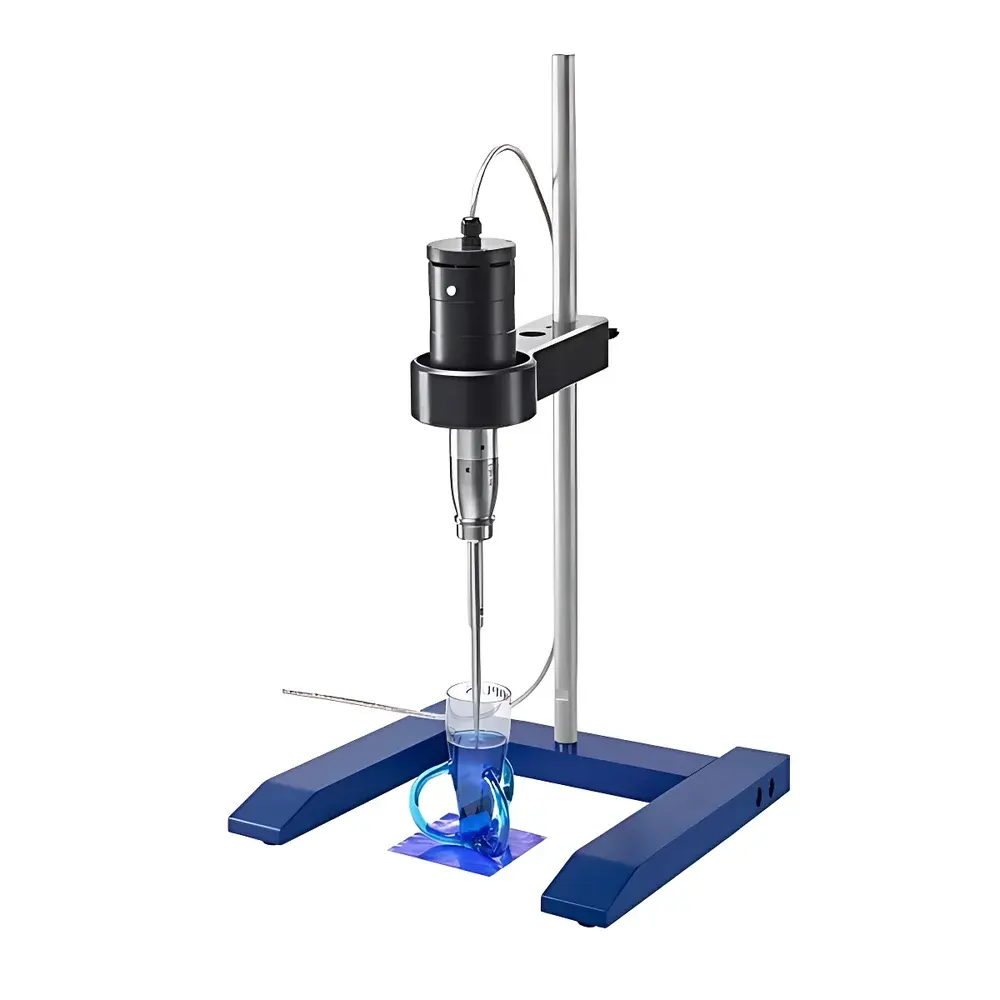
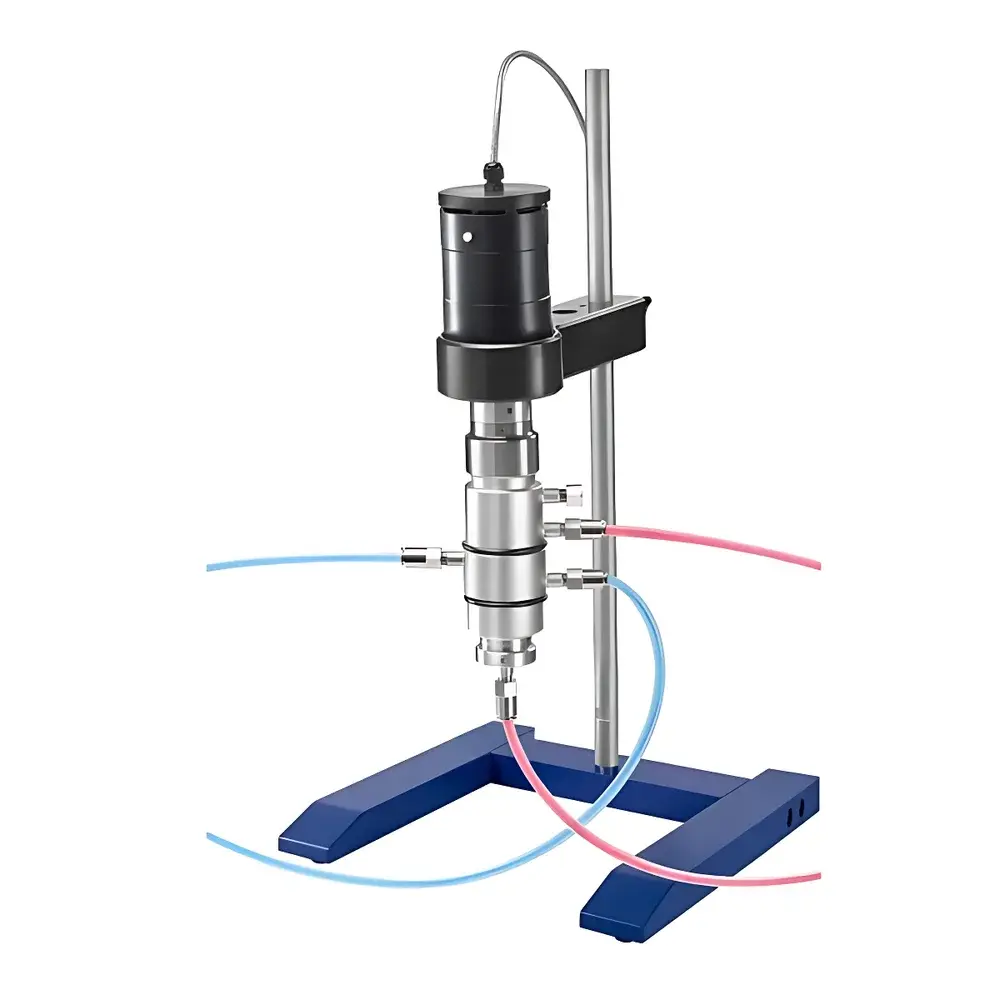
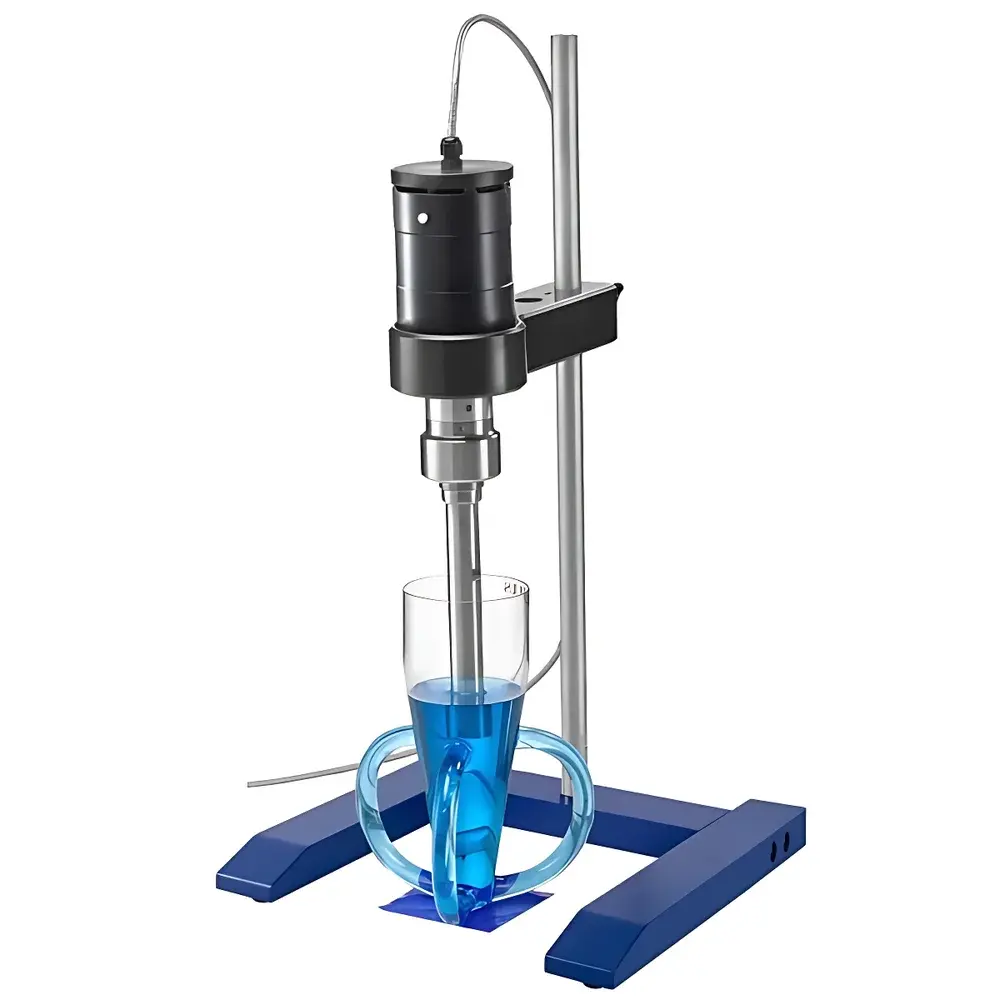
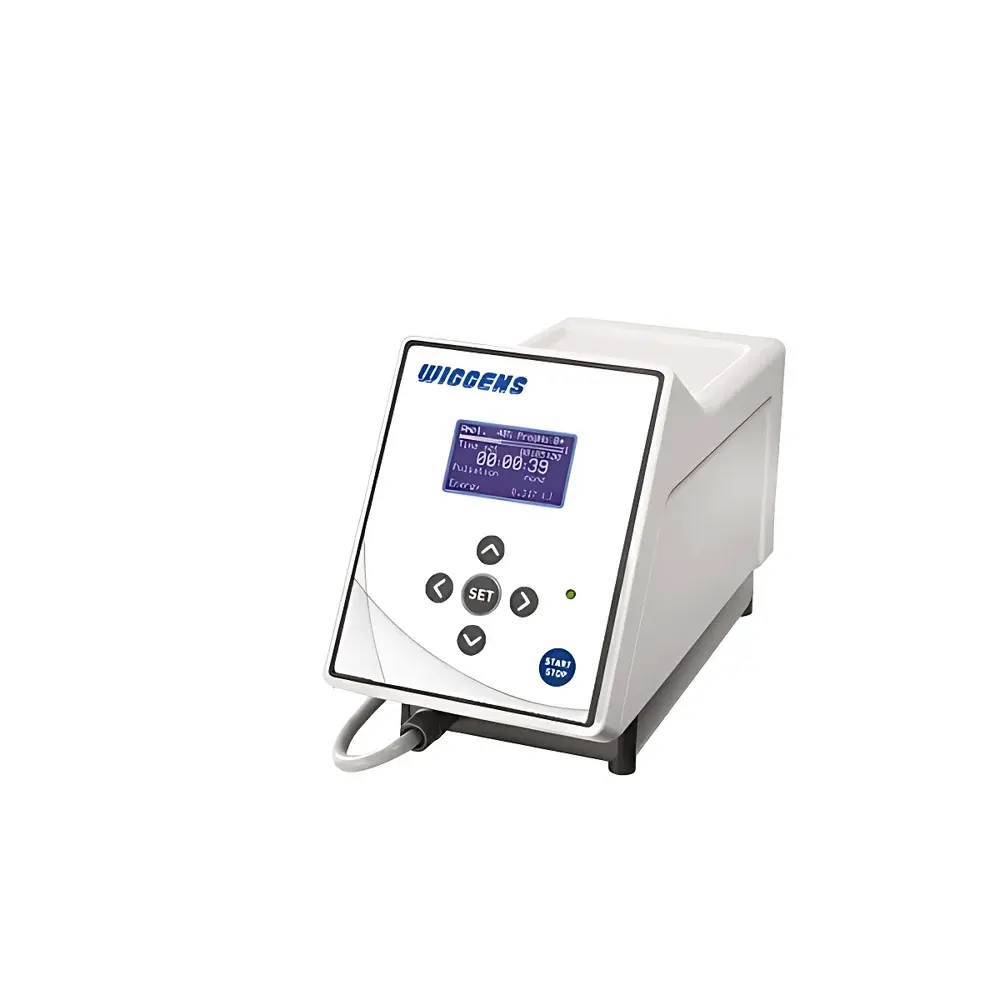
WIGGENS HD4000 Series Premium Ultrasonic Homogenizer
| Brand | WIGGENS |
|---|---|
| Origin | Germany |
| Model | HD4050 / HD4100 / HD4200 / HD4400 |
| Instrument Type | Ultrasonic Cell Disruptor |
| Power Output (Transducer) | 50 W / 100 W / 200 W / 400 W |
| Frequency | 20 kHz ± 0.5 kHz |
| Amplitude Control Range | 10–100% (digitally adjustable) |
| Timer Function | Programmable up to 99 h 59 min (continuous or countdown mode) |
| Cooling Interval Control | Adjustable duty cycle with pause timing for thermal management |
| Probe Diameter Compatibility | 2–38 mm (model-dependent, including conical, flat-end, and microtip geometries) |
| Certifications | CE-compliant per EN 61000-6-2 (EMC) and EN 61000-6-4 (Emission) |
| Operating Ambient Temperature | 5–40 °C |
| Relative Humidity | ≤80% non-condensing |
Overview
The WIGGENS HD4000 Series Premium Ultrasonic Homogenizer is an engineered solution for high-efficiency, reproducible cell disruption and sample homogenization in life science laboratories. Based on piezoelectric ultrasonic transduction at a fixed resonant frequency of 20 kHz, the system converts electrical energy into controlled mechanical oscillations transmitted through interchangeable titanium alloy probes. This cavitation-driven process generates localized shear forces, microstreaming, and transient hotspots (~5,000 K, <1 µs duration), enabling efficient lysis of mammalian cells, bacteria, yeast, spores, and subcellular organelles—without requiring chemical lysis reagents or enzymatic digestion. The HD4000 platform supports both continuous-wave and pulsed ultrasonication modes, making it suitable for heat-sensitive biomolecules (e.g., membrane proteins, nucleic acids, and labile enzymes), where precise thermal management is critical to preserving structural integrity and functional activity.
Key Features
- Stable Amplitude Regulation: Digital amplitude control (10–100%) ensures consistent energy delivery across repeated runs, minimizing inter-run variability and supporting GLP-compliant workflows.
- Thermal Management Architecture: Programmable duty cycles allow user-defined on/off intervals (e.g., 5 s on / 10 s off), facilitating active cooling during prolonged operation and preventing sample overheating—essential for RNA extraction or native protein purification.
- Modular Transducer–Probe Interface: Threaded titanium horn coupling (M6, M10, M14, or M27 depending on model) guarantees mechanical resonance alignment and minimizes energy loss at the interface; all probes are autoclavable and chemically resistant.
- Intelligent Timer System: Dual-mode timing (elapsed time logging or countdown termination) prevents dry-running and enables unattended overnight processing; automatic shutdown activates if no probe load is detected.
- Remote Operation Capability: Optional analog/digital I/O ports support integration into automated liquid handling platforms or centralized lab control systems via TTL or 0–10 V signal protocols.
- CE-Validated Safety Design: Built-in overtemperature, overcurrent, and impedance mismatch protection circuits comply with EN 61010-1 for laboratory equipment safety.
Sample Compatibility & Compliance
The HD4000 series accommodates volumes from 50 µL (microtip probe) to 500 mL (large-diameter horn), covering applications ranging from single-cell lysate preparation to bulk microbial biomass processing. Compatible with aqueous buffers, organic solvents (e.g., chloroform/methanol for lipid extraction), and viscous suspensions (e.g., plant tissue homogenates). All models meet electromagnetic compatibility (EMC) requirements under EN 61000-6-2 and EN 61000-6-4, and are designed for use in ISO 17025-accredited testing labs. While not FDA 21 CFR Part 11–certified out-of-the-box, audit-ready operation logs (time-stamped run records) can be exported via optional RS-232/USB interface for GMP-aligned documentation.
Software & Data Management
The HD4000 operates as a stand-alone instrument without proprietary software dependency. However, its analog/digital control interface supports third-party data acquisition systems (e.g., LabVIEW, MATLAB, or Python-based DAQ frameworks) for protocol scripting, real-time power monitoring, and traceable parameter logging. Time-stamped operational metadata—including amplitude setting, total runtime, number of cycles, and fault codes—is stored in non-volatile memory and retrievable via front-panel display or serial query. For regulated environments, users may implement external electronic lab notebook (ELN) integration to satisfy ALCOA+ data integrity principles.
Applications
- Nucleic acid isolation (genomic DNA, plasmid DNA, total RNA) from Gram-positive/negative bacteria, yeast, and mammalian cell lines
- Preparation of subcellular fractions (mitochondria, nuclei, membrane vesicles) with minimal contamination
- Nanoparticle dispersion and deagglomeration in colloidal drug delivery formulations
- Enhancement of enzymatic digestion kinetics in proteomics sample prep (e.g., FASP, iTRAQ)
- Cell-free expression system activation via ribosome release from lysed E. coli extracts
- Accelerated solvent extraction of phytochemicals and natural products from botanical matrices
FAQ
What is the maximum recommended sample volume for the HD4400 model?
The HD4400 supports up to 500 mL in batch mode using the 38 mm diameter horn; however, optimal lysis efficiency is achieved at 100–300 mL with adequate cooling and probe immersion depth ≥15 mm.
Can the HD4000 series be used for sonication in sealed vessels?
No—direct probe contact with the sample is required. For closed-system applications, consider bath-type ultrasonicators or cup-horn configurations, which are not part of the HD4000 product line.
Is calibration traceable to national standards?
Amplitude output is factory-calibrated against reference vibration analyzers (ISO 5347 compliant); certificate of conformance is provided with each unit. Periodic verification using laser Doppler vibrometry is recommended annually for critical applications.
How often should the ultrasonic probe tip be inspected for erosion?
Titanium probes exhibit gradual tip erosion under high-amplitude, long-duration use. Visual inspection every 50 hours of cumulative operation is advised; replacement is required when tip diameter reduction exceeds 5% of nominal value or surface pitting is observed.
Does the system support variable frequency operation?
No—the HD4000 series operates exclusively at 20 kHz ± 0.5 kHz to maintain mechanical resonance stability and transducer longevity. Frequency sweeping or multi-frequency modes are not supported.




