
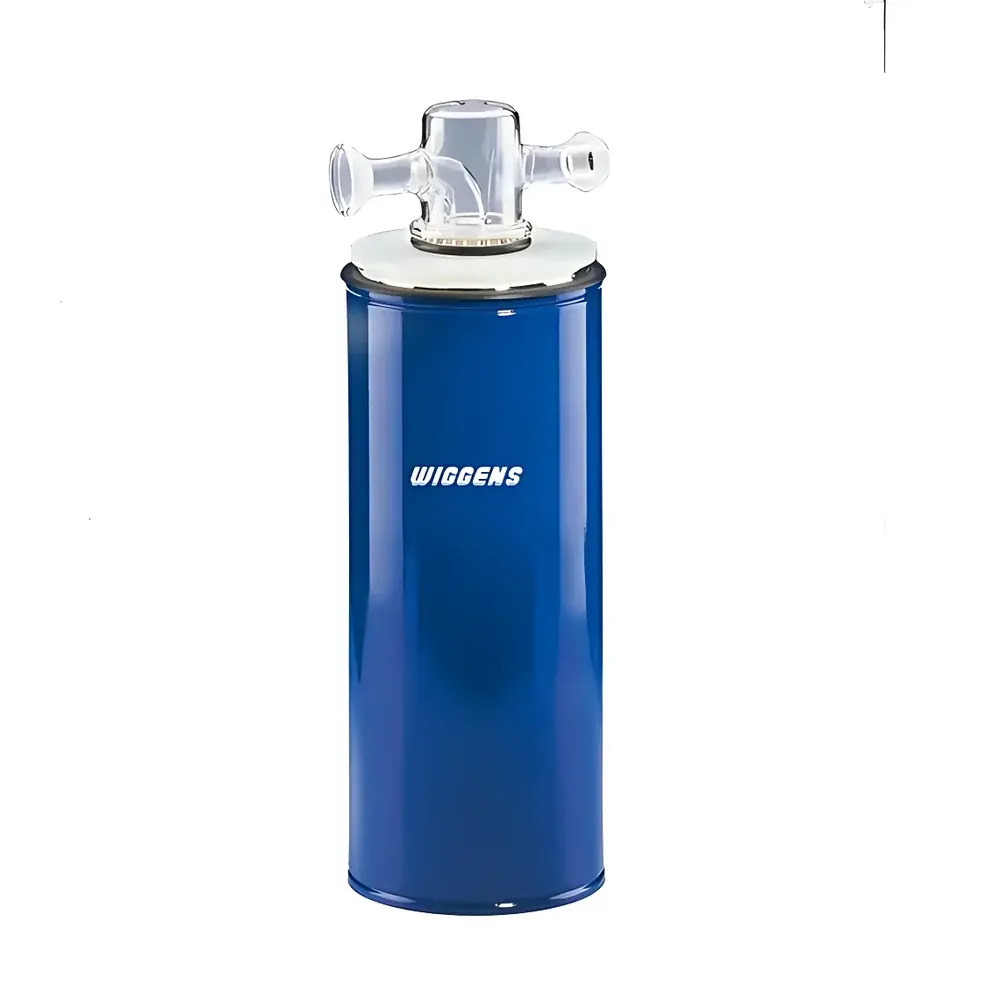
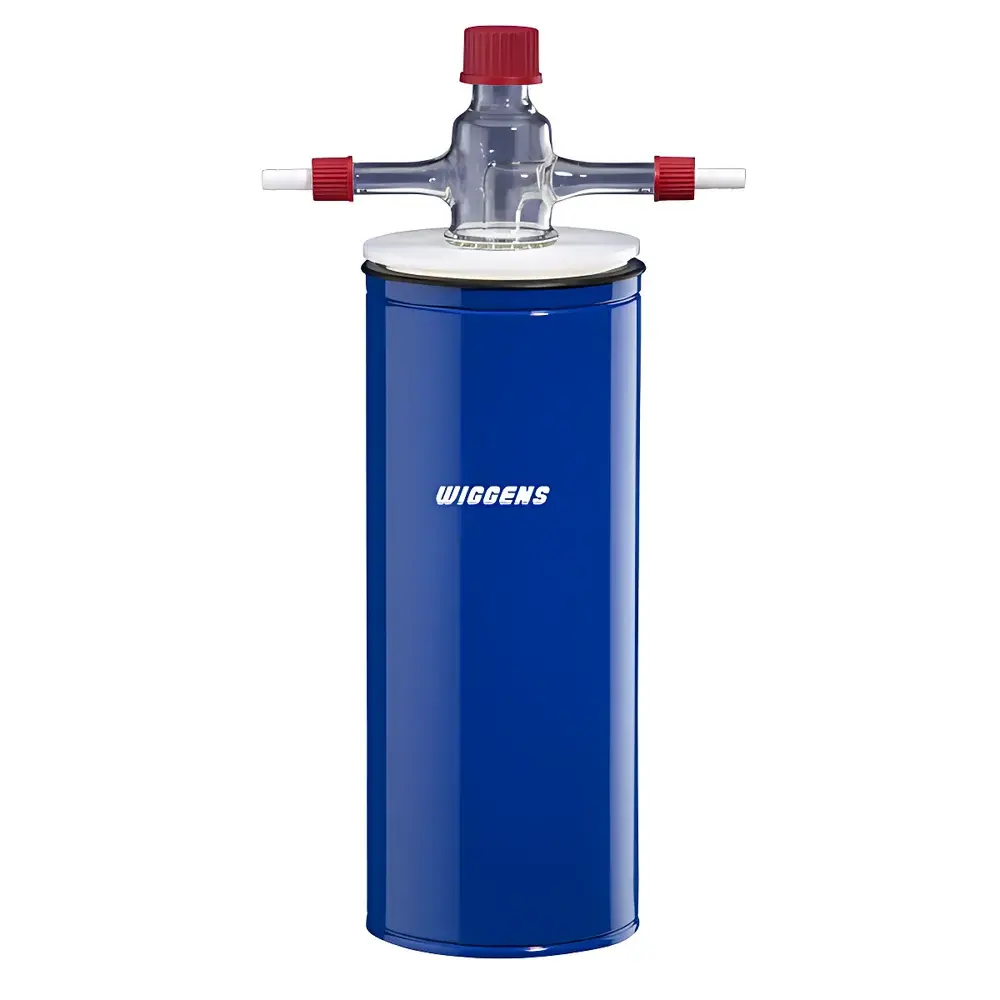
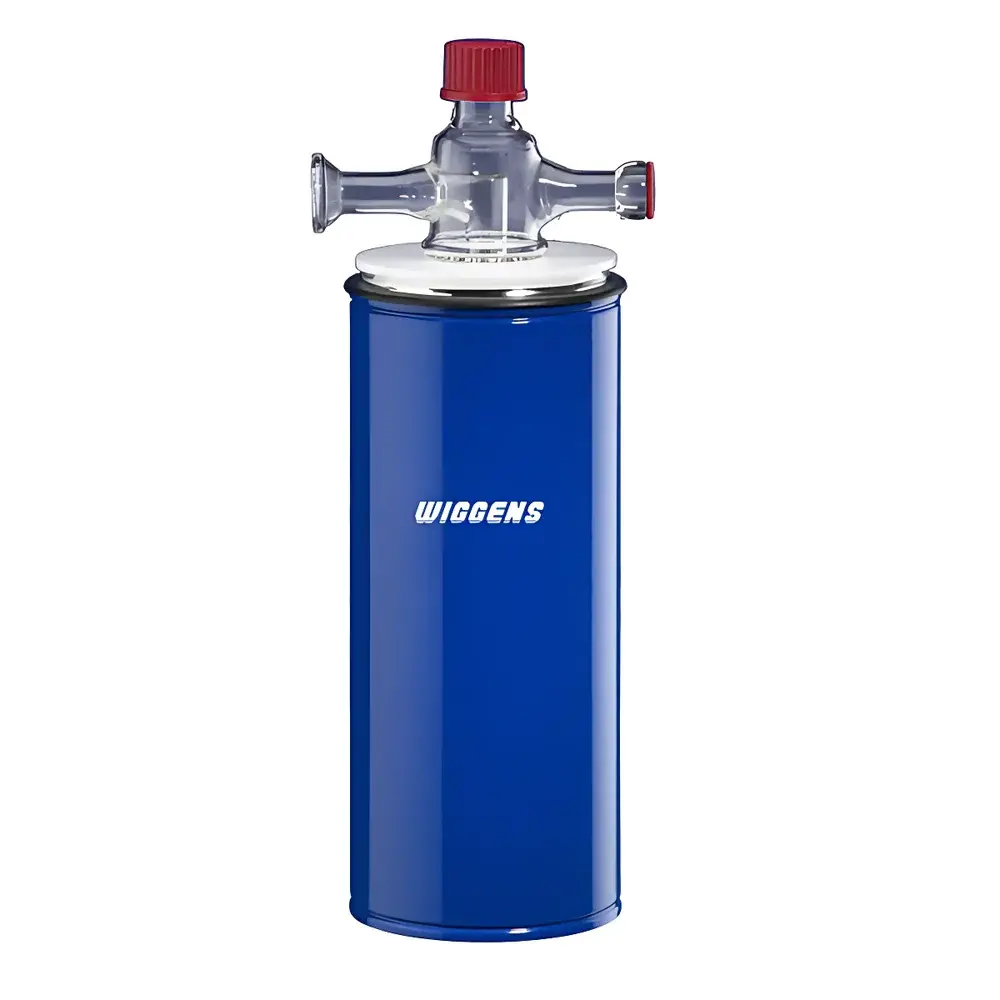
WIGGENS KF29 Cryogenic Cold Trap Kit
| Brand | WIGGENS |
|---|---|
| Origin | Germany |
| Pump Type | Oil-Free Vacuum Trap |
| Connection Standard | KF-NW25 (ISO-KF) |
| Construction Material | Borosilicate Glass 3.3 |
| Cold Trap Volume | 150 mL (Standard) / 250 mL (Extended) |
| Dewar Capacity | 1000 mL (12C) / 2000 mL (18C) |
| Cooling Medium | Liquid Nitrogen or Dry Ice / Solvent Mixtures |
| Sealing | NBR O-Ring (KF-NW25), GL32 Threaded Cap with Corrosion-Resistant Lining |
| Compliance | Designed for ISO/IEC 17025-aligned vacuum systems, compatible with ASTM E2912 (vacuum system integrity) and USP <1058> analytical instrument qualification frameworks |
Overview
The WIGGENS KF29 Cryogenic Cold Trap Kit is a precision-engineered glass vacuum cold trap system designed for efficient condensation and removal of volatile solvents, moisture, and condensable vapors from high-vacuum and medium-vacuum lines. Based on the principle of cryogenic condensation—where vapors are thermally quenched upon contact with sub-ambient surfaces—the KF29 series utilizes borosilicate glass 3.3 (Duran®-grade) construction to ensure chemical inertness, thermal shock resistance, and optical clarity for real-time process monitoring. The trap operates by inserting the cold finger into a Dewar vessel filled with cryogenic coolant (e.g., liquid nitrogen at −196 °C or dry ice/acetone slurry at −78 °C), creating a temperature gradient that drives vapor-phase species to condense on the inner cold surface. Its KF-NW25 (ISO-KF) flange interface enables direct, leak-tight integration with oil-free diaphragm or scroll vacuum pumps—eliminating the need for intermediate adapters or support stands.
Key Features
- Modular KF-NW25 flange mounting: Enables tool-free, repeatable installation directly onto vacuum pump inlets without compromising UHV compatibility or seal integrity.
- Borosilicate glass 3.3 cold finger: Chemically resistant to aggressive solvents (e.g., chlorinated hydrocarbons, strong acids/bases), with coefficient of thermal expansion matched to standard KF hardware to prevent stress cracking during rapid cooldown.
- Dual-volume configuration: Standard (150 mL) and extended-length (250 mL) cold traps—both with identical KF-NW25 interface—offer scalability for varying condensate loads and residence time requirements.
- Integrated GL32 top port with corrosion-resistant threaded cap: Allows safe, controlled drainage of condensed liquids without system venting; facilitates cleaning and residue inspection between runs.
- Self-supporting Dewar suspension: Precision-machined plastic thermal isolation ring centers the cold finger concentrically within the Dewar (12C or 18C models), ensuring uniform coolant distribution and eliminating mechanical stress on glass joints.
- Optical observation window: Transparent glass body permits visual verification of condensate accumulation, frost formation, and potential blockage—critical for GLP-compliant process documentation.
Sample Compatibility & Compliance
The KF29 cold trap is validated for use with common laboratory volatiles including acetone, dichloromethane, ethyl acetate, toluene, methanol, and water vapor. It is not intended for trapping reactive gases (e.g., Cl₂, NH₃, H₂S) without prior compatibility assessment. All glass components conform to DIN ISO 3585 specifications for borosilicate glass 3.3. The KF-NW25 flange assembly complies with ISO 286-2 (tolerance class h7) and ISO 1609 (KF sealing geometry). When deployed in regulated environments (e.g., pharmaceutical QC labs), the system supports audit-ready operation under FDA 21 CFR Part 11–aligned workflows when paired with electronic logbooks and calibrated temperature monitoring (e.g., Pt100 probe in Dewar neck). No lubricants or elastomers contact the vapor path—ensuring compliance with USP extractables testing protocols.
Software & Data Management
As a passive, non-electronic component, the KF29 cold trap does not incorporate embedded firmware or data interfaces. However, it is fully interoperable with third-party vacuum system controllers (e.g., Pfeiffer HiCube, Edwards nXDS) via analog pressure feedback loops and digital I/O triggers. Users may integrate trap status—such as estimated condensate volume (via visual scale markings) or Dewar fill level (using optional ultrasonic level sensors)—into LabArchives ELN or DeltaV DCS platforms using Modbus RTU or OPC UA gateways. For GxP applications, traceability is maintained through batch-specific calibration records (Dewar volume verification per ISO 4787), flange torque logs (per ISO 15848-1), and cold finger visual inspection checklists aligned with ISO/IEC 17025 clause 6.4.2.
Applications
- Solvent recovery in rotary evaporation systems operating below 10 mbar.
- Protection of oil-free vacuum pumps (e.g., WIGGENS VACUUBRAND RC 6, KNF NRP series) from solvent backstreaming during lyophilization or vacuum drying.
- Moisture scavenging in glovebox purification lines prior to inert-atmosphere synthesis.
- Cryofocusing in preparative gas chromatography sample introduction circuits.
- Vapor-phase HCl or SO₂ scrubbing in environmental emission testing setups (when used with chilled ethanol traps).
- Condensate isolation in vacuum distillation of heat-sensitive natural product extracts.
FAQ
What cooling media are compatible with the KF29 cold trap?
Liquid nitrogen (−196 °C), dry ice/acetone (−78 °C), or dry ice/isopropanol (−72 °C) are recommended. Avoid liquid oxygen or halogenated coolants due to explosion and corrosion risks.
Can the KF29 be used with mechanical vacuum pumps containing oil?
Yes—but only if upstream oil mist filters are installed. Direct connection to oil-sealed pumps is discouraged due to risk of oil backstreaming into the cold finger, causing irreversible fouling.
Is the GL32 drain port suitable for vacuum-rated liquid transfer?
No. The GL32 port is designed for atmospheric-pressure drainage after system venting. It is not rated for vacuum service or pressurized discharge.
How often should the O-rings be replaced?
NBR O-rings (supplied with KF-NW25 variants) should be inspected before each use and replaced every 6 months or after 50 thermal cycles, per ISO 15848-2 recommendations for elastomer aging in cryogenic service.
Does the kit include vacuum gauge ports or pressure relief valves?
No. These must be added externally via KF-NW25 tee fittings or cross adapters. WIGGENS recommends installing a capacitance manometer upstream of the trap for accurate process pressure monitoring.



