
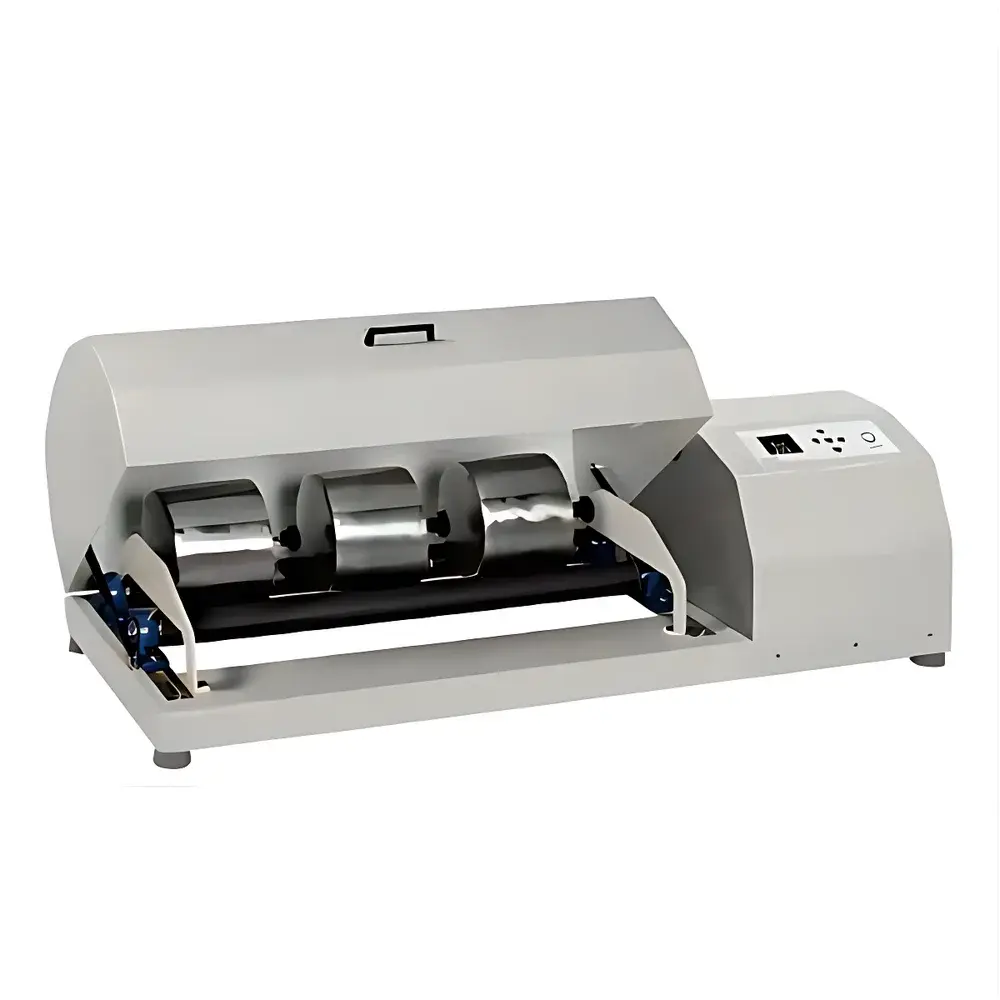
WIGGENS ML007 Planetary Ball Mill
| Brand | WIGGENS |
|---|---|
| Origin | Germany |
| Model | ML007 |
| Instrument Type | Planetary Ball Mill |
| Sample Suitability | Hard and brittle materials |
| Feed Size | <15 mm |
| Final Particle Size | 0.01–0.5 mm (with optional down to <40 µm) |
| Batch Capacity | 15 L |
| Speed Range | 50–300 rpm (closed-loop feedback controlled) |
| Timer | 1 min–99 hr or continuous operation |
| Drum Options | Stainless steel or alumina jars (1 L, 3 L, 5 L, 11 L, 15 L) |
| Safety | Interlocked lid with automatic shutdown |
| Compliance | EN 61010-1, EN 61326, EU Directives 2004/108/EC, 2006/42/EC, 2006/95/EC |
| Dimensions (W×D×H) | 125 × 49 × 34 cm |
| Weight | 72 kg |
| Power Input | 150 W |
Overview
The WIGGENS ML007 Planetary Ball Mill is an engineered laboratory-scale grinding system designed for high-energy, reproducible size reduction of hard, brittle, and moderately tough solid materials. It operates on the principle of planetary motion—where grinding jars rotate around a central axis while simultaneously rotating on their own axes—generating intense impact, shear, and friction forces between grinding media (e.g., stainless steel or alumina balls) and sample particles. This dual-axis motion ensures uniform energy distribution across the entire sample volume, enabling consistent particle size reduction from feed sizes up to 15 mm down to a final particle size range of 0.01–0.5 mm. With optional optimized milling parameters and media selection, sub-40 µm output can be achieved for applications requiring fine or ultrafine powders in materials science, pharmaceutical development, ceramics processing, mineral analysis, and food ingredient standardization.
Key Features
- Digitally controlled rotational speed (50–300 rpm) with real-time feedback regulation to maintain setpoint stability regardless of load variation
- Programmable digital timer (1 minute to 99 hours) plus continuous operation mode
- Interlocked safety lid mechanism: automatic motor shutdown upon lid opening during operation
- Robust planetary drive architecture with precision-machined gear train and low-vibration mounting
- Multiple jar configurations available—including stainless steel and alumina options—in volumes of 1 L, 3 L, 5 L, 11 L, and 15 L—to accommodate diverse batch requirements
- High-strength grinding media offered in standardized diameters (9 mm, 15 mm, 20 mm, 30 mm) and material grades (austenitic stainless steel 1.4571, technical alumina)
- Compact footprint (125 × 49 × 34 cm) and low power consumption (150 W), suitable for standard laboratory benchtop deployment
Sample Compatibility & Compliance
The ML007 is validated for processing dry, non-hygroscopic, and thermally stable samples including oxides, carbides, alloys, minerals, pharmaceutical actives, ceramic precursors, and food-grade raw materials. Its design excludes volatile, reactive, or heat-sensitive substances unless operated under inert atmosphere (requires optional sealed-jar adaptation). All mechanical and electrical components comply with EN 61010-1 (safety requirements for laboratory equipment) and EN 61326 (EMC standards for measurement and control devices). The unit meets essential requirements of EU Machinery Directive 2006/42/EC, Electromagnetic Compatibility Directive 2004/108/EC, and Low Voltage Directive 2006/95/EC—ensuring conformity for CE-marked deployment across EEA laboratories.
Software & Data Management
While the ML007 operates via embedded microcontroller-based digital interface (no external PC required), its operational parameters—including speed, duration, and start/stop timestamps—are logged internally with non-volatile memory retention. For GLP/GMP-aligned environments, users may integrate the device into broader lab data management workflows using optional RS-232 or analog signal outputs (available upon request). Audit trail functionality supports traceability of critical process parameters per ISO/IEC 17025 and FDA 21 CFR Part 11 guidelines when paired with compliant third-party logging software and access-controlled user authentication protocols.
Applications
- Preparation of homogeneous powder blends for XRD, SEM-EDS, and BET surface area analysis
- Mechanochemical synthesis of metal–organic frameworks (MOFs) and doped ceramic precursors
- Particle size standardization of reference materials in QC labs (e.g., USP , ASTM C136)
- Homogenization of composite feedstocks prior to hot isostatic pressing (HIP) or spark plasma sintering (SPS)
- Routine comminution of geological core samples for geochemical assay preparation
- Reduction of API excipient mixtures to improve dissolution kinetics in early-phase formulation studies
FAQ
What jar materials are compatible with the ML007?
Stainless steel (1.4571) and technical-grade alumina jars are factory-certified. Custom liners (e.g., tungsten carbide, agate) may be evaluated on a case-by-case basis subject to mechanical compatibility testing.
Can the ML007 be used for cryogenic milling?
No—the standard configuration is not rated for liquid nitrogen cooling or sub-zero ambient operation. Cryo-adapted versions require modified sealing, thermal insulation, and motor protection; contact technical support for feasibility assessment.
Is the ML007 suitable for wet grinding?
It supports limited wet grinding with non-corrosive solvents (e.g., ethanol, isopropanol) using sealed stainless steel jars; however, extended exposure to aqueous or acidic media is not recommended without custom corrosion-resistant upgrades.
How is reproducibility ensured across batches?
Consistent energy input is maintained through closed-loop speed control, calibrated jar loading protocols (recommended fill ratio: 1:3–1:5 ball-to-sample mass), and documented media wear compensation schedules.
Does the ML007 meet regulatory requirements for pharmaceutical manufacturing?
Yes—as a Class I laboratory instrument, it satisfies baseline safety and EMC criteria for use in R&D and pilot-scale development. Full qualification for GMP production requires IQ/OQ/PQ documentation, which WIGGENS provides upon request with site-specific validation support.



