
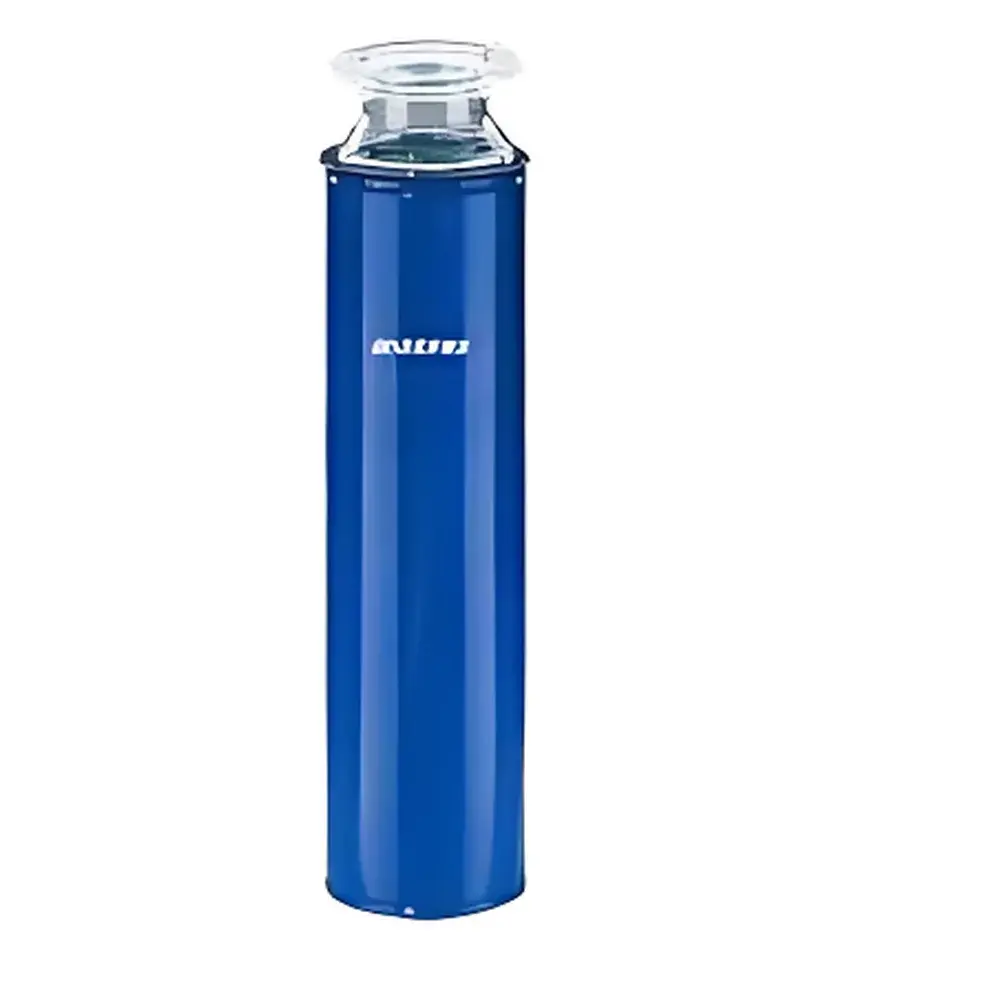
WIGGENS NF7C Schott-Flanged Cryogenic Dewar Flask
| Brand | WIGGENS |
|---|---|
| Origin | Germany |
| Model | NF7C |
| Capacity | 1200 mL |
| Material | DIN 3.3 borosilicate glass (Schott Duran®) |
| Flange Type | Schott standard flange (NF series) |
| Max Operating Pressure | ≤ 0.1 bar (gauge) |
| Weight | 1.0 kg |
| Inner Vessel Part No. | NW6011411 |
Overview
The WIGGENS NF7C Schott-Flanged Cryogenic Dewar Flask is a precision-engineered, vacuum-insulated storage vessel designed for safe, stable, and low-evaporation handling of cryogenic liquids—including liquid nitrogen (LN₂), liquid argon, and solid carbon dioxide—in laboratory environments. Constructed from high-purity DIN 3.3 borosilicate glass (equivalent to Schott Duran®), the flask exhibits exceptional thermal shock resistance (ΔT ≥ 150 °C), chemical inertness toward common solvents and cryogens, and optical clarity for visual monitoring. Its Schott-standard flange interface (NF-series) ensures compatibility with ISO-KF, CF, and other vacuum-rated accessories—enabling integration into closed-loop cryogenic systems, cold traps, or custom condensation setups. Unlike pressurized dewars, the NF7C operates exclusively at near-atmospheric pressure (≤ 0.1 bar gauge), eliminating risks associated with over-pressurization while maintaining effective thermal isolation via double-walled, silver-mirrored vacuum insulation. This design conforms to fundamental safety principles outlined in EN 13489-1 (cryogenic vessels) and supports GLP-compliant sample storage workflows where traceability and physical integrity are critical.
Key Features
- Vacuum-insulated double-wall construction with silver-coated inner surface for minimized radiative heat transfer
- Schott-standard NF flange (ISO-KF 40 compatible) for leak-tight, repeatable mating with valves, gauges, and vacuum manifolds
- DIN 3.3 borosilicate glass body—certified to withstand repeated thermal cycling between −196 °C and +100 °C without microcracking
- Pressure-limited operation (≤ 0.1 bar gauge) enforced by vented flange cap design—prevents hazardous over-pressurization during phase change
- Optional quartz observation window available upon request (custom order; requires specification of spectral transmission range and sealing protocol)
- Lightweight yet robust architecture: 1.0 kg net weight with 1200 mL usable volume—optimized for benchtop stability and ergonomic handling
Sample Compatibility & Compliance
The NF7C is validated for long-term static storage of liquid nitrogen, dry ice slurry, and other non-corrosive cryogens below −100 °C. It is not rated for use with liquefied gases exhibiting high vapor pressure (e.g., liquid oxygen, chlorine) or reactive species (e.g., alkali metals in liquid ammonia). The borosilicate glass composition complies with USP and Ph. Eur. 3.2.1 for pharmaceutical-grade glass containers. When used in regulated environments (e.g., biobanking, clinical research), the flask supports audit-ready documentation through traceable part numbering (NW6011411 inner vessel; 11411 NF7C assembly) and adherence to ISO/IEC 17025 calibration chain requirements for ancillary pressure and temperature sensors. Flange caps must be mechanically vented per manufacturer instruction—non-vented closures violate EN 13489-1 Annex C and invalidate CE conformity.
Software & Data Management
As a passive storage device, the NF7C does not incorporate embedded electronics or firmware. However, its standardized flange interface enables seamless integration with third-party monitoring systems: pressure transducers (e.g., MKS Baratron®), Pt100 cryo-temperature probes, and automated level sensors (capacitance or ultrasonic) can be mounted directly onto the flange port. All sensor outputs may be logged via compliant data acquisition platforms supporting FDA 21 CFR Part 11 audit trails (e.g., LabVIEW™ with NI DIAdem, or DeltaV™ DCS). WIGGENS provides mechanical drawings (STEP/IGES) and flange torque specifications (5.5 N·m ±0.3 N·m for M6 stainless fasteners) to facilitate qualification protocols under GMP Annex 11.
Applications
- Cryopreservation of cell lines, tissue sections, and microbial cultures in LN₂ vapor-phase storage racks
- Condensation trapping in rotary evaporation or vacuum distillation systems operating below −80 °C
- Calibration reference for low-temperature thermocouple or RTD validation (−196 °C fixed point)
- Controlled slow-cooling of protein crystals or electron microscopy grids using graded LN₂ immersion
- Transport and temporary holding of cryogenic reagents in analytical chemistry workflows (e.g., LC-MS cryo-trapping)
- Education and demonstration of phase-change thermodynamics and vacuum insulation principles
FAQ
Is the flange cap included with the NF7C?
No. The flange cap is a separately ordered accessory (part number NW6011411). Per safety directive, all caps must incorporate a calibrated vent orifice—non-vented caps are prohibited.
Can the NF7C be used under vacuum or positive pressure?
It is rated only for atmospheric or slight overpressure (≤ 0.1 bar gauge). Application under full vacuum or elevated pressure voids warranty and violates EN 13489-1 structural classification.
What is the maximum thermal cycling frequency recommended?
Up to 5 complete cycles per day between ambient and −196 °C is permissible when following the manufacturer’s ramp rate guidance (≤ 5 °C/min cooling, ≤ 10 °C/min warming).
Does WIGGENS provide certification of material compliance?
Yes—DIN 3.3 borosilicate glass certificates of conformance (CoC), including hydrolytic class HGB 1 per ISO 719, are supplied with each shipment upon request.
Are custom flange configurations available?
Standard NF-series flanges comply with Schott’s KF40 geometry. Custom CF or ISO-F flanges require engineering review and minimum order quantity (MOQ = 5 units).



