
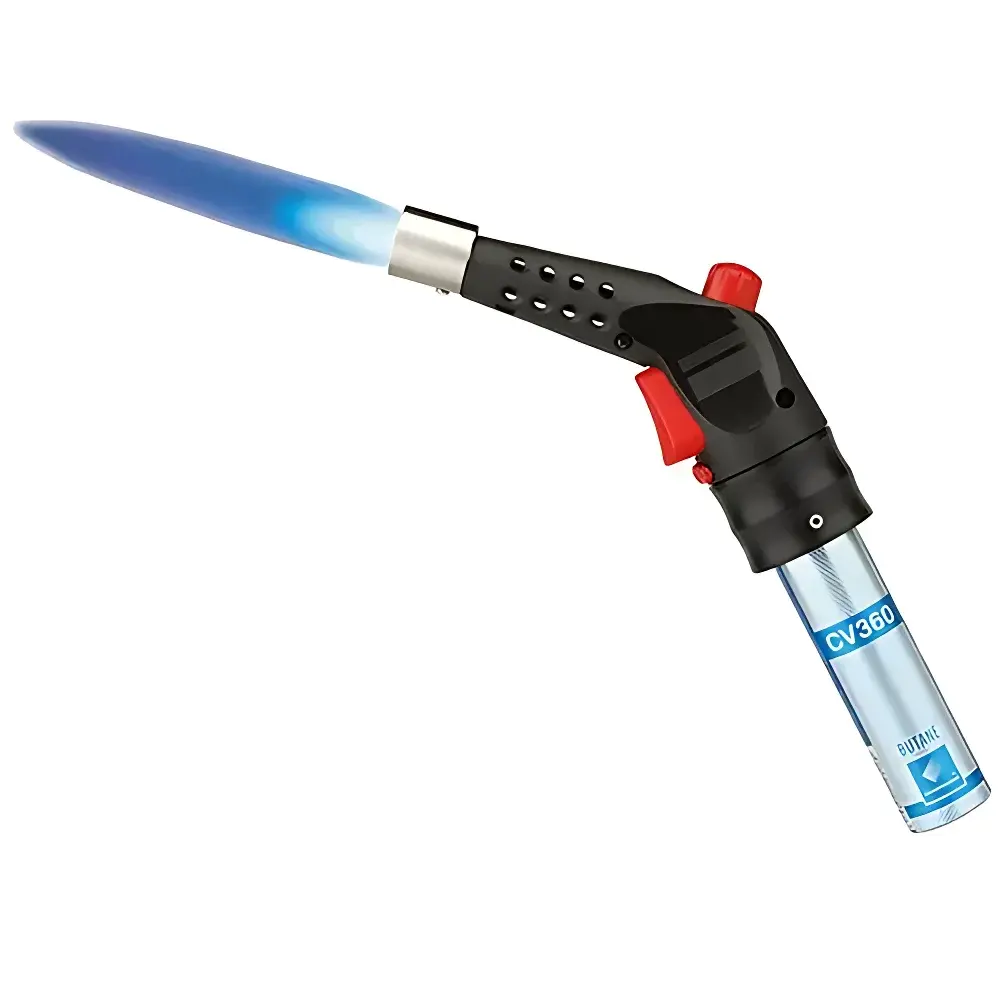
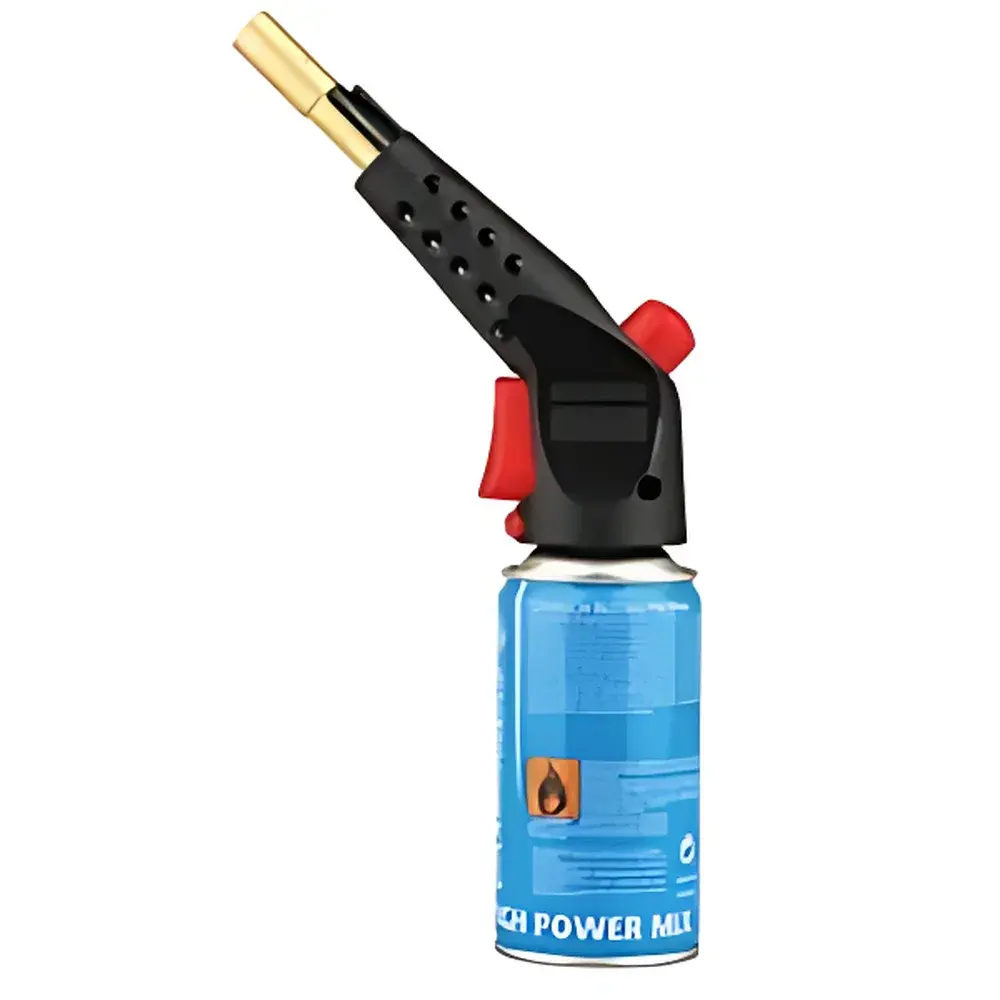
WIGGENS Powerjet2 Portable Bunsen Burner
| Brand | WIGGENS |
|---|---|
| Origin | Germany |
| Model | Powerjet2 |
| Maximum Flame Temperature | 1350 °C (LPG), 1300 °C (Natural Gas) |
| Fuel Consumption | 0.13 kg/h (LPG), 0.12 kg/h (Natural Gas) |
| Compatible Fuels | Butane, Propane, Natural Gas |
| Power Output | 1.7 kW (LPG), 1.0 kW (Natural Gas) |
| Dimensions (W × H) | 150 × 210 mm |
| Weight | 500 g |
| Ignition | Integrated Piezoelectric Igniter |
| Flame Control | Precision Knob with Locking Mechanism |
| Standard Accessories | Stainless Steel Stand, CV360 Campingaz Adapter, Dual Nozzles (Nozzle 06 for Butane/Propane, Nozzle 08 for Natural Gas), 14/17 mm Nozzle Wrench |
Overview
The WIGGENS Powerjet2 Portable Bunsen Burner is a precision-engineered, laboratory-grade flame source designed for reliable, repeatable thermal sterilization and localized heating in microbiological, molecular biology, and general laboratory workflows. Unlike conventional bench-mounted burners, the Powerjet2 employs a controlled laminar flow combustion principle—optimized air–fuel mixing within a calibrated Venturi tube—to generate a stable, non-luminous blue flame with minimal soot formation and high thermal efficiency. Its maximum flame temperature of 1350 °C (when operated with liquefied petroleum gas, LPG) ensures rapid and complete incineration of microbial contaminants on inoculation loops, spreaders, forceps, and glassware necks. The burner operates on multiple fuel types—including butane, propane, and natural gas—enabling flexibility across institutional gas infrastructure and field-deployable settings. All critical components—including the piezoelectric ignition module, brass fuel valve assembly, and stainless steel support stand—are manufactured to DIN-certified tolerances in Germany, ensuring long-term dimensional stability and resistance to thermal fatigue.
Key Features
- Piezoelectric ignition system: One-button activation delivers immediate, spark-free ignition without external power or batteries—reducing failure points and enhancing operational safety.
- Flame stabilization & control: Precision-machined airflow regulator and dual-fuel nozzle set (Nozzle 06 for butane/propane; Nozzle 08 for natural gas) ensure consistent stoichiometric combustion across fuel types.
- Knob-locking mechanism: Enables hands-free, continuous operation during extended sterilization protocols—critical for high-throughput labs adhering to GLP-compliant documentation standards.
- Modular accessory suite: Includes CV360 Campingaz cylinder adapter, stainless steel support stand, and calibrated wrench set (14/17 mm) for rapid field reconfiguration.
- Thermally robust construction: Anodized aluminum housing and corrosion-resistant brass internals withstand repeated thermal cycling and routine ethanol wipe-downs.
- Compact ergonomic design: 150 × 210 mm footprint and 500 g mass facilitate secure placement on biosafety cabinets, laminar flow hoods, or mobile lab carts without compromising workspace integrity.
Sample Compatibility & Compliance
The Powerjet2 is validated for use with standard microbiological tools—including platinum/iridium inoculation loops (0.5–2.0 mm diameter), stainless steel spreaders, and borosilicate glass Pasteur pipettes—without inducing thermal shock or surface oxidation under normal operating conditions. It complies with ISO 15190:2020 (Laboratory safety—Requirements for laboratory equipment) and meets essential requirements outlined in the EU Machinery Directive 2006/42/EC. When used with certified LPG cylinders (e.g., EN 417-compliant Campingaz CV360), the device satisfies pressure regulation and leak-tightness criteria per EN 1949. While not classified as medical device hardware, its flame consistency and reproducibility support adherence to USP Sterility Assurance and CLSI M22-A3 guidelines for aseptic technique validation.
Software & Data Management
As a purely mechanical, non-electronic combustion device, the Powerjet2 does not incorporate embedded firmware, connectivity interfaces, or data logging capabilities. This analog architecture eliminates cybersecurity vulnerabilities, avoids regulatory burdens associated with FDA 21 CFR Part 11 electronic records, and ensures uninterrupted functionality in electromagnetically noisy environments (e.g., near centrifuges or PCR cyclers). Operational parameters—including fuel type selection, flame height adjustment, and ignition status—are manually verified and recorded in laboratory notebooks or electronic lab notebooks (ELNs) as part of standard SOP documentation. Optional integration with digital workflow platforms (e.g., LabArchives, Benchling) is achieved via user-entered metadata fields referencing batch-specific fuel source, calibration date, and maintenance logs.
Applications
- Routine sterilization of inoculation loops and transfer instruments in clinical microbiology and academic teaching labs.
- Flame-polishing of glass capillaries and microelectrodes in neuroscience and electrophysiology preparations.
- Localized annealing of metal tools prior to sterile tissue dissection in animal facility surgical suites.
- Field-deployable heat source for emergency sterilization in mobile diagnostic units or low-resource settings equipped with portable butane canisters.
- Validation of aseptic technique competency during staff training and internal QA audits.
- Supporting ASTM E2872-22 (Standard Guide for Microbiological Sterilization Validation Using Heat) through documented flame temperature consistency and exposure time repeatability.
FAQ
What fuel types are compatible with the Powerjet2, and how do I switch between them?
The Powerjet2 supports butane, propane, and natural gas. Switching requires physically replacing the nozzle: use Nozzle 06 (included) for butane/propane and Nozzle 08 (included) for natural gas. Always verify cylinder regulator compatibility and perform a soap-bubble leak test before ignition.
Is the Powerjet2 suitable for use inside a biosafety cabinet?
Yes—its compact size, low radiant heat profile, and absence of electrical components make it safe for Class II A2 and B2 cabinets when positioned at least 15 cm from the sash and away from airflow sensors.
Does the device require calibration or periodic certification?
No formal calibration is required; however, laboratories following ISO/IEC 17025 should document nozzle installation, fuel source verification, and functional checks (ignition reliability, flame stability, shut-off response) in their equipment log.
Can the Powerjet2 be used with disposable butane cartridges?
It is compatible only with refillable, threaded LPG cylinders meeting EN 417 specifications (e.g., Campingaz CV360). Disposable cartridges lack standardized thread geometry and pressure regulation, posing safety and performance risks.
What maintenance is recommended for long-term reliability?
Clean the nozzle orifice monthly with compressed air or a 0.3 mm cleaning wire. Inspect O-rings for cracking annually and replace using WIGGENS OEM parts (P/N W-OR-02). Store upright in dry ambient conditions to prevent moisture ingress into the piezoelectric element.



