
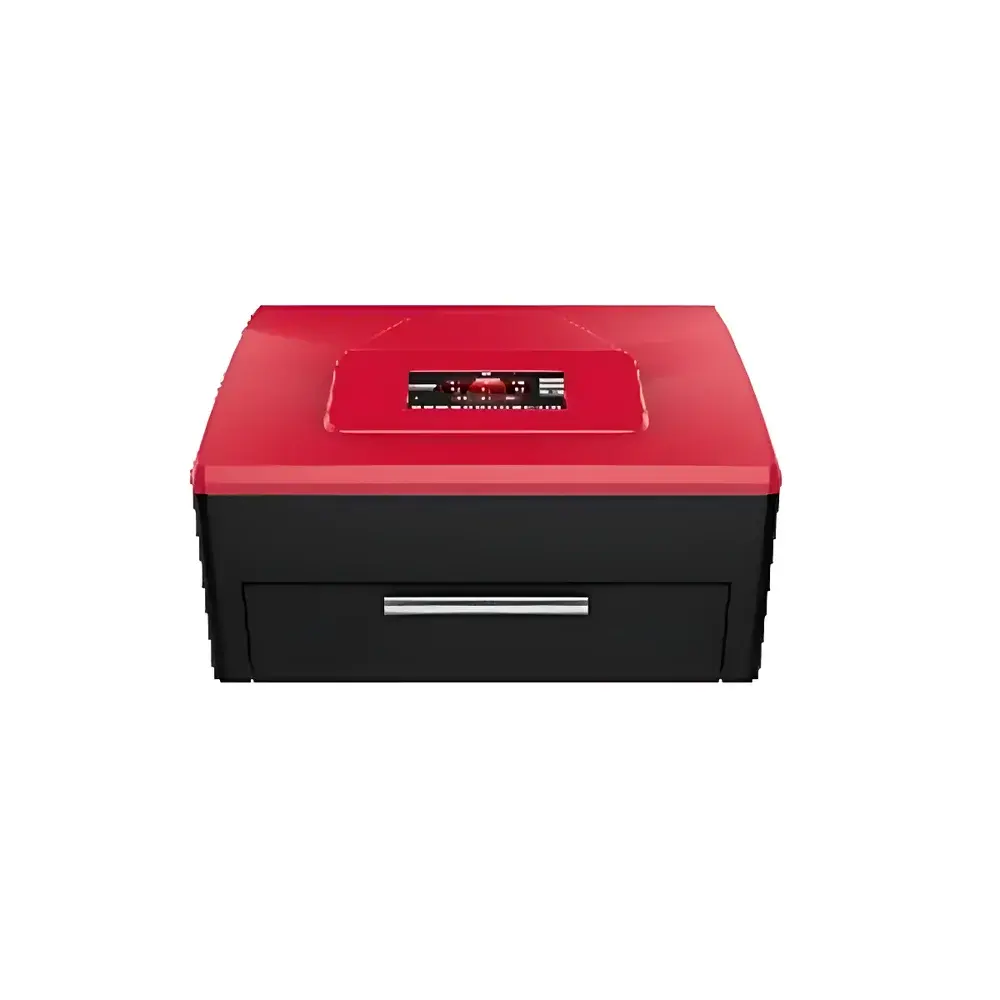
WIX-autoPP Automated Western Blot Processing System
| Brand | WIX |
|---|---|
| Origin | Shanghai, China |
| Model | WIX-autoPP Automated Western Blot Processing System |
| Throughput | Up to 24 membranes per run |
| Incubation Modules | 12 independently controlled modules |
| Temperature Control Range | 4–40 °C |
| Antibody Recovery Rate | ≥95% (up to 10 reuses) |
| Module Dimensions (optional) | 3×8 cm, 6×8 cm, or 9×8 cm |
| Membrane Wetting Maintenance | On-board wash buffer retention post-incubation |
| Fluidic Cross-Contamination Prevention | Automated in-line tubing rinse cycles |
| Compatibility | Open-platform design supports third-party primary/secondary antibodies and wash buffers |
Overview
The WIX-autoPP Automated Western Blot Processing System is an engineered solution for high-fidelity, reproducible immunodetection workflows in protein analysis. Based on precision fluidic handling and thermally regulated incubation architecture, the system executes sequential steps—including blocking, primary antibody binding, secondary antibody conjugation, and multi-stage washing—without manual intervention. It operates on a microfluidic principle optimized for uniform reagent delivery and membrane surface coverage, minimizing non-specific binding while preserving epitope integrity. Designed for laboratories requiring strict adherence to GLP-compliant documentation practices and consistent inter-assay comparability, the WIX-autoPP eliminates operator-dependent variability inherent in manual blot processing—particularly critical in quantitative western blotting, biomarker validation, and preclinical target engagement studies.
Key Features
- Twelve independently addressable incubation modules enable parallel processing of heterogeneous samples under distinct conditions—e.g., differential antibody concentrations, species-specific secondaries, or temperature-sensitive antigens.
- Programmable thermal control (4–40 °C) ensures optimal binding kinetics for diverse antibody-antigen pairs, including those requiring cold-chain preservation or elevated incubation temperatures.
- Integrated antibody recovery subsystem captures >95% of primary and secondary antibodies during aspiration phases; recovered reagents maintain functional activity for up to ten consecutive uses, reducing consumables cost and lot-to-lot variability.
- On-demand tubing purging with fresh wash buffer between protocols prevents carryover contamination across runs—a critical requirement for multiplexed detection or low-abundance target analysis.
- Post-incubation membrane hydration is maintained by retaining residual wash buffer in the sample tray, preventing membrane drying artifacts that compromise signal linearity and band morphology.
- Modular tray design accommodates three standard membrane formats (3×8 cm, 6×8 cm, 9×8 cm), supporting both mini-gel transfers and full-size SDS-PAGE gels without hardware modification.
Sample Compatibility & Compliance
The WIX-autoPP accepts nitrocellulose and PVDF membranes transferred via wet, semi-dry, or rapid electroblotting methods. Its open reagent architecture permits integration with commercially available blocking agents (e.g., 5% non-fat dry milk, BSA, casein), primary antibodies from major vendors (including rabbit, mouse, goat, and chicken hosts), HRP- or AP-conjugated secondary antibodies, and standard TBST/TBS-based wash formulations. The system supports audit-ready operation through timestamped protocol logs and user-accessible event histories, aligning with FDA 21 CFR Part 11 requirements for electronic records when deployed with validated software configurations. It meets ISO/IEC 17025 criteria for test method validation in accredited QC laboratories performing western blot-based release testing.
Software & Data Management
Control is managed via a dedicated Windows-based application featuring intuitive drag-and-drop protocol builder, real-time status monitoring, and parameter locking for SOP enforcement. All executed methods are saved with metadata (user ID, date/time stamp, module assignments, temperature setpoints, dwell times). Raw log files export in CSV format for LIMS integration or statistical process control (SPC) analysis. Optional API access enables orchestration within broader automated lab ecosystems (e.g., integration with liquid handlers or imaging stations via HTTP/REST endpoints). Audit trails record all changes to active protocols, including version history and operator authentication—supporting GLP/GMP traceability requirements.
Applications
- Quantitative western blotting for pharmacodynamic biomarker assessment in preclinical pharmacology studies.
- High-throughput screening of monoclonal antibody specificity and cross-reactivity profiles.
- Standardized validation of CRISPR/Cas9-mediated knockout efficiency across cell line panels.
- Regulatory submission support for biologics characterization, including host-cell protein (HCP) detection and purity verification.
- Teaching laboratory deployment where procedural consistency and student safety (reduced exposure to hazardous reagents) are prioritized.
FAQ
Does the WIX-autoPP support chemiluminescent, fluorescent, and colorimetric detection methods?
Yes—the system processes membranes prior to detection; it is fully compatible with all common western blot visualization modalities, provided downstream imaging hardware is appropriately configured.
Can I validate cleaning efficacy between runs using this system?
The built-in tubing rinse cycle uses defined volumes and flow rates; users may perform residual protein assays (e.g., BCA on collected rinse fractions) to establish cleaning validation protocols per ICH Q5E guidelines.
Is remote monitoring or unattended overnight operation supported?
The system includes hardware-level watchdog timers and network-enabled status reporting; when connected to institutional IT infrastructure, email/SNMP alerts notify operators of completion or error states.
What maintenance intervals are recommended for fluidic components?
Pump tubing and valve manifolds are rated for ≥5,000 cycles; preventive maintenance is scheduled every 6 months or after 200 runs, whichever occurs first, per the manufacturer’s service manual.
How does the system handle membrane overloading or uneven transfer artifacts?
While the WIX-autoPP does not correct upstream electrophoresis or transfer errors, its uniform fluid distribution minimizes edge effects and improves signal homogeneity across the entire membrane surface—enhancing detection robustness even with suboptimal transfers.
Related Products




