WK-XSin 1000 In Situ Hot-Press Sintering Stage for Electron Microscopy and X-ray CT
| Brand | Wkuang |
|---|---|
| Origin | Jiangsu, China |
| Manufacturer Type | Authorized Distributor |
| Origin Category | Domestic (China) |
| Model Series | XSIN |
| Quotation | Upon Request |
| Application Field | Materials Science |
| Temperature Range | ≤1300 °C |
| Axial Compression Load Capacity | 1 kN |
| Maximum Displacement Stroke | 1–3 mm |
Overview
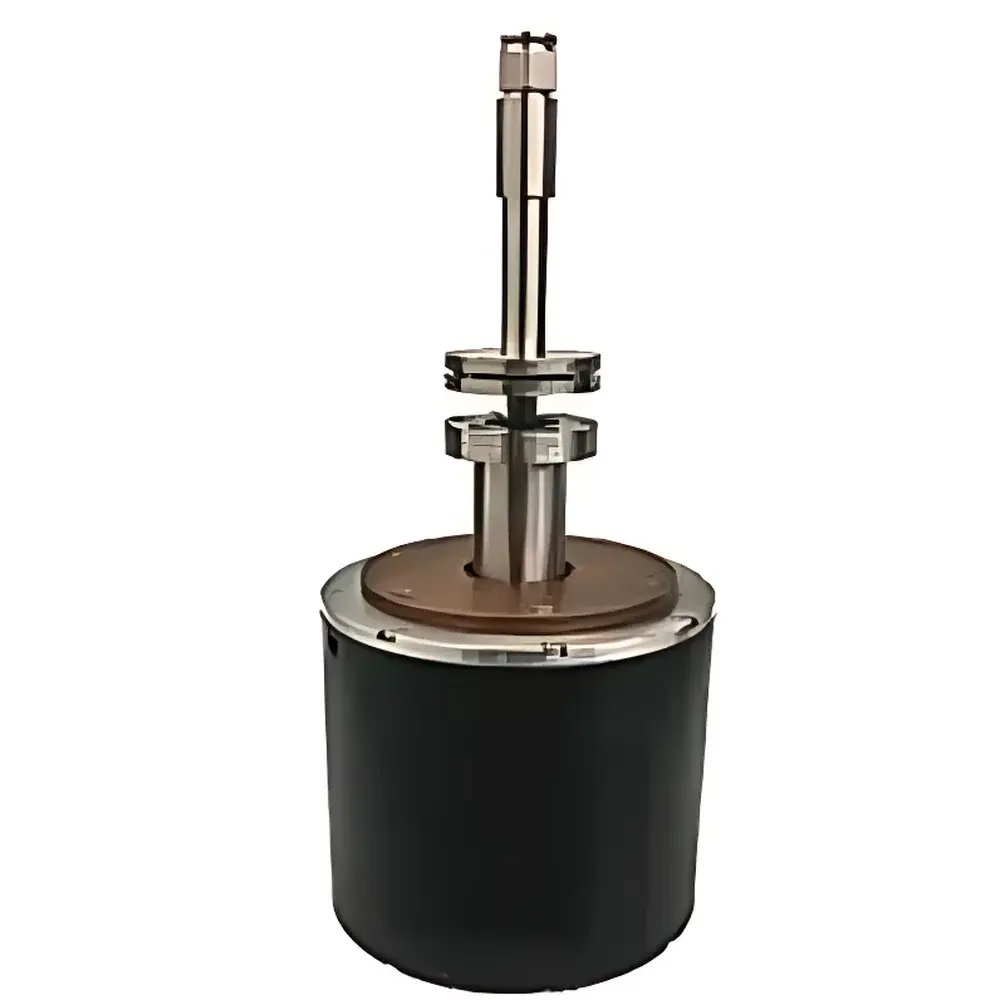
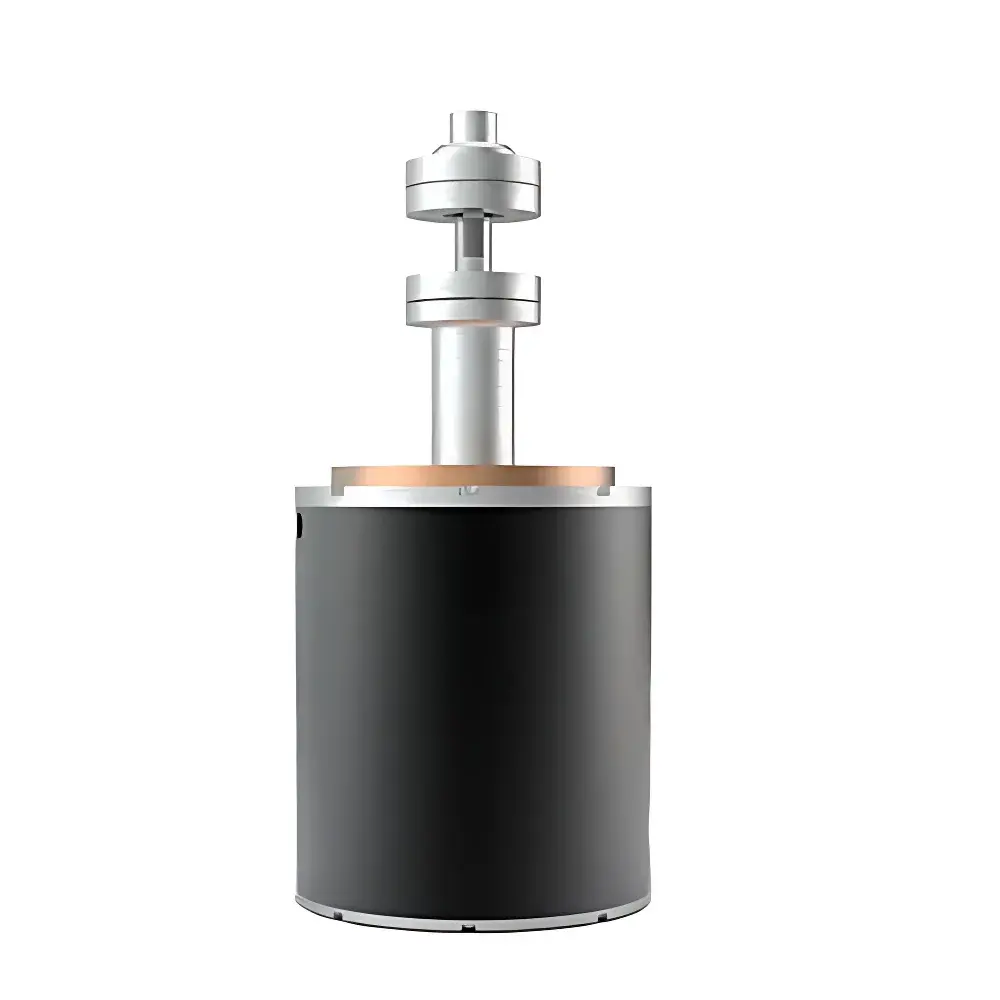
The WK-XSin 1000 is a precision-engineered in situ hot-press sintering stage designed for real-time structural and microstructural observation under controlled thermomechanical loading. Integrated within high-vacuum electron microscopy (SEM/TEM) chambers or synchrotron-based or laboratory X-ray computed tomography (CT) systems, it enables concurrent application of uniaxial compressive force (up to 1 kN) and resistive heating (up to 1300 °C) to powdered or granular specimens. Its operational principle relies on coupled thermal activation and mechanical densification—facilitating atomic diffusion, particle rearrangement, neck growth, and pore elimination—all while preserving spatial resolution during dynamic imaging. Unlike conventional ex situ sintering furnaces, the WK-XSin 1000 supports time-resolved, three-dimensional characterization of solid-state bonding evolution, grain boundary migration, and porosity collapse at sub-micron scale, making it indispensable for fundamental research in powder metallurgy, ceramic processing, and additive manufacturing feedstock development.
Key Features
- High-temperature capability up to 1300 °C with rapid thermal ramping (≤20 °C/s typical) and fine temperature stability (±2 °C over 1 h at 1000 °C), achieved via low-thermal-mass tungsten–rhenium alloy heating elements and integrated thermocouple feedback control.
- Programmable axial compression system delivering precise load control from 0.1 N to 1000 N with closed-loop strain feedback; displacement resolution of 100 nm over 1–3 mm stroke range.
- Compact, modular design (outer diameter ≤25 mm, height ≤45 mm) optimized for compatibility with standard SEM stubs, TEM double-tilt holders, and commercial micro-CT rotation stages (e.g., Zeiss Xradia, Thermo Fisher HeliScan, Bruker SkyScan).
- Vacuum-rated construction using oxygen-free high-conductivity (OFHC) copper body, ceramic insulators (Al₂O₃, ≥99.6% purity), and metal–ceramic hermetic seals compliant with UHV environments (<1×10⁻⁶ Pa).
- Electromechanical actuation with non-magnetic components to avoid interference with electron beam trajectories or magnetic lens systems.
Sample Compatibility & Compliance
The WK-XSin 1000 accommodates disk-shaped, cylindrical, or irregularly shaped powder compacts (diameter ≤8 mm, thickness ≤2 mm) including metallic alloys (e.g., Ti-6Al-4V, Inconel 718), oxide ceramics (Al₂O₃, ZrO₂), carbides (SiC, WC–Co), polymer-derived ceramics, and composite precursors. All wetted materials meet ASTM F899 (Standard Specification for Wrought Stainless Steels for Surgical Instruments) and ISO 13485 biocompatibility pre-screening requirements where applicable. The stage’s mechanical and thermal protocols support method development aligned with ISO 2738 (Sintered metal materials — Determination of density, apparent porosity and open porosity) and ASTM B962 (Standard Test Methods for Density of Compacted or Sintered Powder Metallurgy (PM) Products Using Archimedes’ Principle). Full traceability of load–temperature–time profiles satisfies GLP-compliant data integrity standards.
Software & Data Management
Control is managed via a dedicated Windows-based GUI supporting synchronized acquisition triggers for external detectors (e.g., EDS, EBSD, CT projection frames). Real-time logging records temperature, load, displacement, and time stamps at user-defined intervals (down to 10 ms), exported in HDF5 or CSV format. Audit trails include operator ID, session metadata, firmware version, and calibration certificate references. Optional integration with LabVIEW or Python APIs enables custom automation sequences compliant with FDA 21 CFR Part 11 requirements for electronic records and signatures when deployed in regulated R&D environments.
Applications
- In situ monitoring of solid-state sintering kinetics in Ni-based superalloys for aerospace component qualification.
- Quantitative analysis of pore network evolution during spark plasma sintering (SPS) surrogate processes.
- Correlation of local stress fields (via digital image correlation on CT reconstructions) with phase transformation onset temperatures in ferroelectric ceramics.
- Process window mapping for binder jetting and metal injection molding (MIM) debinding–sintering cycles.
- Microstructural benchmarking of recycled powder feedstocks in laser powder bed fusion (LPBF) workflows.
FAQ
Is the WK-XSin 1000 compatible with field-emission SEM systems?
Yes—it operates under high vacuum (10⁻⁵–10⁻⁷ Pa) and features non-outgassing materials and low electromagnetic emission profiles suitable for FE-SEM and STEM configurations.
Can temperature and load be ramped independently?
Yes—the control architecture supports decoupled or synchronized ramps, including isothermal hold–load ramp, constant-load–temperature ramp, and multi-step cyclic protocols.
What sample mounting accessories are included?
Standard delivery includes graphite or molybdenum platens (2 mm thickness), alumina spacers, and vacuum-compatible alignment jigs; custom tooling (e.g., crucibles, die sets) is available upon request.
Does the system support cryogenic pre-cooling prior to heating?
No—cryogenic integration is not part of the base configuration, but external liquid nitrogen cooling stages may be interfaced via auxiliary flange ports (CF35 or CF40 optional).
How is calibration traceability maintained?
Each unit ships with NIST-traceable calibration certificates for load cell (ISO 376 Class 0.5) and thermocouple (IEC 60584-1 Type K), validated annually per ISO/IEC 17025-accredited procedures.