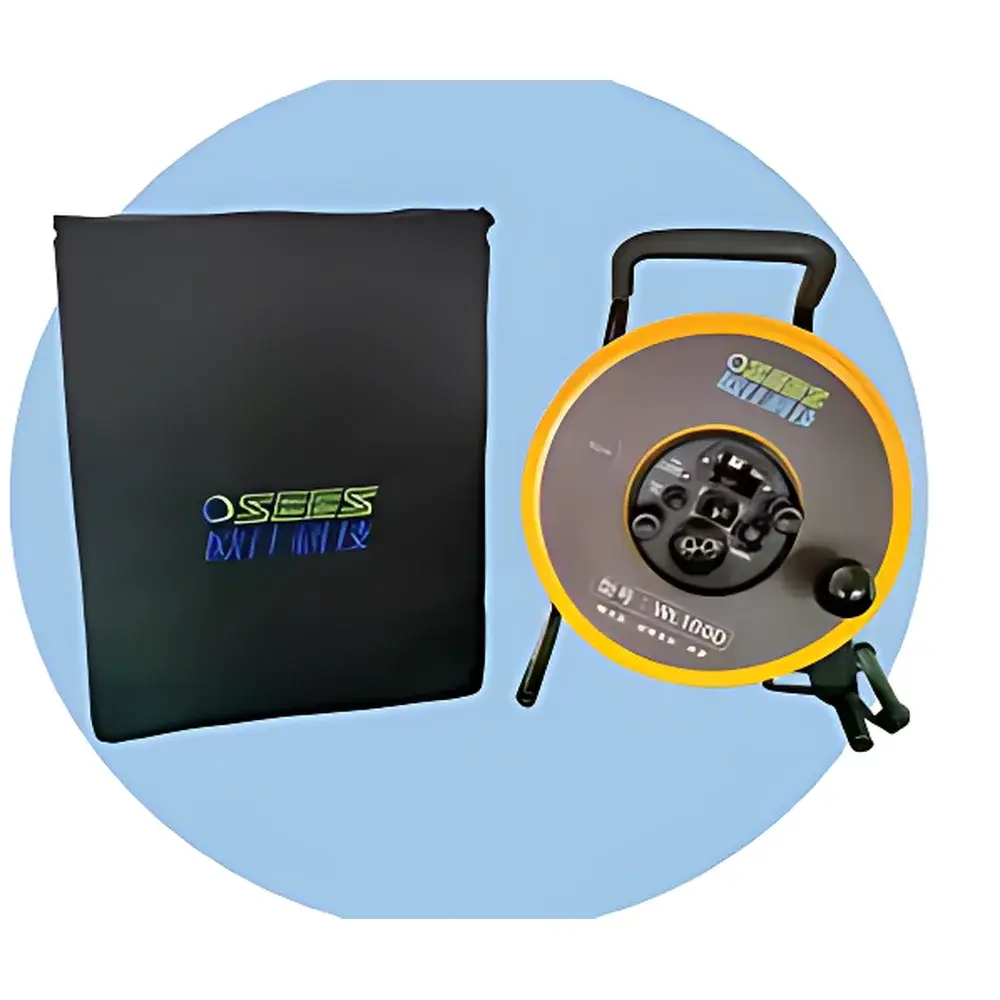
WL30D Multifunctional Water Level Meter (Well Depth Gauge)
| Origin | Beijing, China |
|---|---|
| Manufacturer Type | Authorized Distributor |
| Origin Category | Domestic (China) |
| Model | WL30D |
| Price Range | USD 14,000 – 70,000 |
| Product Type | Pressure-Based Water Level Sensor |
| Probe Interchangeability | Water Level / Casing Length / Well Depth Probes |
| Operating Modes | Static Level, Drawdown Monitoring, Full-Depth Measurement, Casing Length Verification, Auto-Triggered Sampling Integration |
Overview
The WL30D Multifunctional Water Level Meter is an engineered field instrument designed for hydrogeological professionals requiring precise, repeatable, and context-adaptive measurements in boreholes, monitoring wells, and cased wells. Unlike single-purpose water level sensors, the WL30D integrates pressure-based transduction with mechanical depth-sensing architecture to deliver five distinct operational modes within a unified platform: static water level detection, controlled drawdown monitoring, full well depth measurement, metallic casing length verification, and programmable联动 (interlocked) sampling control. Its core sensing principle relies on a calibrated piezoresistive pressure transducer housed in a submersible probe—capable of converting hydrostatic head into millivolt-level output, linearly correlated to water column height above the sensor diaphragm. For well depth and casing length determination, the system employs a mechanically actuated, spring-loaded plunger switch that triggers upon physical contact with the borehole bottom or casing shoe, providing unambiguous tactile confirmation independent of fluid presence or conductivity.
Key Features
- Modular probe system: Rapid interchange between water level probe, casing-length probe, and well-depth probe via standardized quick-connect interface at the tape reel junction.
- Dual-mode pressure sensing: High-stability silicon piezoresistive element with temperature compensation (±0.1°C resolution) ensures consistent accuracy across seasonal thermal gradients in shallow to intermediate-depth wells (up to 300 m).
- Drawdown-triggered sampling interface: Integrated RS-485/Modbus RTU port enables bidirectional communication with G.O. Samper-series groundwater samplers; supports configurable drawdown thresholds (e.g., ≥0.5 m below static level) and automatic pump suspension/resume logic.
- Acoustic-optical depth confirmation: Well-depth probe generates audible beep and LED flash upon plunger compression at bottom contact—verifiable without retrieving probe from borehole.
- Calibrated stainless-steel measuring tape: Metric-graduated, corrosion-resistant tape with ±1 mm graduation accuracy and 300 m maximum extension; tension-controlled spool mechanism minimizes sag-induced error.
- Field-ruggedized control unit: IP67-rated housing, lithium-ion battery pack (≥12 hr continuous operation), backlit LCD display with real-time depth/pressure/temperature overlay.
Sample Compatibility & Compliance
The WL30D is validated for use in PVC, steel, and stainless-steel cased wells ≥2 inches (50.8 mm) in diameter. It complies with ASTM D4043–22 (Standard Guide for Selection of Instruments for Measuring Ground-Water Levels) and ISO 10521–2:2019 (Hydrogeological investigations — Part 2: Field methods for groundwater level measurement). Its pressure transducer meets IEC 61298–2 Class 0.25 accuracy specification for industrial pressure sensors. All firmware and data logging functions adhere to GLP-aligned traceability requirements: timestamped measurements include operator ID, GPS coordinates (via optional Bluetooth GNSS module), probe type ID, and environmental temperature. Audit trails are exportable in CSV and XML formats compatible with EPA WQX and USGS NWIS ingestion protocols.
Software & Data Management
The WL30D interfaces with WinWL Manager v3.2 desktop software (Windows 10/11), supporting batch calibration curve import, multi-well project structuring, and automated report generation per USGS Form 112–A. Raw data files retain native binary format with embedded CRC-16 checksums for integrity validation. Export options include PDF field logs with annotated depth-pressure profiles, GIS-ready shapefiles (with Z-values), and time-series datasets compliant with EPA’s EQuIS schema. Firmware updates are delivered via signed .bin packages with SHA-256 hash verification—ensuring secure, version-controlled device maintenance in regulated environments.
Applications
- Well construction QA/QC: Real-time verification of casing seat depth, grout seal elevation, and screen interval placement.
- Long-term monitoring network maintenance: Annual static level benchmarking and drawdown response analysis during aquifer testing (e.g., slug tests, step-drawdown tests).
- Abandoned well decommissioning: Precise determination of sediment accumulation depth, casing corrosion extent, and residual fluid column height prior to sealing.
- Regulatory compliance reporting: Generation of certified water level records for state groundwater programs (e.g., CA GAMA, TX GRP) and federal RCRA/CERCLA site assessments.
- Integrated sampling campaigns: Synchronized operation with peristaltic or bladder-type low-flow samplers to enforce EPA Method 533-compliant purging criteria based on actual water level recovery kinetics.
FAQ
What is the maximum recommended well depth for reliable WL30D operation?
The system is rated for continuous use up to 300 meters; however, optimal pressure transducer performance is maintained within 0–200 m for high-accuracy static level applications.
Can the WL30D measure water levels in non-conductive fluids such as diesel or LNAPL?
Yes—the pressure-based measurement principle is independent of fluid conductivity; however, probe material compatibility (e.g., FKM O-rings) must be verified for specific hydrocarbon exposure per manufacturer’s chemical resistance chart.
Is the well-depth probe suitable for gravel-packed or screened intervals?
The plunger-based depth probe requires firm, solid contact for reliable triggering; it is not recommended for direct insertion into loose gravel or open-screen zones without a landing plate or bottom plug.
Does the WL30D support FDA 21 CFR Part 11-compliant electronic signatures?
While the device itself does not host user authentication, WinWL Manager v3.2 supports role-based access control, electronic signature capture, and audit trail export meeting ALCOA+ principles required for Part 11 alignment when deployed on validated IT infrastructure.
How often does the pressure transducer require recalibration?
Annual recalibration against NIST-traceable deadweight tester is recommended; field zero-checks using atmospheric reference can be performed before each deployment cycle.