
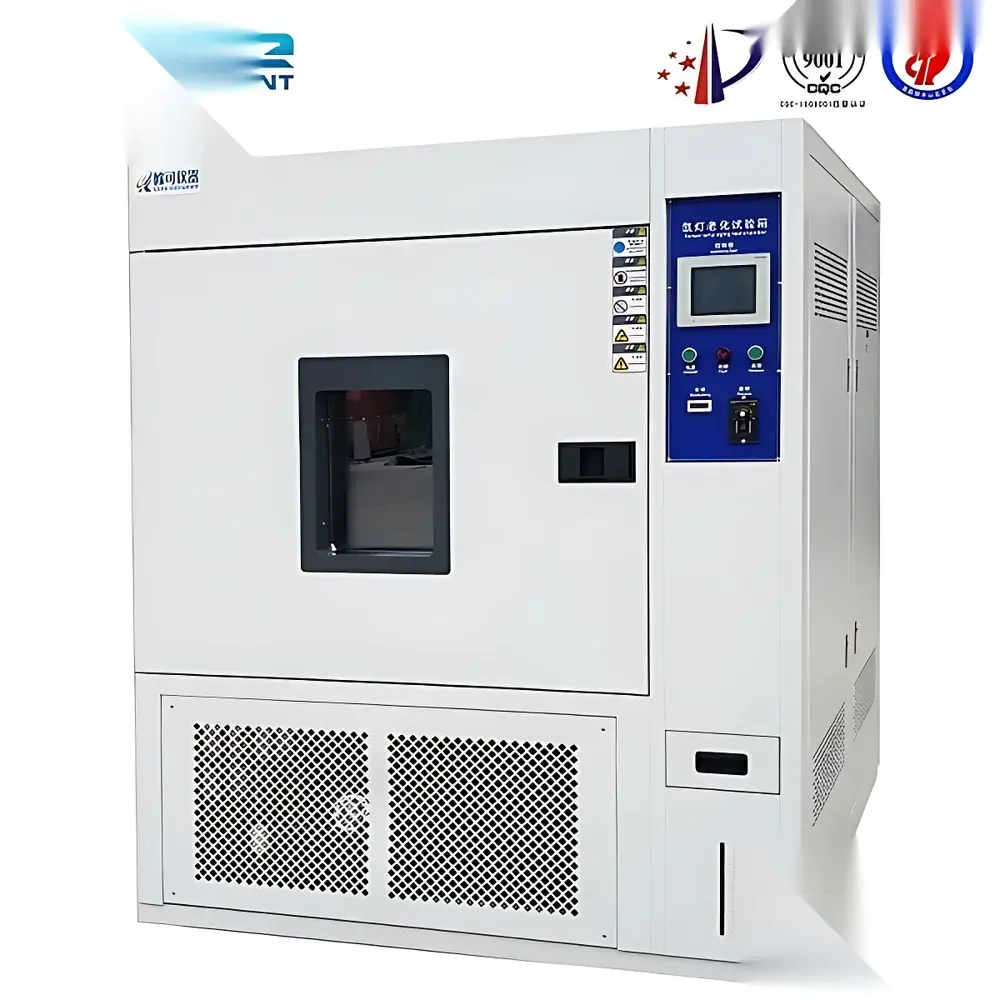
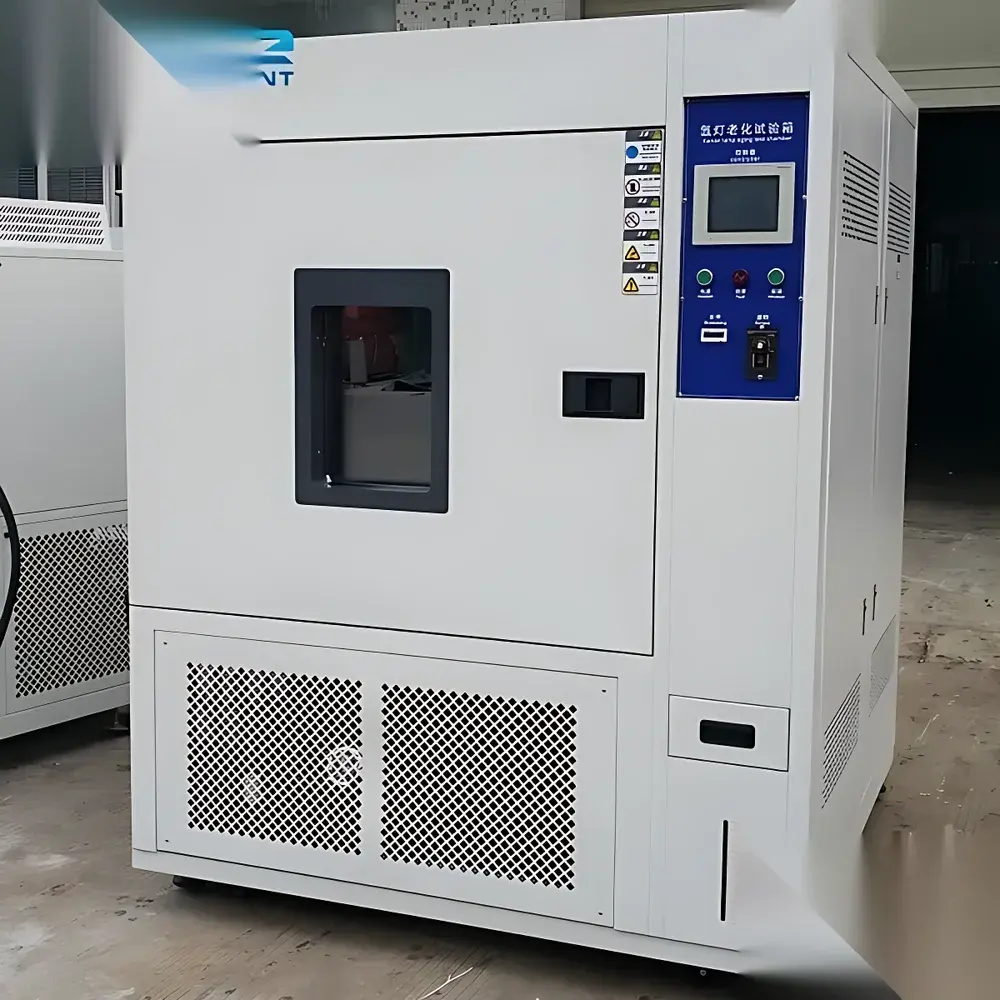
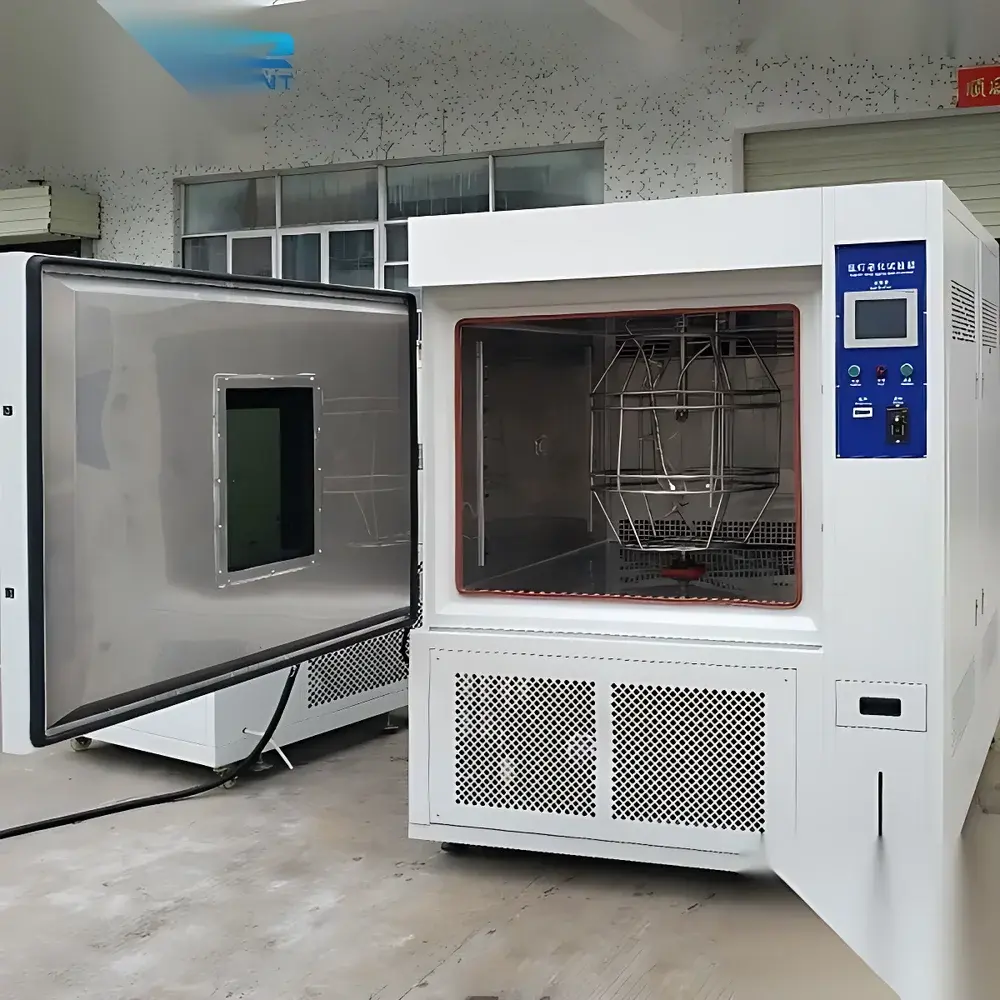
OK-XD-400 Xenon Arc Weathering Test Chamber
| Brand | OK Instruments |
|---|---|
| Model | OK-XD-400 |
| Interior Dimensions (W×H×D) | 470 × 750 × 460 mm |
| Inner Liner Material | SUS304 Stainless Steel |
| Outer Casing | Powder-Coated A3 Steel |
| Temperature Range | RT+10°C to 90°C (±2°C) |
| Black Panel Temperature Range | RT+10°C to 120°C |
| Humidity Range | 45–98% RH (±5% RH) |
| Rainfall Duration | 0–9999 min (continuously adjustable) |
| Light Source | Air-Cooled Xenon Arc Lamp |
| Lamp Power | 5.4 kW |
| Spectral Output | 290–850 nm |
| Sample Holder Capacity | 26 positions, each 200 × 60 mm |
| Compliance | GB/T 16422.2, GB/T 8430, GB/T 1865, GB/T 16259, GB/T 5137.3, GB/T 2423.24, ASTM D4459 |
Overview
The OK-XD-400 Xenon Arc Weathering Test Chamber is an engineered environmental simulation system designed to replicate and accelerate the combined effects of solar radiation, thermal cycling, humidity, and cyclic wetting—key degradation drivers in real-world outdoor exposure. Based on the fundamental principle of xenon arc irradiation, this chamber delivers a spectral power distribution closely matching terrestrial sunlight (290–850 nm), enabling quantitative assessment of photodegradation, color shift, gloss loss, chalking, cracking, and embrittlement across polymeric, coated, textile, and composite materials. Unlike UV fluorescent or metal halide alternatives, xenon arc technology provides full-spectrum fidelity—including critical visible and near-infrared wavelengths—making it the internationally preferred method for ISO 4892-2, ASTM G155, and IEC 60068-2-9 compliant weathering validation.
Key Features
- Precision Black Panel Temperature Control: Equipped with wireless-transmission black panel temperature sensors (BPT/BST), eliminating thermal drift and ensuring traceable, high-reproducibility surface temperature monitoring per ISO 4892-2 Annex B.
- Fiber-Optic Radiant Flux Measurement: Integrated fiber-optic irradiance sensor enables real-time, temperature-stable monitoring of xenon lamp output at 340 nm or 420 nm—critical for maintaining standardized irradiance setpoints (e.g., 0.35 W/m² @ 340 nm) without thermal interference.
- Programmable Wet/Dry Cycling: Independent control of rainfall duration (0–9999 min), spray frequency, and humidity ramping allows precise emulation of diurnal condensation, dew formation, and storm-driven wetting events per ASTM D4459 and GB/T 16422.2.
- Thermally Stable Chamber Architecture: Dual-wall construction with SUS304 stainless steel interior and powder-coated A3 steel exterior ensures corrosion resistance, dimensional stability, and long-term thermal uniformity across the 470 × 750 × 460 mm test volume.
- Fail-Safe Operational Safety: Interlocked door mechanism automatically de-energizes the 5.4 kW xenon lamp upon opening; integrated overtemperature, overhumidity, and lamp arc-failure protection circuits meet IEC 61000-6-2 EMC and Class I electrical safety requirements.
- Time-Based Process Integrity: Digital timer with non-volatile memory logs cumulative operational hours and supports scheduled shutdown—essential for GLP-compliant test documentation and audit-ready runtime traceability.
Sample Compatibility & Compliance
The OK-XD-400 accommodates flat-panel specimens up to 200 × 60 mm on 26 independent holders, supporting multi-material comparative testing under identical irradiance and environmental profiles. Its design fully satisfies national and international standards governing accelerated weathering, including GB/T 16422.2 (plastics), GB/T 8430 (textile colorfastness), GB/T 1865 (coatings), GB/T 16259 (building materials), GB/T 5137.3 (automotive glazing), GB/T 2423.24 (electrotechnical products), and ASTM D4459 (polystyrene reference standards). The chamber’s spectral output, irradiance control accuracy, and humidity uniformity are validated against ISO/IEC 17025-accredited calibration protocols, ensuring data acceptability in regulatory submissions and third-party certification workflows.
Software & Data Management
While the OK-XD-400 operates via intuitive front-panel controls with LED display, optional RS485/Modbus RTU interface enables integration into centralized laboratory management systems (LIMS) or SCADA platforms. All critical parameters—including chamber temperature, black panel temperature, relative humidity, irradiance setpoint vs. actual, rainfall status, and elapsed time—are logged at user-defined intervals (1–60 min). Exportable CSV files support post-test statistical analysis (e.g., ΔE* color difference, gloss retention %, tensile strength decay rate) and facilitate compliance with FDA 21 CFR Part 11 requirements when paired with electronic signature-enabled software extensions.
Applications
This instrument serves as a core qualification tool across R&D, QC, and regulatory affairs functions in industries where long-term outdoor durability is mission-critical: polymer compounders evaluating UV stabilizer efficacy; automotive Tier-1 suppliers validating exterior trim fade resistance; architectural coating manufacturers certifying 10-year warranty claims; textile mills assessing sun-fade performance of outdoor fabrics; and photovoltaic encapsulant developers screening hydrolytic stability under damp-heat + irradiance stress. Its ability to decouple and recombine individual stressors (e.g., UV + humidity without rain, or thermal cycling without light) further enables mechanistic failure mode analysis beyond simple pass/fail screening.
FAQ
What standards does the OK-XD-400 comply with?
It meets GB/T 16422.2, GB/T 8430, GB/T 1865, GB/T 16259, GB/T 5137.3, GB/T 2423.24, and ASTM D4459—covering plastics, textiles, coatings, building materials, automotive glazing, and electrotechnical products.
Is spectral irradiance calibrated and traceable?
Yes—fiber-optic sensor output is factory-calibrated against NIST-traceable reference standards; annual recalibration is recommended per ISO/IEC 17025 guidelines.
Can the chamber operate without rainfall?
Absolutely—the wetting cycle is fully programmable and may be disabled to isolate UV/thermal/humidity effects.
What maintenance is required for the xenon lamp?
Lamp life is approximately 1500 hours; replacement includes recalibration of irradiance and alignment verification—both documented in the included maintenance logbook.
Does the system support GLP/GMP data integrity requirements?
With optional data logging software and electronic signature modules, it supports audit trails, user access control, and 21 CFR Part 11 compliance for regulated environments.



