
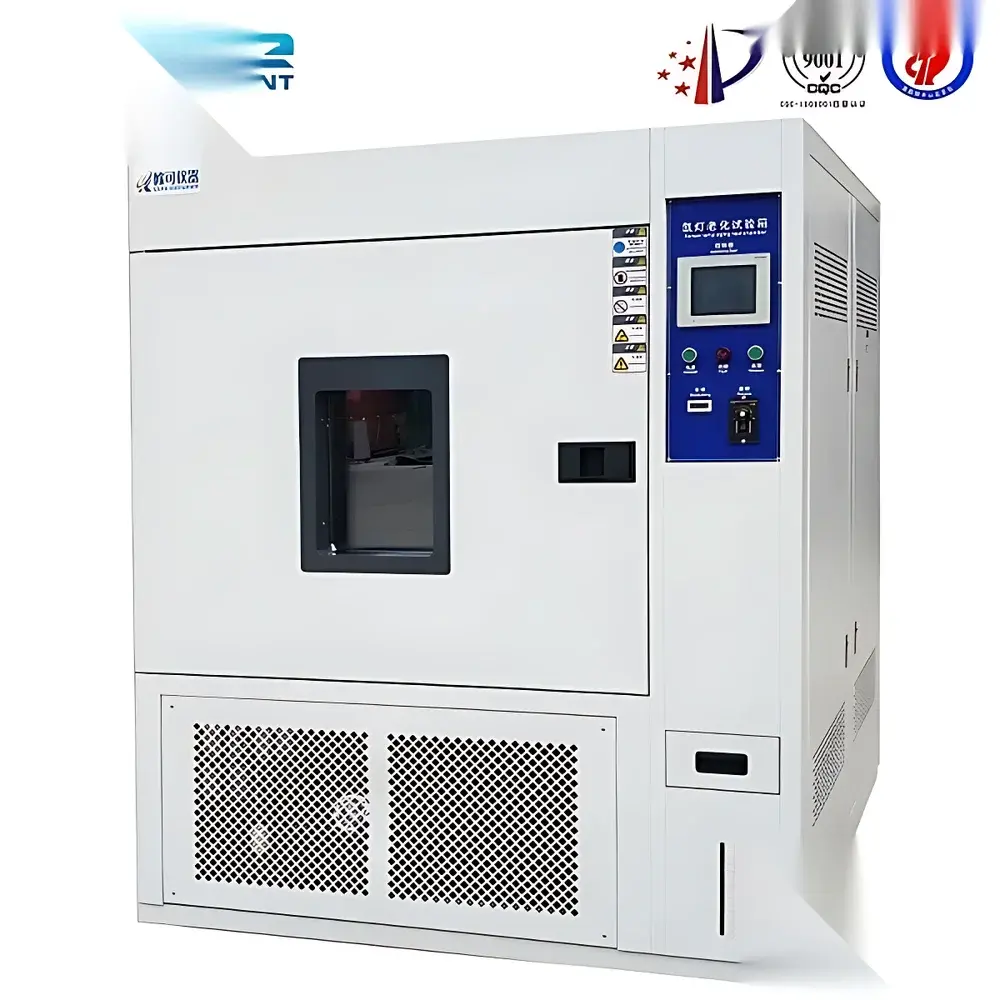
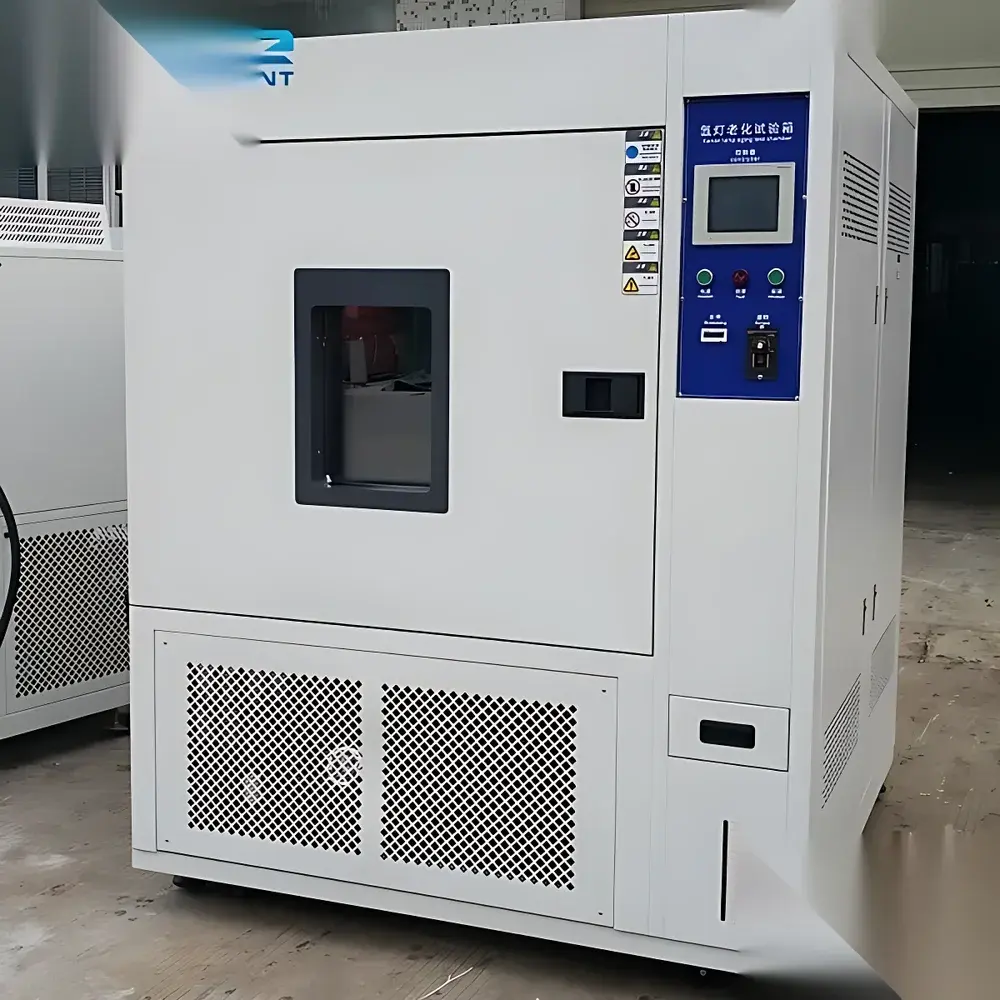
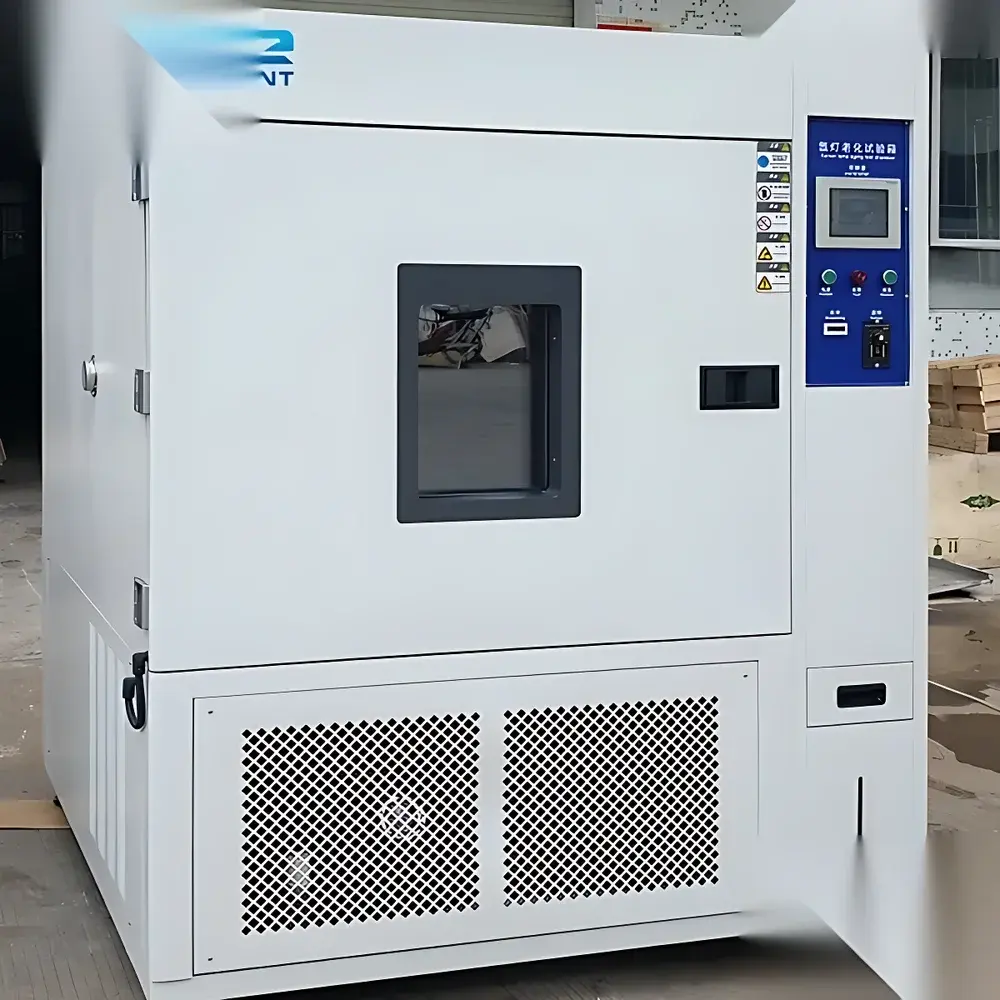
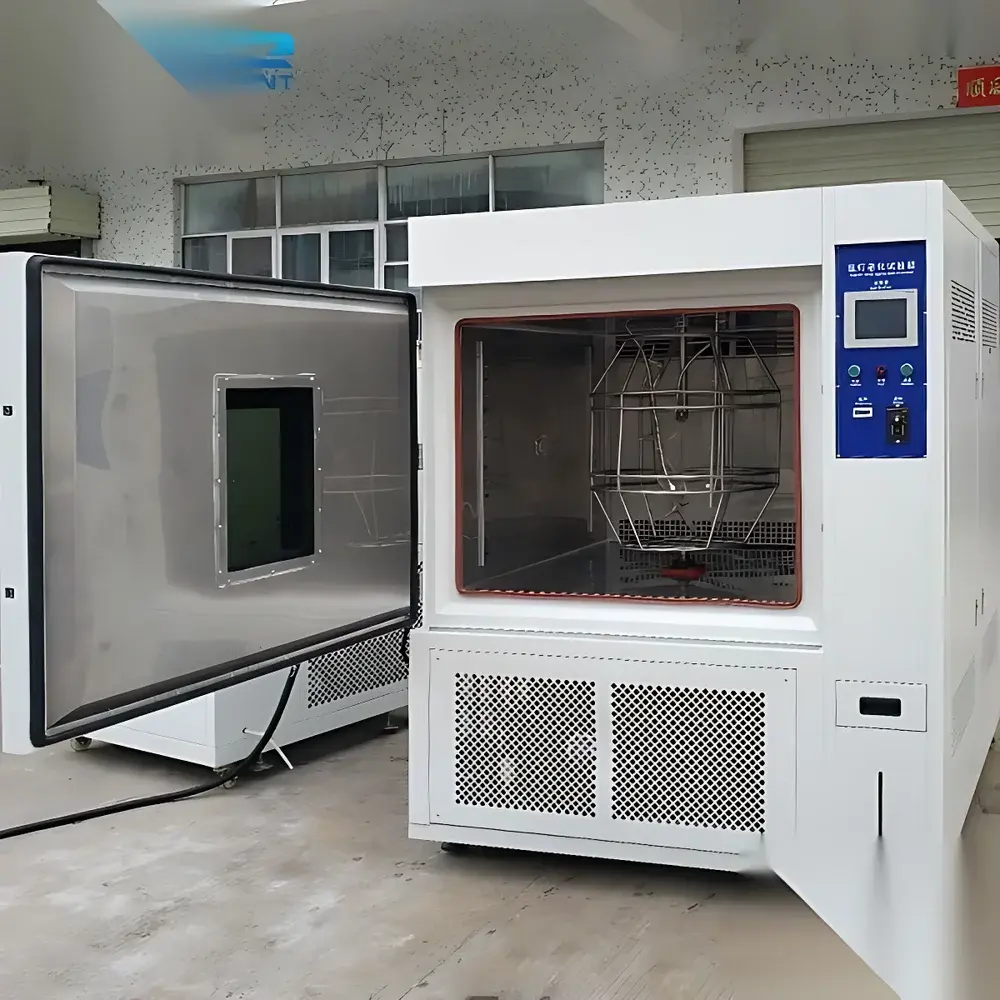
OK-XD Series Xenon Arc Weathering Test Chamber
| Brand | OK Instruments |
|---|---|
| Origin | Imported |
| Manufacturer Type | Authorized Distributor |
| Price | USD 5,300–12,800 (FOB, model-dependent) |
| Internal Chamber Dimensions (L×W×H, cm) | 50×50×40 / 50×75×60 / 80×80×80 / 100×100×100 |
| Temperature Range | 0–150°C (chamber), 40–85°C (black panel) |
| Humidity Range | 20–75% RH (light cycle), 20–98% RH (dark cycle) |
| Temperature Uniformity | ±2.0°C |
| Humidity Uniformity | ±3.0% RH |
| Temperature Control Accuracy | ±0.5°C |
| Humidity Control Accuracy | ±2.0% RH |
| Irradiance | 550 W/m² ±10% (300–800 nm) or 1000 W/m² ±10% (300–1200 nm) |
| Xenon Lamp Power | 1.8 kW / 2.5 kW / 6 kW |
| Lamp Life | ~1,500 hours |
| Spray Cycle Duration | 1–999 min (intermittent or continuous) |
| Spray Pressure | 70–127 kPa |
| Sample Mounting | Dual-layer wire mesh rack or 500 mm diameter rotating turntable (0–3 rpm) |
| Interior Material | SUS304 stainless steel |
| Exterior Material | SUS304 stainless steel or powder-coated steel |
| Power Supply | AC 380 V ±5%, 50 Hz ±0.5 Hz |
Overview
The OK-XD Series Xenon Arc Weathering Test Chamber is an engineered environmental simulation system designed to replicate the full-spectrum solar radiation, thermal cycling, and moisture exposure encountered in real-world outdoor conditions. Utilizing long-arc, air-cooled xenon lamps filtered to match terrestrial sunlight (CIE 85:1989, ISO 4892-2), the chamber delivers spectrally accurate irradiance across UV, visible, and near-infrared wavelengths (300–1200 nm). Its core function is accelerated weathering evaluation—quantifying material degradation mechanisms including photolysis, oxidation, chalking, cracking, color shift, and gloss loss. Unlike UV fluorescent lamp systems, xenon arc technology provides true broadband solar simulation, making it the reference method for ISO, ASTM, and GB/T standards governing textile lightfastness, automotive exterior durability, architectural coating performance, and polymer stabilization validation.
Key Features
- Full-spectrum xenon arc source with precision optical filtering to maintain CIE daylight spectral power distribution (SPD) compliance over lamp lifetime.
- Independent control of black panel temperature (40–85°C) and chamber air temperature (0–150°C), enabling decoupled thermal stress application per ISO 4892-2 Annex B.
- Dynamic humidity regulation across both light and dark cycles—20–75% RH during irradiation, 20–98% RH during condensation/dark phases—to simulate diurnal dew formation and rain events.
- Programmable water spray system with adjustable pressure (70–127 kPa) and duration (1–999 min), supporting intermittent or continuous wetting per ASTM G154 and ISO 4892-2 Clause 7.4.
- Rotating sample holder (0–3 rpm, Ø500 mm) or dual-layer static mesh rack—configurable to accommodate irregular geometries without mechanical interference or shadowing artifacts.
- Robust SUS304 stainless steel construction for interior chamber and critical fluid-contact components, ensuring corrosion resistance against saline mist, acidic condensate, and organic solvents.
- Modular lamp assembly with quick-release mechanism; standard 1,500-hour rated xenon tubes are field-replaceable without recalibration or optical realignment.
Sample Compatibility & Compliance
The OK-XD chamber accommodates flat, curved, or three-dimensional specimens up to 100 × 100 × 100 cm (OK-XD-1000 model), including textiles, coated metal panels, plastic injection-molded parts, automotive trim, roofing membranes, and composite laminates. It fully supports standardized test protocols requiring precise irradiance monitoring, such as ISO 4892-2 (Methods A & B), ASTM G155 (Cycle A–F), GB/T 16422.2, GB/T 8427 (Textile Blue Wool Scale), GB/T 14576 (Photostability of Pigments), and ASTM D529 (Automotive Paints). All models include calibrated UV radiometers traceable to NIST standards and meet GLP documentation requirements for audit-ready test records.
Software & Data Management
Equipped with a programmable 7-inch touchscreen HMI controller, the chamber enables storage of ≥100 multi-step test profiles—including ramp/soak temperature sequences, humidity transitions, irradiance setpoints, and spray timing logic. Real-time data logging (temperature, humidity, irradiance, elapsed time) is timestamped and exportable via USB to CSV format. Optional Ethernet connectivity supports remote monitoring and integration into LIMS environments. The system complies with FDA 21 CFR Part 11 requirements when configured with user-level access controls, electronic signatures, and audit trail generation—essential for regulated QC laboratories operating under ISO/IEC 17025 or ICH Q5C guidelines.
Applications
This instrument serves as a primary tool for R&D and quality assurance in sectors where long-term outdoor performance is mission-critical: automotive OEMs validating dashboard materials per SAE J2527; textile mills certifying dye fastness to ISO 105-B02; paint manufacturers qualifying exterior acrylics per ASTM D4587; and photovoltaic component suppliers testing encapsulant yellowing per IEC 61215. It also supports comparative aging studies in academic polymer science labs investigating UV stabilizer efficacy, photo-oxidative kinetics, and structure–property relationships under controlled spectral stress.
FAQ
What spectral range does the xenon lamp cover, and how is it filtered?
The lamp emits broad-spectrum radiation from 290 nm to 2500 nm; integrated daylight filters (quartz outer + borosilicate inner) attenuate unwanted IR and short-wave UV to deliver a CIE-reference spectrum compliant with ISO 4892-2 Class I.
Can the chamber perform cyclic tests with alternating light/dark and wet/dry phases?
Yes—fully programmable cycles allow independent definition of irradiance, black panel temperature, chamber humidity, and spray activation for each phase, supporting ASTM G155 Cycle A (light/wet), Cycle B (light/dark), and custom hybrid protocols.
Is calibration traceable to national standards?
Each unit ships with factory-calibrated irradiance sensors certified to NIST-traceable reference standards; annual recalibration services are available with documented uncertainty budgets per ISO/IEC 17025.
What maintenance intervals are recommended for optimal performance?
Xenon lamps require replacement every ~1,500 operational hours; optical filters should be inspected quarterly and replaced annually; humidity sensor calibration is recommended every 6 months; full preventive maintenance (cooling system flush, gasket integrity check, electrical safety verification) is advised biannually.
Related Products



