
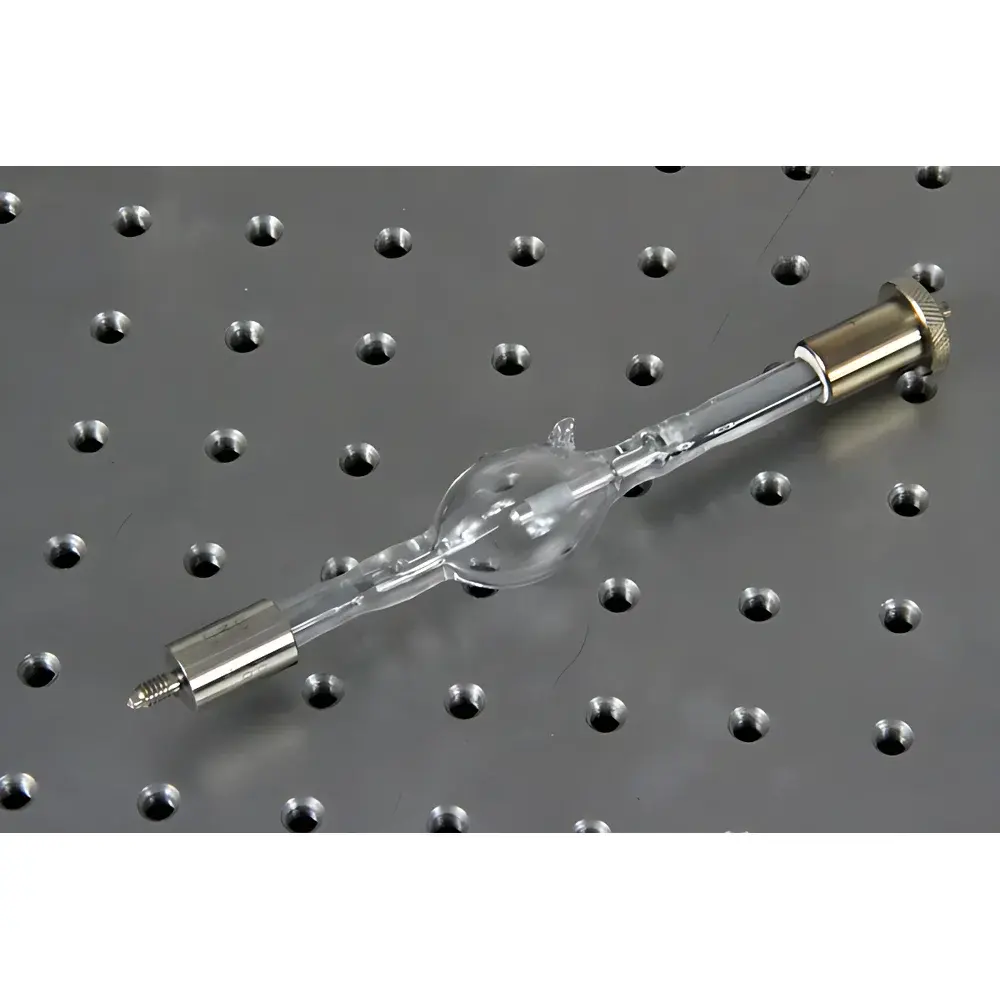
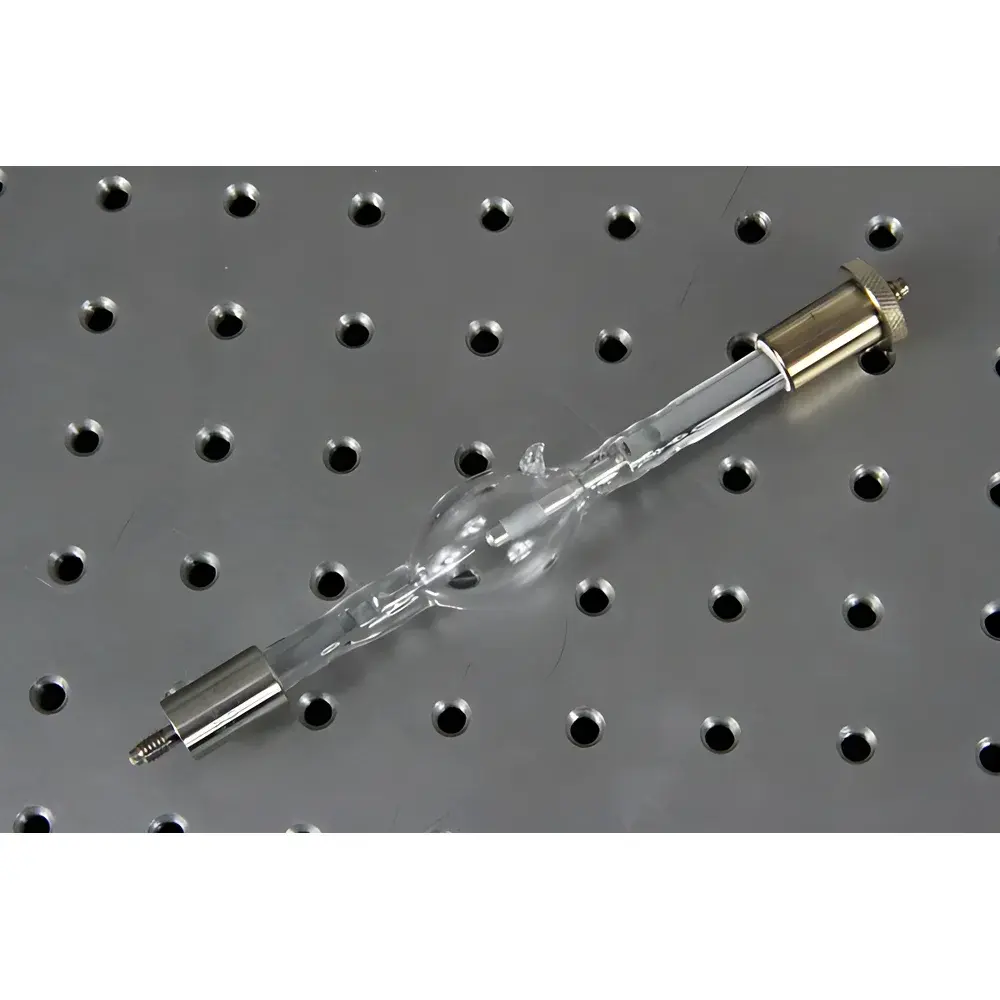
Xenon Arc Lamp Bulb – CEI 500WXL & 350WXL Spherical Short-Arc Lamp
| Brand | CEI (Zhongjiao Jinyuan) |
|---|---|
| Origin | Beijing, China |
| Manufacturer Type | OEM Lamp Producer |
| Model | 500WXL, 350WXL |
| Rated Power | 500 W / 350 W |
| Color Temperature | ~6000 K |
| Spectral Output | Continuous in Visible Range (380–780 nm) |
| CRI (Ra) | ≥94 |
| Arc Stability | <±1.5% RMS Intensity Fluctuation |
| Ignition Time to 90% Max Output | <30 s |
| Arc Spot Diameter | ≤0.8 mm |
| Rated Lifetime | ≥800 h (at rated power, stable cooling, recommended ballast) |
Overview
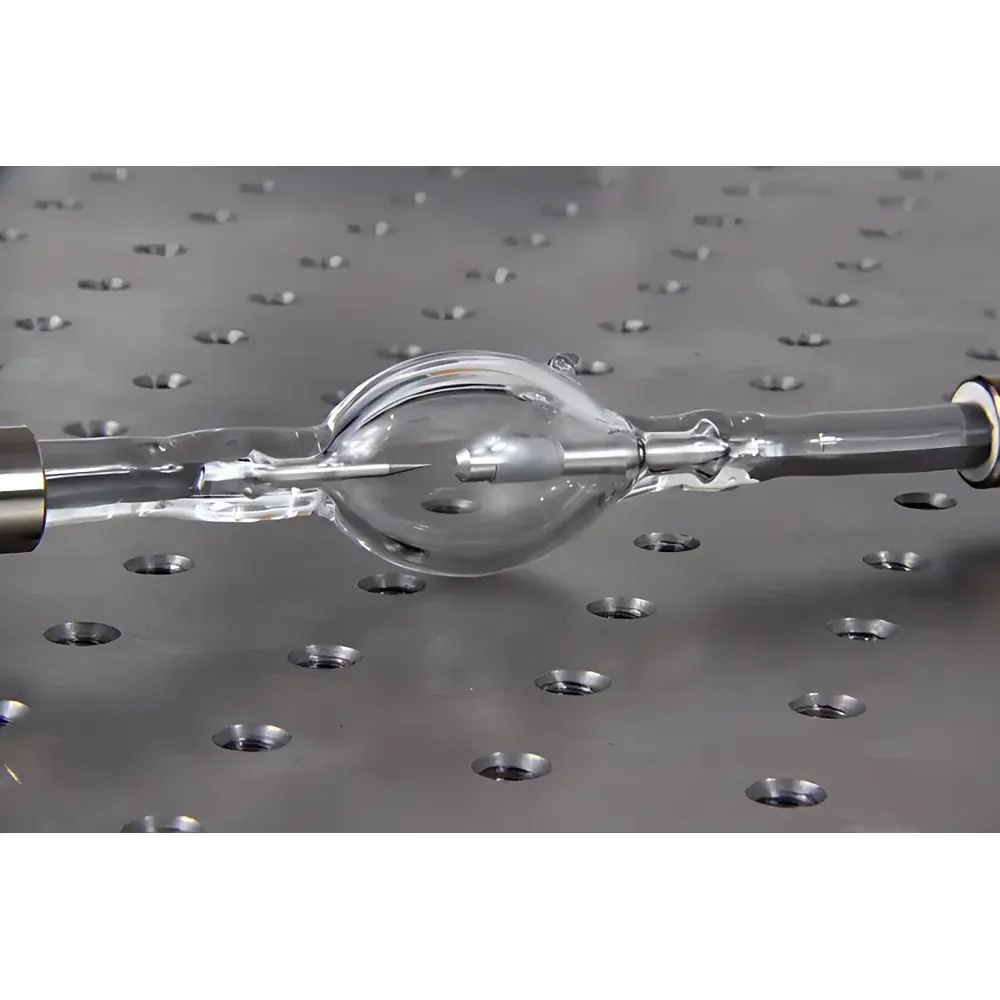
The CEI 500WXL and 350WXL spherical short-arc xenon lamps are engineered for high-fidelity solar simulation, spectroscopic calibration, optical testing, and precision illumination applications requiring broadband spectral continuity and photometric stability. Based on DC-stabilized, pure-xenon plasma discharge technology, these lamps generate a near-blackbody continuum across the visible spectrum (380–780 nm) with minimal line emission—critical for applications demanding spectrally neutral reference sources. The compact spherical envelope and precisely centered tungsten electrodes enable tight arc confinement (≤0.8 mm diameter), facilitating efficient coupling into monochromators, integrating spheres, collimators, and fiber-optic light guides. Unlike metal-halide or mercury-xenon hybrids, the pure-xenon fill ensures consistent color temperature (~6000 K) and high color rendering index (CRI ≥94) throughout rated life—making them suitable for ISO 9001-certified optical labs, ASTM E927-compliant solar simulators, and USP qualified analytical instrument light sources.
Key Features
- Spherical Geometry & Precision Arc Placement: Optimized quartz envelope geometry ensures repeatable electrode alignment and minimal arc wander—essential for long-term irradiance uniformity in collimated beam systems.
- Stable DC Operation: Designed for use with constant-current DC power supplies featuring active current regulation and overvoltage protection; achieves <±1.5% RMS intensity stability under thermal equilibrium conditions.
- Rapid Thermal Equilibrium: Reaches >90% of nominal radiant output within 30 seconds post-ignition, minimizing warm-up delays in automated test sequences.
- Long-Life Electrode Architecture: Tungsten electrodes doped with thorium oxide enhance electron emission efficiency and reduce cathode sputtering—contributing to ≥800 h service life when operated within specified thermal management limits (e.g., forced-air or water-cooled lamp housings).
- Low UV Degradation Risk: Fused silica envelope transmits minimal UVC (<200 nm) and exhibits low solarization under continuous operation, preserving spectral fidelity during extended calibration cycles.
Sample Compatibility & Compliance
These lamps are compatible with industry-standard lamp housings supporting ANSI XBO-type mechanical and electrical interfaces (e.g., CEI-compatible socket assemblies, water-cooled mounts with O-ring sealing). They meet key photometric requirements for Class AAA solar simulators per IEC 60904-9:2020 (spectral match, spatial uniformity, temporal stability) when integrated with appropriate filters and optics. While not individually certified, the lamps support system-level compliance with GLP/GMP documentation practices—including traceable batch records, burn-in logs, and end-of-life verification protocols. No hazardous substance declarations (RoHS, REACH) are required, as the lamp contains only xenon gas and tungsten electrodes sealed in fused silica.
Software & Data Management
As passive optical components, the 500WXL/350WXL lamps do not incorporate embedded electronics or firmware. However, they integrate seamlessly with third-party lamp control platforms (e.g., Newport 69910, OAI Solar Simulator Controllers, or custom LabVIEW-based power management systems) that log operational parameters including ignition count, cumulative on-time, current/voltage profiles, and thermal feedback from housing sensors. When deployed in regulated environments, lamp usage history—including installation date, replacement timestamp, and associated calibration certificates—can be maintained within LIMS or ELN systems compliant with FDA 21 CFR Part 11 audit-trail requirements.
Applications
- Solar cell quantum efficiency (QE) and I–V characterization systems
- Reflectance and transmittance spectrophotometer calibration standards
- Accelerated weathering chamber irradiance sources (per ISO 4892-2)
- Fluorescence microscopy excitation (with bandpass filtering)
- Projection optics R&D and photolithography mask inspection illumination
- Colorimetric reference sources for display metrology (CIE 1931 XYZ matching functions)
FAQ
What is the recommended operating orientation for the 500WXL lamp?
Vertical base-down orientation is strongly recommended to ensure optimal convection cooling and electrode erosion symmetry. Horizontal or inverted operation reduces lifetime and increases arc instability risk.
Can these lamps be dimmed using variable current control?
Yes—output can be reduced to ~40% of nominal power via adjustable DC current, but derating below 70% may compromise arc stability and color temperature consistency. Dimming is not recommended for photometric-critical applications.
Is ozone generation a concern during operation?
No significant ozone is produced under standard air-cooled operation. However, direct exposure of unfiltered xenon output to ambient air at intensities >100 mW/cm² in the 185–200 nm range may yield trace ozone; this is negligible when used with standard quartz envelopes (which absorb sub-200 nm radiation).
How often should spectral recalibration be performed?
For metrology-grade use, spectral irradiance calibration is advised every 200 hours of operation or after any lamp replacement, referencing NIST-traceable standards such as calibrated photodiodes or spectroradiometers.



