
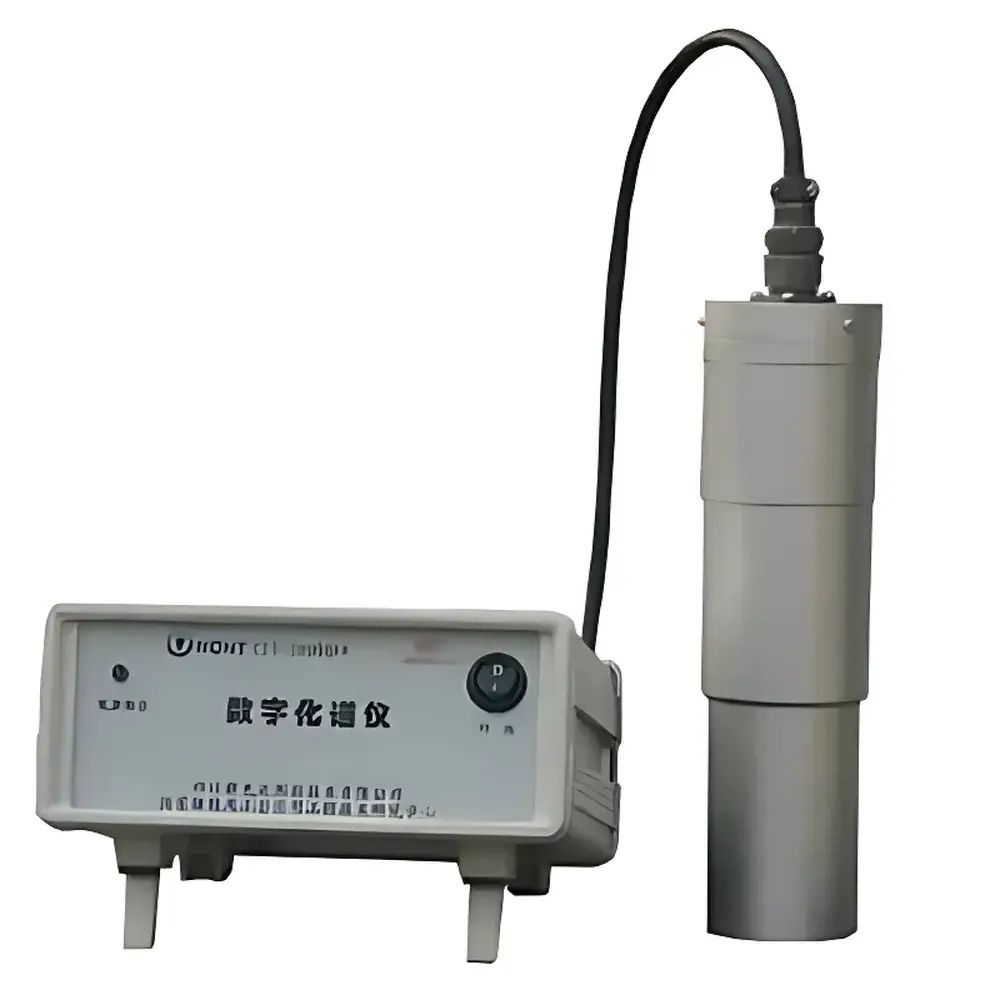
Xianxian Da CIT-3000DPP Digital Gamma Spectrometer
| Brand | Xianxian Da |
|---|---|
| Model | CIT-3000DPP |
| Detector Type | Scintillation-based Gamma Spectrometer |
| Crystal | NaI(Tl), Φ50 mm × 50 mm (optional Φ75 mm × 75 mm) |
| Energy Resolution | ≤6.5% FWHM at 662 keV (¹³⁷Cs) |
| ADC Sampling Rate | 20–80 MS/s |
| Pulse Shaping Time | 1–5 µs |
| MCA Channels | 256–4096 |
| Differential Nonlinearity | <0.1% |
| Integral Nonlinearity | <0.01% |
| Programmable Gain | 1–4095 steps |
| Digital Pulse Processing (DPP) | Threshold-free acquisition architecture |
| Communication Interfaces | CAN, RS-232, USB 2.0, TCP/IP |
| Power Consumption | <1 W |
| Operating Temperature Range | –10 °C to +50 °C |
| Compliance | Meets IEC 61000-4 EMC standards |
Overview
The Xianxian Da CIT-3000DPP Digital Gamma Spectrometer is a high-stability, low-power scintillation spectrometry system engineered for precise gamma-ray energy spectroscopy in field-deployable and laboratory-based radiation monitoring applications. It employs a thallium-doped sodium iodide [NaI(Tl)] scintillation detector—standard with a Φ50 mm × 50 mm crystal and optionally configurable with a Φ75 mm × 75 mm crystal—to deliver enhanced detection efficiency and improved photopeak resolution. Unlike conventional analog multichannel analyzers (MCAs), the CIT-3000DPP implements proprietary Digital Pulse Processing (DPP) architecture, eliminating fixed upper/lower discrimination thresholds and enabling continuous pulse amplitude capture across an extended dynamic range. This architecture, combined with a high-speed 20–80 MS/s ADC and sub-microsecond pulse shaping (1–5 µs), ensures near-zero dead-time operation and eliminates pulse pile-up artifacts under moderate count rates. The system achieves ≤6.5% full-width-at-half-maximum (FWHM) energy resolution at the 662 keV photopeak of ¹³⁷Cs—a measurable improvement over legacy NaI(Tl)-based systems calibrated to 7–9%—and maintains spectral stability via precision military-grade operational amplifiers, temperature-compensated passive components, and a high-accuracy voltage reference.
Key Features
- Digital Pulse Processing (DPP) engine with threshold-free acquisition, supporting adaptive baseline restoration and real-time pulse validation
- Programmable gain control with 4095 discrete steps for optimal signal-to-noise ratio across wide energy ranges (from ~30 keV to >3 MeV)
- Configurable multichannel analyzer (MCA) with user-selectable channel depth: 256, 512, 1024, 2048, or 4096 channels
- Ultra-low power consumption (<1 W) enabling extended battery-powered operation in remote or mobile deployments
- Integrated digital oscilloscope mode with 2-kiloword FIFO buffer for live analog waveform visualization and pulse shape diagnostics
- Multi-mode digital communication: native support for CAN bus (for rugged industrial networks), RS-232 (legacy instrumentation integration), USB 2.0 (plug-and-play PC connectivity), and TCP/IP (networked data streaming and remote control)
- Advanced numerical filtering options including high-frequency noise suppression and low-frequency baseline drift correction
- High linearity performance: differential nonlinearity <0.1%, integral nonlinearity <0.01% — critical for quantitative nuclide identification and activity calculation
Sample Compatibility & Compliance
The CIT-3000DPP is optimized for gamma-emitting radionuclides commonly encountered in environmental surveillance, nuclear safeguards, emergency response, and academic research. It interfaces seamlessly with standard NIM and CAMAC-compatible preamplifiers and HV supplies, and supports both well-type and planar NaI(Tl) detectors. Its spectral fidelity and long-term stability meet requirements for routine compliance with ISO 11929 (evaluation of measurement uncertainty in ionizing radiation), ASTM D3648 (standard test methods for radioactivity in water), and IAEA Technical Reports Series No. 295 (gamma spectrometry for environmental samples). While not certified as a Class I medical device, its design adheres to electromagnetic compatibility (EMC) specifications per IEC 61000-4 series and supports audit-ready data integrity when integrated into GLP- or ISO/IEC 17025-accredited laboratories.
Software & Data Management
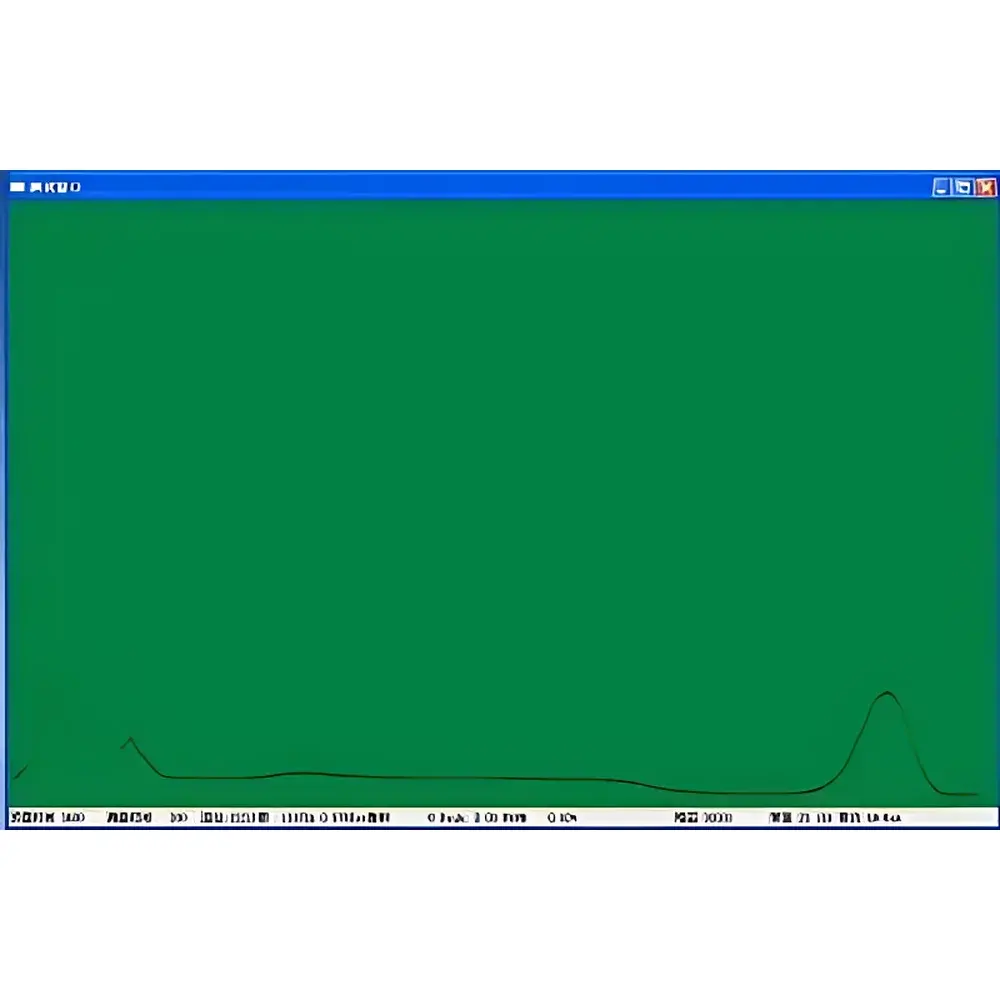
The CIT-3000DPP operates with vendor-supplied cross-platform analysis software (Windows/macOS/Linux) that provides full spectral acquisition, calibration (energy and efficiency), nuclide library matching (including IAEA and ORTEC libraries), peak deconvolution, and activity calculation using certified reference sources. All spectral data are stored in standardized binary formats (e.g., .CNF, .SPC) compliant with the RadWare and GammaVision ecosystems. Software features include automated peak search with statistical significance filtering, region-of-interest (ROI) integration, and customizable reporting templates aligned with regulatory submission requirements. Audit trail functionality—including operator login timestamps, parameter change logs, and raw spectrum versioning—is implemented to satisfy traceability expectations under FDA 21 CFR Part 11 when used in regulated environments.
Applications
- Environmental radioactivity monitoring of soil, water, air filters, and vegetation samples
- In-situ gamma surveying and dose rate mapping in decommissioning and remediation projects
- Radioisotope identification and quantification in nuclear medicine waste streams
- Educational use in nuclear physics laboratories for teaching gamma spectroscopy fundamentals
- Border security and customs screening for illicit radioactive materials
- Long-term stability testing of detector systems under varying thermal and electrical conditions
FAQ
What is the minimum detectable activity (MDA) achievable with the CIT-3000DPP?
MDA depends on detector geometry, sample matrix, counting time, and background conditions. Using the standard Φ50 mm × 50 mm NaI(Tl) crystal and a 10,000-second count, typical MDA for ¹³⁷Cs in a Marinelli beaker is approximately 0.5–1.2 Bq/kg under lab background conditions.
Can the CIT-3000DPP be used with HPGe detectors?
No—the CIT-3000DPP firmware and front-end electronics are specifically optimized for scintillation detectors (NaI(Tl), LaBr₃(Ce)) with decay times in the 200–500 ns range. It does not support the cryogenic biasing, ultra-low-noise preamplification, or pulse timing requirements of high-purity germanium (HPGe) systems.
Is firmware upgrade supported in the field?
Yes—firmware updates are delivered via USB or TCP/IP and installed through the host software without requiring hardware modification or factory return.
Does the system support external trigger inputs or gate signals?
Yes—digital trigger input (TTL-compatible) and gate output signals are accessible via the rear-panel DB-9 connector, enabling synchronization with external devices such as sample changers or neutron generators.
What calibration sources are recommended for routine energy calibration?
A mixed-source check standard containing ²²Na, ⁶⁰Co, ¹³⁷Cs, and ⁵⁴Mn is recommended for multi-point energy calibration; single-point calibration may use ¹³⁷Cs (662 keV) or ⁶⁰Co (1173 keV & 1332 keV) depending on application scope.
Related Products







