XIATECH DMCS Liquid Density Measurement Service
| Brand | XIATECH |
|---|---|
| Origin | Shaanxi, China |
| Manufacturer Type | Authorized Distributor |
| Country of Origin | China |
| Model | DMCS |
| Quotation | Available upon Request |
| Service Experience | Certified Density Testing Service |
| Accuracy | ±0.5 % |
| Density Range | 100–2000 kg/m³ |
| Temperature Range | −30 °C to 300 °C |
| Pressure Range | 0.1–70 MPa |
| Measurement Methods | Vibrating-String Method, Oscillating U-Tube Method, Pycnometric (Density Bottle) Method |
| Sample Types | Pure fluids and mixtures including hydrocarbon fuels, refrigerants, nanofluids, organic solvents, ionic liquids, and aqueous systems |
Overview
The XIATECH DMCS Liquid Density Measurement Service is a precision laboratory testing offering engineered for thermophysical property characterization under controlled temperature and pressure conditions. It employs primary and secondary metrological methods—namely the vibrating-string technique, oscillating U-tube densimetry, and calibrated pycnometry—to deliver traceable, reproducible density data for research, formulation development, and process validation. Designed in accordance with ISO 12185 (petroleum products), ASTM D4052 (standard test method for density of liquids by digital density meter), and ISO 1675 (liquid chemicals—determination of density), this service supports rigorous scientific reporting and regulatory compliance across energy, chemical, refrigeration, and advanced materials sectors.
Key Features
- High-accuracy density determination with certified uncertainty of ±0.5 % across the full operational envelope
- Extended thermo-pressure coverage: temperature from −30 °C to 300 °C and pressure up to 70 MPa—enabling characterization of subcritical, near-critical, and supercritical fluid states
- Multi-method verification capability: cross-validation between vibrating-string (ideal for high-viscosity or high-pressure media), oscillating U-tube (optimized for low-viscosity, volatile, or small-volume samples), and gravimetric pycnometry (reference-grade calibration for pure standards)
- Traceable calibration using NIST-traceable reference fluids and certified density standards
- Controlled sample handling protocols minimizing thermal history effects, vapor loss, and contamination—particularly critical for reactive, hygroscopic, or thermally labile fluids such as ionic liquids and nanofluids
Sample Compatibility & Compliance
The DMCS service accommodates a broad spectrum of liquid-phase materials, including but not limited to: hydrocarbon fuels (gasoline, kerosene, diesel), halogenated and hydrofluoroolefin refrigerants (R134a, R12, R22, R123, DME), metal-oxide and carbon-based nanofluids (Al2O3, graphite, Fe3O4 suspensions), polar and non-polar solvents (water, toluene, ethanol, methanol), and thermally stable ionic liquids. All procedures adhere to GLP principles; raw data logs, instrument calibration records, and environmental monitoring reports are retained for audit readiness. Where applicable, test reports may be issued with ISO/IEC 17025 accreditation statements (subject to client-specified scope and laboratory certification status).
Software & Data Management
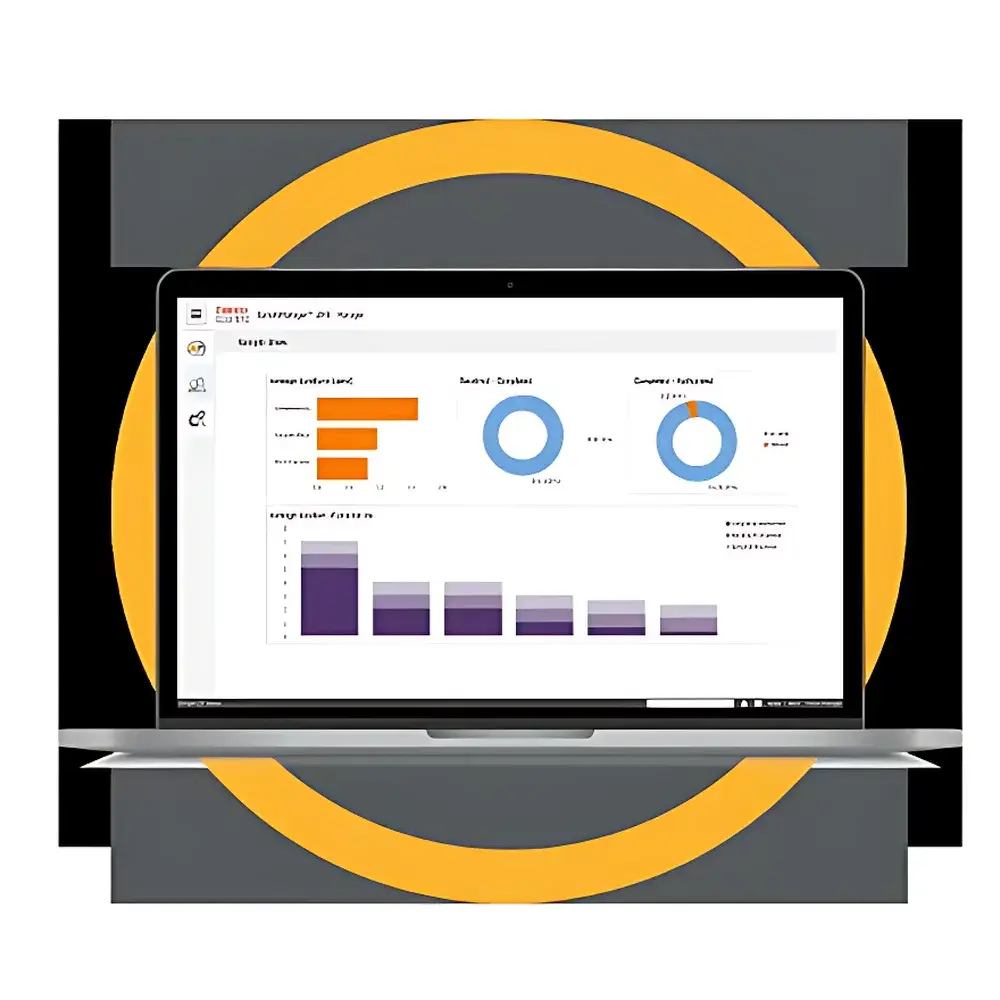
Data acquisition and analysis are performed using XIATECH’s proprietary DMCS Control Suite, compliant with FDA 21 CFR Part 11 requirements for electronic records and signatures. The software provides real-time monitoring of temperature stability (±0.01 °C), pressure regulation (±0.05 MPa), and resonance frequency tracking with automated baseline correction. Export formats include CSV, PDF (with digital signature), and XML structured for integration into LIMS platforms. Audit trails record operator ID, method version, calibration timestamps, and all parameter modifications—ensuring full traceability for QA/QC and regulatory submissions.
Applications
- Thermodynamic modeling support: generation of high-fidelity density data for equation-of-state (EOS) regression (e.g., Peng–Robinson, PC-SAFT)
- Fuel formulation and blending optimization: quantification of density–composition–temperature relationships for ASTM D3606/D975 compliance
- Refrigerant property databases: expansion of NIST REFPROP and CoolProp libraries with experimental validation points
- Nanofluid stability assessment: detection of sedimentation-induced density gradients via time-resolved measurements
- Pharmaceutical excipient qualification: density profiling of solvent systems used in lyophilization or crystallization processes
- Process safety evaluation: determination of phase envelope boundaries and compressibility behavior under elevated pressure
FAQ
What standards does the DMCS service follow for density measurement?
ASTM D4052, ISO 12185, ISO 1675, and ISO 5725 for accuracy and repeatability assessment.
Can the service handle hazardous or air-sensitive samples?
Yes—samples are introduced via sealed, inert-gas-purged transfer lines or crimp-sealed vials; glovebox-compatible handling is available upon request.
Is temperature and pressure control independently verified during testing?
Yes—secondary Pt100 sensors and dead-weight pressure calibrators are deployed in parallel with primary instrumentation for real-time validation.
How long does a typical density measurement take per condition point?
Approximately 8–15 minutes per T–p state, depending on thermal equilibration time and sample volatility.
Are raw data files and uncertainty budgets provided with the final report?
Yes—full datasets, covariance matrices, and GUM-compliant uncertainty propagation summaries are included in the deliverable package.