
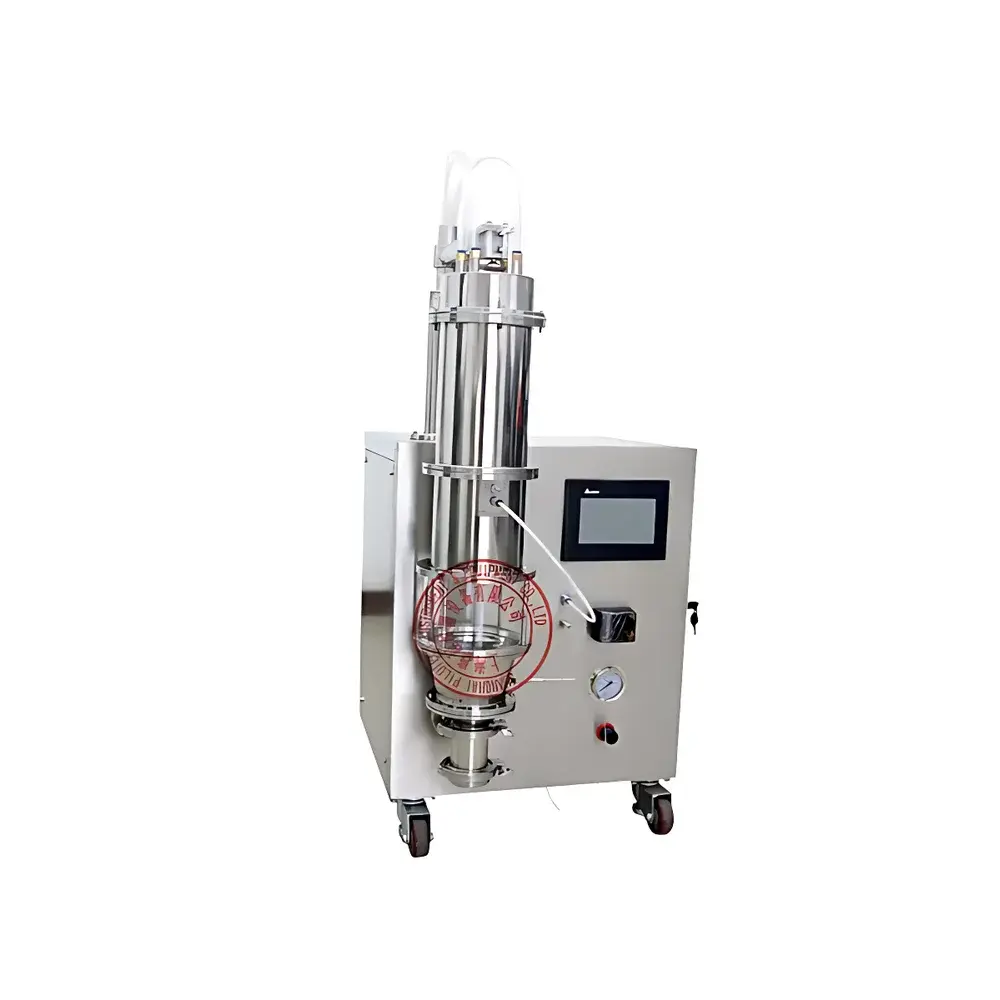
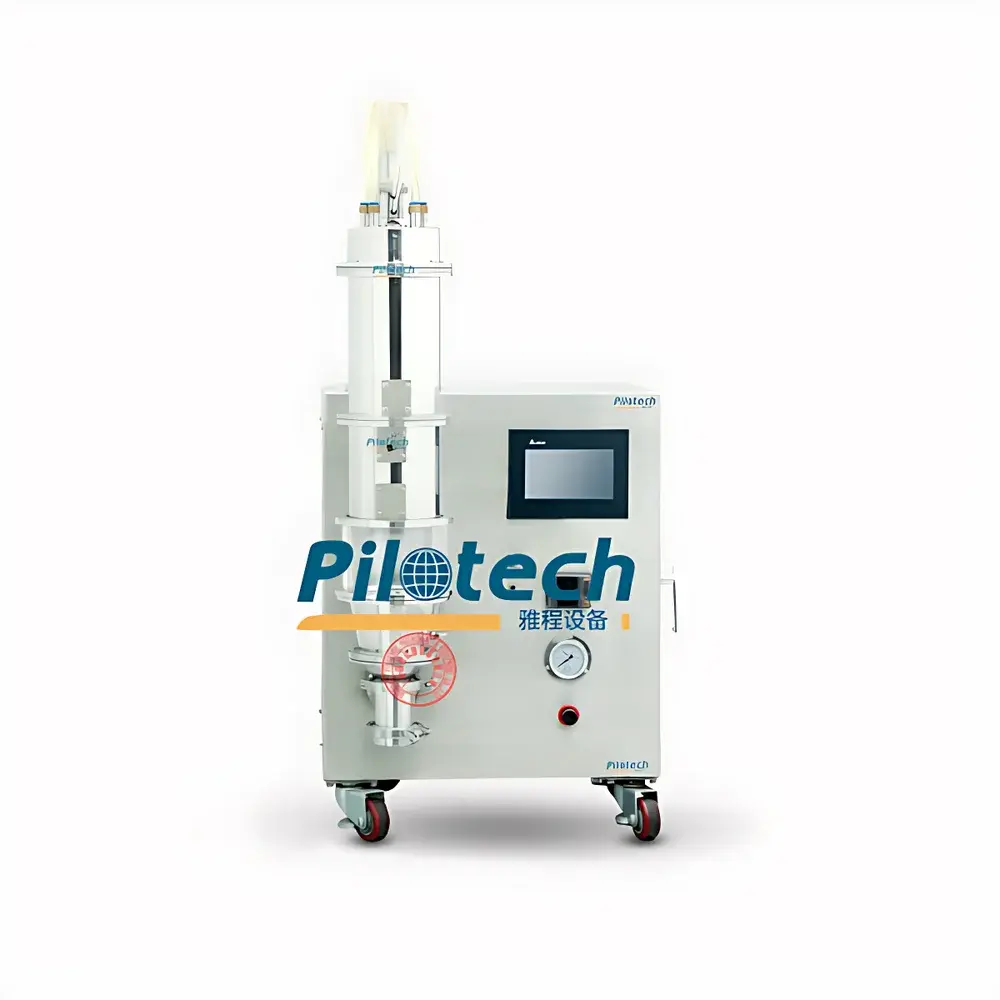
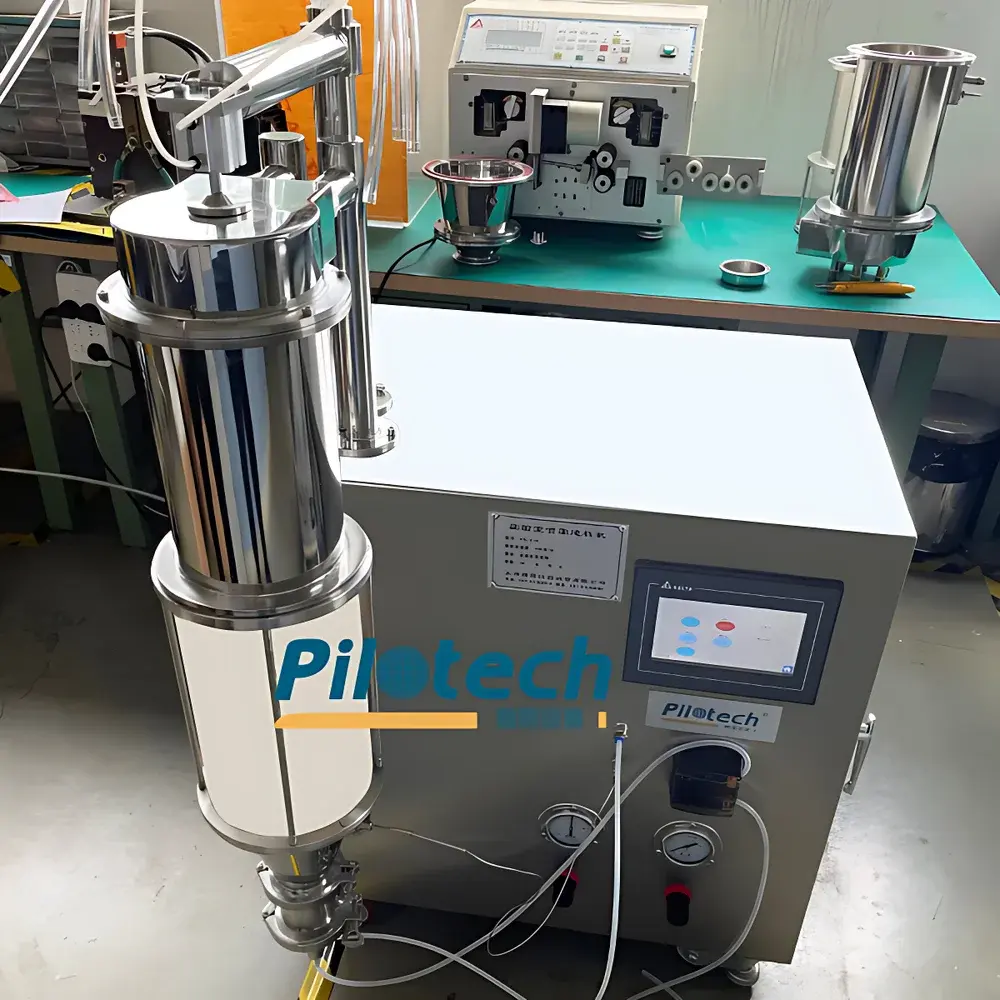
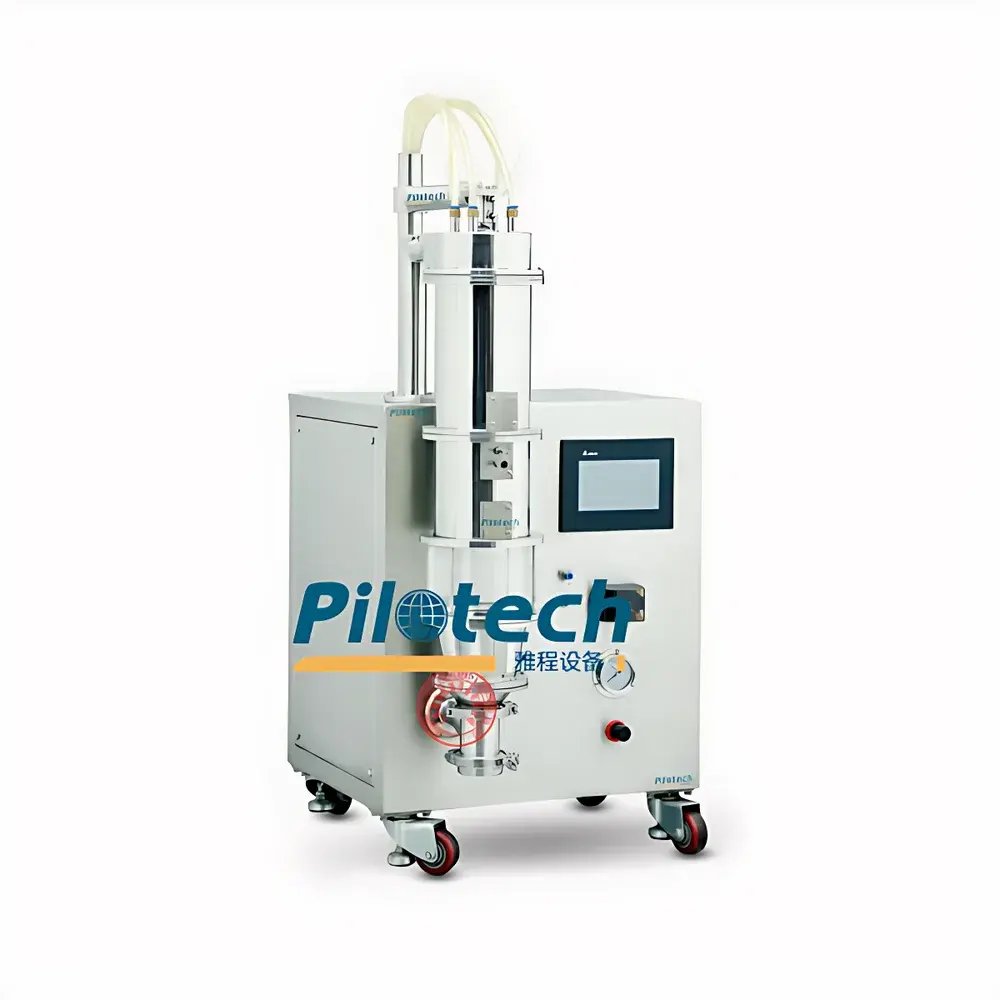
Yacheng / PILOTECH YC-310 Laboratory-Scale Fluidized Bed Granulator, Coater & Dryer (Top-Spray & Bottom-Spray Integrated System)
| Brand | Yacheng / PILOTECH |
|---|---|
| Origin | Shanghai, China |
| Manufacturer Type | OEM Manufacturer |
| Country of Origin | China |
| Model | YC-310 |
| Pricing | Upon Request |
Overview
The Yacheng / PILOTECH YC-310 is a compact, modular fluidized bed processing system engineered for laboratory-scale granulation, coating, and drying of pharmaceutical, nutraceutical, and fine chemical powders. It operates on the principle of controlled fluidization—where solid particles are suspended in an upward-moving gas stream to form a dynamic, pseudo-fluid state—enabling uniform heat and mass transfer during spray-based unit operations. Unlike conventional tray or oven drying, the YC-310 leverages fluid dynamics and precise thermal management to achieve rapid, reproducible particle growth via liquid bridge formation, followed by controlled solvent evaporation and structural hardening. This integrated platform supports both top-spray (for agglomeration, drying, and taste-masking coatings) and bottom-spray (for functional film coating of pellets and microparticles) configurations, making it suitable for early-stage formulation development, process optimization, and regulatory batch documentation under GLP-aligned workflows.
Key Features
- PLC-based automation with color touchscreen HMI for real-time parameter adjustment—including inlet air temperature, blower frequency, product bed temperature, peristaltic pump speed, and pulse-jet filter backflush interval.
- Dual-mode fluidization design: interchangeable top-spray and bottom-spray modules with dedicated conical bowl geometries optimized for distinct flow regimes—top-spray enables fountain-type fluidization; bottom-spray utilizes an internal draft tube to generate high-velocity core flow for uniform coating of small-diameter cores.
- Modular bowl configuration: multiple bowl volumes available to accommodate sample sizes from 50 g to 1 kg, supporting scalability studies from discovery to pilot scale.
- Advanced thermal control architecture: PID-regulated inlet air heating with feedforward–feedback coupling between inlet temperature and real-time bed temperature, preventing surface crust formation and ensuring moisture diffusion equilibrium during simultaneous spraying and drying.
- Integrated pulse-jet filter cleaning system: programmable reverse-pulse backflushing minimizes filter cake buildup and improves granule yield consistency across repeated cycles.
- Critical components sourced from internationally certified suppliers—including industrial-grade touchscreens, EC centrifugal blowers, stainless-steel heating elements, and corrosion-resistant 316L stainless steel contact parts compliant with ASME BPE surface finish standards.
Sample Compatibility & Compliance
The YC-310 accommodates a broad range of hygroscopic, thermolabile, and cohesive powders—including herbal extracts, amorphous APIs, excipient blends, and functional food matrices. Its design conforms to fundamental principles outlined in USP , ISO 14644-1 (Class 7 cleanroom compatibility), and FDA guidance on process validation for solid dosage forms. While not a GMP-certified production system, its architecture supports audit-ready data integrity practices: all critical parameters are timestamped, logged internally, and exportable via USB to CSV or PDF formats—facilitating traceability required for ICH Q5, Q8, and Q9 submissions. The system’s closed-loop airflow path, HEPA-filtered exhaust, and optional inert gas purge capability further align with OEL containment expectations for potent compound handling.
Software & Data Management
The embedded control software records up to 20 concurrent analog/digital process variables at user-defined intervals (1–30 sec resolution). Data logging includes inlet/outlet air temperatures, relative humidity, pressure drop across the filter, bed temperature gradients, and pump delivery rate. Exported datasets retain full metadata (operator ID, batch tag, timestamp, version-stamped firmware ID), satisfying basic ALCOA+ criteria for raw data attribution and legibility. Optional Ethernet connectivity enables integration with LIMS or MES platforms using Modbus TCP protocol. Audit trail functionality—tracking parameter changes, login events, and recipe modifications—is enabled by default and stored locally with write-protection against unauthorized overwrites.
Applications
- Development of immediate-release granules from aqueous or alcoholic herbal extracts, optimizing dissolution profile and flowability for direct compression.
- Functional enteric or sustained-release coating of microcrystalline cellulose pellets (0.3–1.5 mm) using Eudragit® or HPMC-based formulations.
- Moisture-sensitive API stabilization via low-temperature fluidized bed drying post-wet granulation—reducing residual solvent levels to <500 ppm per ICH Q3C.
- Process mapping studies to define design space boundaries (e.g., inlet temperature vs. spray rate) in accordance with ICH Q8(R2) Quality by Design frameworks.
- Comparative evaluation of binder performance (PVP, HPC, gelatin) under identical hydrodynamic conditions to assess granule strength and friability.
- Scale-down modeling for commercial fluid bed processors (e.g., Glatt GPCG, Freund GranuCell), supporting tech transfer documentation.
FAQ
What is the maximum batch capacity supported by the standard YC-310 configuration?
The base system is configured for 300–500 g working capacity in top-spray mode; optional larger bowls extend this to 1 kg.
Can the YC-310 operate under nitrogen atmosphere?
Yes—equipped with dual gas inlets and pressure-relief valves, it supports inert gas purging for oxygen-sensitive compounds.
Is the system compliant with 21 CFR Part 11 requirements?
It meets foundational data integrity requirements (audit trail, electronic signatures optional via external authentication); full Part 11 compliance requires site-specific validation protocols.
What particle size range is achievable via top-spray granulation?
Typical granule diameters fall between 100 µm and 3 mm, depending on feedstock morphology, binder viscosity, and fluidization velocity.
How does the bottom-spray module differ hydrodynamically from top-spray?
Bottom-spray induces laminar core flow within the draft tube, minimizing particle attrition and enabling uniform film thickness on fragile cores—ideal for pellet coating where surface area-to-volume ratio is critical.






