
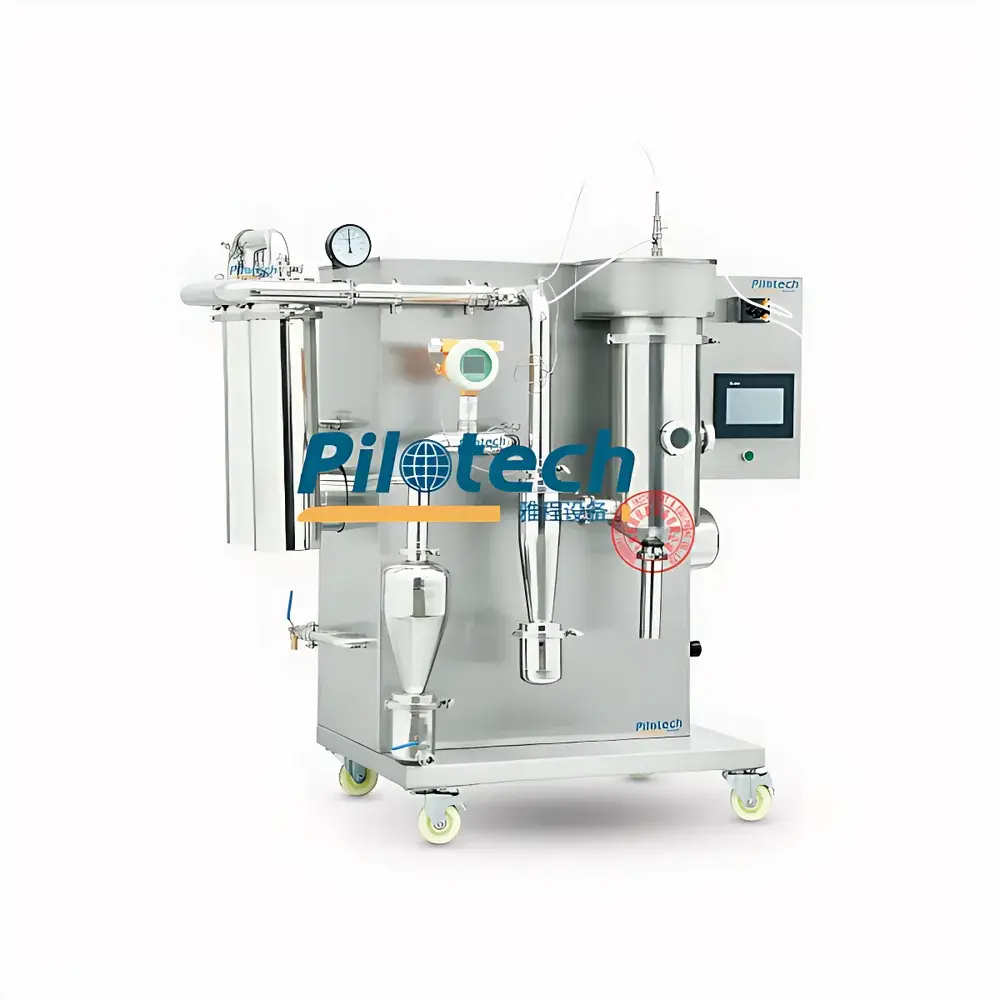
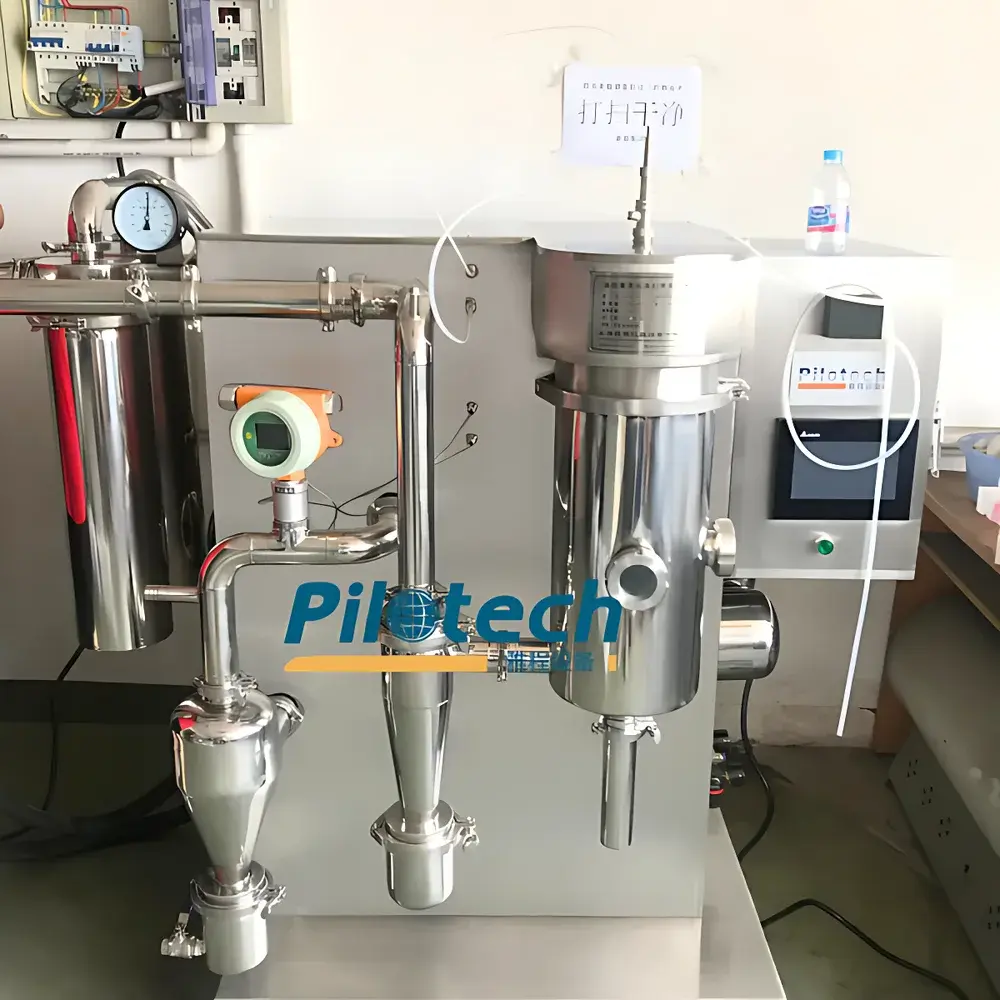
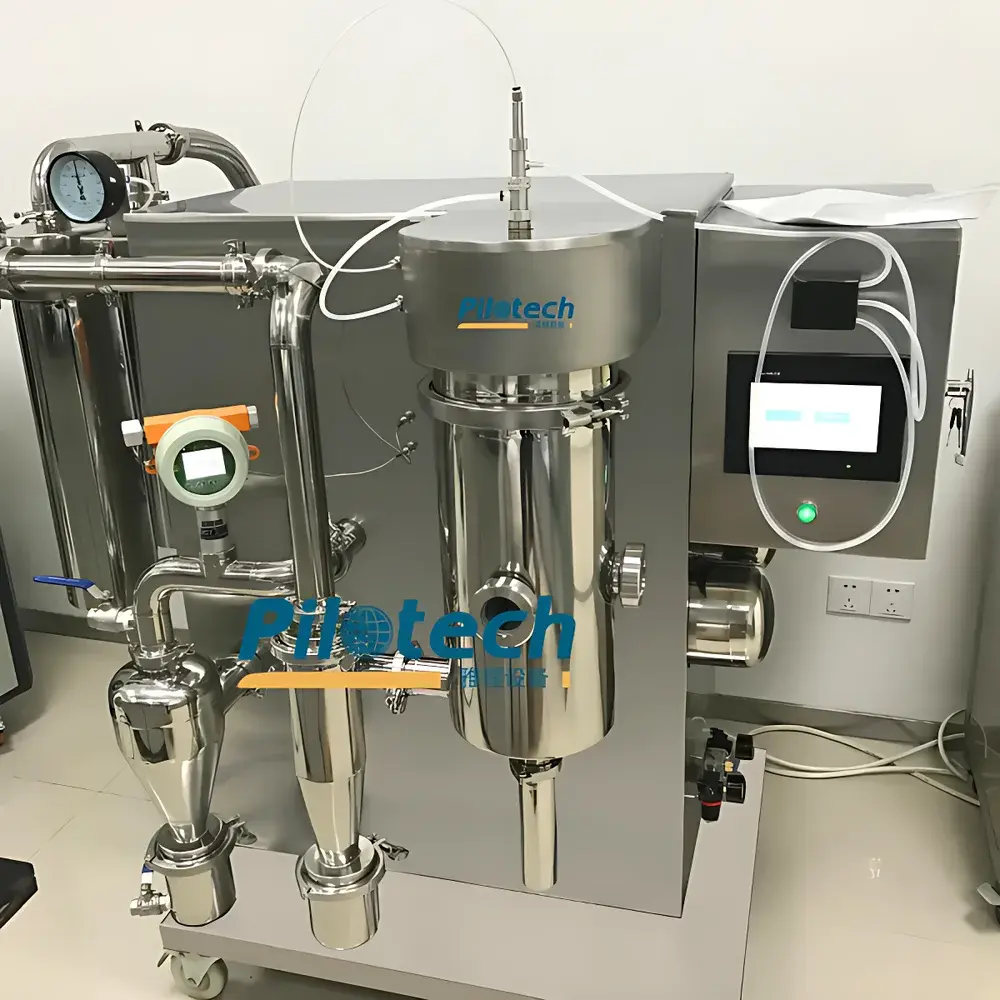
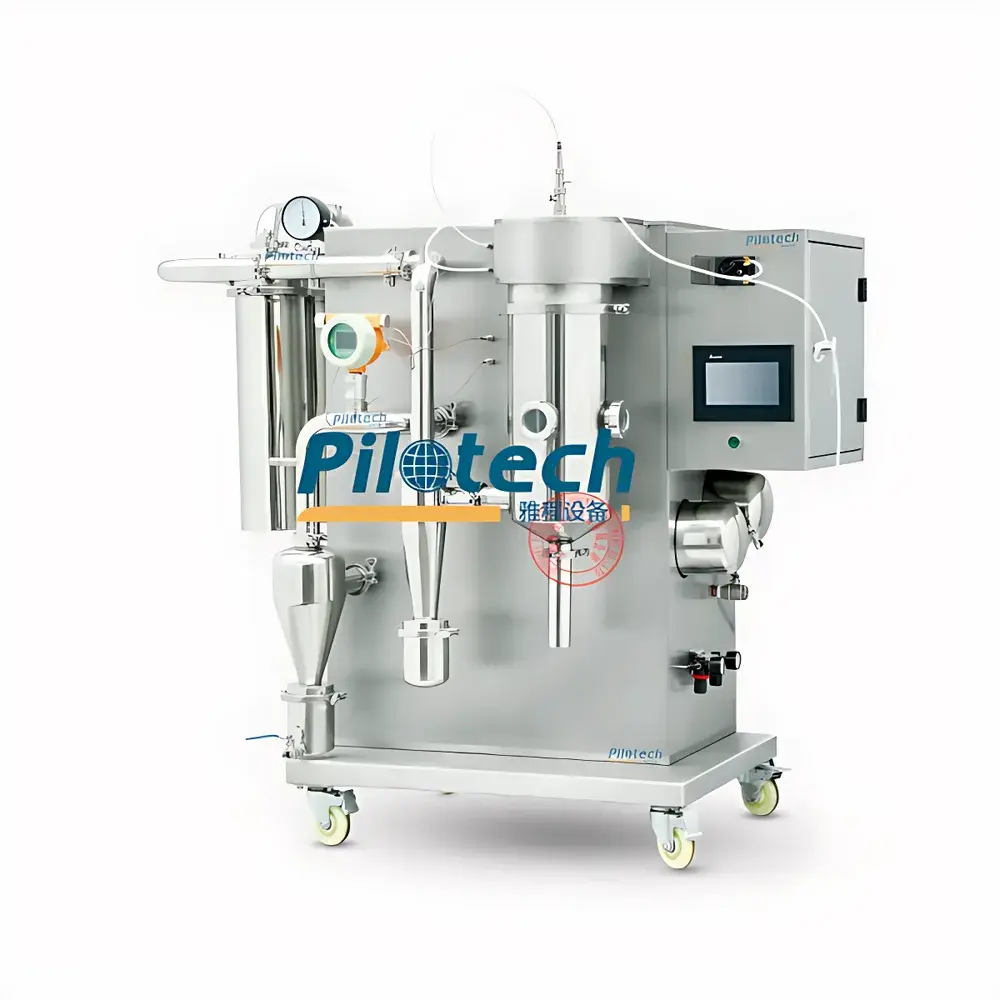
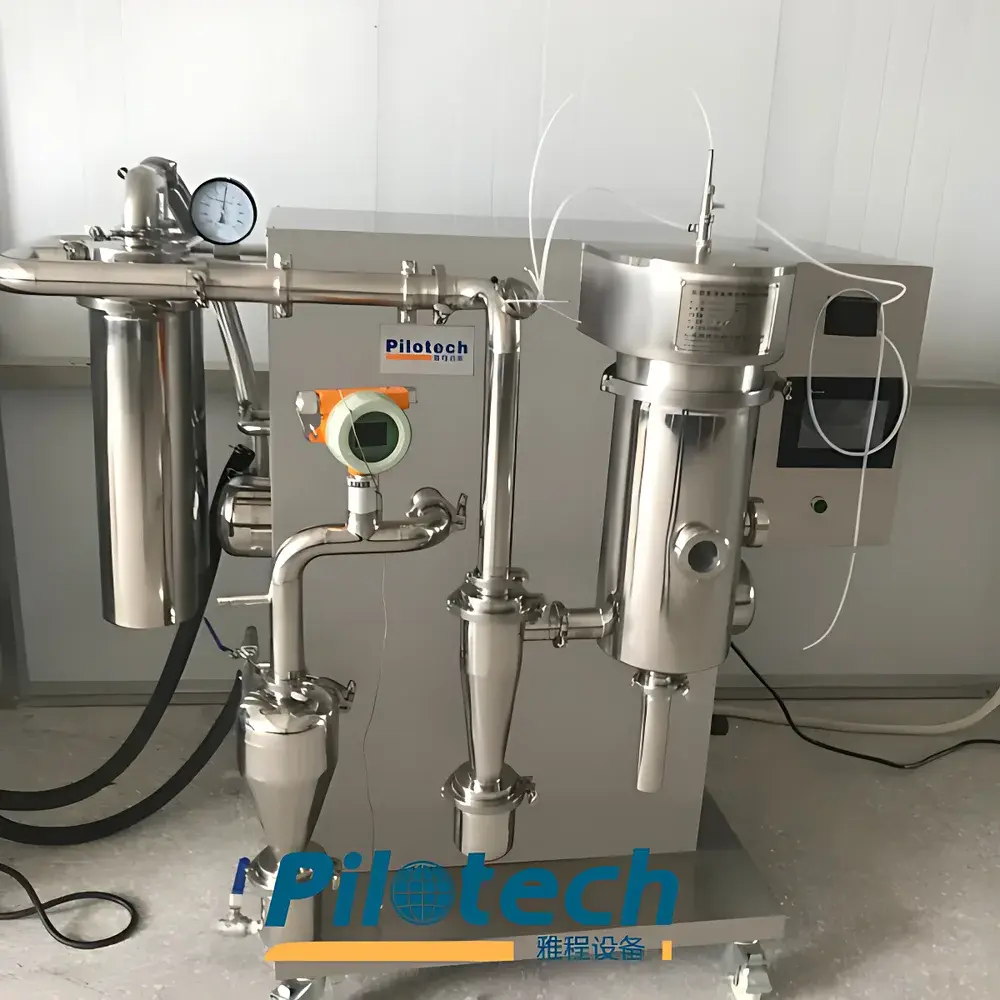
Yacheng YC-015A Benchtop Closed-Cycle Spray Dryer for Organic Solvents
| Brand | Yacheng / PILOTECH |
|---|---|
| Origin | Shanghai, China |
| Manufacturer Type | Direct Manufacturer |
| Product Category | Domestic |
| Model | YC-015A |
| Max Feed Rate | 1500 mL/h |
| Inlet Air Temperature Range | Up to 200 °C |
| Particle Size Output | 1–25 µm |
| Solvent Compatibility | Water & Common Organic Solvents (e.g., ethanol, acetone, ethyl acetate, chloroform) |
| Oxygen Monitoring Threshold | Auto-Shutdown at ≥2.5% O₂ |
| Nozzle Diameter | Standard 1.0 mm (optional: 0.5/0.8/1.5/2.0 mm) |
| Minimum Sample Volume | 30 mL |
| PID Temperature Control Accuracy | ±1 °C |
Overview
The Yacheng YC-015A Benchtop Closed-Cycle Spray Dryer is an engineered solution for the safe, precise, and reproducible drying of heat-sensitive, oxidation-prone, or hazardous materials dissolved in water or organic solvents. Unlike conventional open-loop spray dryers, the YC-015A operates under a fully inert, nitrogen-purged closed system—eliminating oxygen exposure and preventing combustion, oxidation, or atmospheric contamination during processing. Its core principle relies on coaxial two-fluid nozzle atomization: liquid feed is pneumatically dispersed by pressurized nitrogen into fine droplets within a heated, recirculating N₂ stream; rapid solvent evaporation occurs in the drying chamber, followed by cyclonic separation of dried particles and condensation-based solvent recovery via integrated heat exchangers and low-temperature traps. This architecture ensures compliance with intrinsic safety requirements for Class I, Division 1 environments when handling flammable solvents (per NFPA 484 and IEC 60079-10-1), while maintaining thermal integrity for thermolabile compounds such as peptides, enzymes, liposomes, and active pharmaceutical ingredients (APIs). Designed for laboratory-scale development—not pilot production—the system supports process parameter optimization critical for subsequent scale-up under QbD (Quality by Design) frameworks.
Key Features
- Inert gas closed-loop operation with real-time oxygen concentration monitoring (0–10% range); automatic emergency shutdown triggered at ≥2.5% O₂ to prevent explosive atmospheres.
- Coaxial concentric nozzle design ensures symmetrical atomization—eliminating wall impingement, maximizing powder yield (>85% typical recovery), and enabling vertical adjustment for optimal spray trajectory alignment with drying airflow.
- Integrated solvent recovery system comprising high-efficiency heat exchanger and cryogenic condenser (-20 °C standard, optional -40 °C), achieving >95% solvent capture efficiency for acetone, ethanol, dichloromethane, and other low-boiling organics.
- PLC-based control system with 7-inch color touchscreen interface (fully English-capable firmware); intuitive menu navigation for setting inlet temperature, peristaltic pump speed (0.1–100 rpm), needle cleaning frequency (0–30 Hz), and N₂ flow rate.
- Dual-safety thermal management: post-run cooling protocol maintains fan operation until chamber temperature drops below 50 °C—preventing thermal degradation of residual material and ensuring operator safety.
- Corrosion-resistant construction: all wetted parts—including blower housing, cyclone, and collection vessel—are fabricated from electropolished 316L stainless steel; N₂-compatible seals and gaskets rated for continuous exposure to aggressive solvents.
- Minimal sample requirement: validated operation with as little as 30 mL feed volume, supporting early-stage formulation screening without material waste.
Sample Compatibility & Compliance
The YC-015A accommodates aqueous solutions, ethanol-, methanol-, acetone-, THF-, and ethyl acetate-based suspensions, as well as emulsions and nanoemulsions containing lipids, polymers, or nanoparticles. It is routinely deployed for drying proteins (e.g., lysozyme, BSA), monoclonal antibody formulations, vaccine adjuvants (e.g., PLGA microparticles), natural extracts (curcumin, quercetin), and catalyst precursors. The system meets essential regulatory expectations for lab-scale GMP-aligned workflows: audit-trail-enabled parameter logging (time-stamped, user-ID tagged), electronic signature support (21 CFR Part 11 ready with optional software license), and compatibility with ISO 22000, USP , and ASTM E2500-22 verification protocols. All electrical components conform to CE/EMC Directive 2014/30/EU and RoHS 2011/65/EU standards.
Software & Data Management
The embedded controller logs all critical process variables—including inlet/outlet temperature, N₂ pressure, O₂ concentration, pump speed, and nozzle vibration status—at 1-second intervals. Data export is supported via USB 2.0 to CSV format for integration with LIMS or statistical analysis platforms (e.g., JMP, Minitab). Optional Ethernet connectivity enables remote monitoring and centralized fleet management across multi-instrument laboratories. Firmware updates are performed via secure authenticated download, preserving calibration history and audit integrity. For GLP-compliant environments, optional software modules provide electronic batch records, deviation tracking, and automated report generation aligned with Annex 11 principles.
Applications
- Pharmaceutical R&D: Production of amorphous solid dispersions, inhalable dry powders, and sterile-grade excipient carriers under inert conditions.
- Biotechnology: Stabilization of labile biologics without freeze-drying-induced aggregation; preparation of enzyme-loaded microspheres for controlled release studies.
- Materials Science: Synthesis of uniform metal-organic framework (MOF) nanoparticles, lithium-ion battery cathode precursors (e.g., NMC), and quantum dot colloids.
- Food & Nutraceuticals: Encapsulation of omega-3 oils, probiotics, and anthocyanins using GRAS-certified solvents (e.g., ethanol/water mixtures).
- Agrochemical Development: Formulation of pesticide nanosuspensions with improved photostability and reduced environmental leaching potential.
FAQ
Can the YC-015A handle chlorinated solvents such as dichloromethane or chloroform?
Yes—provided the optional corrosion-resistant cold trap and compatible elastomers are installed. System compatibility must be verified case-by-case based on solvent vapor pressure and chemical resistance data.
Is validation documentation (IQ/OQ/PQ) available?
Standard factory acceptance test (FAT) reports and calibration certificates for temperature sensors and flow meters are included. Custom IQ/OQ protocols can be supplied upon request for regulated environments.
What maintenance intervals are recommended for the nitrogen recirculation loop?
Oil-free scroll compressor service every 2,000 operating hours; oxygen sensor recalibration every 6 months; nozzle inspection and ultrasonic cleaning after each 10 runs involving viscous or particulate-laden feeds.
Does the system support continuous feeding with automated level sensing?
No—it is designed for batch-mode operation with manual feed reservoir loading. Continuous feed capability requires integration with third-party peristaltic pumps and level controllers.
Can particle morphology be controlled via process parameters?
Yes—feed concentration, inlet temperature, atomization gas pressure, and drying residence time collectively influence surface roughness, porosity, and crystallinity, as confirmed by SEM and XRD correlation studies published in Journal of Aerosol Science and Drying Technology.



