
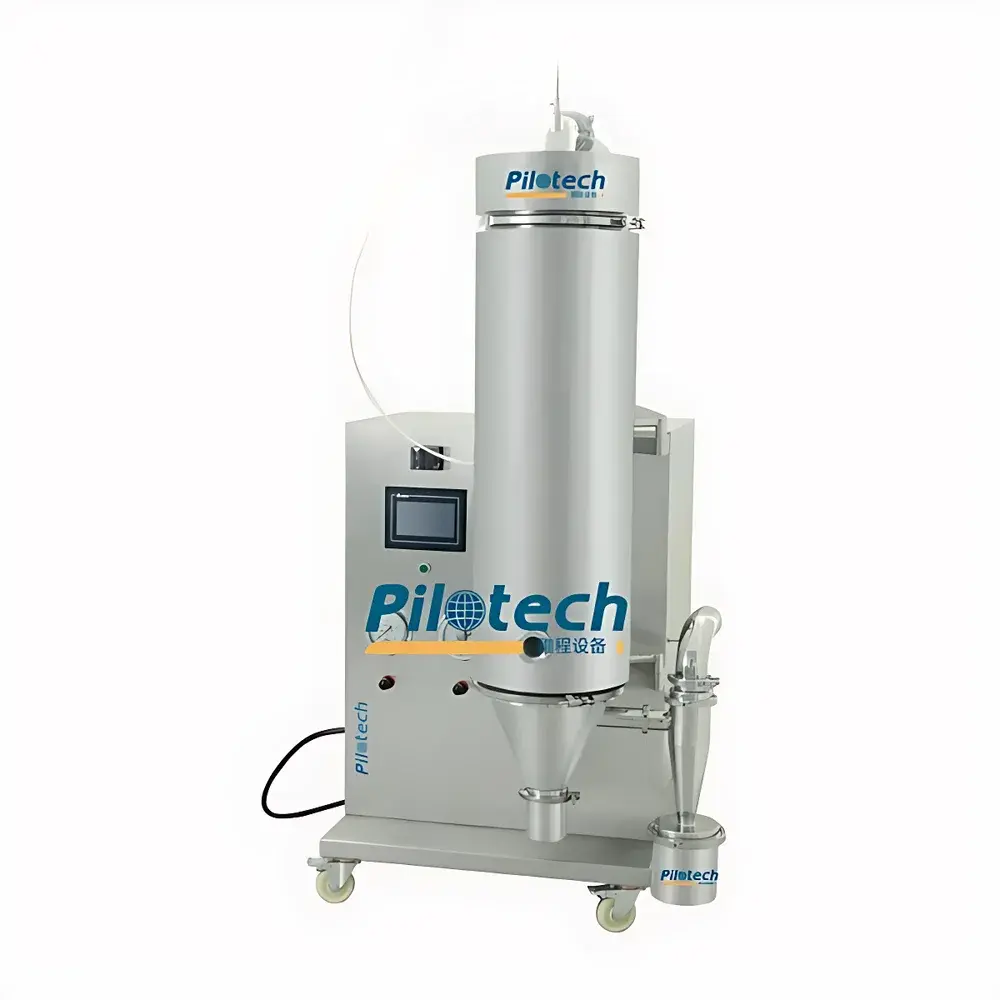
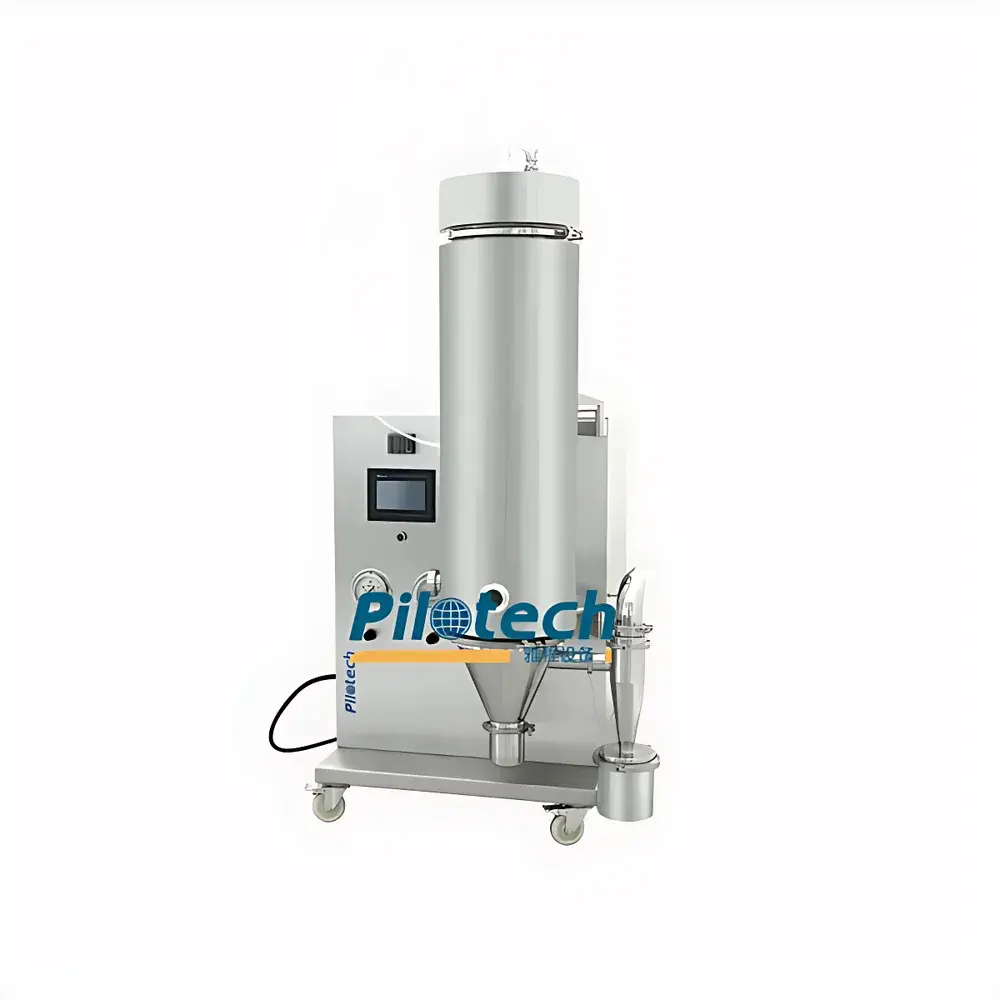
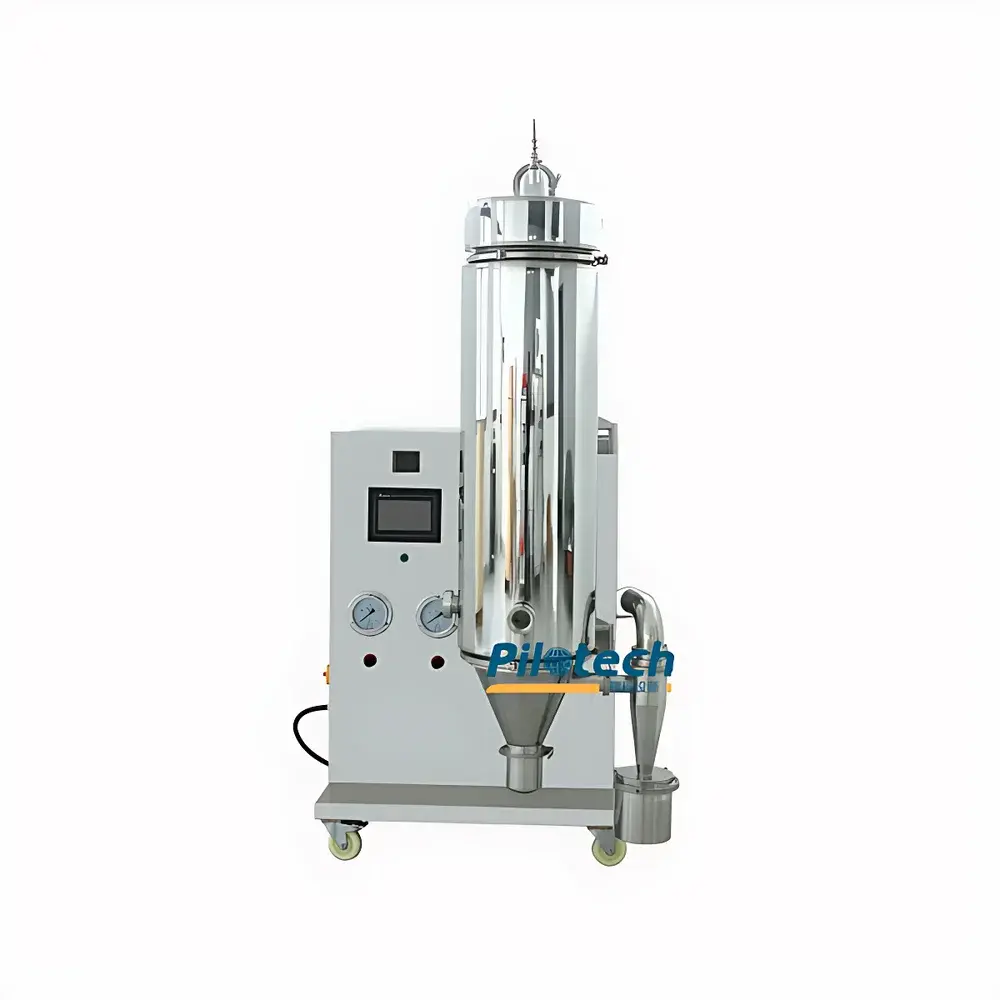
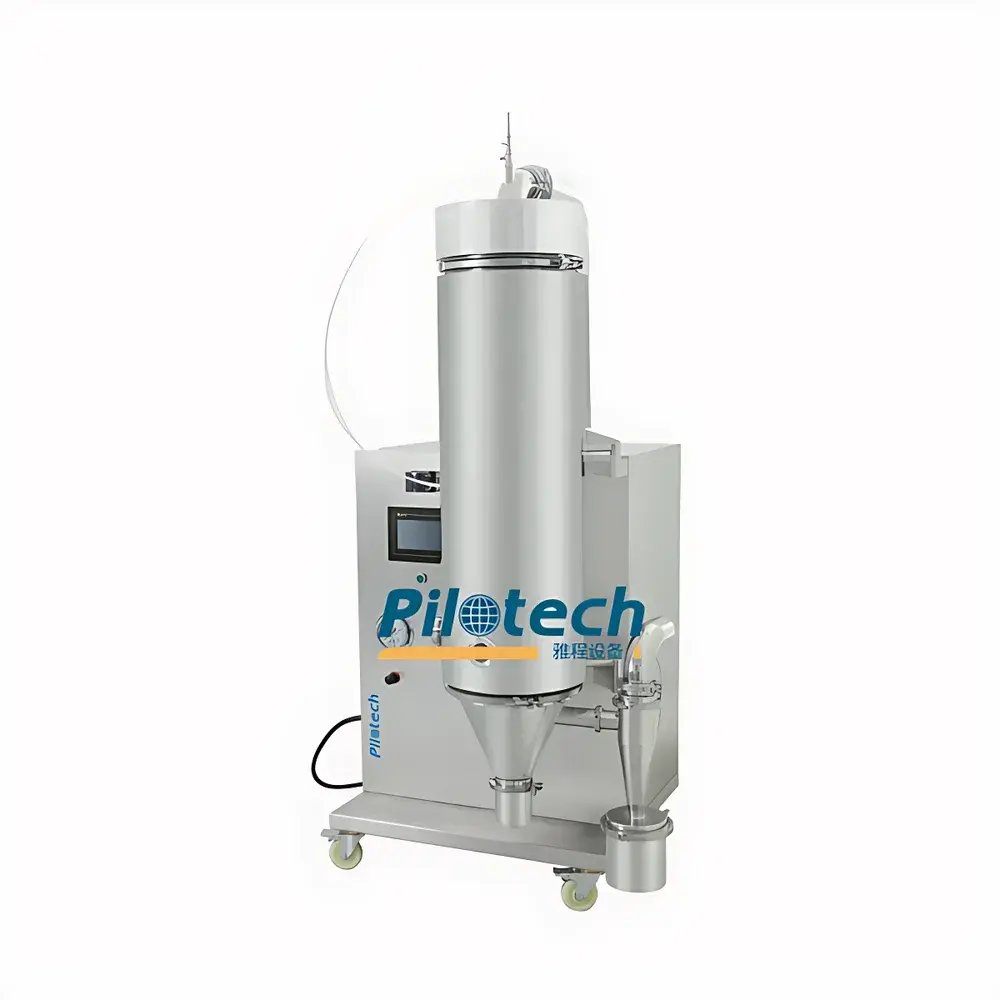
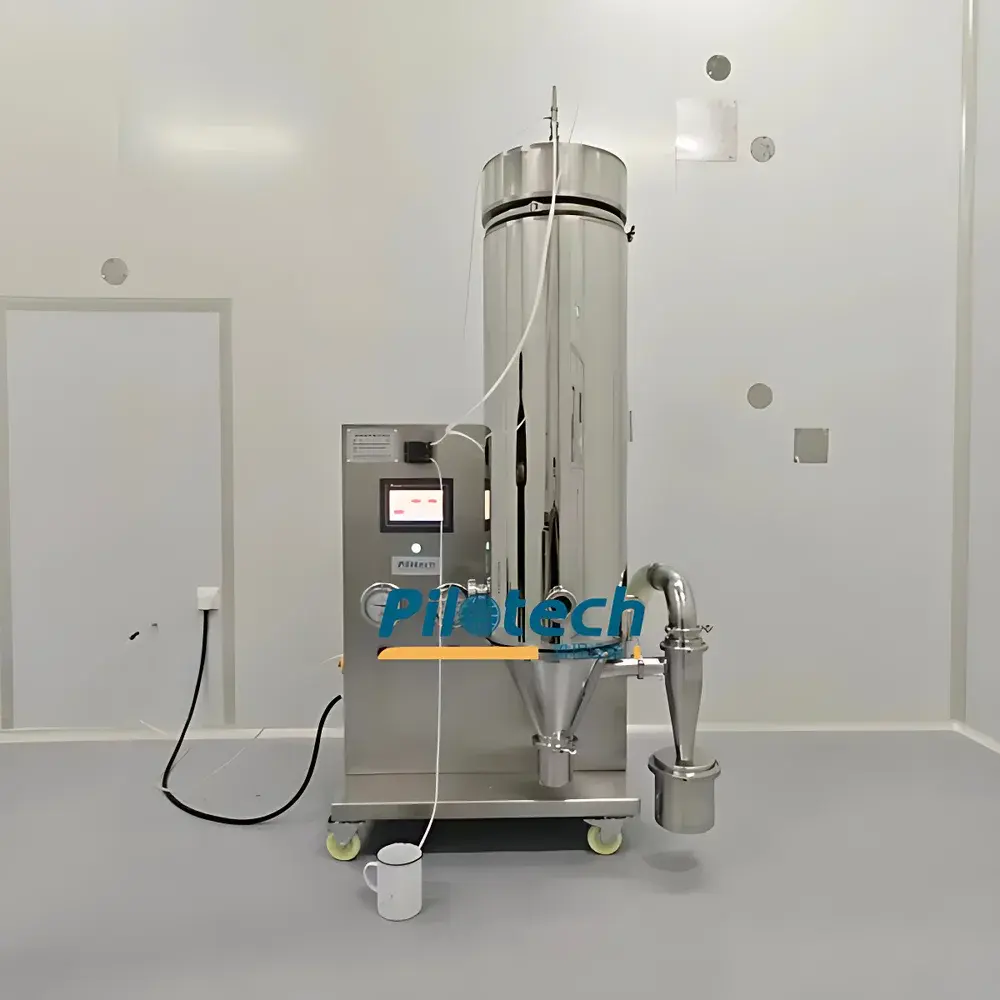
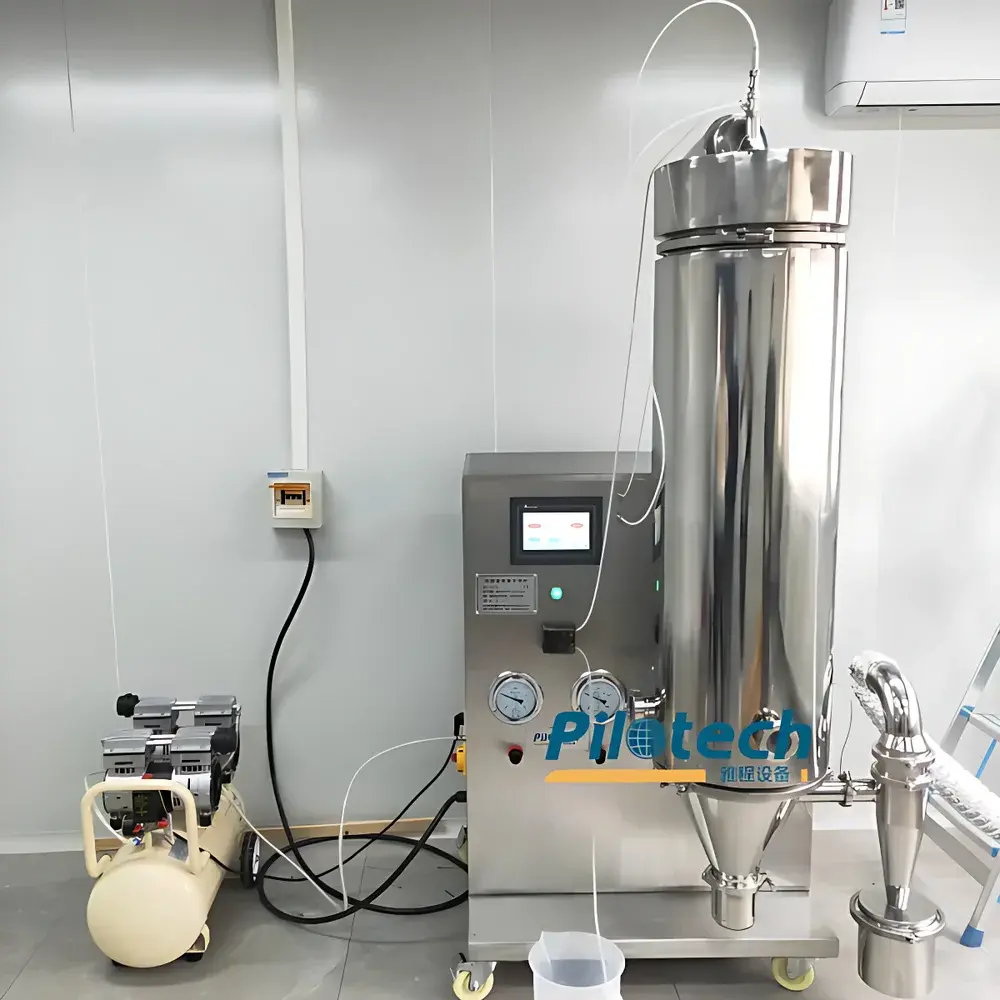
Yacheng YC-019 Pilot-Scale Spray Dryer
| Brand | Yacheng / PILOTECH |
|---|---|
| Origin | Shanghai, China |
| Manufacturer Type | Direct Manufacturer |
| Country of Origin | China |
| Model | YC-019 |
| Sample Type | Aqueous solutions only |
| Maximum Feed Rate | 5000 mL/h |
| Inlet Air Temperature Range | 105–350 °C |
| Particle Size Range | 1–100 µm |
| Nozzle Orifice | 2.0 mm standard (0.5/0.8/1.0/1.5 mm optional) |
| Drying Time | 1.0–1.5 s |
| Temperature Control Accuracy | ±2 °C (PID) |
| Recovery Efficiency | Up to 92% |
| Construction Material | 304 Stainless Steel (drying chamber, cyclone, collection tubing) |
| Compressor | Oil-free air compressor |
| Display | Full-color LCD touchscreen with real-time parameter animation |
Overview
The Yacheng YC-019 Pilot-Scale Spray Dryer is a benchtop-to-pilot transition system engineered for controlled, scalable thermal processing of heat-sensitive aqueous solutions. It operates on the principle of flash evaporation via single-fluid nozzle atomization: liquid feed is pneumatically atomized into fine droplets (1–100 µm), which are rapidly dried in a co-current hot-air stream. The unit’s design integrates precise thermal management (105–350 °C inlet air), low-inertia airflow dynamics, and optimized residence time (1.0–1.5 s) to preserve labile bioactive compounds—including enzymes, peptides, botanical extracts, and microbial metabolites—while enabling reproducible particle formation across pilot-scale throughput (100 mL to 5000 mL/h). Its compact footprint (<1 m² floor space) and quiet operation (<65 dB(A)) meet ISO 14040-compliant laboratory acoustic requirements, making it suitable for shared core facilities and regulated R&D environments.
Key Features
- Wide operational temperature range (105–350 °C inlet air) supports both low-temperature drying of sugar-rich herbal extracts and high-temperature ceramic precursor processing.
- Adjustable nozzle orifice (standard 2.0 mm; optional 0.5–1.5 mm) enables targeted control over droplet size distribution and final particle morphology.
- Integrated automatic nozzle cleaning (‘needle clearance’ function) with user-adjustable frequency prevents clogging during extended runs with viscous or particulate-laden feeds.
- Dual-stage recovery architecture—optimized cyclone geometry combined with stainless-steel collection vessels—achieves up to 92% mass recovery, significantly exceeding conventional single-cyclone systems.
- PID-controlled heating system maintains inlet air temperature stability within ±2 °C, ensuring batch-to-batch consistency under GLP-aligned experimental protocols.
- Oil-free compressed air supply guarantees particle purity and eliminates hydrocarbon contamination risk—critical for pharmaceutical excipient development and catalyst synthesis.
- Real-time animated touchscreen interface displays inlet temperature, blower frequency, peristaltic pump speed, and needle actuation status—enabling full process traceability without external data loggers.
Sample Compatibility & Compliance
The YC-019 accepts aqueous solutions, suspensions, and emulsions with total solids content ranging from 1% to 40% w/w. It is routinely used for drying thermolabile biologics (e.g., monoclonal antibody formulations, vaccine adjuvants), natural product extracts (polyphenols, glycosides), food-grade colloids (whey protein, maltodextrin), and inorganic precursors (metal nitrates, sol-gel slurries). All wetted parts—including drying chamber, cyclone separator, and collection tubing—are constructed from electropolished 304 stainless steel, compliant with FDA 21 CFR Part 11 material contact requirements for non-sterile R&D applications. While not certified for GMP manufacturing, its design supports audit-ready documentation practices required by ISO/IEC 17025-accredited laboratories and preclinical formulation workflows aligned with ICH Q5C stability guidelines.
Software & Data Management
The integrated color LCD touchscreen provides intuitive, menu-driven operation with no external PC dependency. Parameter sets (temperature ramp profiles, pump speed gradients, needle pulse intervals) can be saved as named methods and recalled for repeat experiments. Real-time graphical overlays show dynamic trends of inlet temperature vs. time and feed rate vs. outlet temperature—facilitating correlation of thermal history with powder morphology. All displayed parameters are timestamped and stored internally (≥10,000 data points), exportable via USB to CSV for integration into LIMS or statistical process control (SPC) platforms. Audit trail functionality records operator ID (via optional login), method changes, and emergency stop events—supporting basic 21 CFR Part 11 compliance for electronic record integrity.
Applications
- Catalyst development: Production of spherical 60–100 µm metal oxide particles for fluidized-bed catalysis screening.
- Pharmaceutical formulation: Generation of inhalable dry powders (1–5 µm) and sustained-release microparticles (20–80 µm) from aqueous nanosuspensions.
- Nutraceutical processing: Stabilization of probiotics, omega-3 emulsions, and anthocyanin-rich fruit extracts without Maillard degradation.
- Materials science: Synthesis of uniform ceramic microspheres (e.g., ZrO₂, SiO₂) for sintering studies and battery cathode precursor production.
- Academic research: Teaching platform for mass transfer, thermodynamics, and particle engineering principles in chemical and food engineering curricula.
FAQ
What is the minimum sample volume required for a valid run?
A minimum of 100 mL is recommended for stable atomization and representative particle sampling; actual minimum depends on feed viscosity and solids concentration.
Can the YC-019 handle organic solvents?
No—it is designed exclusively for aqueous-phase feeds. Solvent-based processing requires explosion-proof enclosures and inert gas purging, which are outside this model’s safety certification scope.
Is calibration documentation provided with the unit?
Yes—NIST-traceable temperature sensor calibration certificates and airflow verification reports are included at shipment.
How is particle size distribution verified post-drying?
The system does not include an integrated particle sizer; users typically employ laser diffraction (e.g., Malvern Mastersizer) or SEM imaging on collected powder samples.
What maintenance intervals are recommended?
Daily: Visual inspection of nozzle tip and cyclone seals; weekly: Cleaning of stainless-steel collection components with 70% ethanol; annually: Full PID controller recalibration and blower bearing lubrication per OEM service manual.



