
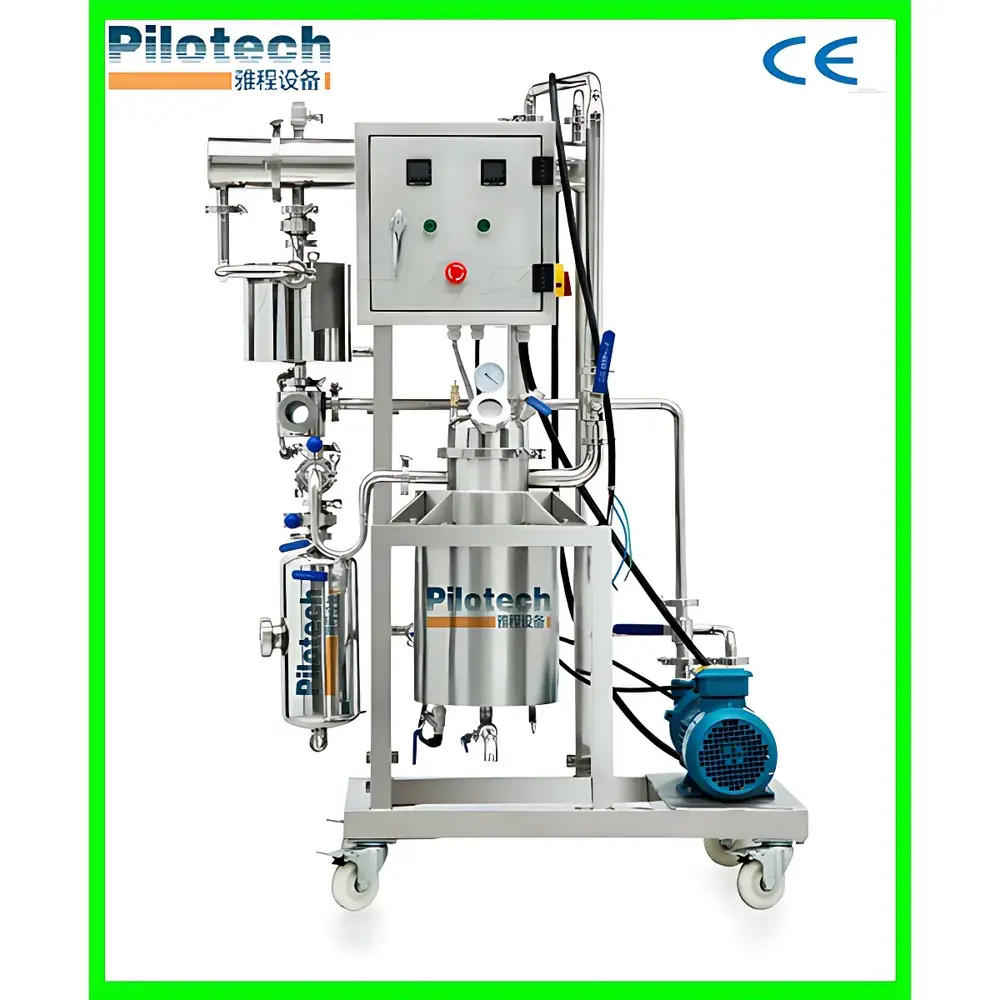
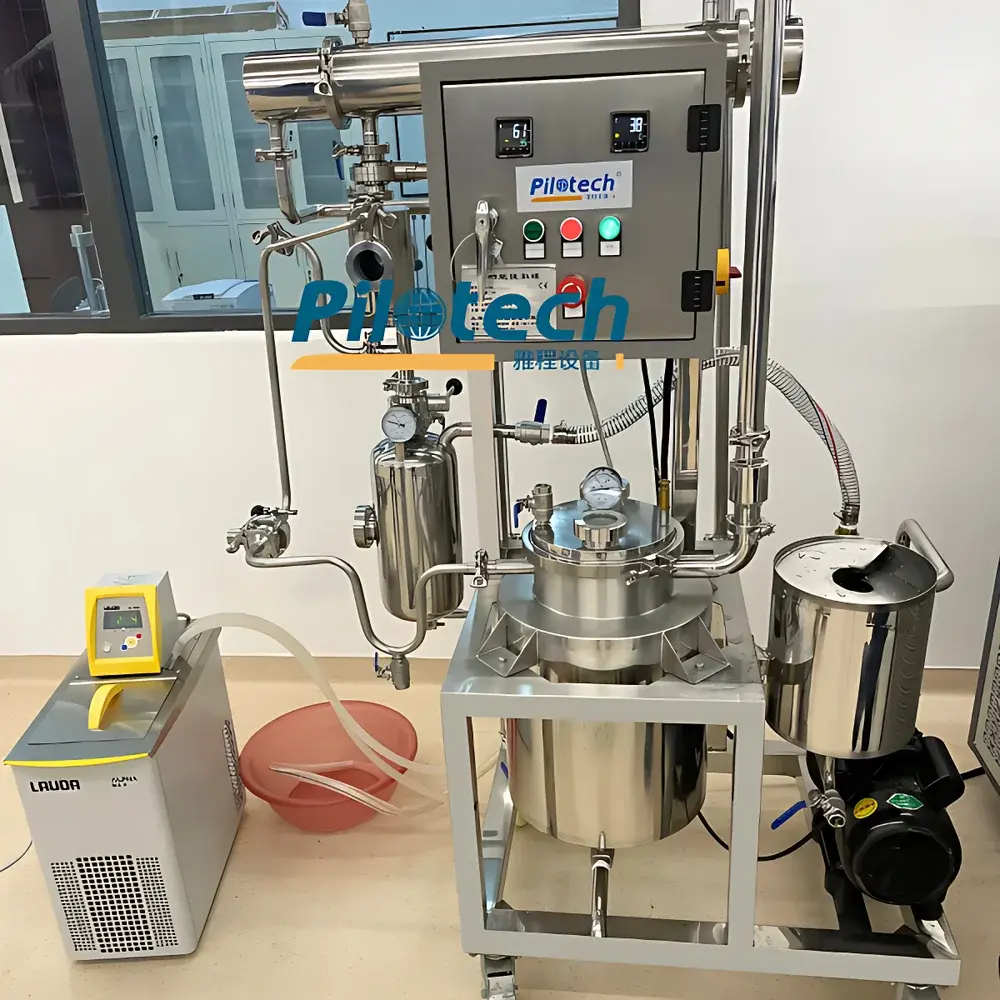
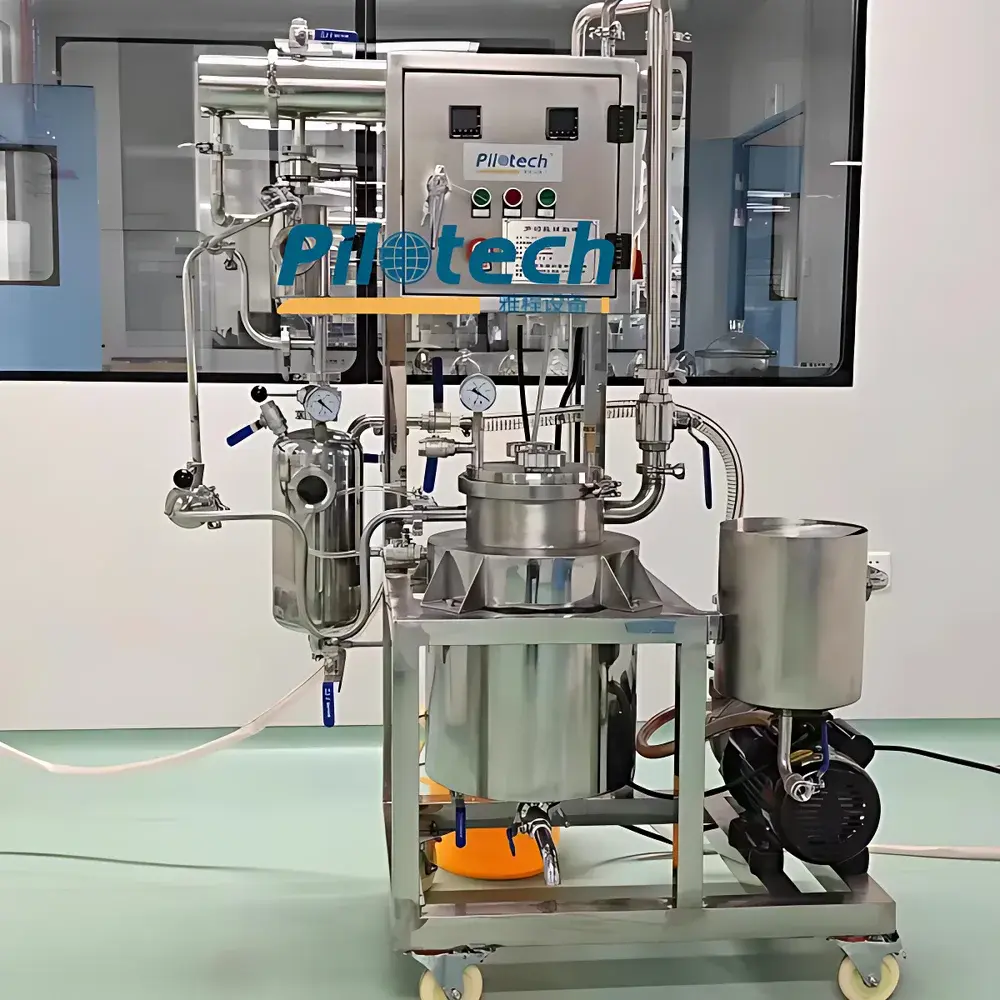
Yacheng YC-10L Pilot-Scale Soxhlet-Integrated Extraction & Concentration System
| Brand | Yacheng / PILOTECH |
|---|---|
| Origin | Shanghai, China |
| Manufacturer Type | OEM/ODM Manufacturer |
| Country of Origin | China |
| Model | YC-10L |
| Pricing | Upon Request |
| Extractor Volume | 10 L (effective) |
| Condenser Area | 0.5 m² |
| Vacuum Range | 0 to −0.08 MPa |
| Temperature Control | PID, ±2 °C accuracy |
| Heating Method | Jacketed thermal oil circulation (pressureless) |
| Material of Construction | 316L stainless steel (wetted parts) |
| Cooling Water Consumption | 0.5 t/h at < 0.3 MPa pressure |
| Power Supply | 3-phase, 380 V, 50 Hz (customizable) |
| Optional | Integrated ultrasonic extraction module (15–60 kHz, titanium alloy transducer) |
Overview
The Yacheng YC-10L Pilot-Scale Soxhlet-Integrated Extraction & Concentration System is an engineered laboratory-scale unit designed for simultaneous solid–liquid extraction, solvent recovery, and vacuum concentration of heat-sensitive botanical matrices. It integrates principles of percolation, reflux extraction, and thin-film evaporation within a single compact architecture—enabling both classical Soxhlet-style cyclic extraction and dynamic thermal reflux under controlled vacuum conditions. Unlike conventional batch extractors, this system supports continuous solvent recirculation through a thermally insulated jacketed vessel, paired with a dedicated condenser and oil–water separator to recover volatile aromatic fractions (e.g., terpenes, monoterpenoids) without phase loss. Its modular design conforms to fundamental unit operations in phytochemical process development: extraction kinetics optimization, solvent selection screening (aqueous, hydroalcoholic, or organic), and early-stage concentration profiling prior to downstream purification. The system operates across three pressure regimes—vacuum (−0.08 MPa), atmospheric, and mild positive pressure—ensuring compatibility with diverse solvents (ethanol, methanol, ethyl acetate, water) while maintaining structural integrity and GMP-aligned material traceability.
Key Features
- Compact footprint (≤1 m² floor space), suitable for standard fume hoods or dedicated lab benches; minimal infrastructure requirements (only electrical supply and cooling water connection)
- 10 L double-jacketed stainless steel extraction vessel with polished interior surface (Ra ≤ 0.4 µm), polyurethane insulation layer, and pressureless thermal oil heating circuit for uniform temperature distribution and avoidance of localized overheating
- Integrated tubular condenser (0.5 m² effective area) and gravity-driven oil–water separator enabling quantitative recovery of volatile essential oils and hydrophobic constituents
- Onboard vacuum generation via water-ring pump with sealed coolant reservoir, supporting stable operation down to −0.08 MPa for low-temperature concentration (typically 40–65 °C)
- PID-controlled digital temperature regulation (Omron controller) with real-time monitoring via front-panel touchscreen or optional Ethernet/USB interface for remote logging and audit trail compliance
- Perforated stainless steel support plate and removable extraction basket (316L) ensuring consistent solvent contact and mechanical retention of coarse particulates
- Full 316L wetted-path construction compliant with ASME BPE and ISO 20858 standards for pharmaceutical and food-grade applications
Sample Compatibility & Compliance
The YC-10L accommodates dried or fresh plant materials—including roots, leaves, bark, seeds, and flowers—with feed capacities ranging from 0.3 kg to 1.5 kg (dry weight basis). It supports aqueous, ethanol-based, and mixed-solvent extractions per USP , EP 2.8.12, and Chinese Pharmacopoeia Vol. IV methods. All fluid-contact surfaces meet FDA 21 CFR Part 11 requirements when equipped with audit-trail-enabled control software. The system’s vacuum-rated vessel and pressure-tested piping comply with PED 2014/68/EU Category I classification. Documentation packages include material certificates (EN 10204 3.1), weld maps, and FAT/SAT reports upon request—supporting GLP/GMP validation protocols in academic, contract research, and preclinical manufacturing environments.
Software & Data Management
The standard control interface features a 7-inch resistive touchscreen with intuitive HMI navigation, real-time parameter visualization (temperature, vacuum level, elapsed time), and manual/auto mode switching. Optional PC integration enables CSV export of time-stamped process logs (temperature, pressure, setpoint deviations), facilitating trend analysis and regulatory reporting. When configured with validated firmware, the system supports electronic signatures, user-level access control (admin/operator), and immutable data storage aligned with ALCOA+ principles. Data integrity safeguards include automatic backup to external USB drives and network-attached storage (NAS) via TCP/IP.
Applications
This system serves as a scalable bridge between benchtop experimentation and pilot production for natural product laboratories. Typical use cases include: optimization of extraction yield vs. solvent ratio and dwell time for polyphenols (e.g., EGCG, curcuminoids); recovery of volatile oils from citrus peels or lavender flowers; concentration of tea infusions or fruit juice extracts to specific gravities (1.1–1.38); comparative studies of ultrasonic-assisted vs. conventional reflux extraction for alkaloid recovery; and process qualification for herbal injectables under Chinese NMPA guidelines. Universities employ it for thesis-level process engineering projects; CROs utilize it for client-specific method development; and nutraceutical manufacturers apply it for batch consistency testing prior to scale-up.
FAQ
What solvents are compatible with the YC-10L system?
Water, ethanol, methanol, isopropanol, ethyl acetate, and acetone—provided vapor pressure and flash point allow safe operation under specified vacuum and temperature limits.
Can the system handle viscous or fibrous botanicals?
Yes—adjustable basket geometry and bottom-mounted filtration plates accommodate coarse powders, granules, and shredded biomass without channeling or clogging.
Is ultrasonic extraction truly integrated—or is it an add-on module?
The ultrasonic transducer (titanium alloy, 15–60 kHz selectable) is factory-installed with sealed feedthroughs and calibrated power coupling; no field modification required.
Does the system support automated cleaning-in-place (CIP)?
Not natively—but the fully drainable, slope-bottomed vessel and sanitary valve layout permit manual CIP using validated detergent solutions and conductivity verification.
What documentation is provided for regulatory submissions?
IQ/OQ protocols, material traceability dossiers, calibration records for temperature/vacuum sensors, and third-party CE/EC Declaration of Conformity are available upon order confirmation.



