
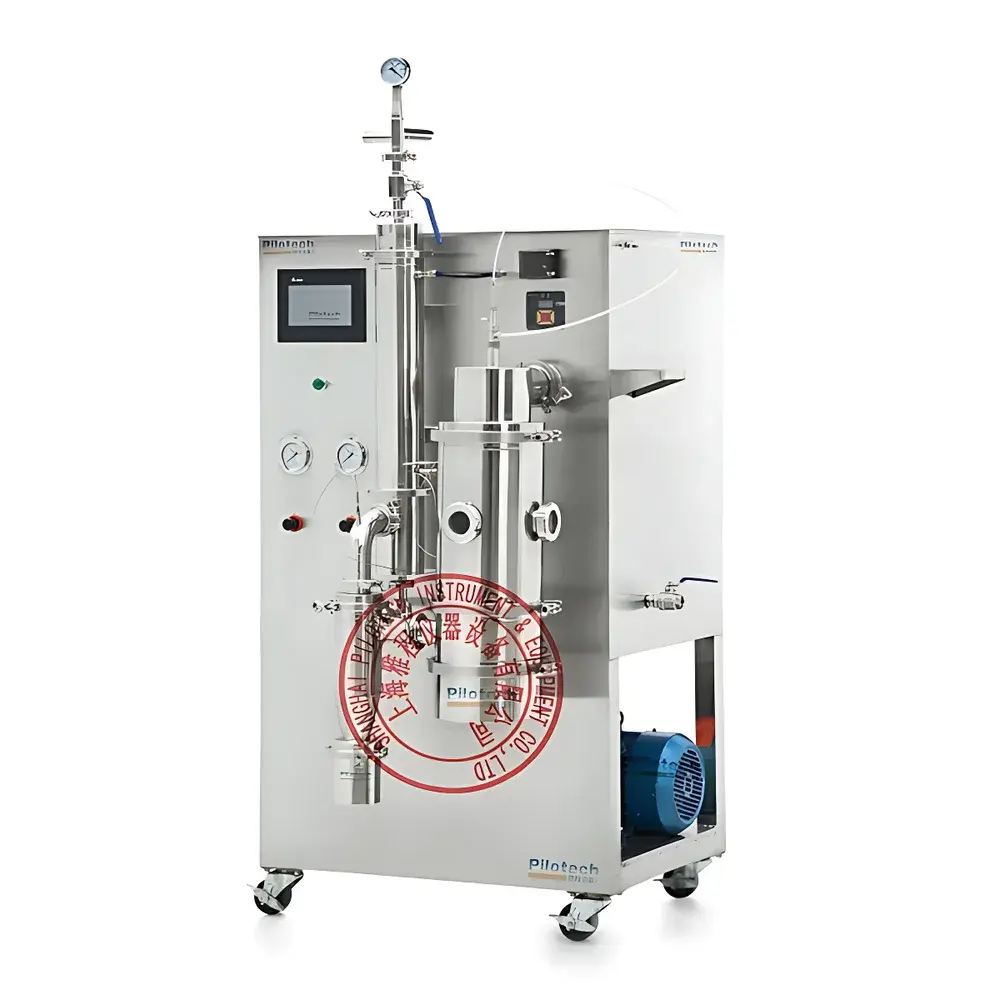
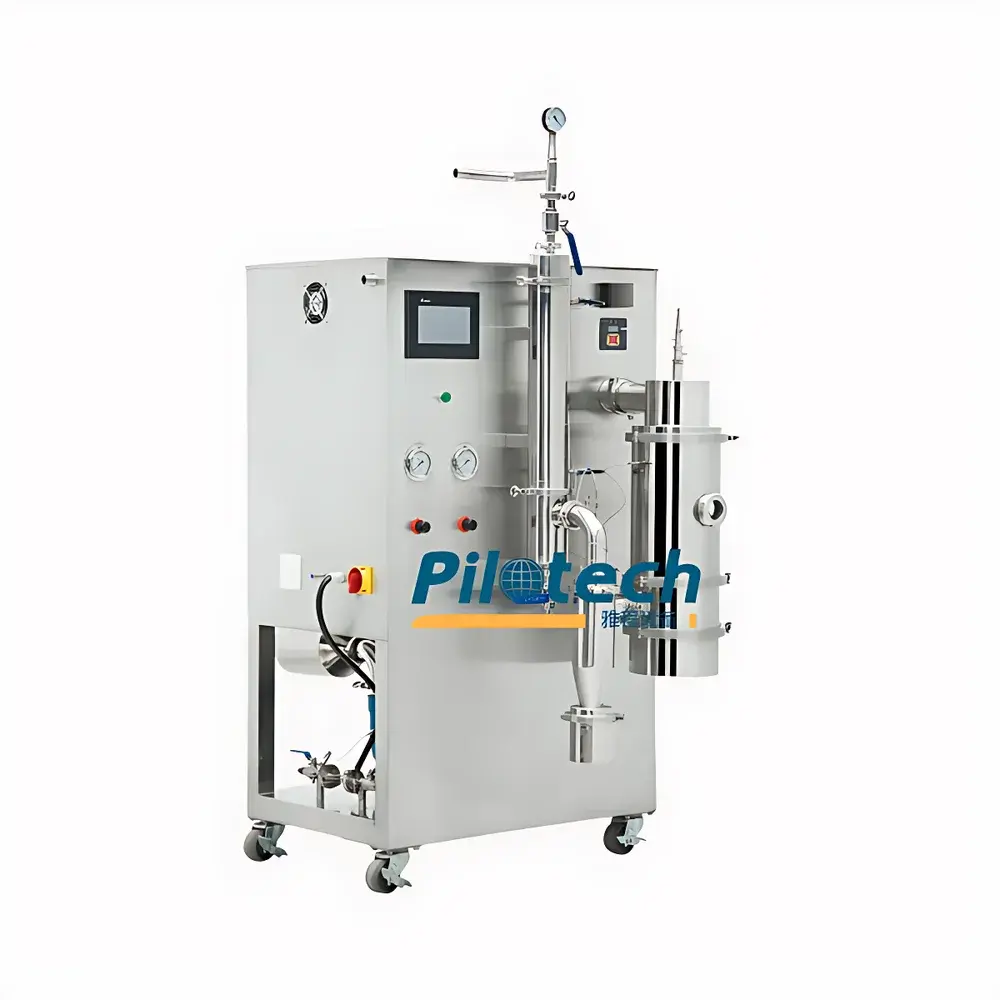
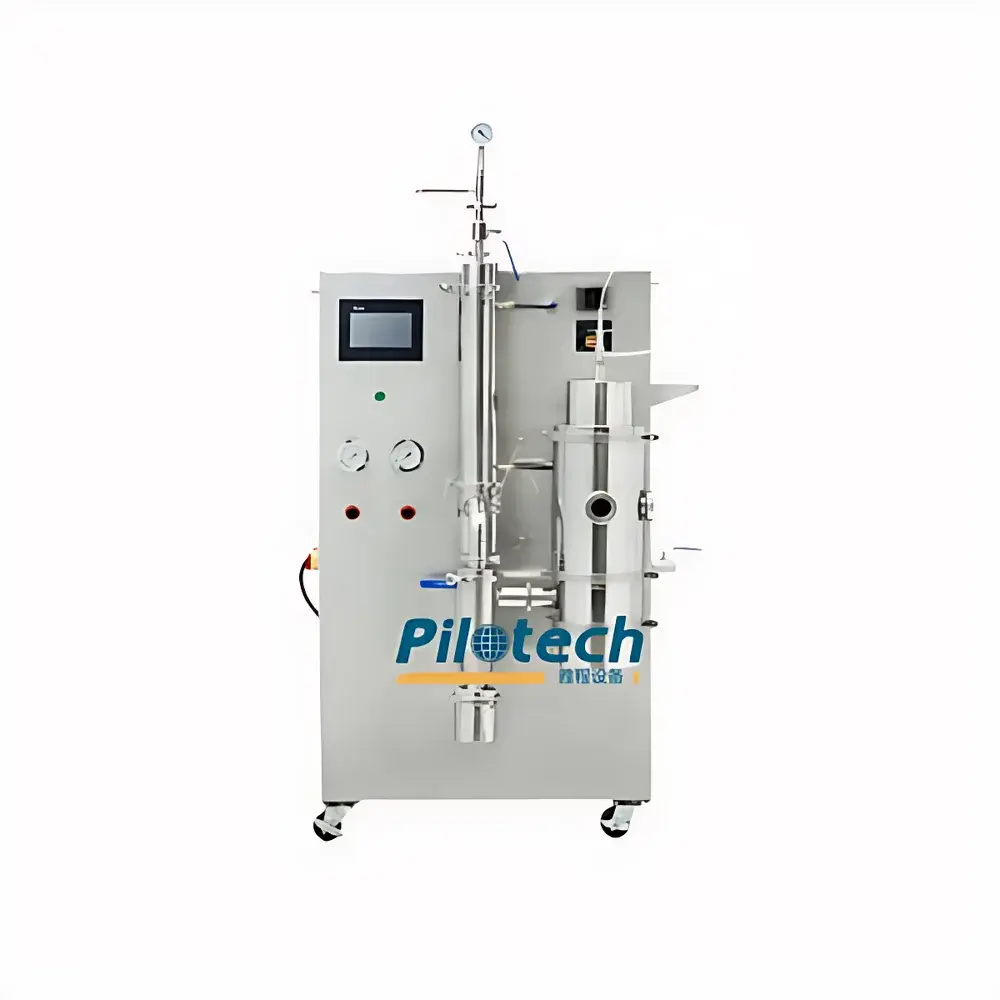
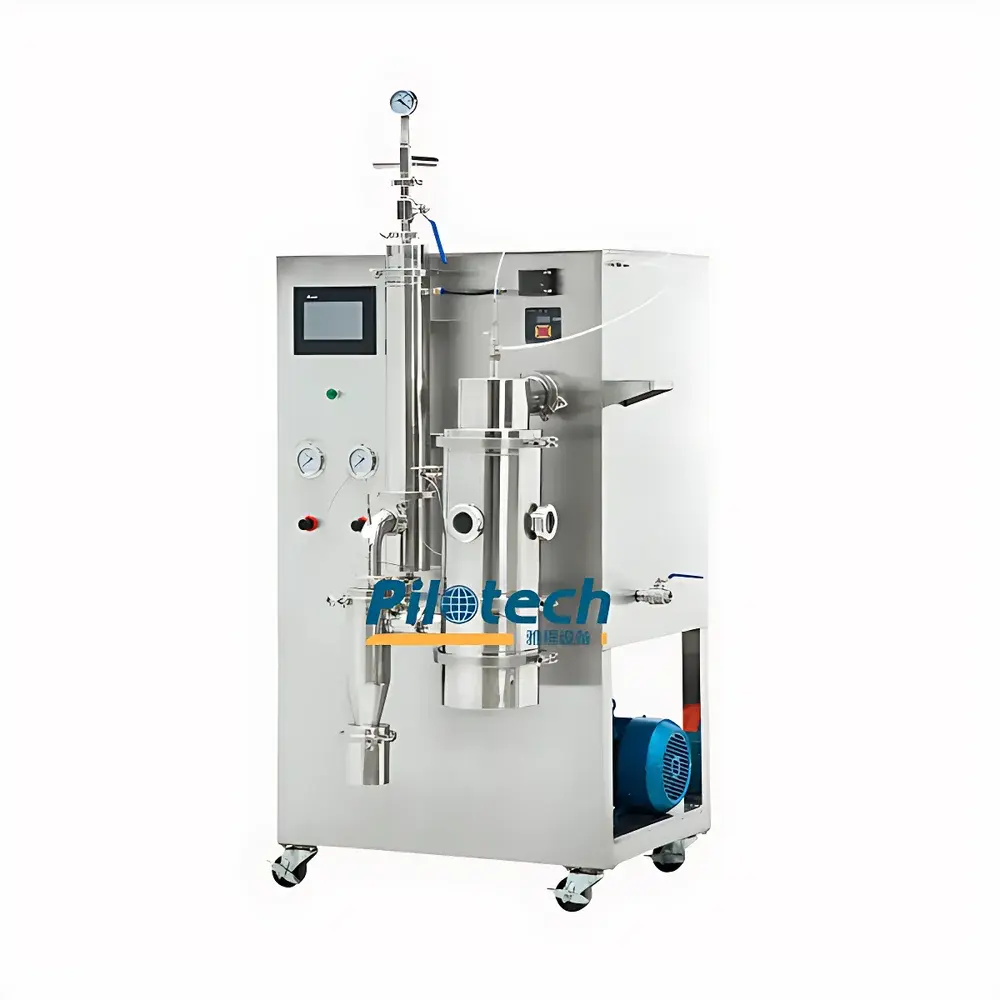
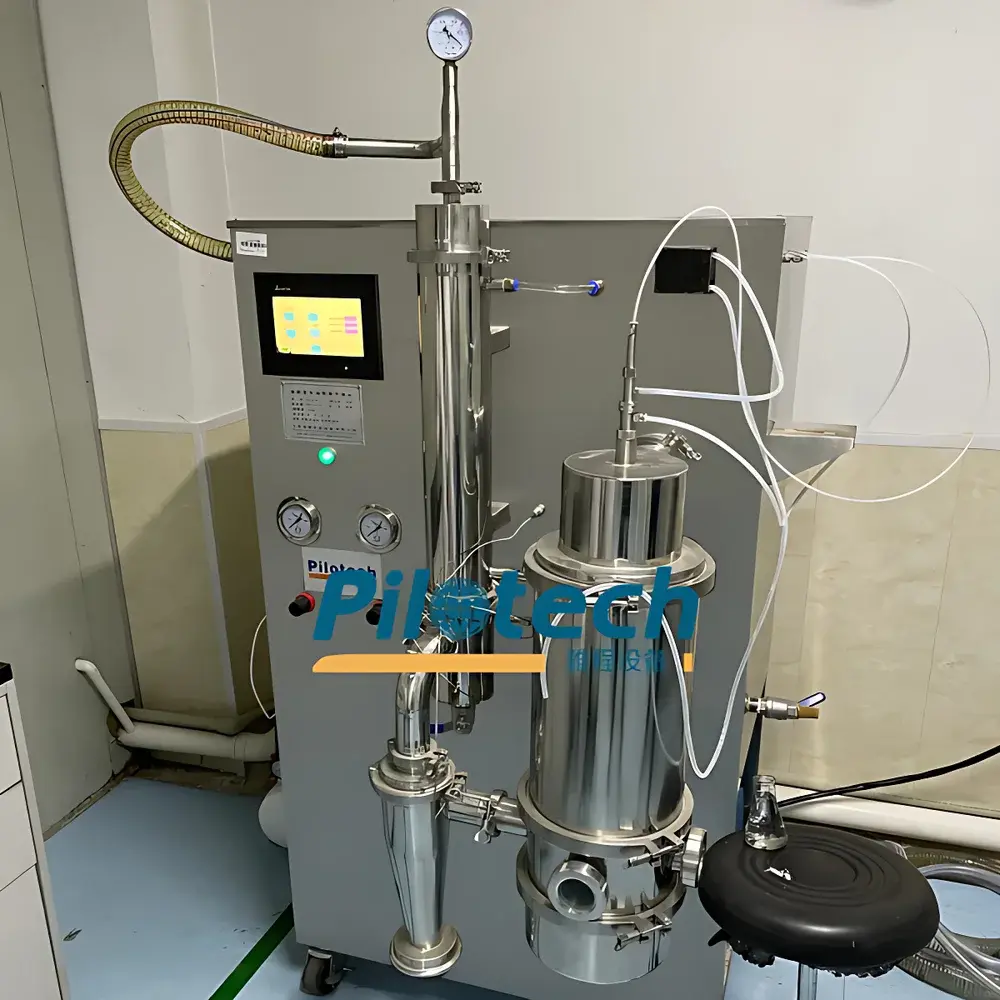
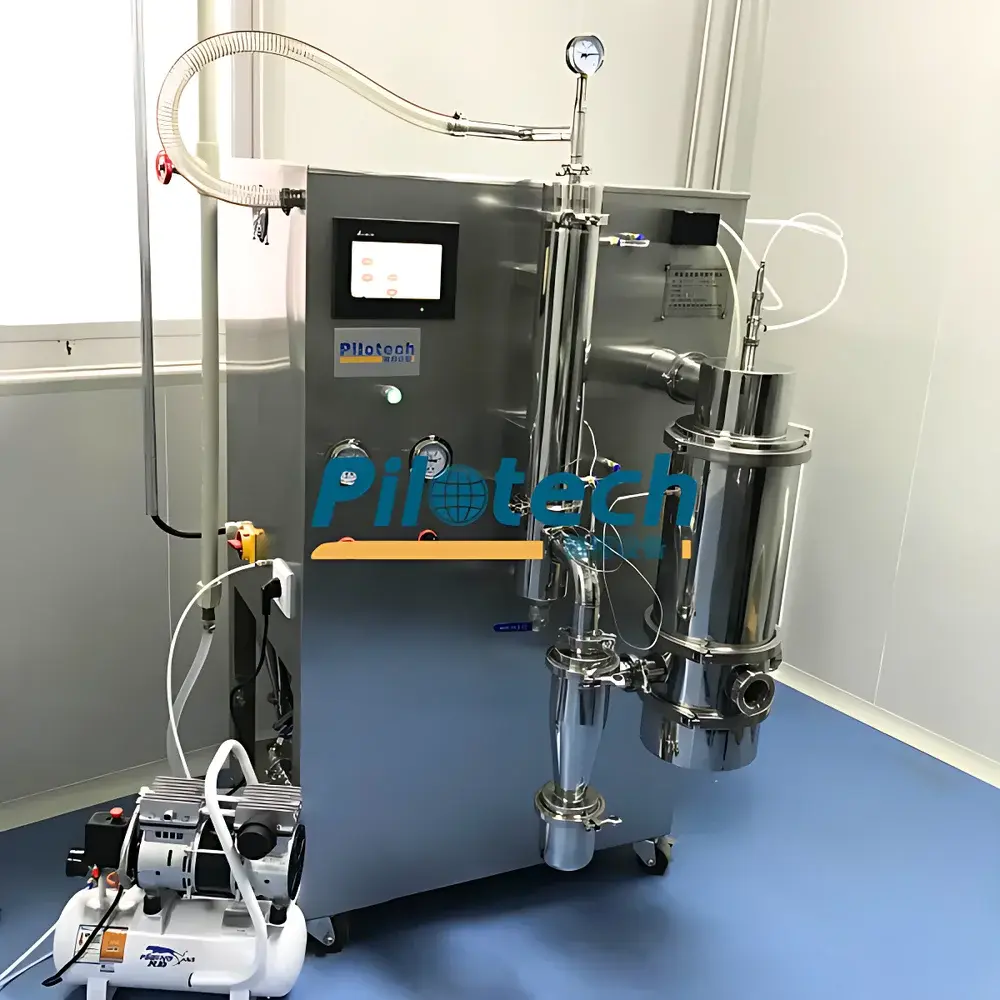
Yacheng YC-2000 Laboratory-Scale Vacuum Spray Dryer
| Brand | Yacheng / PILOTECH |
|---|---|
| Origin | Shanghai, China |
| Manufacturer Type | OEM Manufacturer |
| Product Category | Domestic |
| Model | YC-2000 |
| Sample Type Compatibility | Aqueous solutions only |
| Maximum Feed Rate | 1500 mL/h |
| Temperature Range | 60–200 °C (operable down to 50 °C under vacuum) |
| Particle Size Distribution | 1–100 µm (normal distribution) |
| Vacuum Range | –0.05 to –0.06 MPa |
| Heating Control Accuracy | ±1 °C (PID-regulated) |
| Nozzle Orifice | 1.0 mm standard (0.5/0.8/1.5/2.0 mm optional) |
| Power Supply | 7 kW / 380 V AC |
| Construction Material | Full 316L stainless steel |
| Integrated Oil-Free Compressor | Yes |
| Cleaning Function | Automatic needle-type nozzle clearance system |
Overview
The Yacheng YC-2000 Laboratory-Scale Vacuum Spray Dryer is an engineered solution for thermally labile and oxidation-sensitive materials requiring gentle, rapid solvent removal without structural degradation. Unlike conventional atmospheric spray dryers, the YC-2000 operates under controlled vacuum conditions (–0.05 to –0.06 MPa), enabling solvent evaporation at significantly reduced boiling points—down to 50 °C for aqueous systems. This principle leverages the physical relationship between vapor pressure and ambient pressure: lowering system pressure reduces the thermal energy required for phase transition, thereby preserving enzymatic activity, microbial viability, glycosidic bonds in natural extracts, and conformational integrity of proteins or heat-labile polymers. The unit integrates a coaxial two-fluid nozzle, precision PID temperature regulation, and real-time feed rate control via peristaltic pump—forming a closed-loop, self-contained drying platform suitable for R&D laboratories, formulation development, and preclinical process validation.
Key Features
- Full-vacuum operation enables low-temperature drying (50–80 °C), minimizing thermal denaturation and oxidative decomposition.
- Coaxial two-fluid nozzle design ensures symmetrical atomization, eliminating wall impingement and improving powder yield uniformity.
- Integrated oil-free air compressor eliminates hydrocarbon contamination risk—critical for pharmaceutical and biotech applications.
- Automatic nozzle cleaning system (needle-type “clearing pin”) prevents clogging during extended runs with viscous or particulate-containing feeds.
- Color LCD touchscreen interface with full Chinese GUI supports intuitive parameter setting, real-time monitoring, and protocol recall.
- Stainless steel 316L construction complies with ISO 14644-1 Class 7 cleanroom compatibility requirements and meets FDA-recommended material standards for equipment contacting GMP intermediates.
- PID-controlled heating system maintains ±1 °C accuracy across the full 60–200 °C range, ensuring reproducible thermal profiles essential for DOE-based process optimization.
Sample Compatibility & Compliance
The YC-2000 is validated for aqueous-based feedstocks only—including enzyme suspensions, probiotic broths, herbal extract concentrates, polysaccharide solutions, and water-soluble polymer emulsions. It is not rated for organic solvents, flammable liquids, or corrosive media. Its design conforms to general safety standards IEC 61010-1 (electrical safety for laboratory equipment) and incorporates grounding continuity, overtemperature cutoff, and vacuum interlock protection. While not certified for GMP manufacturing, the system supports GLP-compliant documentation workflows when paired with external audit-trail-capable data loggers. Its operational parameters align with common method development frameworks referenced in USP , EP 2.9.36, and ISO 13320 for particle size characterization of dried powders.
Software & Data Management
The embedded control system records time-stamped logs for inlet/outlet temperature, vacuum level, feed rate, and chamber pressure. All parameters are exportable via USB to CSV format for integration into LIMS or statistical analysis platforms (e.g., JMP, Minitab). Though the unit lacks native network connectivity or 21 CFR Part 11 compliance out-of-the-box, its deterministic control architecture allows third-party SCADA integration using Modbus RTU over RS-485. Users may implement electronic signature protocols externally by linking the YC-2000’s analog/digital I/O ports to validated industrial controllers meeting ALCOA+ data integrity principles.
Applications
- Pre-formulation studies of protein-based therapeutics and vaccine adjuvants.
- Drying of lactic acid bacteria cultures for probiotic powder development.
- Stabilization of anthocyanins, curcuminoids, and other polyphenolic plant extracts.
- Rapid prototyping of inhalable dry powder formulations (DPIs) requiring narrow PSD and high flowability.
- Production of reference standards for analytical method validation (e.g., HPLC, DSC, XRD).
- Material science research involving thermosensitive nanocomposites and conductive polymer dispersions.
FAQ
Can the YC-2000 handle organic solvents such as ethanol or acetone?
No. The system is designed exclusively for aqueous solutions. Organic solvents pose explosion risks under vacuum and may degrade seals or contaminate the integrated compressor.
What is the minimum sample volume required for a valid run?
30 mL is the practical lower limit, assuming ≥5% total solids content. Lower concentrations may require recirculation mode or concentration pre-treatment.
Is the particle size distribution reproducible across batches?
Yes—when feed composition, solids concentration, inlet temperature, vacuum level, and nozzle geometry are held constant, CV of D50 remains ≤8% (n=5), verified per ISO 13320 guidelines.
Does the unit support IQ/OQ documentation packages?
Factory-supplied test certificates cover mechanical and electrical safety. Full qualification kits (including sensor calibration records and performance verification protocols) are available upon request for regulated environments.
Can nozzle orifices be changed without tools?
No. Orifice replacement requires calibrated torque wrenches and alignment fixtures to maintain coaxial precision; this is a field-service procedure performed by authorized technicians.



