
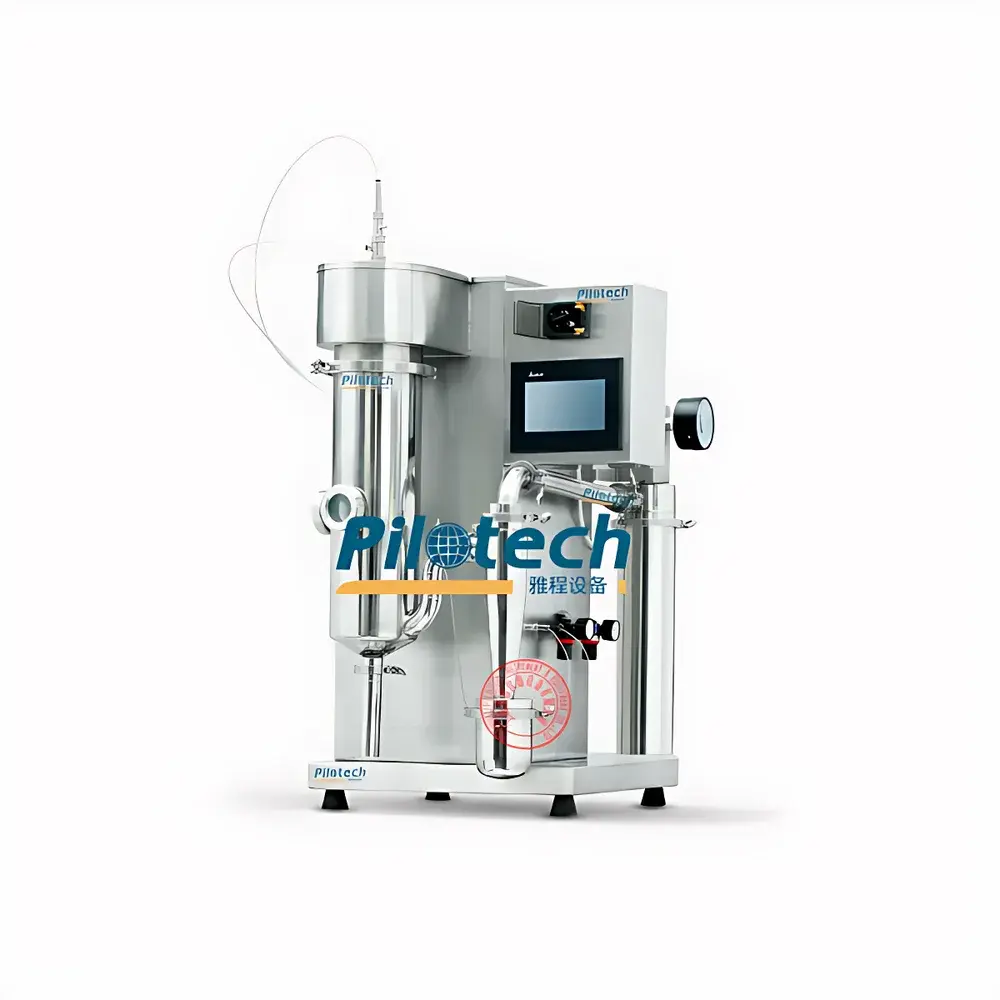
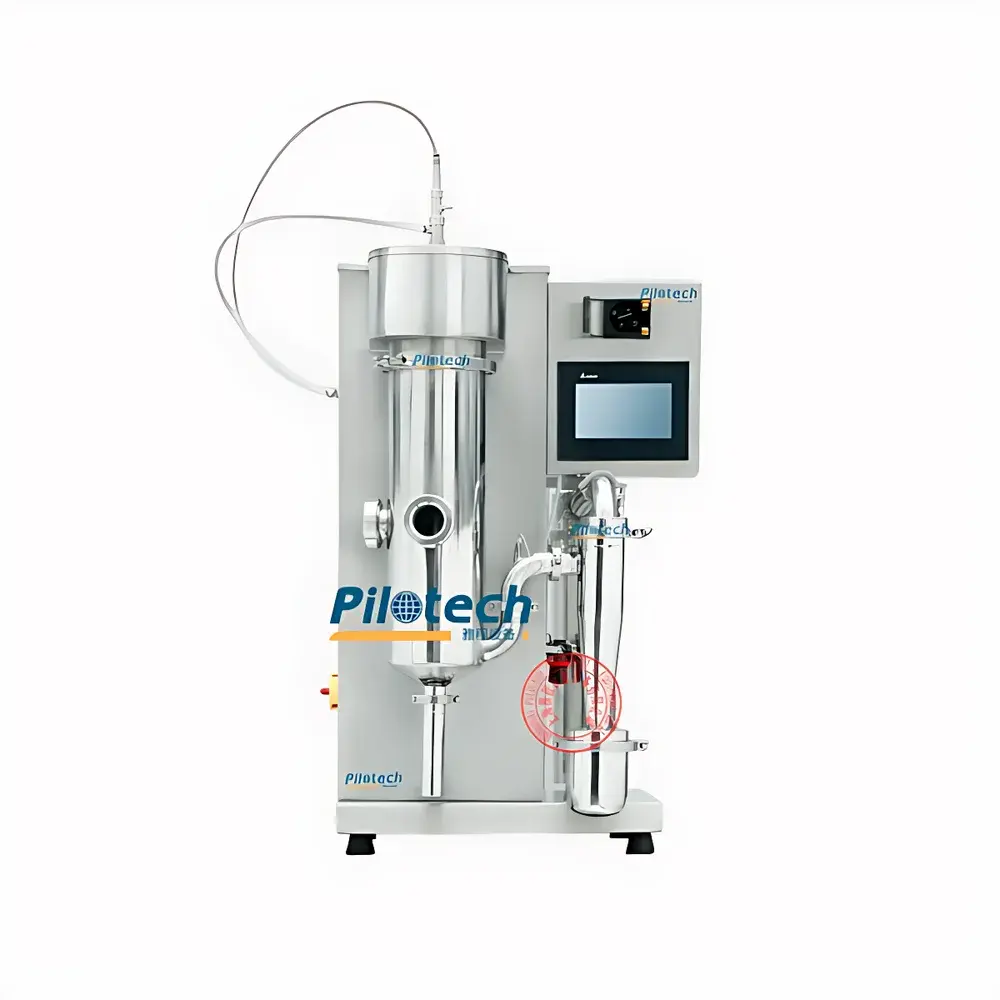
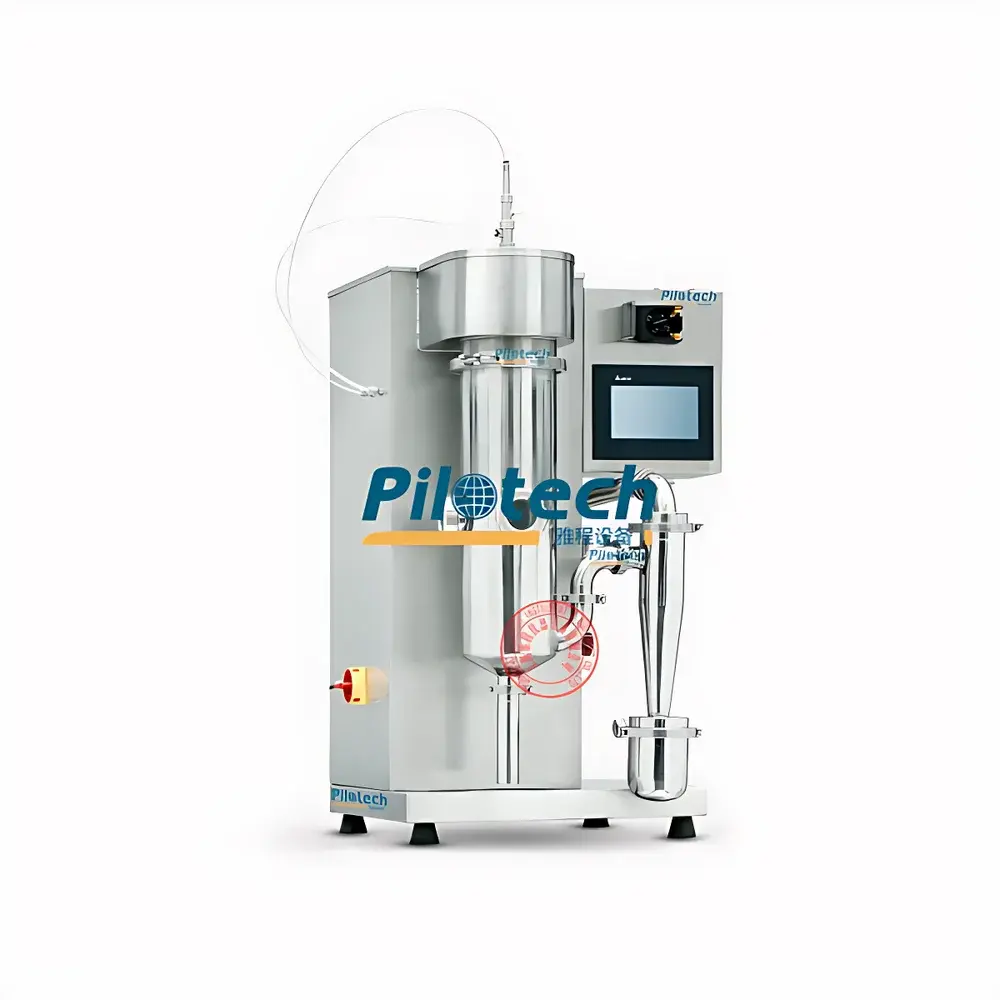
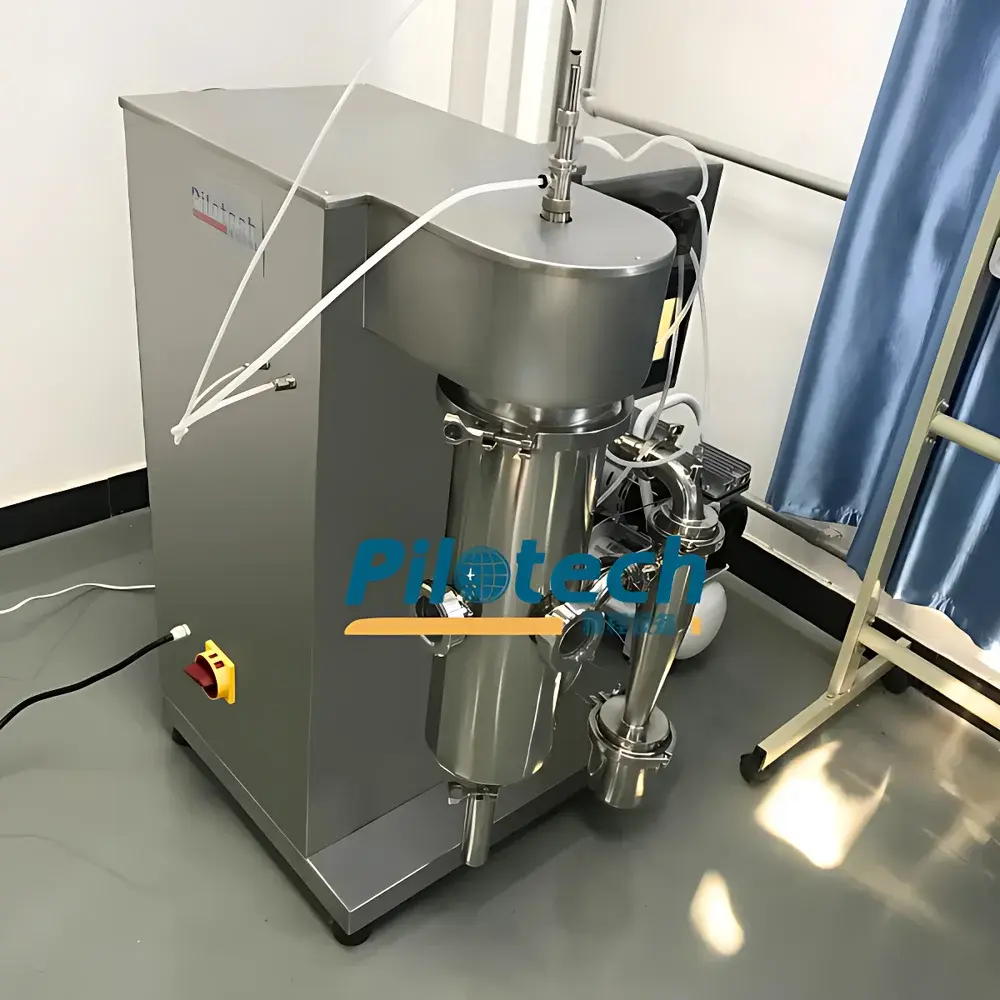
Yacheng YC-500 Benchtop Spray Dryer
| Brand | Yacheng / PILOTECH |
|---|---|
| Origin | Shanghai, China |
| Manufacturer Type | Direct Manufacturer |
| Product Origin | Domestic (China) |
| Model | YC-500 |
| Sample Type Compatibility | Aqueous solutions (organic solvents supported with optional YC-501 nitrogen recirculation system) |
| Maximum Feed Rate | 500 mL/h |
| Inlet Air Temperature Range | Up to 200 °C |
| Outlet Air Temperature Range | As low as 80 °C (solvent-dependent) |
| Particle Size Range | 1–25 µm |
| Nozzle Diameter | Standard 1.0 mm (0.5/0.8/1.5/2.0 mm optional) |
| Construction Material | Full SUS304 stainless steel |
| Power Supply | 2 kW / 220 V |
Overview
The Yacheng YC-500 Benchtop Spray Dryer is an engineered solution for laboratory-scale particle formation and solvent removal via single-stage, concurrent-flow spray drying. It operates on the principle of atomizing liquid feed into fine droplets using a dual-fluid (air or nitrogen) nozzle, followed by rapid evaporation in a heated drying chamber under controlled thermal and airflow conditions. Designed specifically for research environments where space, flexibility, and reproducibility are critical, the YC-500 integrates precision temperature control, real-time process monitoring, and modular adaptability—enabling seamless transition between aqueous and organic solvent processing without hardware replacement. Its compact footprint allows direct placement on standard laboratory benches or integration with the optional YC-501 nitrogen recirculation system for inert-atmosphere drying of flammable or oxygen-sensitive materials. The system complies with fundamental engineering safety standards for lab-scale thermal processing equipment and supports GLP-aligned documentation practices through its embedded data logging interface.
Key Features
- Modular design enables field-upgrade from aqueous-only operation to full organic-solvent compatibility via plug-and-play integration of the YC-501 nitrogen recirculation module—eliminating redundant capital expenditure.
- Coaxial two-fluid nozzle ensures concentric atomization with zero eccentricity, preventing wall impingement and maximizing powder recovery efficiency—even for high-viscosity feeds up to 500 cP.
- Vertically adjustable nozzle mount permits dynamic optimization of spray trajectory relative to drying air flow and chamber geometry, enhancing drying uniformity and particle morphology control.
- Integrated cyclonic exhaust filtration system reduces airborne particulate emissions and improves collection yield—particularly beneficial for low-density or electrostatically cohesive powders.
- Robust SUS304 stainless-steel construction across all wetted and heated components—including observation viewport—ensures corrosion resistance, cleanability, and compliance with ISO 14644-1 Class 7 cleanroom-compatible handling protocols.
- Intelligent 7-inch color touchscreen interface displays real-time parameters: inlet/outlet temperature, blower frequency, peristaltic pump speed, needle cleaning cycle frequency, and system status alerts.
- Thermally stable heating element architecture mitigates premature filament failure—a common failure mode in legacy benchtop dryers—extending mean time between maintenance (MTBM) beyond 12 months under continuous operation.
Sample Compatibility & Compliance
The YC-500 accommodates aqueous suspensions, emulsions, polymer solutions, protein formulations, and colloidal dispersions. With the YC-501 nitrogen recirculation system installed, it supports drying of ethanol-, acetone-, chloroform-, and ethyl acetate-based solutions under O₂ < 1% v/v conditions. While not certified to specific FDA 21 CFR Part 11 requirements out-of-the-box, the system’s audit-trail-capable data logger (timestamped parameter export in CSV format) provides foundational traceability for internal QA/QC workflows and pre-GMP method development. All electrical components meet CE Low Voltage Directive (2014/35/EU) and EMC Directive (2014/30/EU) conformity standards. Structural design adheres to ISO 13857:2019 safety distances for machinery and incorporates dual-channel overtemperature cutoff protection.
Software & Data Management
Process data—including inlet temperature, outlet temperature, feed rate, airflow velocity, and nozzle cleaning intervals—is continuously logged to internal flash memory and exportable via USB port in timestamped CSV files. No proprietary software installation is required; raw data is compatible with MATLAB, Python (pandas), JMP, and industry-standard LIMS platforms. Optional RS-485 Modbus RTU output enables integration into centralized lab automation networks. All parameter setpoints are password-protected to prevent unauthorized modification during unattended runs. System firmware supports over-the-air updates via secure HTTPS connection to Yacheng’s technical support portal—ensuring long-term alignment with evolving regulatory expectations for instrument qualification.
Applications
The YC-500 serves as a primary tool in pharmaceutical formulation development (e.g., amorphous solid dispersion screening, inhalable microparticle synthesis), food science (encapsulation of probiotics, flavors, and nutraceuticals), materials science (synthesis of metal oxide nanoparticles, battery cathode precursors), and nanotechnology (production of silica, chitosan, and PLGA microspheres). Its ability to generate particles within the 1–25 µm range—with narrow distribution profiles under optimized settings—makes it suitable for aerodynamic characterization studies (e.g., cascade impaction per USP ), dissolution testing, and scanning electron microscopy (SEM) sample preparation. Academic users leverage its modularity for comparative drying kinetics experiments across solvent systems, while industrial R&D labs deploy it for rapid prototype iteration prior to pilot-scale fluidized-bed or rotary-disk dryer trials.
FAQ
Can the YC-500 dry heat-labile biomolecules without denaturation?
Yes—by adjusting inlet temperature downward (e.g., 100–130 °C) and optimizing feed concentration and pump rate, the system achieves outlet temperatures as low as 80 °C, preserving structural integrity of proteins, enzymes, and live probiotics.
Is the YC-500 compliant with explosion-proof requirements for organic solvent use?
When equipped with the YC-501 nitrogen recirculation system and operated under continuous N₂ purge with O₂ monitoring, the integrated setup meets ATEX Zone 2 / Class I Div 2 equivalency for laboratory-scale solvent drying—subject to local authority review.
What maintenance intervals are recommended for the coaxial nozzle and heating element?
Nozzle inspection and ultrasonic cleaning are advised after every 20 hours of cumulative operation; heating element performance verification (via thermocouple calibration check) is recommended quarterly.
Does the system support GMP-compliant electronic signatures and user access levels?
While native electronic signature functionality is not embedded, the system’s password-protected parameter interface and CSV-based audit trail enable integration with third-party electronic lab notebook (ELN) or LIMS platforms supporting 21 CFR Part 11 compliance.
Can custom nozzle diameters be supplied for specialized particle size targeting?
Yes—nozzles ranging from 0.5 mm to 2.0 mm are available as factory-installed options; bespoke geometries (e.g., swirl, pressure-swirl hybrid) can be commissioned under NDA for advanced aerosol dynamics research.



