
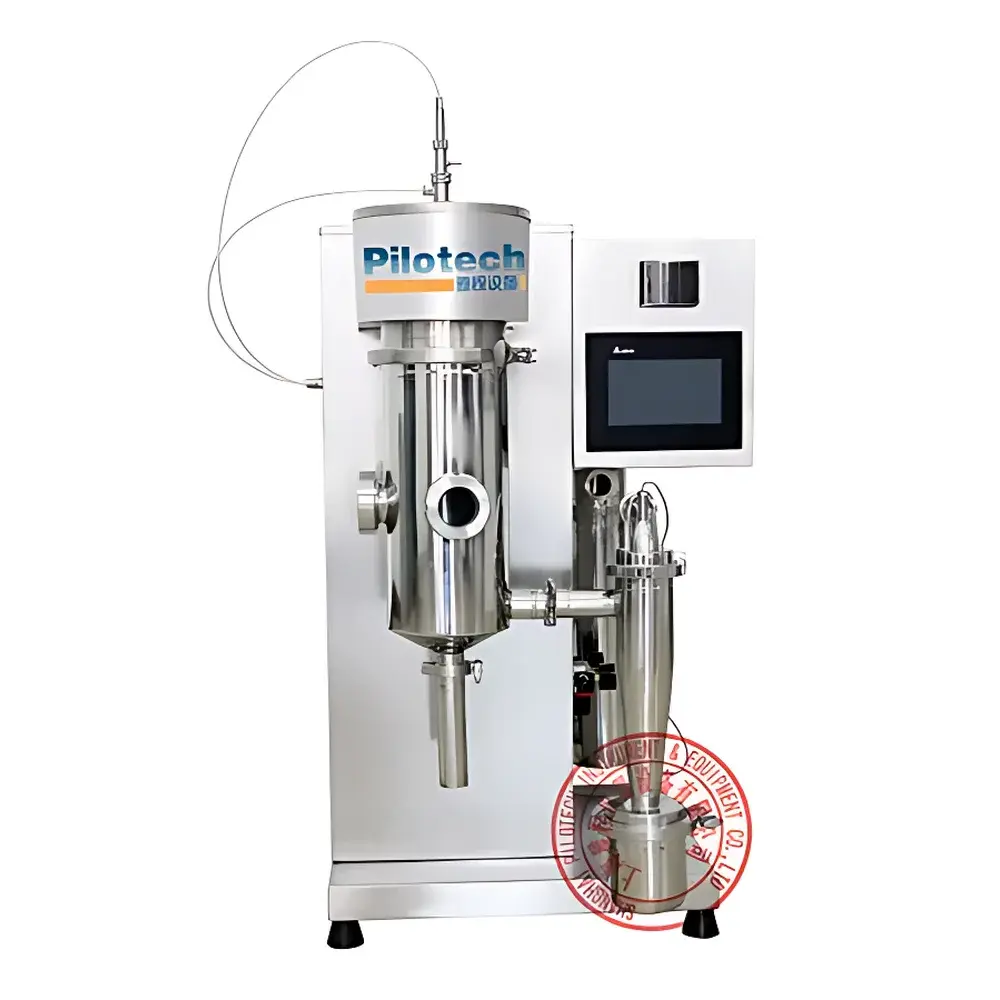
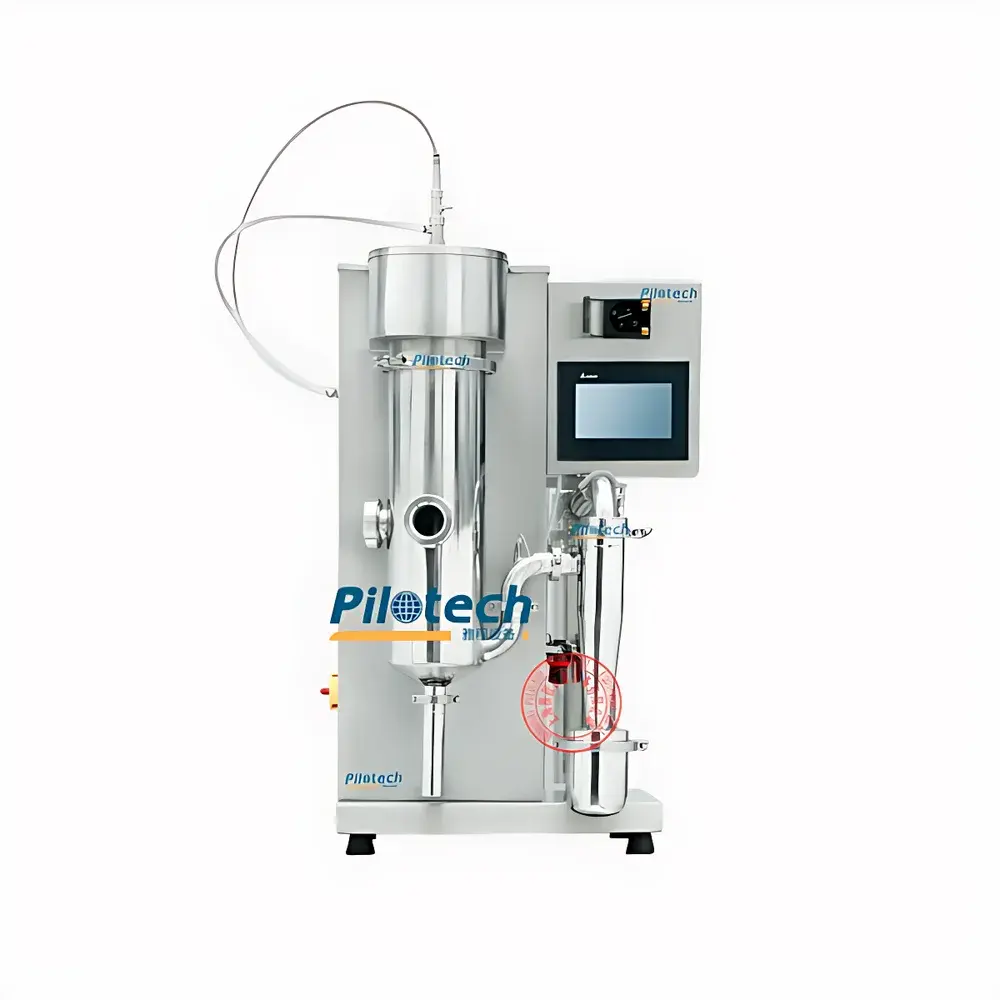
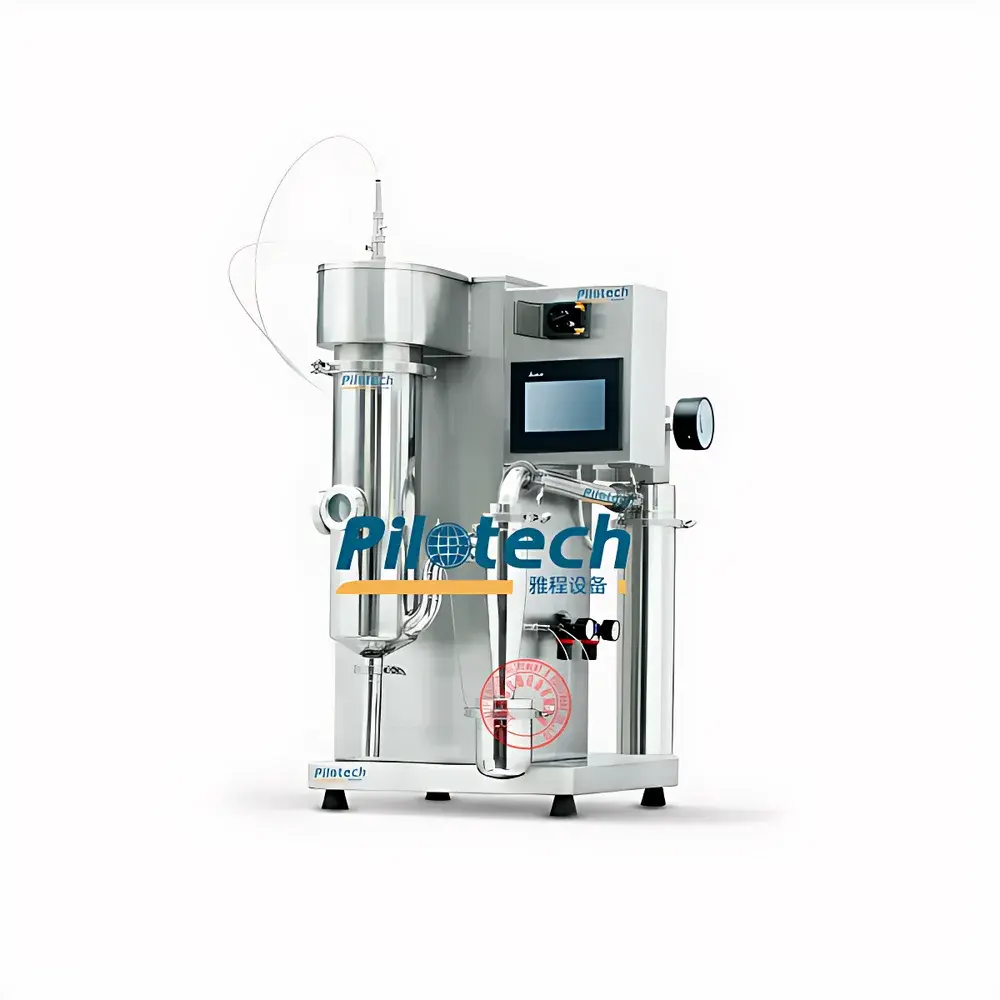
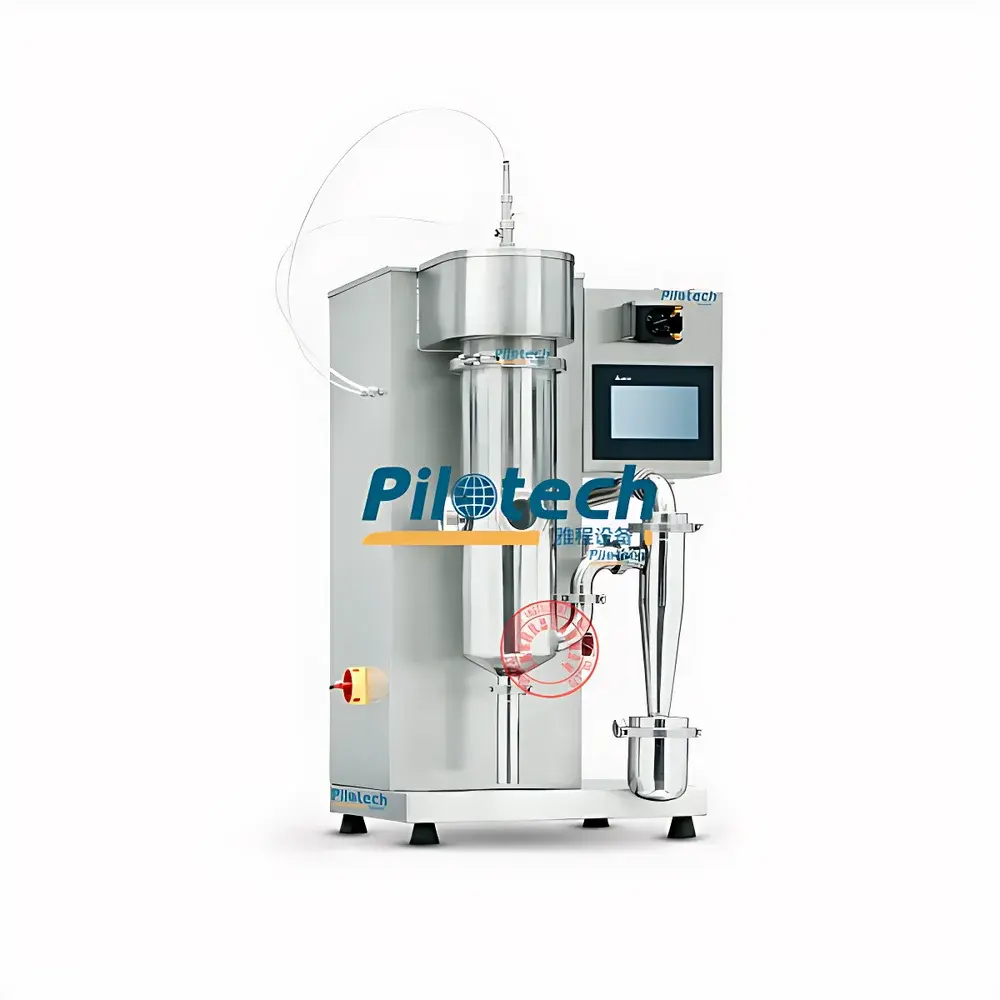
YaCheng YC-500 Benchtop Spray Dryer
| [Brand | YaCheng / PILOTECH |
|---|---|
| Origin | Shanghai, China |
| Manufacturer Type | Direct Manufacturer |
| Model | YC-500 |
| Max Feed Rate | 500 mL/h |
| Inlet Temperature Range | Up to 200 °C |
| Particle Size Output | 1–25 µm |
| Solvent Compatibility | Aqueous and Organic (with optional YC-501 Nitrogen Recirculation System) |
| Nozzle Diameter | 1.0 mm standard (0.5/0.8/1.5/2.0 mm optional) |
| Construction | Full SUS304 Stainless Steel |
| Power Supply | 2 kW / 220 V] |
Overview
The YaCheng YC-500 Benchtop Spray Dryer is a compact, high-precision laboratory-scale instrument engineered for reproducible conversion of liquid feedstocks—including aqueous solutions and organic solvent-based suspensions—into free-flowing, spherical microparticles via single-stage, concurrent-flow spray drying. Operating on the principle of rapid solvent evaporation through atomization into a heated air or nitrogen stream, the YC-500 delivers controlled thermal processing with real-time parameter monitoring. Its design adheres to fundamental fluid dynamics and heat/mass transfer principles governing droplet drying kinetics, enabling consistent particle morphology, narrow size distribution, and minimal thermal degradation—particularly critical for thermolabile biomolecules, pharmaceutical actives, and functional nanomaterials. Unlike conventional floor-standing units, the YC-500 integrates seamlessly into standard fume hoods or laminar flow workstations, supporting GLP-compliant R&D workflows in academic, industrial, and regulatory environments.
Key Features
- Benchtop Modular Architecture: Self-contained unit designed for placement directly on laboratory benches or atop the optional YC-501 Nitrogen Recirculation System—enabling rapid reconfiguration between aqueous and organic solvent operation without hardware replacement.
- Coaxial Two-Fluid Nozzle: Precision-machined concentric nozzle ensures symmetrical atomization with zero eccentricity, eliminating wall impingement and maximizing powder recovery (>90% typical for model systems). Adjustable vertical positioning allows optimization of droplet trajectory relative to drying airflow and chamber geometry.
- High-Viscosity Tolerance: Engineered nozzle geometry and optimized gas-liquid pressure balance support stable雾化 (atomization) of feed solutions up to 15% w/w solids content and dynamic viscosities exceeding 50 mPa·s—reducing frequency of nozzle clogging and manual intervention.
- Robust Thermal Management: Patented ceramic-insulated heating element with PID-controlled inlet temperature regulation (ambient to 200 °C ±1 °C) and fail-safe overtemperature cutoff. Dual-stage cooling prevents thermal stress accumulation during extended runs.
- Integrated Cyclonic Recovery & Optional Filter Module: Primary stainless steel cyclone collector paired with an optional HEPA-grade exhaust filtration system minimizes environmental release of fine particulates and improves yield—especially for low-density, electrostatically cohesive powders (e.g., proteins, liposomes).
- Full-SUS304 Construction: Entire drying chamber, feed tubing, nozzle assembly, and collection vessel fabricated from electropolished AISI 304 stainless steel (Ra ≤ 0.8 µm), compliant with ISO 14644-1 Class 7 cleanroom requirements and resistant to corrosion from acidic/basic or halogenated solvents.
Sample Compatibility & Compliance
The YC-500 accommodates a broad spectrum of feed materials: water-based colloids (e.g., polysaccharide hydrogels, protein emulsions), polar organic solvents (e.g., ethanol, acetone, isopropanol), and mixed-solvent systems—provided the optional YC-501 inert gas recirculation module is installed to maintain O2 concentration below 8% v/v per NFPA 484 and OSHA 1910.1200 guidelines. All wetted surfaces meet USP extractables testing criteria. The system supports method development aligned with ICH Q5C (stability of biotechnological/biological products), ASTM E2934-17 (spray-dried particle characterization), and ISO 8573-1:2010 (compressed air purity class 2 for instrument air supply). Full audit trail logging meets FDA 21 CFR Part 11 requirements when used with validated software configurations.
Software & Data Management
A 7-inch capacitive color touchscreen interface provides real-time visualization of inlet/outlet temperatures, blower frequency (30–60 Hz), peristaltic pump speed (0.1–99.9 rpm), and needle-cleaning cycle intervals. All operational parameters are timestamped and exportable in CSV format via USB 2.0 port. Optional YaCheng LabLink™ software enables remote monitoring, multi-unit fleet management, automated SOP execution, and integration with LIMS platforms via OPC UA protocol. Data integrity safeguards include user-level access control (admin/operator/guest), electronic signatures, and immutable event logs—fully traceable for GMP/GLP audits.
Applications
- Pharmaceutical formulation: Amorphous solid dispersions, inhalable dry powders (DPIs), and nanoparticle carriers for controlled release.
- Food science: Encapsulation of probiotics, flavors, omega-3 oils, and heat-sensitive vitamins.
- Materials research: Synthesis of battery cathode precursors (e.g., LiFePO4), metal oxide catalysts, and silica aerogel nanoparticles.
- Biotechnology: Stabilization of monoclonal antibodies, enzymes, and viral vectors without cryoprotectants.
- Agrochemical development: Water-dispersible granules (WDGs) and controlled-release pesticide microcapsules.
FAQ
Can the YC-500 process flammable organic solvents safely?
Yes—when equipped with the YC-501 Nitrogen Recirculation System, which maintains an oxygen-deficient environment (<8% O2) throughout the drying loop, complying with ATEX Category 3G and IEC 60079-10-1 zone classification standards.
What is the minimum sample volume required for a valid run?
Typical minimum feed volume is 10–20 mL, depending on solids concentration and desired powder yield; lower volumes may be accommodated using the optional low-volume feed kit.
Is the YC-500 suitable for Good Manufacturing Practice (GMP) environments?
While classified as a laboratory R&D instrument, its construction, documentation package (IQ/OQ templates available), and data integrity features support qualification for early-phase clinical manufacturing under ICH Q7 Annex 19 and EU GMP Annex 15.
How does the coaxial nozzle improve particle uniformity compared to off-center designs?
Symmetrical gas-liquid interaction eliminates asymmetric shear forces that cause skewed droplet trajectories—ensuring consistent residence time distribution within the drying zone and reducing polydispersity index (PDI) by up to 35% in comparative trials.
Does YaCheng provide application support and method development assistance?
Yes—YaCheng’s global Applications Lab offers remote and on-site technical support, including DOE-based drying protocol optimization, particle characterization guidance (via partner labs), and regulatory documentation review for IND/IMPD submissions.



