
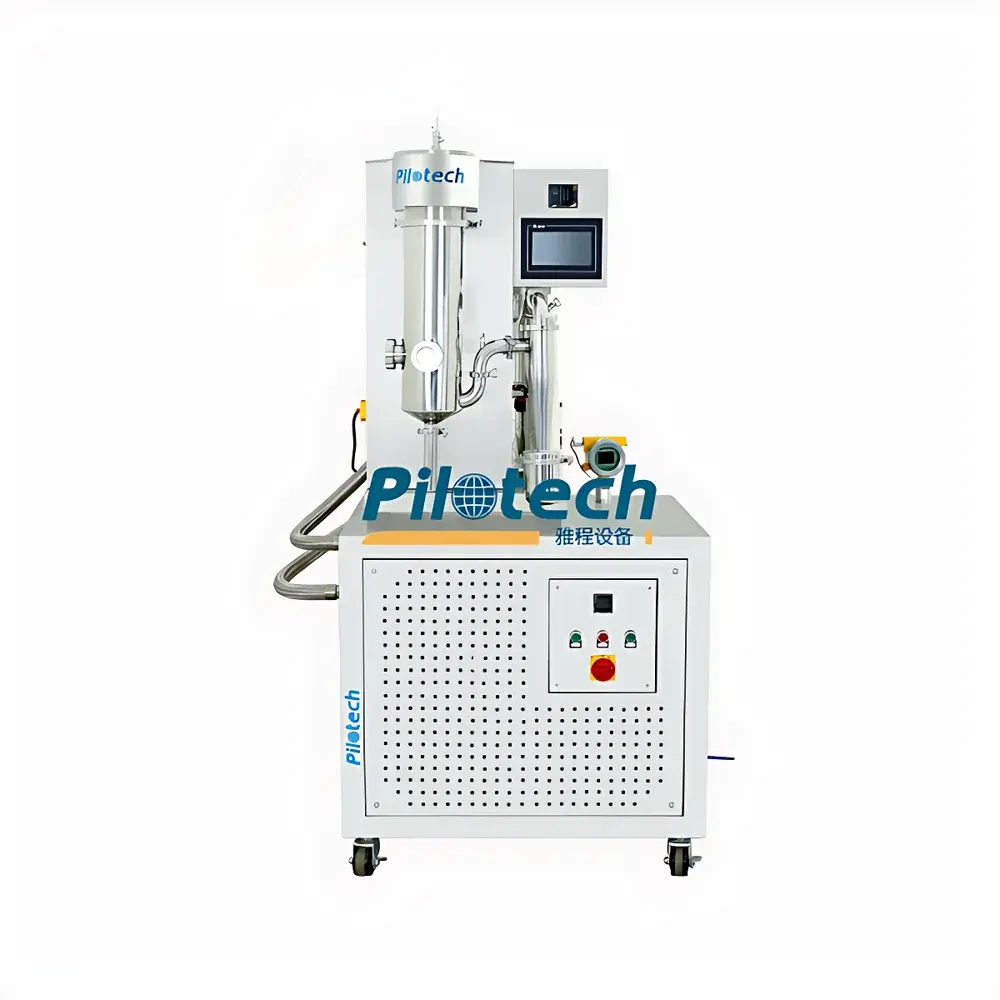
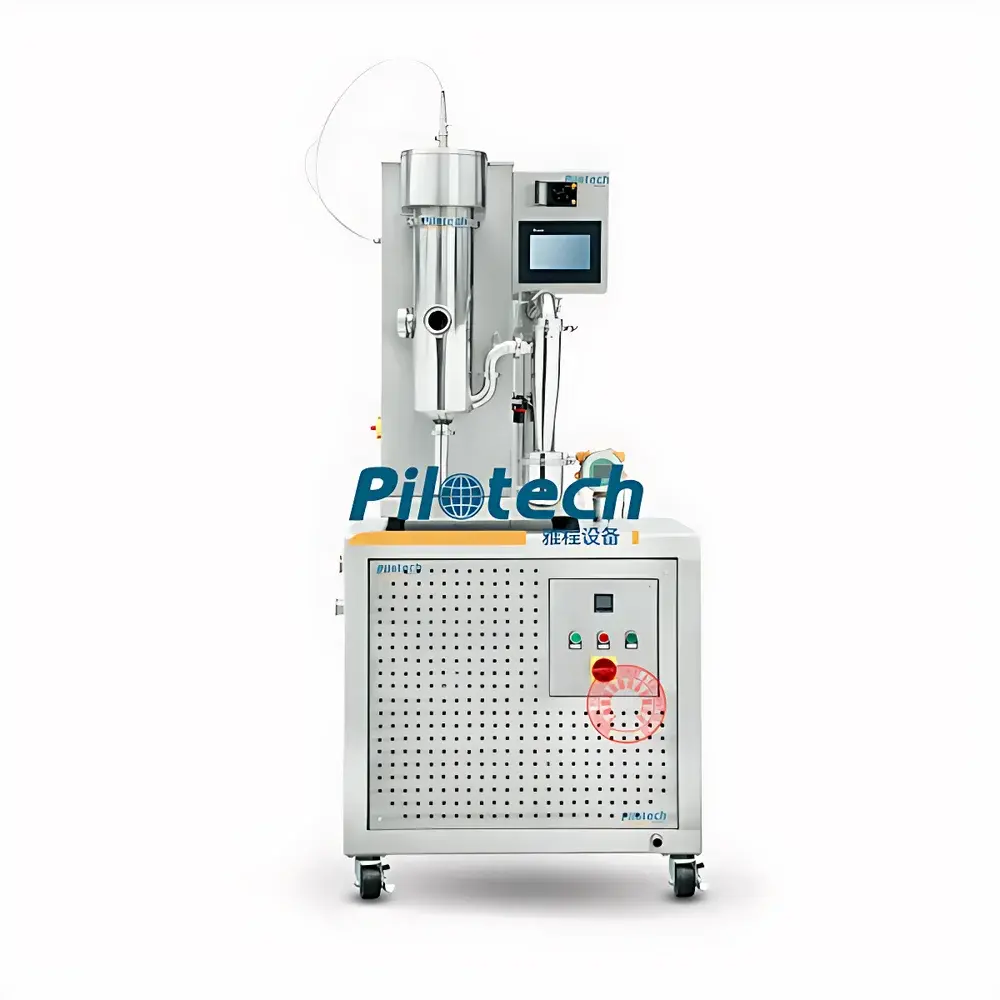
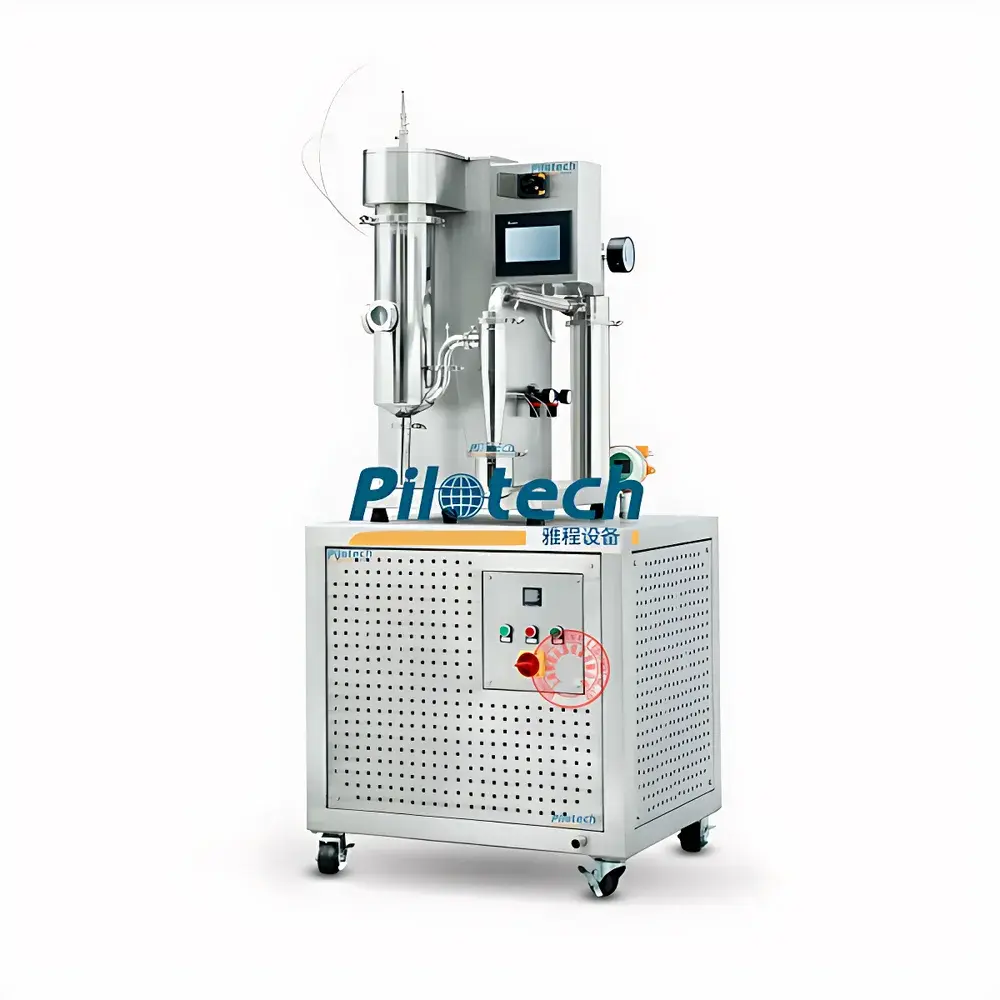
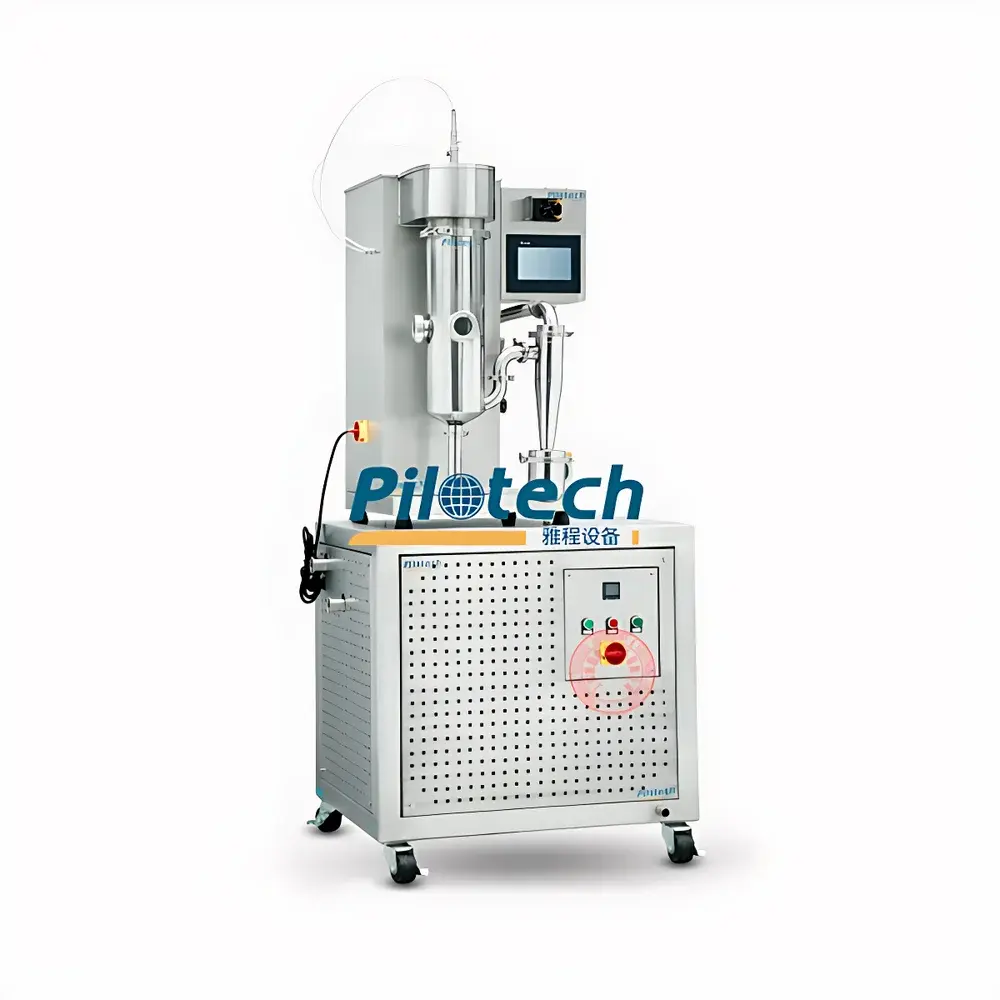
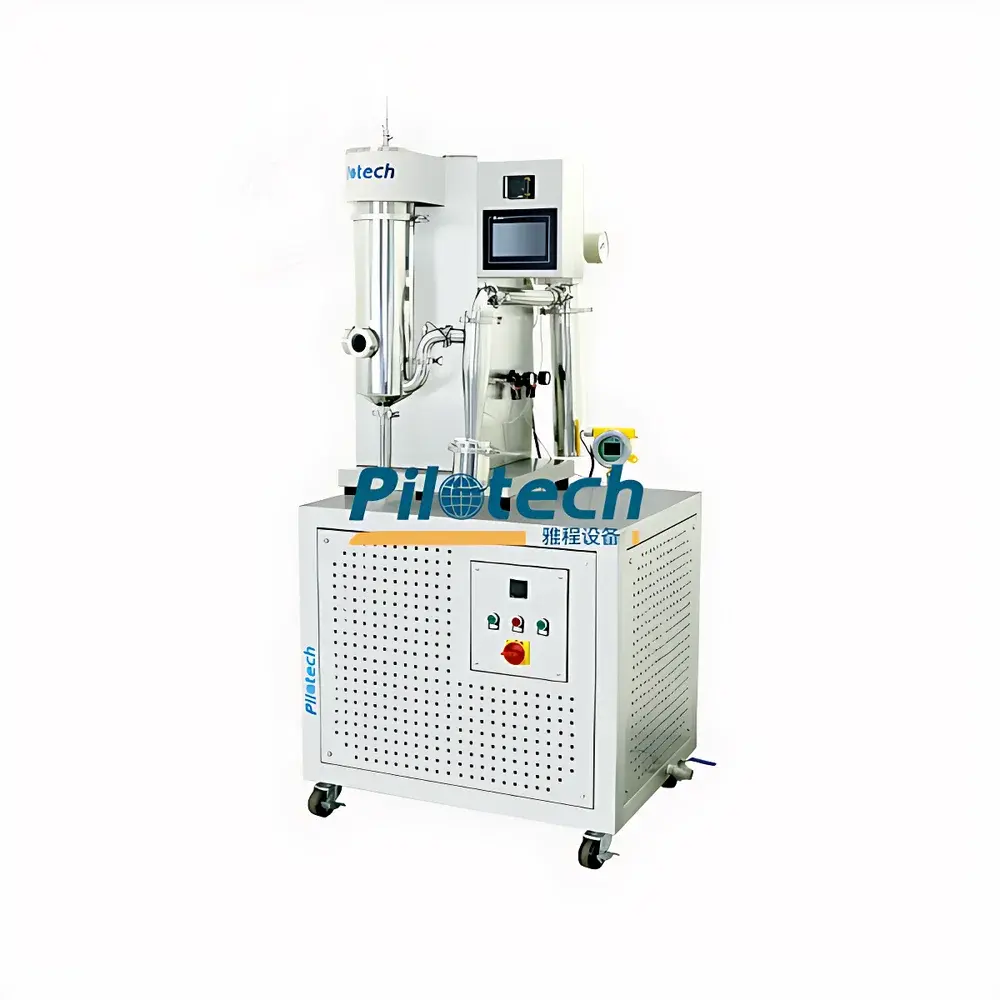
YaCheng YC-501 Miniature Closed-Cycle Spray Dryer for Organic Solvents
| [Brand | YaCheng / PILOTECH |
|---|---|
| Origin | Shanghai, China |
| Manufacturer Type | Direct Manufacturer |
| Model | YC-501 |
| Sample Compatibility | Aqueous & organic solvent-based solutions (e.g., ethanol, acetone, chloroform, ethyl acetate) |
| Max Feed Rate | 500 mL/h |
| Inlet Temperature Range | Ambient to 200 °C |
| Outlet Temperature Range | ≥40 °C (solvent-dependent) |
| Particle Size Distribution | 1–25 µm |
| 雾化方� | �: Two-fluid nozzle (coaxial, adjustable vertical position) |
| Nozzle Orifice | 1.0 mm standard (0.5/0.8/1.5/2.0 mm optional) |
| Construction Material | Full SUS304 stainless steel (including drying chamber, cyclone, collection vessel, and viewing port) |
| Control Interface | 7-inch color touchscreen with real-time animated process visualization |
| Key Parameters Displayed | Inlet temperature, needle purge frequency, peristaltic pump speed, O₂ concentration (optional sensor) |
| Integrated Systems | Built-in nitrogen recirculation loop with condenser-based solvent recovery |
| Power Supply | 2.5 kW total (220 V, 50/60 Hz)] |
Overview
The YaCheng YC-501 Miniature Closed-Cycle Spray Dryer is an engineered solution for the safe, reproducible, and scalable laboratory-scale drying of heat-sensitive, oxidation-prone, or flammable formulations—particularly those dissolved or suspended in organic solvents. Unlike conventional open-loop spray dryers, the YC-501 operates as a fully sealed inert-gas recirculation system, using high-purity nitrogen as both atomizing gas and drying medium. This design eliminates contact between volatile organic vapors and atmospheric oxygen, thereby mitigating explosion risk, preventing oxidative degradation of labile compounds (e.g., APIs, lipids, polyphenols, nanocellulose), and enabling quantitative solvent recovery via integrated refrigerated condensation. The system employs coaxial two-fluid atomization: liquid feed is pneumatically sheared by nitrogen flowing through an annular gap, generating fine, uniform droplets that undergo rapid convective drying within a vertically oriented stainless-steel chamber. Dried particles are separated via a high-efficiency cyclone collector and deposited into a sealed glass or stainless-steel collection vessel; residual solvent-laden nitrogen passes through a heat exchanger and cryogenic condenser before returning to the recirculation loop. Its compact footprint (benchtop-compatible) and modular architecture support seamless integration with existing YaCheng YC-500 base units—enabling dual-mode operation (aqueous vs. organic) without hardware duplication.
Key Features
- Explosion-safe closed-cycle nitrogen recirculation system compliant with IEC 60079-0 and ATEX Zone 2 guidelines for handling Class I flammable solvents (e.g., methanol, THF, dichloromethane)
- Coaxial adjustable-nozzle assembly ensuring centered, non-wall-impinging atomization—critical for maximizing powder recovery (>90% typical for low-viscosity organics) and minimizing nozzle clogging, even with viscosities up to 500 cP
- Real-time process monitoring via 7-inch capacitive touchscreen interface displaying inlet/outlet temperatures, peristaltic pump RPM, purge needle frequency, and optional inline O₂ sensor output (0–1000 ppm range)
- Integrated solvent recovery train: plate-type heat exchanger + −20 °C refrigerated condenser achieving >95% condensation efficiency for common solvents (acetone, ethanol, ethyl acetate)
- Full SUS304 construction—including transparent borosilicate viewport for visual process validation—and IP54-rated electrical enclosure
- Modular upgrade path: YC-500 base unit can be retrofitted with YC-501 nitrogen recirculation module (including compressor, condenser, O₂ monitor, and control logic) to convert from aqueous-only to organic-capable operation
- Dual-mode gas supply management: automatic switching between compressed air (for aqueous feeds) and regulated nitrogen (for organic feeds) via solenoid-valve manifold
Sample Compatibility & Compliance
The YC-501 accommodates a broad spectrum of thermolabile and chemically reactive materials, including but not limited to: pharmaceutical active ingredients (APIs) in ethanol or DMSO solutions; lipid nanoparticles (LNPs) in chloroform/isopropanol mixtures; metal-organic frameworks (MOFs) dispersed in DMF; polymer solutions (PLGA, PVP) in acetone; and natural extracts (curcumin, resveratrol) in methanol. Its closed architecture ensures compliance with occupational health and safety standards (OSHA 1910.119, NFPA 30), environmental regulations (EPA 40 CFR Part 63), and laboratory quality systems requiring solvent containment (e.g., ISO 14001, GLP Annex 3). For regulated environments, optional audit-trail-enabled firmware supports 21 CFR Part 11-compliant electronic records when paired with validated data logging software.
Software & Data Management
The embedded microprocessor controller logs all operational parameters at 1-second intervals to internal flash memory (≥10,000 cycles retention). Data export is supported via USB 2.0 (CSV format) for post-processing in MATLAB, Python (Pandas), or statistical packages (JMP, Minitab). Optional YaCheng LabLink™ software provides remote monitoring, alarm notification (email/SMS), and automated report generation—including batch summary sheets with critical process parameters (CPPs), particle size correlation maps, and solvent recovery yield calculations. All firmware updates are delivered via signed binary packages to ensure integrity and traceability.
Applications
- Pharmaceutical R&D: Production of amorphous solid dispersions (ASDs) from solvent-based polymer-API blends; stabilization of peptide therapeutics against hydrolysis and oxidation
- Materials Science: Synthesis of solvent-stable MOF powders, conductive polymer microparticles, and battery cathode precursors (e.g., NMC, LFP) without thermal decomposition
- Food & Nutraceuticals: Encapsulation of omega-3 oils, carotenoids, and probiotics using ethanol or limonene-based carriers—preserving bioactivity during drying
- Nanotechnology: Fabrication of drug-loaded PLGA nanoparticles, silica aerogel precursors, and magnetic iron oxide colloids under oxygen-free conditions
- Academic Research: Method development for continuous manufacturing workflows, DOE-based optimization of drying kinetics, and comparative studies of solvent effects on particle morphology
FAQ
Can the YC-501 handle chlorinated solvents such as chloroform or dichloromethane?
Yes—the system’s full SUS304 wetted parts, fluoropolymer-sealed valves, and cold trap design are compatible with halogenated solvents. Condenser temperature must be set ≤−30 °C for optimal recovery.
Is GMP documentation available for IQ/OQ/PQ protocols?
Yes—YaCheng provides vendor-qualified IQ/OQ templates aligned with ASTM E2500 and EU Annex 15; PQ execution requires site-specific testing under user-defined process parameters.
What is the minimum sample volume required for method development?
Typical minimum feed volume is 15–25 mL, depending on solids content (5–20 wt%) and target yield; lower volumes may be used with gravimetric feed calibration.
Does the system meet FDA requirements for solvent residue limits in pharmaceutical intermediates?
The integrated condenser achieves ≤50 ppm residual solvent in dried product when operated per validated parameters; final compliance depends on user-defined process validation and analytical testing (e.g., GC headspace).
Can the YC-501 be integrated with automated feeding or downstream milling?
Yes—RS-485 Modbus RTU and digital I/O ports enable synchronization with peristaltic feed pumps, vibratory feeders, or fluidized-bed dryers for end-to-end continuous processing.



