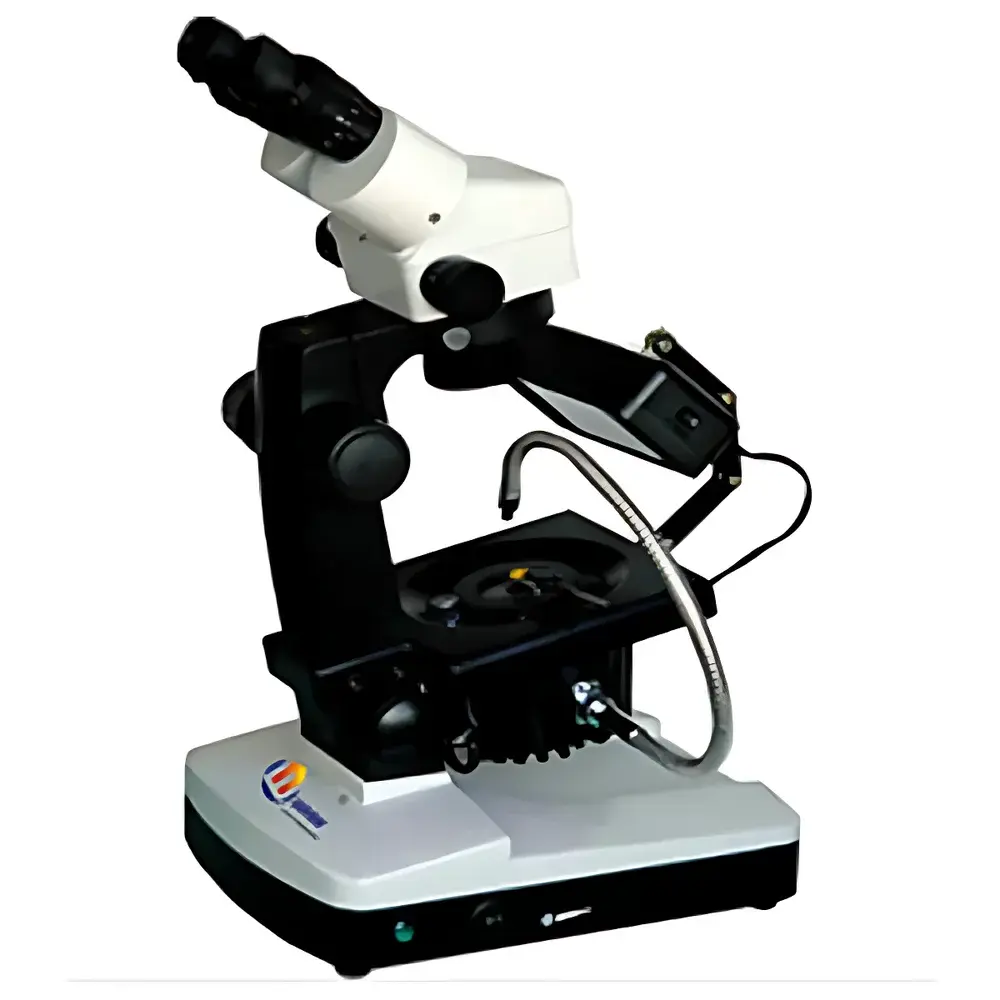
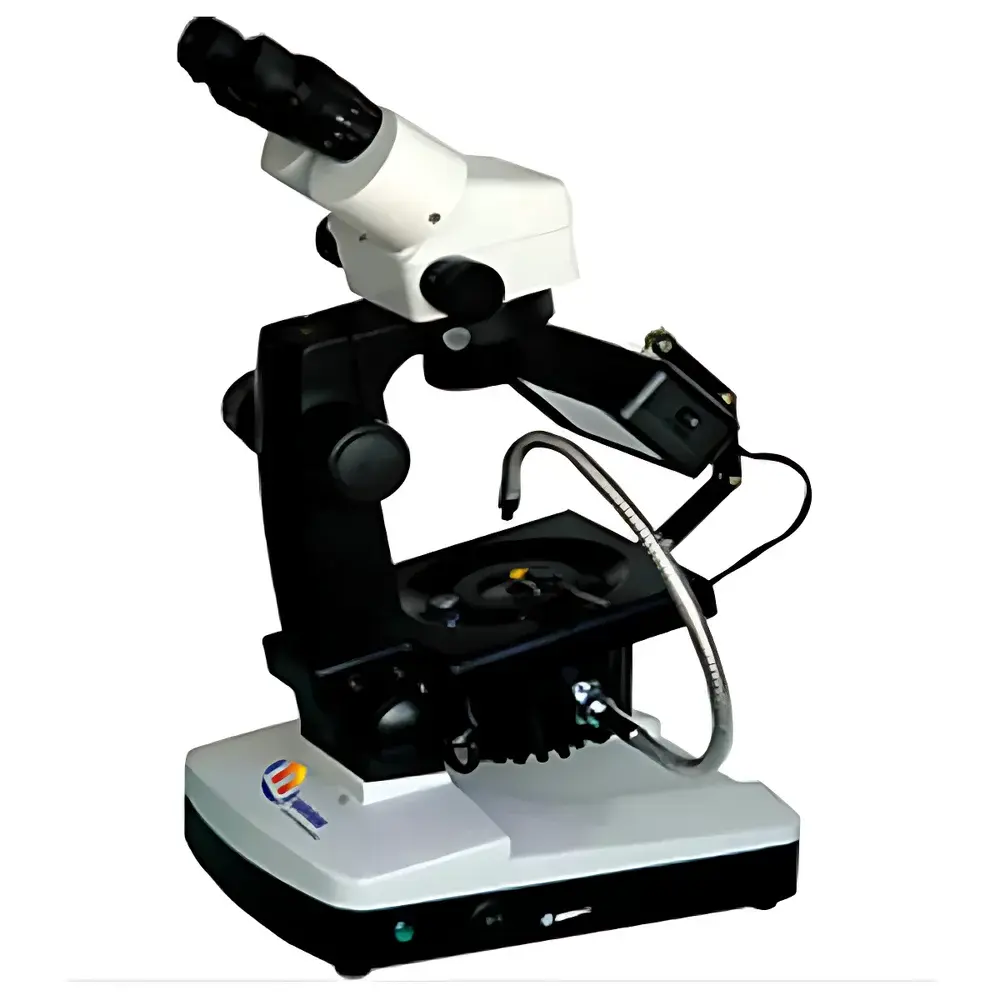
YANRUN BPAS-240 Stereo Jewelry Microscope
| Brand | YANRUN |
|---|---|
| Origin | Shanghai, China |
| Manufacturer Type | Direct Manufacturer |
| Region Classification | Domestic (China) |
| Model | BPAS-240 Stereo Jewelry Microscope |
| Price | USD 1 (Reference Only) |
| Zoom Range | 7×–45× Continuous (Expandable to 50×) |
| Working Distance | 95 mm (Extendable to 115 mm) |
| Eyepiece | Wide-Field WF10×/23 mm |
| Interpupillary Adjustment Range | 55–75 mm |
| Focus Travel | 125 mm |
| Optional Accessories | Auxiliary Objectives (0.75× WD=105 mm |
Overview
The YANRUN BPAS-240 Stereo Jewelry Microscope is a purpose-engineered optical instrument designed for high-fidelity visual inspection and structural evaluation of gemstones, mounted jewelry, precious metal components, and small-scale metallurgical specimens. Utilizing a Galilean-style zoom optical system with coaxial illumination pathways, the BPAS-240 delivers true stereoscopic imaging with consistent depth perception and minimal parallax across its full magnification range. Its core architecture adheres to ISO 10934-1 (Optics and optical instruments — Microscopes — Nomenclature of parts and performance characteristics) and supports metrologically traceable observation workflows in gemological laboratories, quality control departments of fine jewelry manufacturers, and academic materials characterization facilities. The microscope operates on a dual-path optical principle—separate left/right light paths converge at the observer’s eyes—enabling natural binocular vision critical for spatial assessment of facet geometry, inclusion morphology, surface finish, and internal strain patterns.
Key Features
- Continuous zoom optics providing 7× to 45× magnification (extendable to 50× with auxiliary lens), enabling seamless transition from macro overview to fine-detail inspection without objective lens changes.
- Extended focus travel of 125 mm accommodates specimens ranging from loose faceted stones (40 mm height), maintaining parfocality throughout vertical adjustment.
- Wide-field 10×/23 mm eyepieces deliver an expansive field of view (FOV) with edge-to-edge sharpness and optimized eye relief—critical for prolonged operator comfort during gem grading or repair verification.
- Adjustable interpupillary distance (55–75 mm) ensures ergonomic alignment for users across anthropometric percentiles, reducing ocular fatigue during extended sessions.
- Modular illumination system with rotatable lamp housing allows precise angular positioning of incident light to optimize contrast for reflective surfaces, polish evaluation, and inclusion delineation.
- Dual-mounting configuration on the stage—pre-drilled holes on both sides—permits flexible installation of steel-wire or flat-jaw gem clamps, supporting variable specimen orientation and minimizing shadowing of girdle regions.
- Integrated polarizer option enables birefringence detection, optic sign determination, and identification of stress-induced interference colors—key for distinguishing synthetic vs. natural corundum, detecting glass-filled emeralds, or verifying crystallographic orientation in quartz or tourmaline.
Sample Compatibility & Compliance
The BPAS-240 accommodates diverse sample geometries including loose gems (round, oval, pear, marquise), prong-set rings, bezel-mounted pendants, filigree metalwork, solder joints, and polished metallographic cross-sections. Its 95 mm standard working distance (expandable to 115 mm) permits unobstructed access for tweezers, gravers, or micro-probes during live inspection or micro-repair. The steel-wire gem clamp provides calibrated retention force—sufficient to secure stones without inducing mechanical deformation or masking subsurface features—and its low-profile design minimizes peripheral light blockage. All optical components comply with RoHS Directive 2011/65/EU for hazardous substance restrictions. While not certified to ISO/IEC 17025 as a measuring instrument per se, the BPAS-240 meets essential requirements for use within GLP-compliant gemological reporting environments when operated with documented calibration procedures for magnification verification (e.g., stage micrometer validation per ASTM E1558).
Software & Data Management
The BPAS-240 is a hardware-only platform and does not include embedded digital imaging or proprietary software. However, it features standardized C-mount and trinocular port compatibility (optional adapter required), enabling integration with third-party USB3.0 or HDMI cameras (e.g., AmScope MU1403, Thorlabs DCC1545M) and industry-standard image acquisition suites such as Stream Motion (Olympus), NIS-Elements (Nikon), or open-source alternatives like Fiji/ImageJ. When coupled with compliant capture hardware, the system supports audit-trail-enabled documentation per FDA 21 CFR Part 11 guidelines—including timestamped metadata, user authentication logs, and immutable image archiving—provided the host software and IT infrastructure meet regulatory configuration requirements.
Applications
- Gemstone identification and inclusion mapping per GIA/GG or FGA protocols
- Facet symmetry and polish grade assessment against AGS Light Performance Standards
- Micro-solder joint integrity verification in platinum/gold alloy assemblies
- Surface defect detection (pitting, porosity, scratches) on precious metal substrates
- Crystal growth pattern analysis in synthetic gem material development
- Educational demonstration of optical anisotropy and pleochroism in dichroic minerals
- Forensic examination of tool marks on recovered jewelry evidence
FAQ
Is the BPAS-240 compatible with digital camera systems?
Yes—via optional trinocular head or C-mount adapter, supporting external CMOS/CCD sensors up to 1/1.8″ format.
Does the microscope include calibration certification?
No factory-issued calibration certificate is supplied; users must perform periodic magnification verification using NIST-traceable stage micrometers.
Can the polarizer be installed post-purchase?
Yes—the polarizer is offered as a field-installable accessory with standardized thread mount (M27×0.75) on the illumination path.
What is the maximum specimen height supported with standard focus travel?
With full 125 mm vertical adjustment and standard 95 mm working distance, specimens up to ~110 mm tall can be accommodated when using low-magnification settings.
Are replacement eyepieces and auxiliary objectives available separately?
Yes—all optical accessories—including WF15×, WF20× eyepieces and 0.75×/1.5×/2× auxiliary objectives—are stocked and sold individually with documented MTF and transmission specifications.