
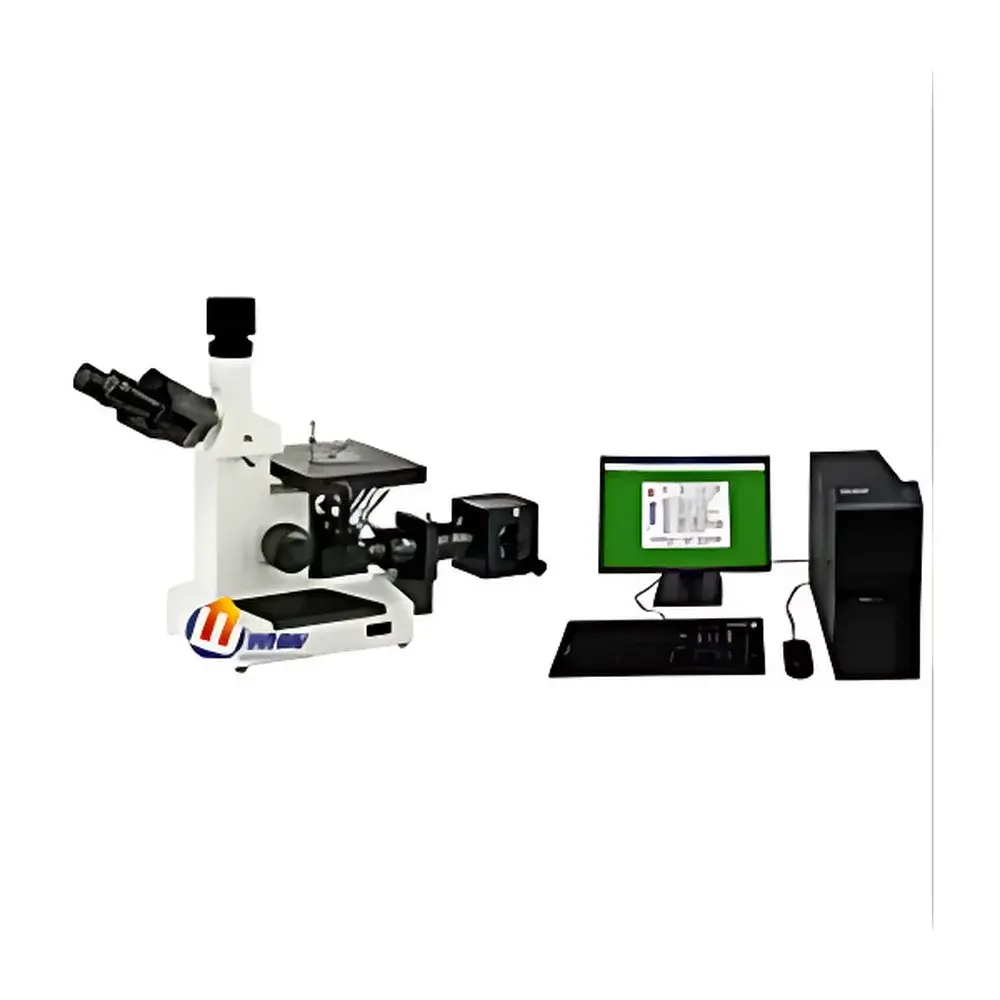
YANRUN MMAS-4 Inverted Metallurgical Microscope with Integrated Image Analysis System
| Brand | YANRUN |
|---|---|
| Origin | Shanghai, China |
| Manufacturer Type | OEM Manufacturer |
| Product Origin | Domestic (China) |
| Model | MMAS-4 |
| Configuration | Inverted |
| Image Analysis System Included | Yes |
| Total Optical Magnification Range | 100×–1600× |
| Eyepieces | 10×, Ø18 mm |
| Objective Lenses | 10×, 20×, 40×, 100× (NA: 0.25, 0.40, 0.60, 1.25 |
| WD | 8.8 mm, 8.6 mm, 3.7 mm, 0.44 mm) |
Overview
The YANRUN MMAS-4 Inverted Metallurgical Microscope with Integrated Image Analysis System is a precision-engineered optical instrument designed for quantitative microstructural characterization of metallic and alloyed materials. Built upon a robust inverted optical architecture, the system enables high-fidelity observation of polished or etched metallographic specimens with the sample surface facing downward—eliminating height and parallelism constraints common in upright configurations. This design is especially advantageous for large, irregular, or multi-layered samples encountered in foundry, heat treatment, failure analysis, and quality assurance laboratories. The core optical path follows standardized finite-conjugate (160 mm mechanical tube length) principles compliant with ISO 8578 and ASTM E3-22 for metallographic microscopy. Coupled with a Köhler illumination system featuring adjustable aperture and field diaphragms, the MMAS-4 ensures uniform brightness, optimal contrast, and minimal glare across all magnifications—from routine low-magnification grain size assessment (100×) to high-resolution phase boundary and inclusion analysis (up to 1600× with digital interpolation).
Key Features
- Inverted trinocular head with 30° inclined viewing angle and interpupillary adjustment range of 53–75 mm; diopter compensation available on both eyepieces
- Plan achromatic objectives (10×/0.25, 20×/0.40, 40×/0.60, 100×/1.25 oil-immersion) with specified working distances and parfocal alignment per ISO 10934-1
- Four-position ball-bearing objective turret with precise internal indexing; optional five-position upgrade available
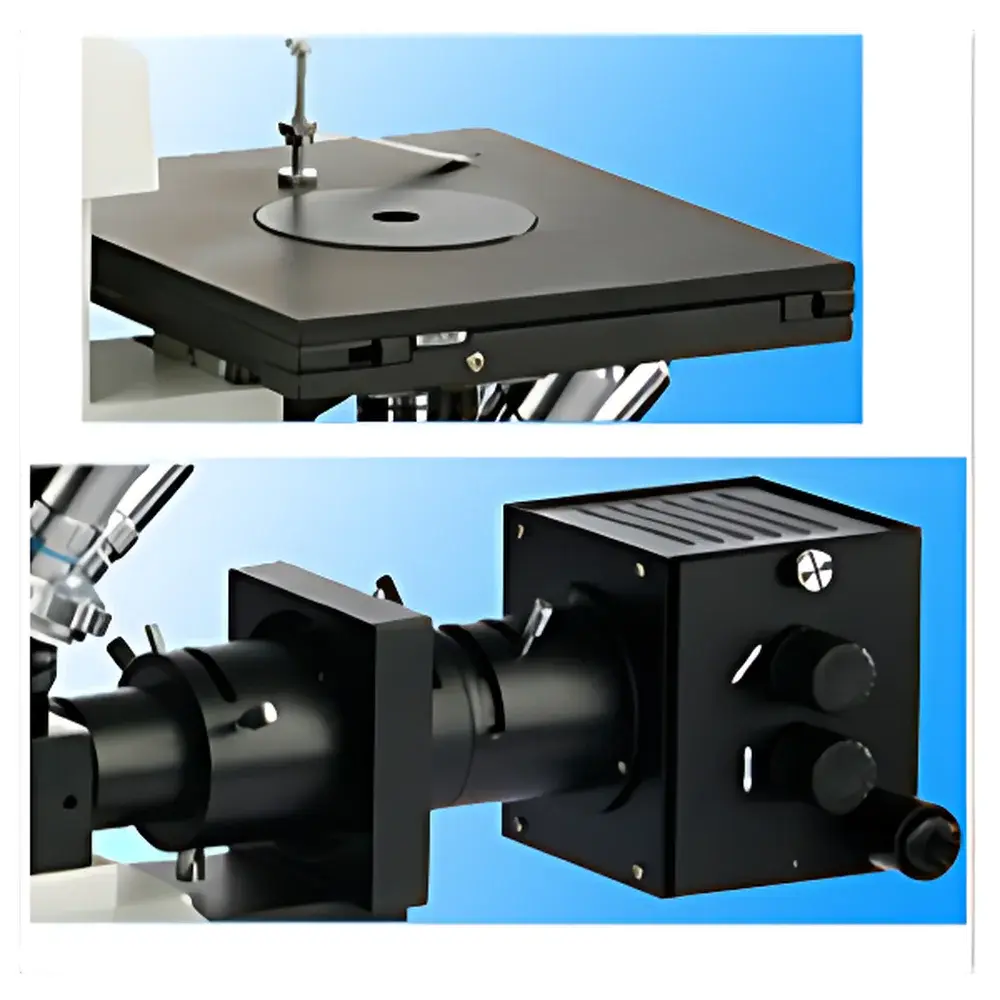
- Double-layer mechanical stage (180 × 150 mm), offering 15 × 15 mm travel range and built-in rotating circular plate for polarized light applications
- Coaxial coarse/fine focusing mechanism: 30 mm vertical travel; fine focus resolution of 2 µm per graduation
- Adjustable 6 V / 20 W halogen Köhler illuminator with intensity control and integrated green/yellow/blue interference filters
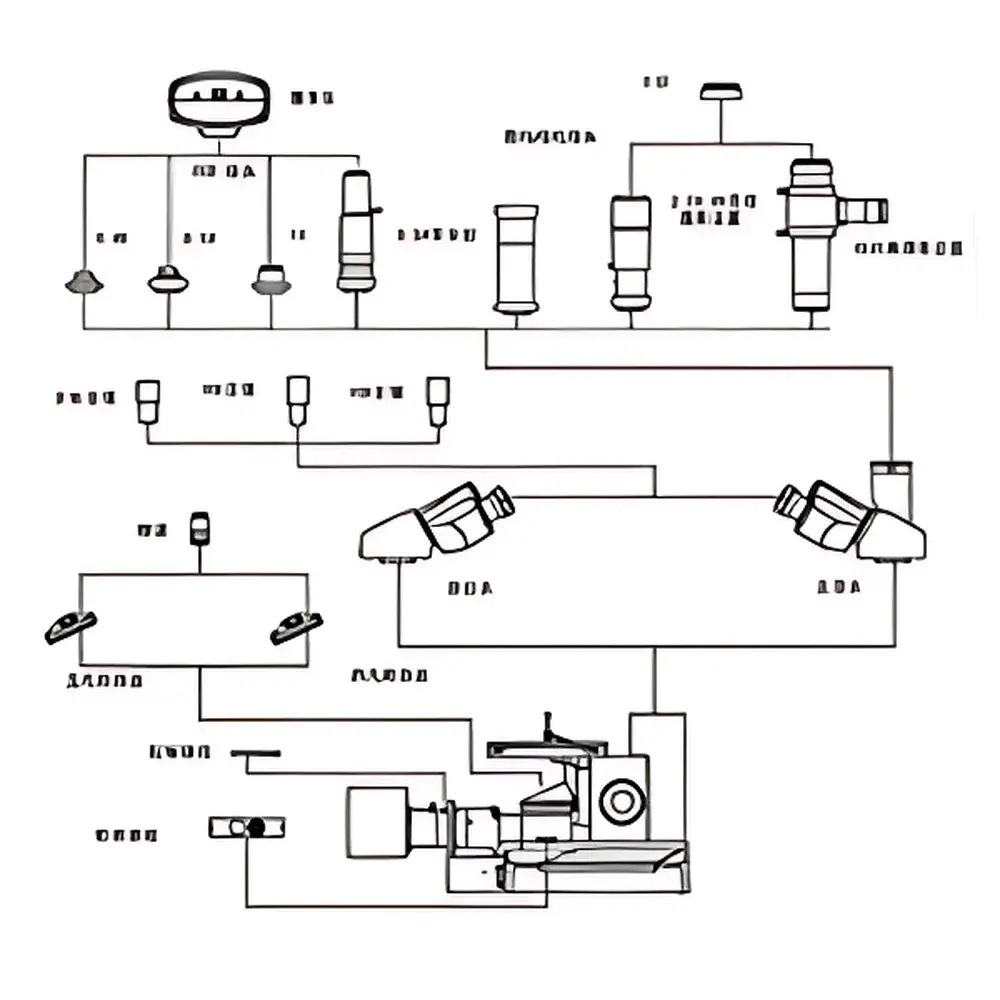
- Comprehensive optical compatibility: supports optional polarization kits (rotatable polarizer/analyzer), long-working-distance objectives (e.g., 5×/0.12, 60×/0.75), and C-mount adapters for digital imaging
Sample Compatibility & Compliance
The MMAS-4 accommodates standard metallographic specimens up to 50 mm in diameter and 40 mm in thickness without requiring specialized holders. Its inverted configuration permits direct mounting of bulk components, weld cross-sections, and coated substrates onto the stage—ideal for industrial QA/QC where sample preparation flexibility is critical. The system complies with key international standards governing metallurgical evaluation, including ASTM E112 (grain size determination), ASTM E1245 (inclusion rating), ISO 643 (steel microstructure classification), and EN 10247 (non-metallic inclusion assessment). When operated with the included MMAS software under validated conditions, data outputs meet GLP documentation requirements—including audit-trail-enabled image capture timestamps, user authentication logs, and calibration history tracking—as required by ISO/IEC 17025-accredited testing laboratories.
Software & Data Management
The proprietary MMAS Image Analysis Software Suite (v5.x) serves as the computational backbone of the system. It provides ISO/ASTM-compliant automated评级 (rating) across more than 400 standardized modules—including ferrite/pearlite ratio quantification, austenite grain size per ASTM E112, carbide distribution analysis, and inclusion classification per ASTM E45. All measurements adhere to traceable pixel-to-micron calibration protocols using certified stage micrometers. The software supports DICOM-compatible image import/export, multi-user role-based access control, and export of measurement metadata in CSV/XML formats for LIMS integration. Reporting functionality includes customizable templates aligned with ISO 14284 and EN 13274-2, electronic signature support per FDA 21 CFR Part 11, and batch report generation with embedded statistical summaries (mean, SD, CV%). Optional advanced modules—such as extended-depth-of-field (EDF) image stacking, mosaic stitching for large-area mapping, and grayscale thresholding with morphological filtering—are available under formal validation packages.
Applications
The MMAS-4 is routinely deployed in metallurgical R&D labs for phase transformation kinetics studies, in-service component failure root cause analysis (e.g., intergranular corrosion, fatigue crack initiation), and supplier material verification per ASME BPVC Section II or MIL-STD-883. Beyond metals, its optical versatility extends to ceramic sintering analysis, semiconductor wafer defect screening, powder morphology assessment (ISO 13322-1), and composite fiber orientation quantification. Educational institutions utilize the platform for undergraduate metallurgy labs and graduate-level microstructure-property correlation research. In manufacturing environments, it supports PPAP documentation, incoming raw material inspection, and post-process verification for aerospace castings, automotive crankshafts, and medical implant alloys—all while maintaining full traceability from image acquisition to final report generation.
FAQ
Is the MMAS-4 compatible with third-party digital cameras and frame grabbers?
Yes—the system features a standard C-mount port (1× coupling) and supports USB3.0/PCIe digital cameras via TWAIN and DirectShow drivers. Calibration coefficients are user-definable for any sensor format.
Does the MMAS software support GMP/GLP audit trails and electronic signatures?
Yes—when configured with user authentication and enabled logging, the software records operator ID, timestamp, parameter changes, and image processing steps in an immutable audit trail compliant with 21 CFR Part 11 Annex 11 requirements.
Can the system perform grain size measurements per ASTM E112 using the intercept method?
Yes—MMAS implements both manual line-intercept and automated area-based grain sizing algorithms, with configurable test line lengths, grid densities, and confidence interval reporting per ASTM E112-22 Appendix X1.
What polarization accessories are available for birefringent phase identification?
A complete polarizing kit is offered, including a rotatable linear polarizer (0–90° vernier scale), analyzer slider, and strain-free objectives—enabling quantitative retardation measurements when paired with calibrated λ/4 plates.
Is technical support and software updates included after purchase?
YANRUN provides 24-month hardware warranty and complimentary minor-version software updates. Extended service contracts include remote diagnostics, annual performance verification, and on-site training for metrology staff.





