
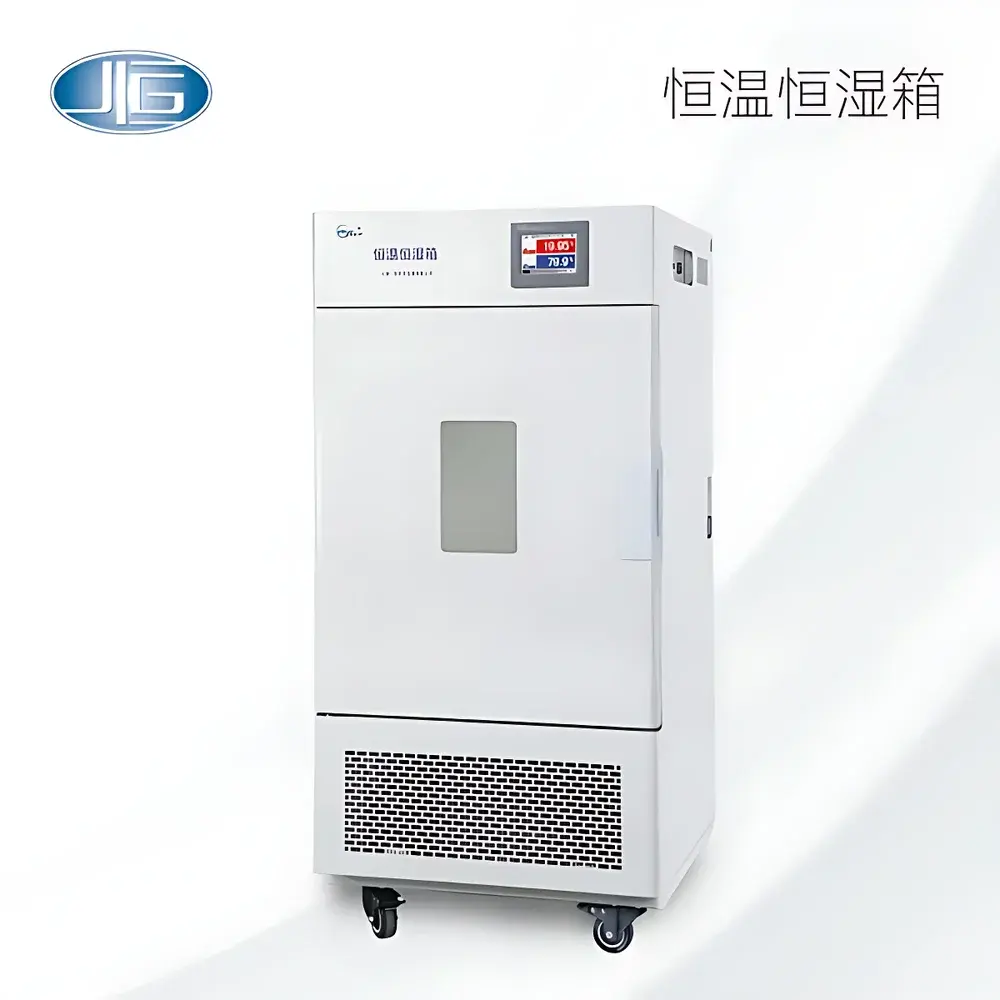
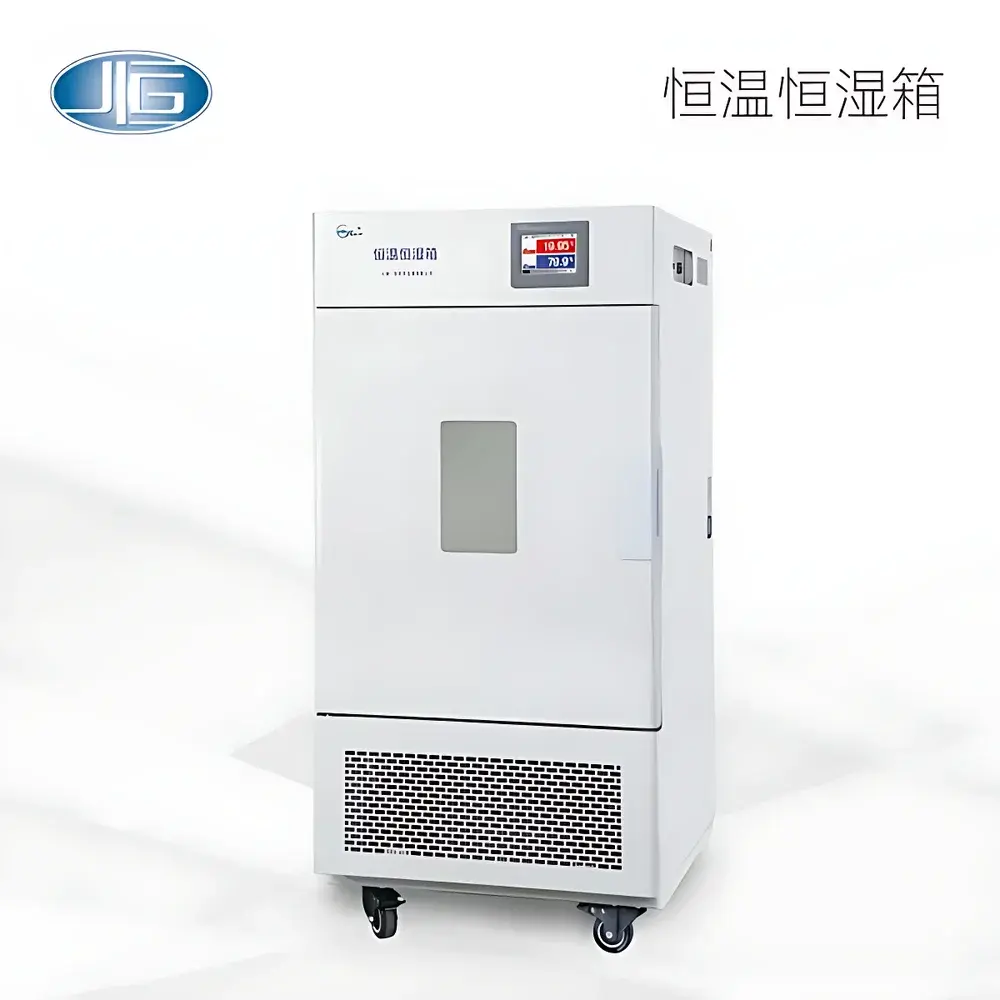
YiHeng BPS-50CH Programmable Touchscreen Temperature and Humidity Controlled Chamber
| Brand | YiHeng |
|---|---|
| Origin | Shanghai, China |
| Manufacturer Type | Direct Manufacturer |
| Product Category | Domestic |
| Model | BPS-50CH |
| Instrument Type | Upright Vertical Chamber |
| Temperature Range | RT+10°C to 85°C |
| Humidity Range | 80–95% RH |
| Temperature Uniformity | ±1.0°C |
| Humidity Deviation | ±3% RH |
| Internal Dimensions (W×D×H) | 350 × 300 × 500 mm |
| Construction | Mirror-Finish 304 Stainless Steel Interior |
| Control System | Programmable PID Touchscreen Controller (100 Programs / 1000 Segments / 999 Cycles) |
| Data Interface | RS-232 / RS-485 (Optional) |
| Safety Protections | Independent Over-Temperature Cut-off, Compressor Overheat/Overcurrent/Overload Protection, Fan Overheat Protection, Low-Water Alarm, Dual High/Low Humidity Alarms |
Overview
The YiHeng BPS-50CH is a vertically oriented, programmable temperature and humidity controlled chamber engineered for precise environmental simulation in quality control, materials stability testing, pharmaceutical storage validation, and accelerated aging studies. It operates on a dual-loop PID-controlled thermohygrostatic system utilizing TMHM (Thermal-Moisture Hybrid Management) balancing methodology—ensuring simultaneous, stable regulation of both temperature and relative humidity within defined operational envelopes. Unlike basic static chambers, the BPS-50CH integrates forced-air convection with a symmetrical wind tunnel design, enabling uniform distribution of conditioned air across the entire 52.5 L working volume (350 × 300 × 500 mm). Its refrigeration circuit employs environmentally compliant, non-ozone-depleting refrigerants (R134a or equivalent), aligned with international green manufacturing standards such as ISO 14001 and EU F-Gas Regulation (EU No. 517/2014). The chamber meets core functional requirements for ICH Q1A(R2) stability testing conditions (e.g., 40°C/75% RH long-term), and supports protocol-driven execution under GLP-compliant laboratory environments.
Key Features
- High-resolution 7-inch capacitive touchscreen controller with intuitive graphical interface supporting both English and Chinese language modes
- Advanced programmable logic: up to 100 independent test programs, each containing up to 1000 time-segmented steps and 999 repeat cycles
- Real-time dynamic curve display showing current temperature/humidity trajectories alongside setpoints
- Mirror-polished 304 stainless steel interior with radius-rounded corners and removable adjustable shelving for full cleanability and ISO 14644-1 Class 7-compatible maintenance
- Power-fail recovery function: all active program parameters and runtime states are retained in non-volatile memory and automatically resume upon re-energization
- Dual-stage safety architecture including independent mechanical over-temperature limiter, digital humidity deviation alarms, and multi-point fault diagnostics (compressor overload, fan stall, low-water detection)
- Φ25 mm sealed access port located on the left side wall for sensor feedthrough, data cable routing, or external monitoring integration
Sample Compatibility & Compliance
The BPS-50CH accommodates standard sample trays, petri dishes, vials, and small-component assemblies without spatial interference. Its internal geometry and airflow pattern comply with ASTM E145-22 Annex A2 guidelines for forced-convection chamber uniformity verification. While not certified to IEC 61000-4 electromagnetic immunity standards out-of-the-box, its power supply and control electronics meet CE marking requirements for industrial equipment (2014/30/EU EMC Directive and 2014/35/EU LVD Directive). For regulated industries, optional audit-trail-enabled firmware (with timestamped parameter changes, user logins, and alarm history export) can be configured to support FDA 21 CFR Part 11 compliance when paired with validated software platforms.
Software & Data Management
The controller supports ASCII-based serial communication via RS-232 or RS-485 interfaces (optional hardware module required). When connected to a host PC running compatible terminal emulation or custom SCADA software, users may remotely configure test profiles, initiate/abort cycles, and stream real-time sensor values at configurable intervals (1–60 s). Optional data logging packages enable automatic generation of CSV-formatted time-series files containing temperature, humidity, cycle stage, and alarm status—suitable for inclusion in regulatory submissions per ISO/IEC 17025 clause 7.7. All exported data retains traceable timestamps synchronized to the controller’s internal RTC (real-time clock), which maintains accuracy within ±2 seconds/month under normal operating conditions.
Applications
- Pharmaceutical stability testing per ICH Q1A(R2), Q5C, and USP guidelines
- Electronics component moisture sensitivity level (MSL) preconditioning per JEDEC J-STD-020
- Polymer and composite material hygrothermal aging per ISO 22088-3 and ASTM D570
- Seed germination and botanical specimen conditioning in agricultural research labs
- Calibration reference environment for hygrometers and thermometers requiring traceable RH/°C exposure points
- Pre-conditioning of packaging materials prior to permeability testing (ASTM F1249, ISO 15106)
FAQ
What is the maximum allowable ambient temperature for continuous operation?
The chamber is rated for installation in rooms maintained between 15°C and 30°C with ≤80% non-condensing relative humidity.
Can the BPS-50CH achieve and hold 85°C at 95% RH simultaneously?
No—maximum humidity capability decreases as temperature increases above 60°C; at 85°C, stable RH control is limited to ≤60% due to physical saturation constraints.
Is the stainless steel interior electropolished or mechanically polished?
The interior surfaces undergo mechanical polishing to Ra ≤0.8 µm finish, meeting ASME BPE-2022 surface roughness criteria for non-sterile process equipment.
Does the controller support Modbus RTU protocol natively?
Not by default—the RS-485 interface uses proprietary ASCII framing; Modbus implementation requires third-party protocol converter hardware.
How is temperature uniformity verified during factory calibration?
Using nine calibrated PT100 sensors placed at standardized locations per ISO 16710:2017 Annex B, with results documented in the Certificate of Conformance shipped with each unit.



