
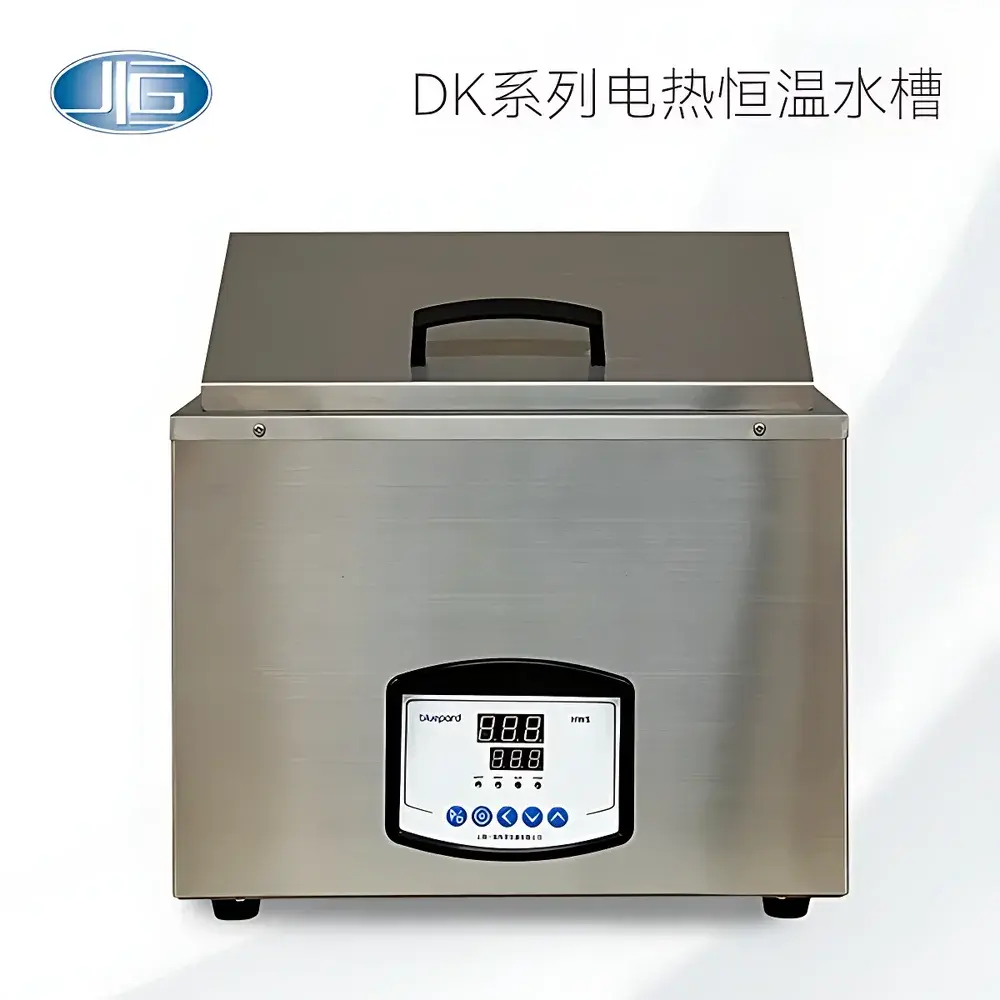
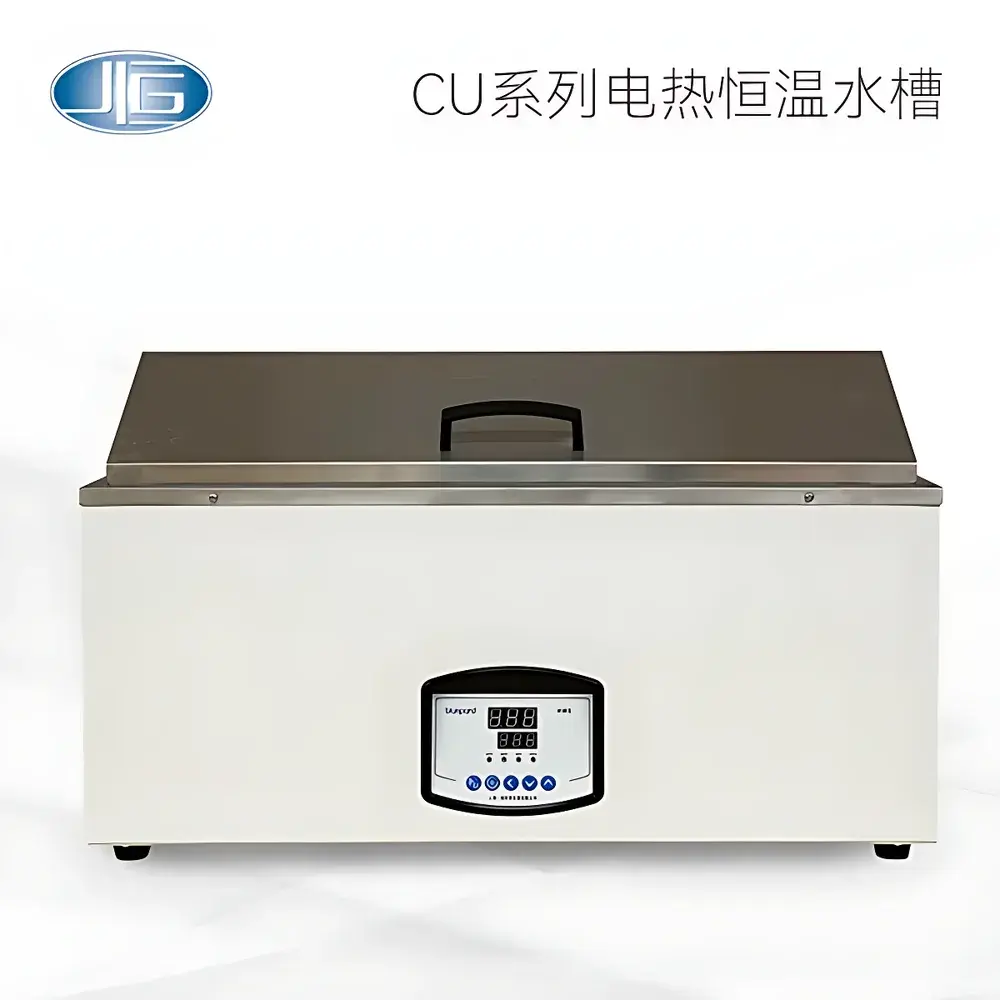
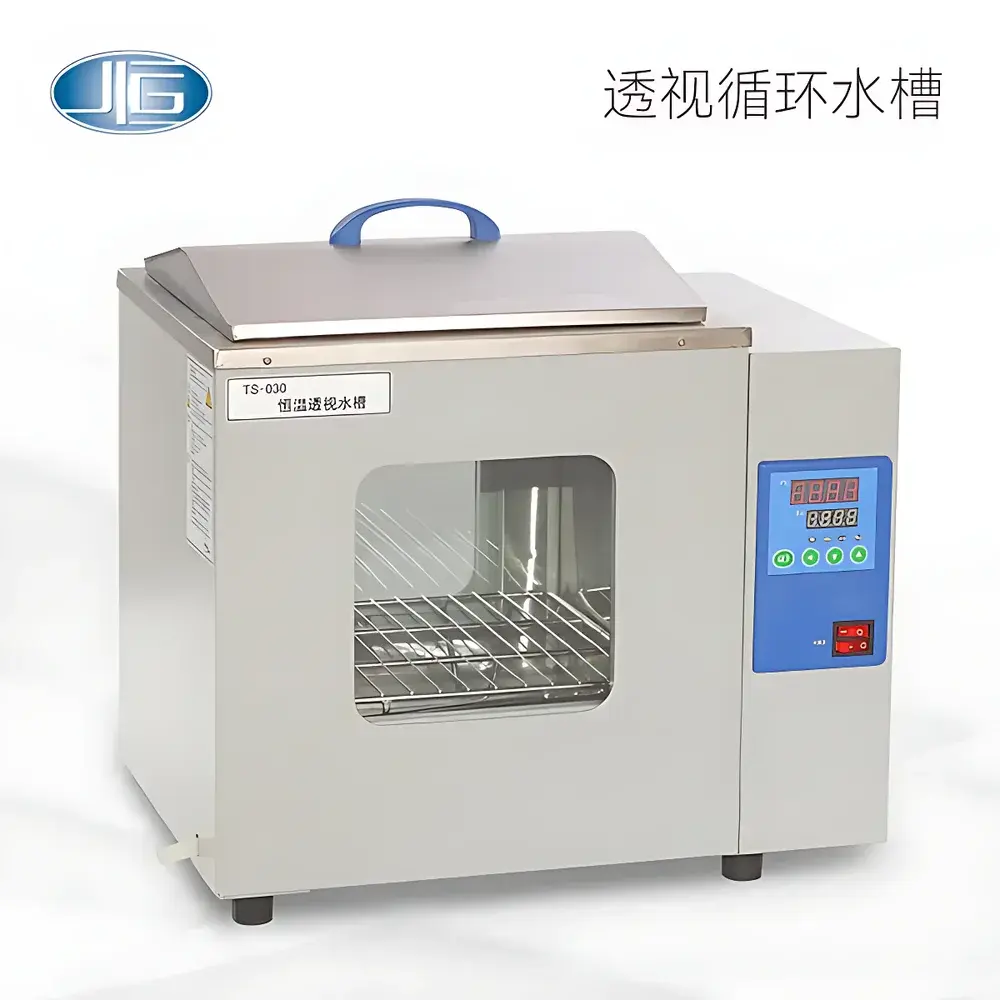
Yiheng CU-420 / DK-8AXX / DKB-600B / TS-030 / DK-8D Triple-Compartment Circulating Water Bath
| Brand | Yiheng |
|---|---|
| Origin | Shanghai, China |
| Manufacturer Type | Direct Manufacturer |
| Region Classification | Domestic (China) |
| Models | CU-420, DK-8AXX, DKB-600B, TS-030, DK-8D |
| Price Range | USD 260 – 500 (FOB Shanghai) |
| Instrument Type | Heating-Only Constant-Temperature Bath |
| Circulation Mode | Internal Recirculation Only |
| Bath Volume | Model-Dependent (CU-420: ~12 L total |
| DKB-600B | ~60 L total |
| TS-030 | ~30 L total) |
| Temperature Range | RT+5°C to 99°C (CU-420, DKB-600B, TS-030) |
| Temperature Resolution | 0.1°C |
| Power Input | Model-Dependent (CU-420: 800 W |
| DKB-600B | 2200 W |
| TS-030 | 1500 W) |
| Supply Voltage | AC 220 V, 50 Hz |
| Control System | Microprocessor-Based Digital PID Controller with Timer Function |
| Safety Features | Over-Temperature Audible/Visual Alarm with Independent Thermal Cut-Out |
| Construction | 304 Stainless Steel Inner Tank and Lid |
| Configuration | Three Independent Temperature-Controlled Compartments |
| Optional Feature | Multi-Stage Programmable Controller (PID-based, up to 30 segments) |
Overview
The Yiheng Triple-Compartment Circulating Water Bath series (models CU-420, DK-8AXX, DKB-600B, TS-030, and DK-8D) is a precision-engineered laboratory thermal management system designed for simultaneous, independent temperature control across three physically separated bath compartments. Each compartment operates under a dedicated microprocessor-controlled heating circuit with digital PID regulation, enabling stable thermal environments within ±0.3°C accuracy at setpoint across the full operating range (RT+5°C to 99°C, depending on model). Unlike single-bath systems, this architecture eliminates cross-compartment thermal interference—critical when running parallel assays requiring distinct incubation temperatures (e.g., enzyme kinetics at 37°C, denaturation studies at 65°C, and low-temperature stability testing at 25°C). The unit employs natural convection enhanced by an internal recirculation pump, ensuring uniform temperature distribution (±0.2°C spatial homogeneity) without external plumbing or reservoirs. Its stainless steel (AISI 304) tank and lid provide chemical resistance to aqueous buffers, saline solutions, and mild detergents, supporting long-term use in QC labs, academic research facilities, and pharmaceutical stability chambers.
Key Features
- Three thermally isolated stainless steel compartments with individual digital temperature setpoints and real-time display
- Microprocessor-based PID temperature controller with 0.1°C resolution and adjustable proportional band, integral time, and derivative time for optimized response
- Programmable timer function (0–999 minutes) per compartment, enabling unattended endpoint termination
- Independent over-temperature protection circuit with dual-stage thermal cut-out (mechanical backup + electronic alarm)
- Adjustable internal circulation pump speed (0–100% PWM control) to balance mixing efficiency and sample agitation sensitivity
- Front-panel LED display with intuitive menu navigation; optional multi-segment programmable controller supports up to 30 ramp-hold cycles per channel
- Robust mechanical design compliant with IEC 61010-1:2010 safety standards for laboratory electrical equipment
Sample Compatibility & Compliance
This water bath accommodates standard laboratory vessels including glass beakers (up to 1000 mL), polypropylene centrifuge tubes, reaction vials, and enzymatic assay plates—provided vessel height does not exceed compartment depth. The absence of external circulation ports ensures containment integrity for non-sterile but contamination-sensitive applications (e.g., protein refolding, cell culture pre-warming, reagent equilibration). Units are CE-marked and conform to ISO/IEC 17025 calibration traceability requirements when used with NIST-traceable reference thermometers. While not certified for GLP/GMP production environments, the system meets routine QC validation criteria per ASTM E2251-22 (Standard Specification for Liquid-Bath Temperature Controllers) and supports audit-ready documentation via optional RS232/USB data logging interfaces (firmware v2.3+).
Software & Data Management
Standard operation requires no host software—temperature, timer, and alarm status are managed locally via the embedded controller. For laboratories requiring electronic records, optional firmware upgrade enables ASCII-formatted serial output (9600 baud, 8N1) compatible with LabVIEW, MATLAB, or custom Python scripts for timestamped temperature logging. When paired with the multi-segment programmable module, users can export and import .csv configuration files containing ramp rates, dwell times, and target temperatures—facilitating SOP-driven protocol replication across instruments. All configurations support manual override during active runs, and system logs retain the last 50 alarm events (timestamp, type, compartment ID) accessible via diagnostic menu.
Applications
- Simultaneous incubation of multiple biological samples at differential temperatures (e.g., comparative thermal stability assays)
- Pre-equilibration of HPLC mobile phases, GC injection liners, and spectrophotometer cuvettes
- Controlled hydrolysis reactions, polymer dissolution, and viscosity standardization per ISO 3219
- Calibration of liquid-in-glass thermometers and RTDs against reference standards
- Supporting ASTM D92 (Cleveland Open Cup Flash Point) and ASTM D1500 (ASTM Color) test preparations
- Long-duration stability studies complying with ICH Q1A(R2) guidance for temperature-controlled storage conditions
FAQ
Is external cooling capability available?
No—this is a heating-only bath. Refrigerated circulation or Peltier-cooled variants are not offered in this series.
Can the three compartments operate at significantly different temperatures simultaneously?
Yes—each compartment has independent PID control; typical operational delta between compartments is ≤75°C (e.g., 25°C, 50°C, and 99°C) without performance degradation.
What is the maximum recommended fill level for optimal thermal uniformity?
Fill to 2–3 cm below the top rim of each compartment to ensure adequate convection headspace and prevent overflow during pump-induced surface turbulence.
Does the unit support 21 CFR Part 11-compliant electronic signatures?
Not natively—the base controller lacks user authentication, audit trails, or electronic signature functionality. Integration with validated third-party SCADA systems is required for regulated environments.
Are calibration certificates included with shipment?
Factory calibration certificates (as-found/as-left data at 37°C, 60°C, and 95°C) are provided upon request at no additional cost; NIST-traceable calibration services are available separately.



