
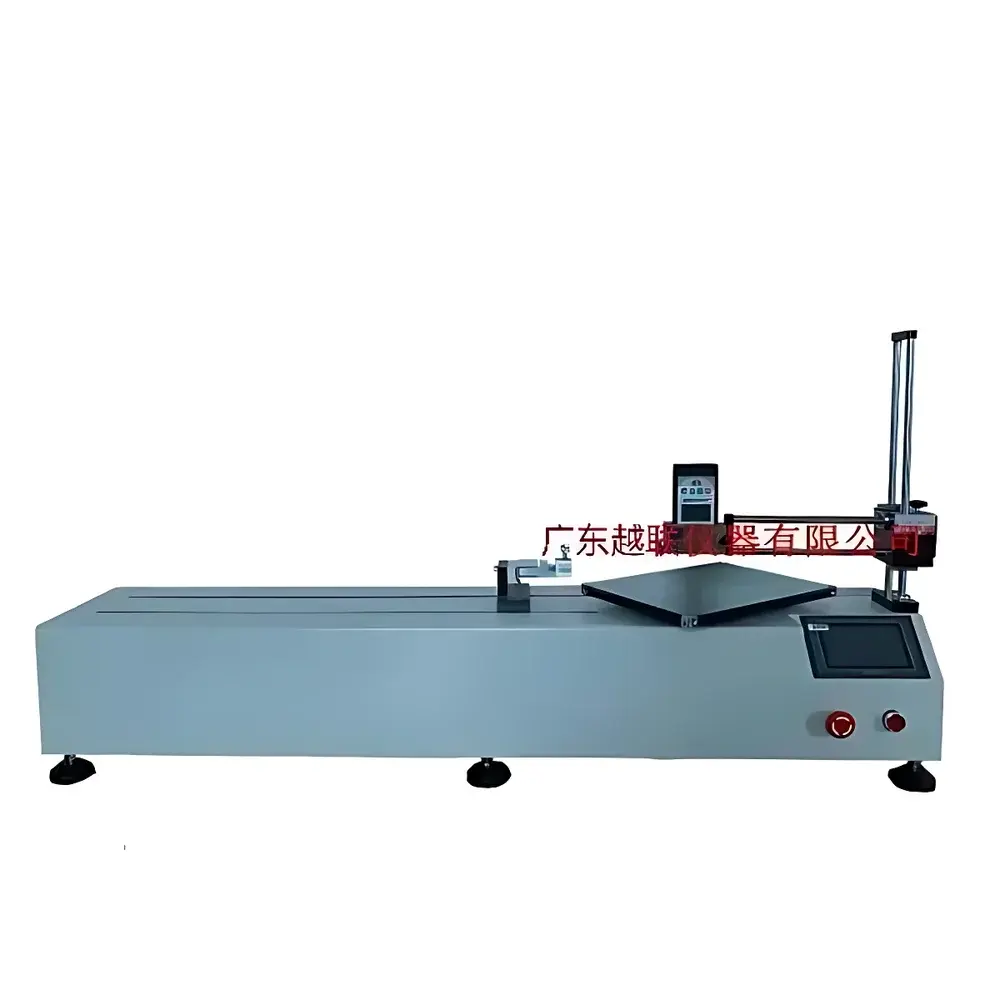
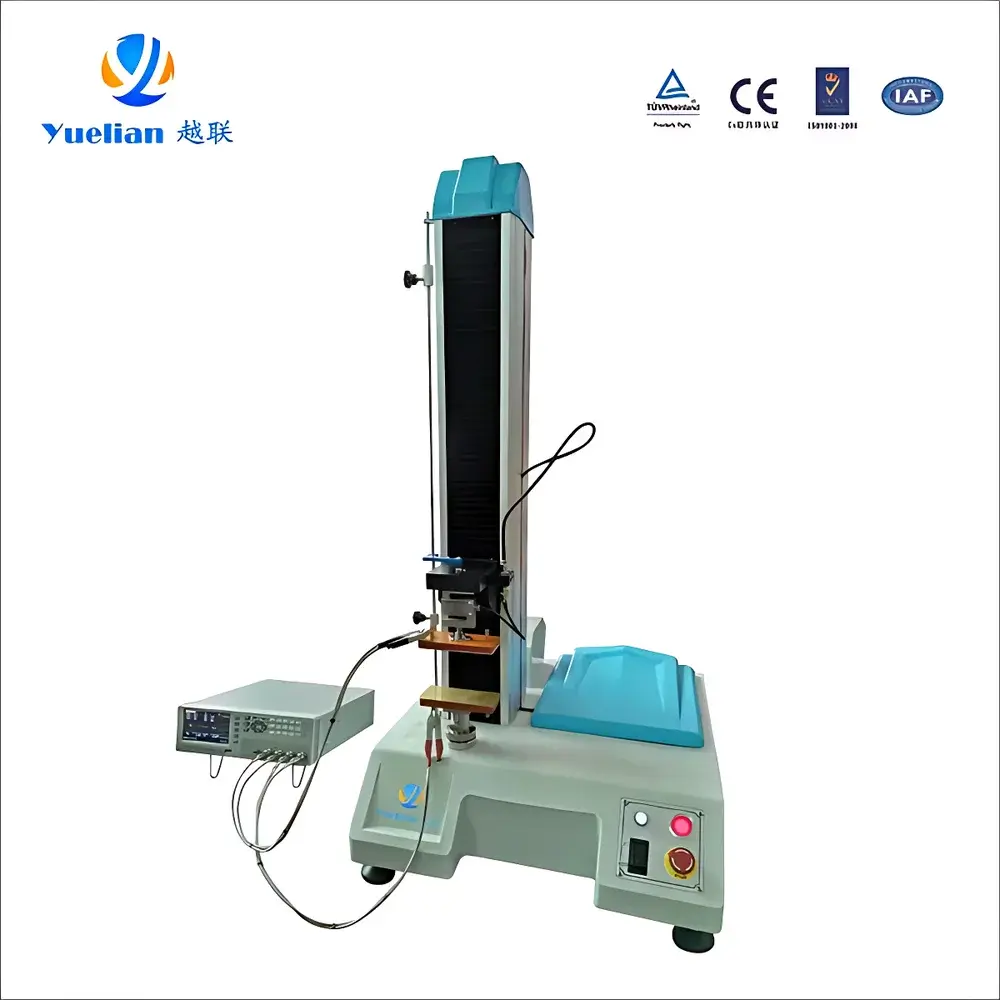
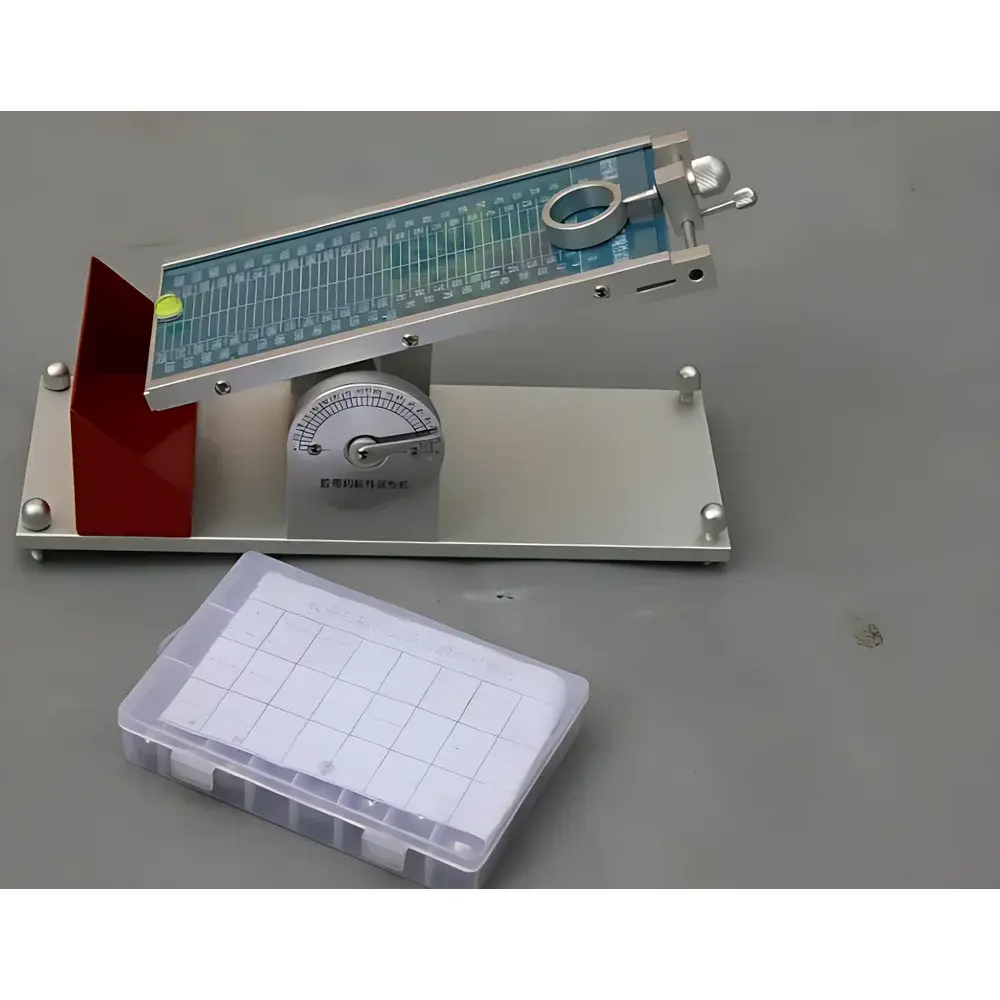
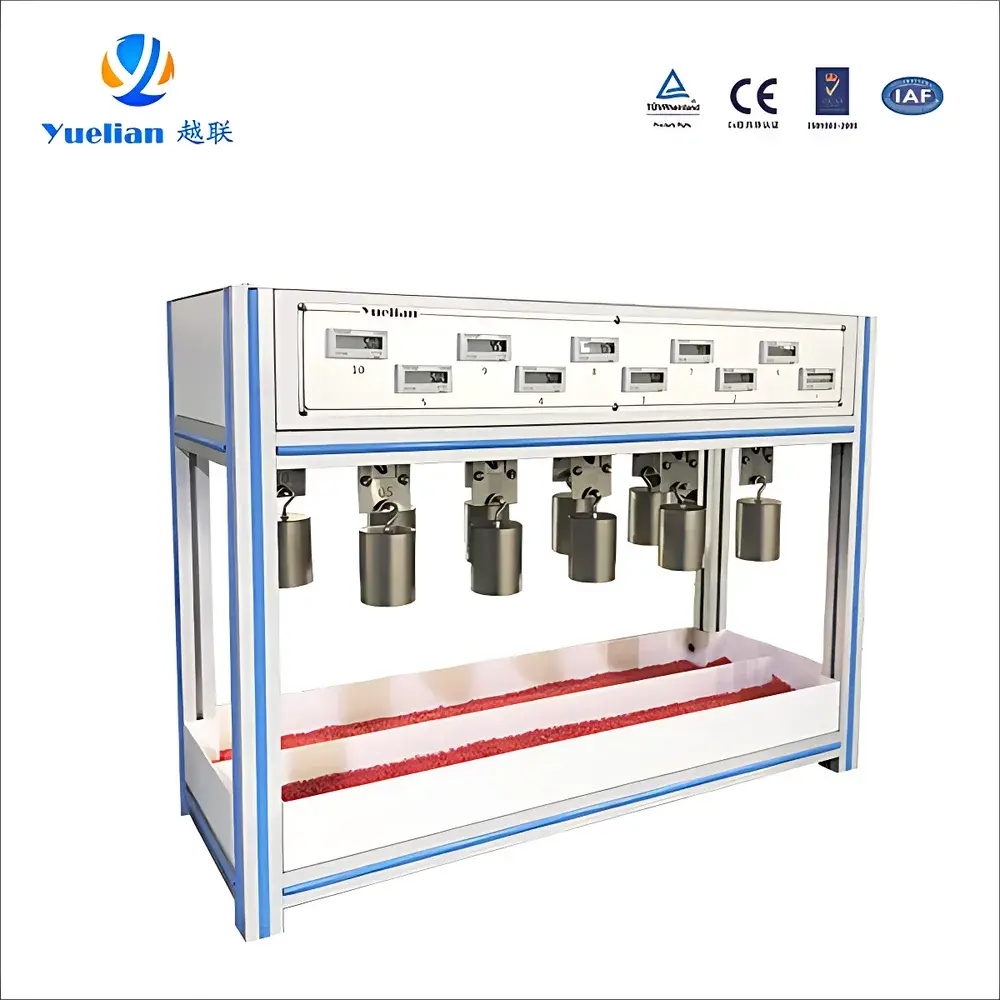
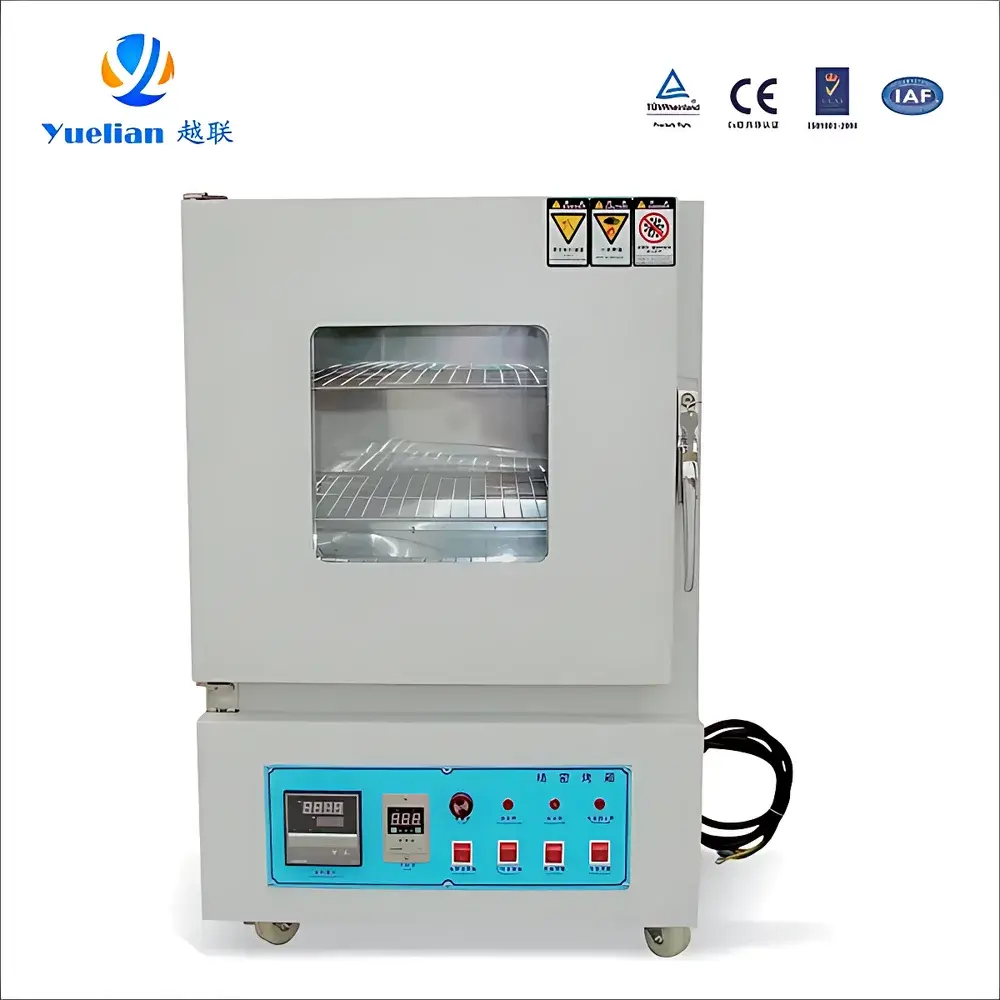
YL-H03C-SV Static Voltage Tester for Film Delamination
| Measurement Range | ±2 kV |
|---|---|
| Test Distance | 5 mm – 25 m |
| Sensing Area Diameter | 25–175 mm |
| Accuracy | ±5% of full scale |
| Resolution | 1 V |
| Operating Temp. | 15–35 °C, RH ≤85% non-condensing |
| Drift | <600 ppm/hour (time), <600 ppm/°C (temp.) |
| Response Time | <25 ms |
| Display | 3.5-digit LCD |
| Dimensions | 31 × 59 × 173 mm |
| Weight | 200 g |
| Power | 9 V battery (8 h continuous operation) |
| Analog Output | Yes |
| Hold Function | Yes |
| Sensor Thickness | Ultra-thin probe design |
Overview
The Yuelian YL-H03C-SV Static Voltage Tester for Film Delamination is a precision-engineered, handheld electrostatic surface voltage measurement instrument designed specifically for quantifying triboelectric charge generation during protective film separation processes. It operates on the principle of non-contact electrostatic field sensing via capacitive coupling—eliminating physical contact with charged surfaces and thereby preserving sample integrity and measurement fidelity. Unlike conventional field meters constrained by fixed standoff distances or limited spatial access, the YL-H03C-SV employs an ultra-thin, low-profile sensor probe that enables reliable voltage acquisition from confined geometries, narrow gaps, and irregularly contoured substrates—common in display module assembly, optical film lamination, and semiconductor packaging workflows. Its calibrated response across a wide dynamic range (±2 kV) ensures traceable measurements under both ambient and ionized environments, including active ionizer zones where traditional meters exhibit instability or drift.
Key Features
- Non-contact capacitive sensing architecture optimized for surface potential mapping without perturbation or charge dissipation
- Ultra-thin probe profile (≤1.2 mm thickness) enabling access to recessed, interstitial, and high-aspect-ratio test locations
- Variable standoff tolerance: accurate measurement across 5 mm to 25 m distance—no mechanical fixturing or calibration per distance required
- High temporal stability: <600 ppm/hour time drift and <600 ppm/°C thermal coefficient support repeatable long-duration QC monitoring
- Dual-mode output: real-time 3.5-digit LCD readout + analog voltage output (0–2 V or 0–5 V scalable) for integration with data loggers or SCADA systems
- Hold function with visual indicator allows stable capture and manual recording of transient peak values during rapid delamination events
- Battery-powered operation (9 V alkaline) delivering >8 hours of continuous use with low-battery warning indicator
- Robust EMC design validated for stable performance in electrically noisy production environments—including proximity to ionizing blowers, plasma treaters, and RF sealers
Sample Compatibility & Compliance
The YL-H03C-SV is compatible with a broad spectrum of dielectric films used in electronics manufacturing—including PET, PC, PMMA, and silicon-based release liners—across thicknesses from 12 µm to 250 µm. Its 25–175 mm effective sensing diameter accommodates standard test coupons (e.g., ASTM D257-compliant 100 mm × 100 mm specimens) as well as micro-feature areas such as touch panel edge seals or flex circuit adhesive zones. While not certified to IEC 61340-4-1 or ANSI/ESD S20.20 as a standalone compliance tool, the instrument’s metrological traceability, documented linearity, and repeatability (±5% FS per ISO/IEC 17025-aligned internal validation) support its use in GLP- and GMP-aligned static control programs. It meets CE marking requirements for electromagnetic compatibility (2014/30/EU) and low-voltage safety (2014/35/EU).
Software & Data Management
The YL-H03C-SV operates as a stand-alone analog/digital meter and does not require proprietary software for basic operation. However, its analog output interface (BNC or screw-terminal) supports seamless connection to third-party acquisition platforms—including National Instruments DAQ systems, Keysight BenchVue, and LabVIEW-based custom QC dashboards. When integrated into automated test stations, the device supports timestamped data streaming with configurable sampling rates up to 40 Hz. All measurement sessions comply with ALCOA+ data integrity principles when logged via validated systems; audit trails, electronic signatures, and 21 CFR Part 11–compliant user access controls are implemented at the host software layer—not within the meter itself.
Applications
- Quantitative evaluation of static charge decay profiles during protective film removal from OLED and LCD panels
- In-process verification of anti-static coating efficacy on release liners prior to die-cutting or slitting
- Root-cause analysis of electrostatic discharge (ESD) events in cleanroom assembly lines handling bare wafers or MEMS sensors
- Validation of ionizer balance and decay time performance per ANSI/ESD STM3.1 protocols
- Material qualification testing for low-charging adhesives and static-dissipative backing layers
- Static mapping of multi-layer film stacks undergoing sequential peeling—enabling correlation between peel force (via tensile tester) and voltage generation rate
FAQ
Does the YL-H03C-SV require periodic recalibration?
Yes—annual recalibration against NIST-traceable electrostatic reference sources is recommended to maintain stated accuracy. Calibration certificates include as-found/as-left data and uncertainty budgets per ISO/IEC 17025.
Can it measure voltage on conductive substrates?
No—it is designed exclusively for insulating or semi-insulating surfaces. Conductive materials will rapidly dissipate charge; surface potential cannot be meaningfully defined without controlled grounding conditions.
Is the analog output isolated?
The analog output is non-isolated but features common-mode rejection >60 dB at 50/60 Hz, minimizing ground-loop interference in industrial settings.
What is the minimum measurable area?
The effective minimum sensing diameter is 25 mm; smaller features may yield attenuated readings due to field dispersion—validation against known point-source calibrators is advised for sub-20 mm targets.
Does it support RS-232 or USB communication?
No—the unit provides only analog voltage output and local digital display. Digital communication requires external ADC integration.



