
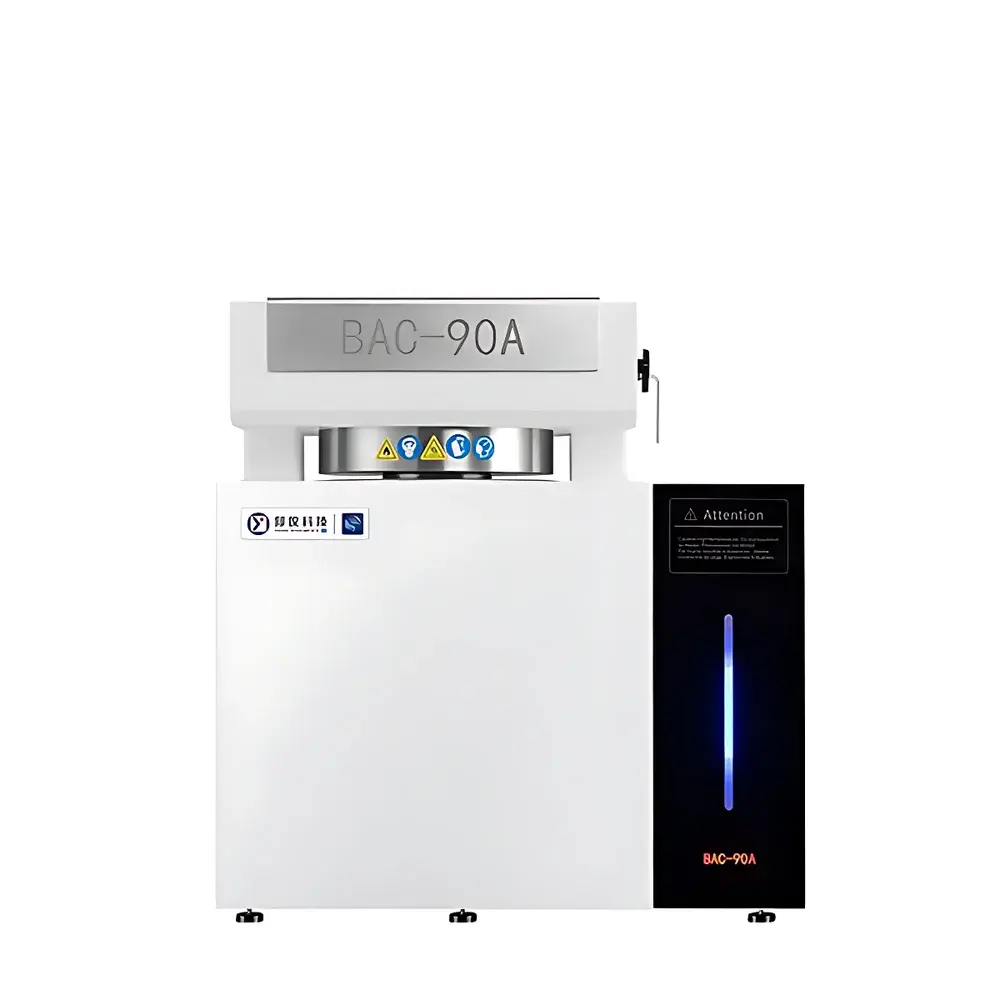
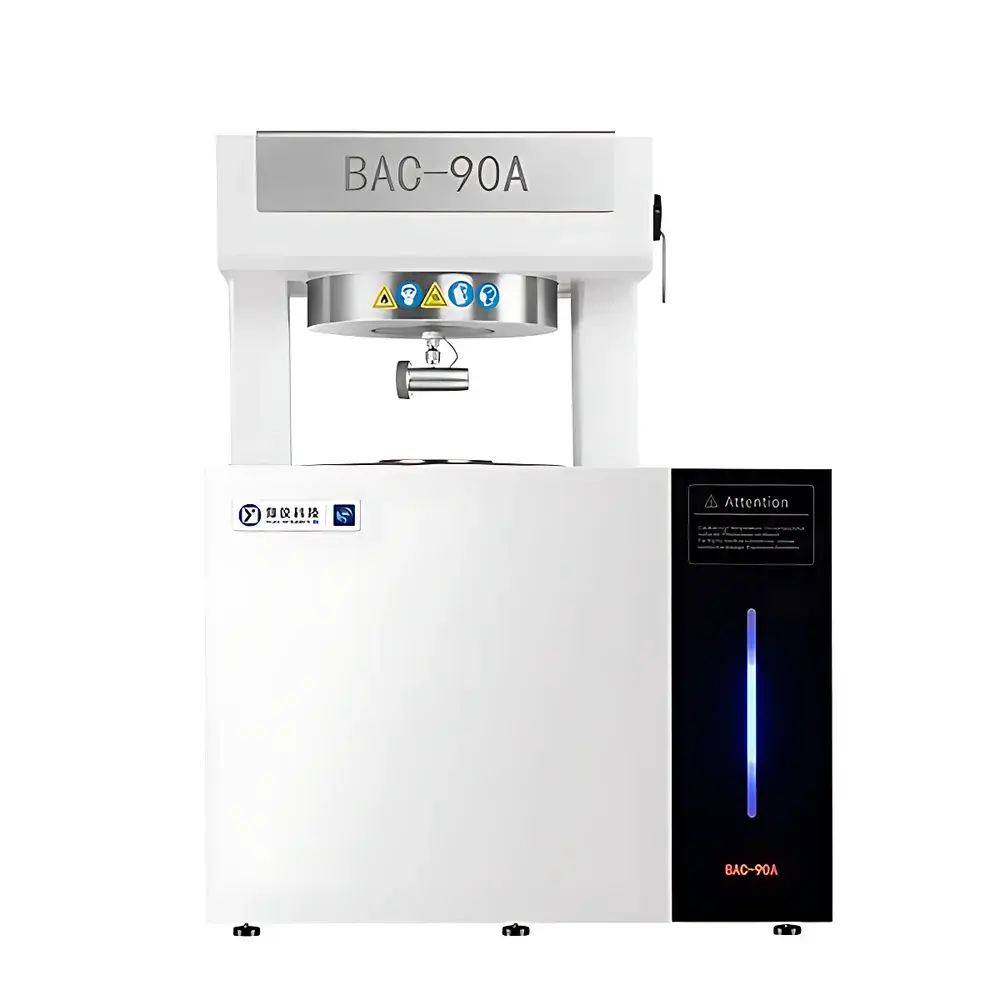
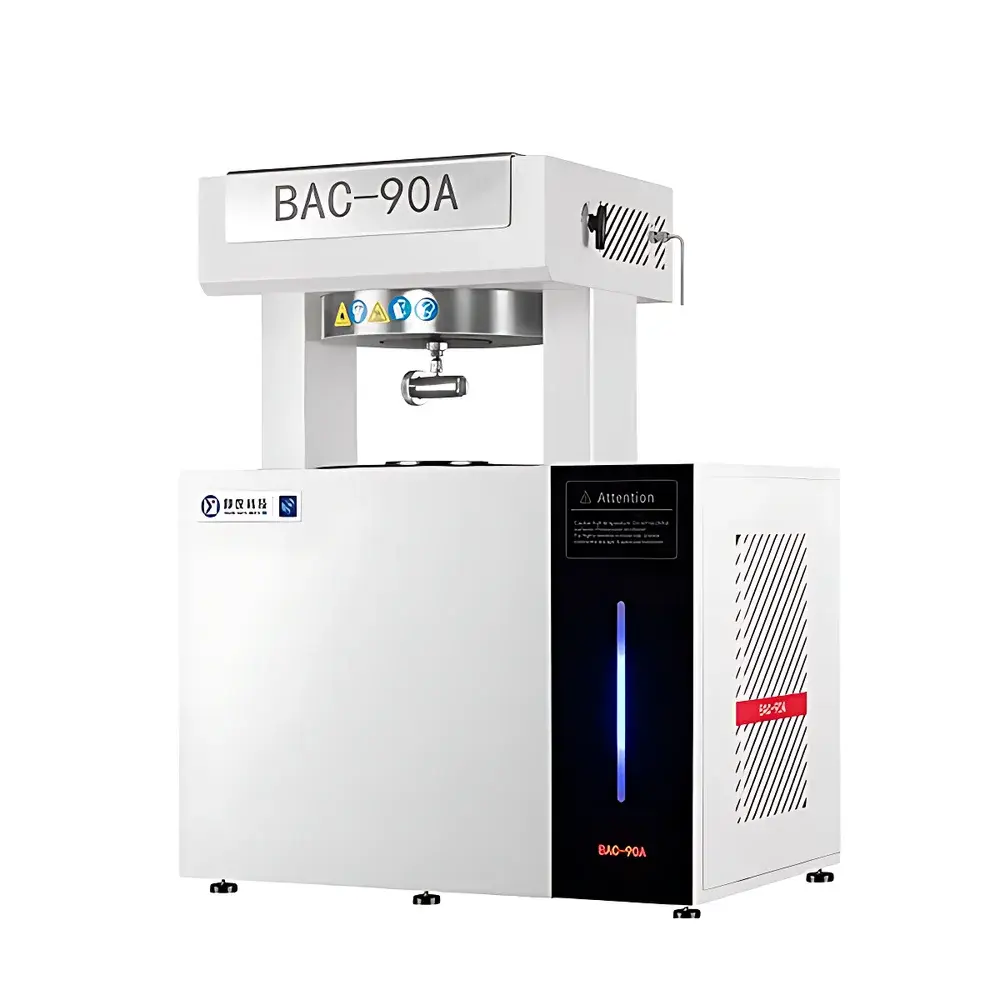
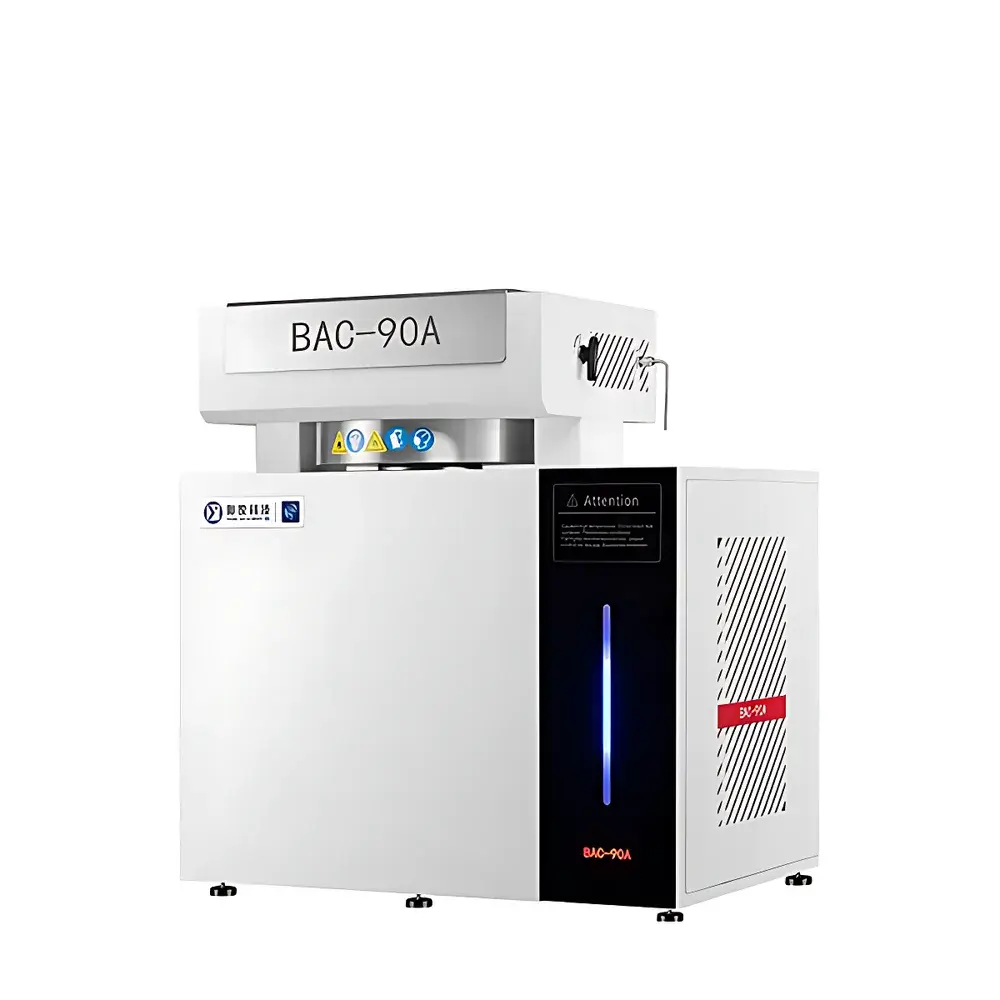
Young Instruments BAC-90A Small-Battery Adiabatic Calorimeter for Lithium-Ion Thermal Runaway Testing
| Brand | Young Instruments |
|---|---|
| Origin | Zhejiang, China |
| Manufacturer Type | Manufacturer |
| Origin Category | Domestic |
| Model | BAC-90A |
| Instrument Type | Accelerating Rate Calorimeter (ARC) |
| Measurement Mode | Adiabatic Calorimetry |
| Temperature Range | RT to 500 °C |
| Temperature Resolution | 0.001 °C |
| Chamber Dimensions | Ø90 mm × 110 mm depth |
| Temperature Tracking Rate | 0.005–40 °C/min |
| Minimum Detectable Temperature Rise Rate | 0.005–0.02 °C/min |
| Power Supply | 220 V / 50 Hz |
| Max Power Consumption | ≤3000 W |
| Data Interface | USB or RJ45 |
| Operating Environment | 5–40 °C, <85% RH |
Overview
The Young Instruments BAC-90A Small-Battery Adiabatic Calorimeter is a purpose-engineered accelerating rate calorimeter (ARC) designed specifically for high-fidelity thermal safety assessment of lithium-ion and other rechargeable battery cells up to 18650 format. It operates on the fundamental principle of adiabatic calorimetry—where the sample chamber actively tracks the temperature of the test cell in real time, minimizing heat loss to the environment and enabling precise quantification of self-heating behavior under near-ideal adiabatic conditions. Unlike conventional differential scanning calorimeters (DSC) or isothermal microcalorimeters, the BAC-90A captures intrinsic thermal runaway kinetics—including onset temperature (Tonset), maximum self-heating rate ((dT/dt)max), adiabatic temperature rise (ΔTad), and time-to-thermal-runaway—under controlled thermal, electrical, and mechanical abuse scenarios. Its architecture integrates thermodynamic and kinetic modeling capabilities directly into the measurement workflow, supporting both fundamental research and regulatory-compliant safety validation per UN GTR 20, UL 1642, IEC 62619, and GB/T 36276.
Key Features
- True adiabatic operation with active temperature tracking (0.005–40 °C/min), achieving thermal inertia compensation via high-gain feedback control
- Dual-mode thermal abuse protocols: constant-temperature hold, linear temperature ramp, and Heat-Wait-Search (HWS) sequences compliant with ASTM E698 and ISO 11358
- Integrated electrochemical module (optional): 8-channel synchronized voltage/current/temperature monitoring; ±0.1% FS accuracy for voltage and current; programmable CC/CV charging (up to 5 V / 20 A); real-time SOC estimation
- Pressure-resolved gas evolution analysis (optional): sealed 18650-compatible pressure vessel rated to 10 bar; pressure sensing range 0–20,000 kPa (1 kPa resolution; ≤0.05% full-scale accuracy); staged gas sampling ports for post-test GC-MS or FTIR analysis
- Dedicated battery-specific calorimetric modes: constant-power and constant-rate specific heat capacity (Cp) determination using calibrated reference blocks traceable to NIST SRM standards
- Multi-parameter synchronous acquisition: temperature (0.001 °C resolution), pressure, voltage, current, and time-stamped event triggers—all time-aligned with sub-millisecond precision
- Safety-critical hardware interlocks: dual redundant over-temperature and over-pressure shutdown; motorized lid lift mechanism; fail-safe venting path design
Sample Compatibility & Compliance
The BAC-90A accommodates cylindrical (e.g., 18650, 21700), prismatic, and pouch-format lithium-ion cells, as well as electrolyte formulations, cathode/anode slurries, and separator materials. Its compact 90 mm diameter × 110 mm deep reaction chamber enables representative testing of commercially relevant cell formats without compromising thermal homogeneity. All operational modes and data reporting workflows are structured to support GLP-compliant documentation requirements. The system’s embedded audit trail, electronic signature capability, and secure user-role management align with FDA 21 CFR Part 11 expectations for regulated battery safety testing laboratories. Calibration procedures follow ISO/IEC 17025 principles, with documented traceability for temperature, pressure, voltage, and current sensors.
Software & Data Management
Control and analysis are executed via the proprietary ThermoSafe Suite, a Windows-based application accessible locally or remotely over Ethernet (RJ45). The software implements hierarchical user permissions, encrypted project databases, and automated report generation in PDF and CSV formats. Raw data streams—including thermocouple voltages, pressure transducer outputs, and analog channel waveforms—are stored in HDF5 format for long-term integrity and interoperability with MATLAB, Python (NumPy/Pandas), or commercial CAE platforms. Built-in calculation modules compute activation energy (Ea) via Ozawa-Flynn-Wall and Kissinger methods, derive heat capacity curves from constant-power scans, and generate Arrhenius plots for thermal stability prediction. All data handling complies with ISO 14644-1 cleanroom-grade metadata tagging for traceability.
Applications
- Quantitative thermal runaway threshold mapping under thermal abuse (HWS, ramp-hold)
- Electrochemically induced failure mode analysis (overcharge, external short, internal short simulation)
- Gas generation kinetics and composition profiling during venting events
- Specific heat capacity (Cp) characterization across state-of-charge (SOC) and temperature domains
- Material-level screening of novel electrolytes, binders, and solid-state interfaces
- Validation of battery thermal management system (BTMS) input parameters for CFD and lumped-parameter modeling
- Regulatory submission support for UL, CE, UN 38.3, and China CCC certification pathways
FAQ
What battery formats are supported by the BAC-90A?
The standard chamber accepts 18650 and smaller cylindrical cells; optional fixtures enable testing of 21700, prismatic, and flexible pouch cells with custom thermal interface configurations.
Does the system meet international safety testing standards?
Yes—it supports test protocols aligned with UN GTR 20 Annex 4 (thermal propagation), IEC 62619 Clause 8.2.2 (thermal abuse), and GB/T 36276 Appendix C, with full traceability for calibration and environmental monitoring.
Can the BAC-90A operate without the optional electrochemical module?
Yes—the base configuration performs fully autonomous adiabatic calorimetry on passive samples (e.g., electrolytes, dry electrodes); the electrochemical module is field-upgradable and decoupled from core thermal measurement functionality.
How is temperature uniformity maintained across the cell surface?
The furnace employs a multi-zone resistive heating array with PID-controlled spatial compensation, verified by 3D thermal mapping using embedded thermocouple arrays; radial temperature gradients remain ≤±0.3 °C at 200 °C steady state.
Is remote operation supported for hazardous testing scenarios?
All control, monitoring, and emergency shutdown functions are accessible via secure TCP/IP connection; no local operator presence is required during thermal runaway experiments.
Related Products



