
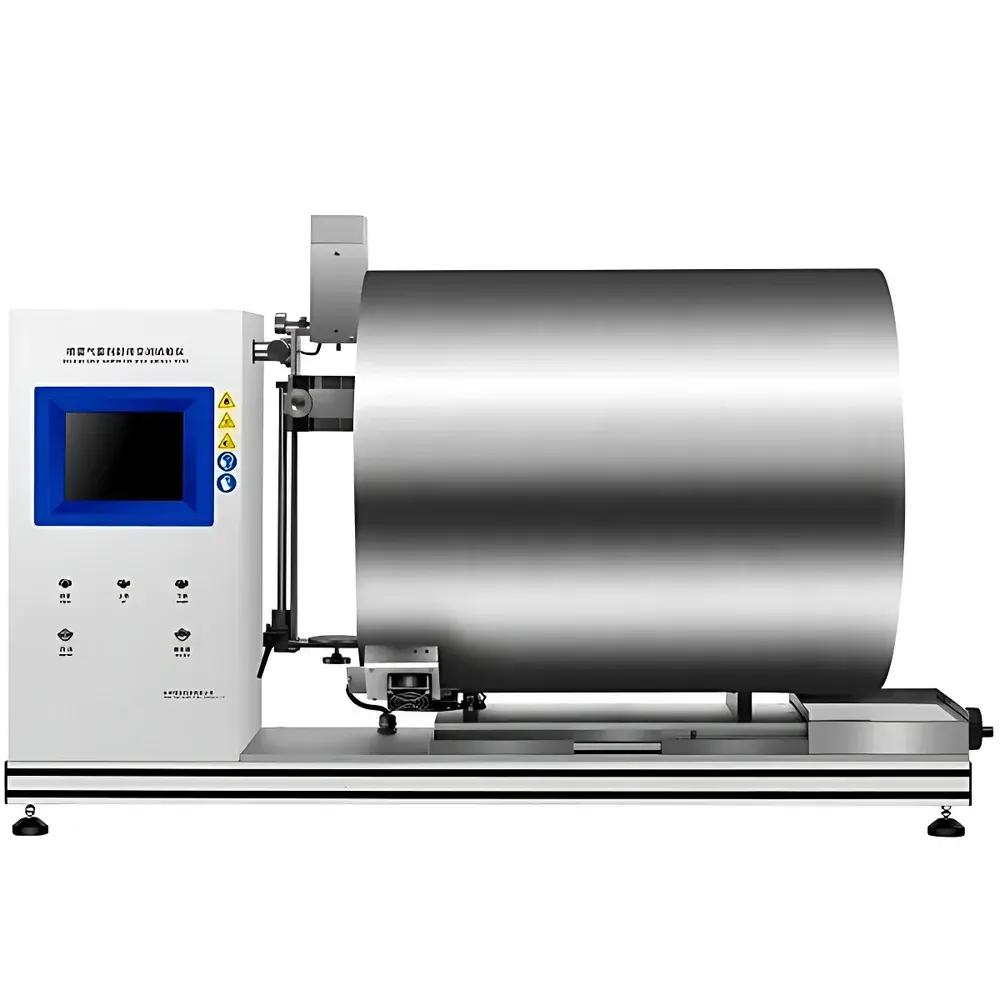
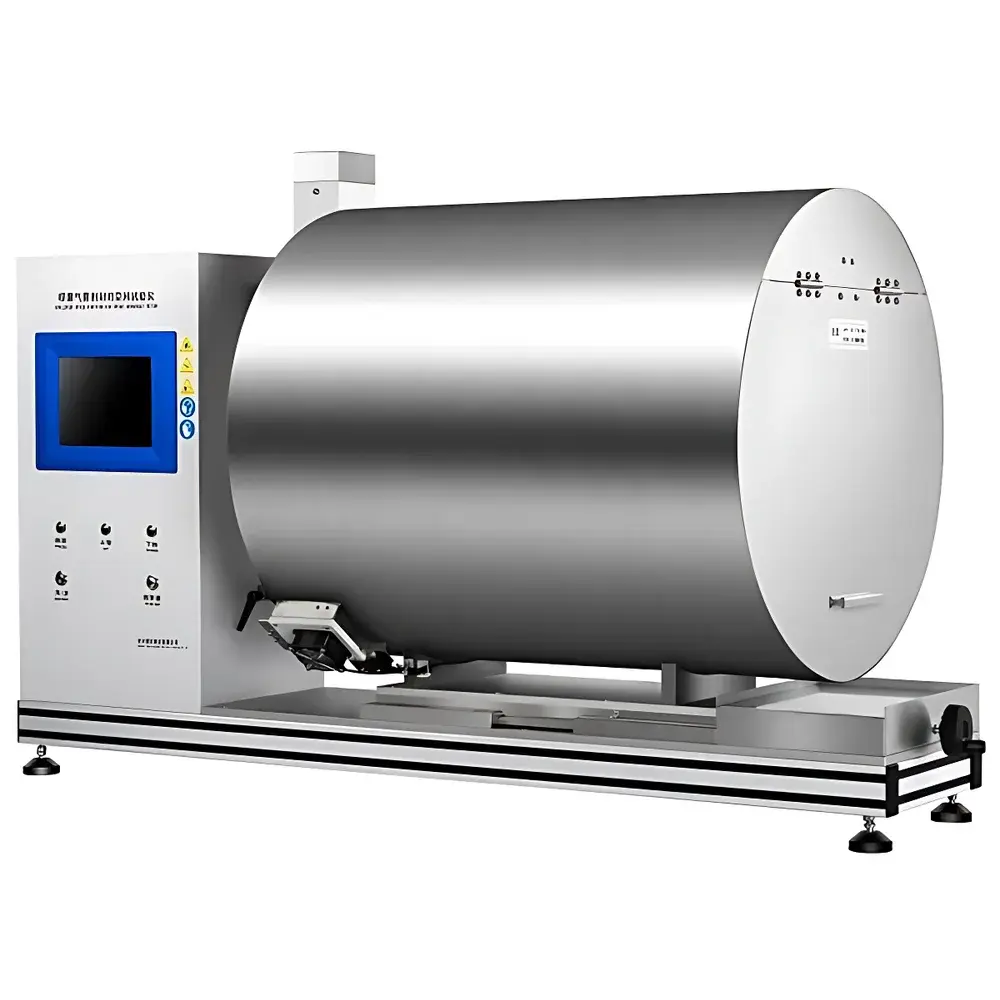
Young Instruments HWP10-10S Closed-Space Ignition Tester for Aerosol Products
| Brand | Young Instruments |
|---|---|
| Origin | Zhejiang, China |
| Manufacturer Type | Manufacturer |
| Country of Origin | Domestic (China) |
| Model | HWP10-10S |
| Pricing | Upon Request |
| Operating Environment | (-5 to 45) °C, <95% RH |
| Ambient Temperature Range | -10 to +60 °C |
| Ambient Temperature Accuracy | ±0.5 °C |
| Ambient Humidity Range | 5–95% RH |
| Ambient Humidity Accuracy | ±5.0% RH |
| Flame Detection Response Time | ≤6 ms |
| Differential Pressure Range | -5 to +5 kPa |
| Pressure Measurement Accuracy | ±0.1% FS |
| Spectral Response Range | 760–1100 nm (Near-Infrared) |
| Spectral Response Frequency | 5000 Hz |
| Timing Accuracy | ±0.01 s |
| Timing Resolution | 0.1 s |
| Ignition Source | Standardized candle flame |
| Test Chamber Dimensions | Ø600 mm × 720 mm (200 dm³ volume) |
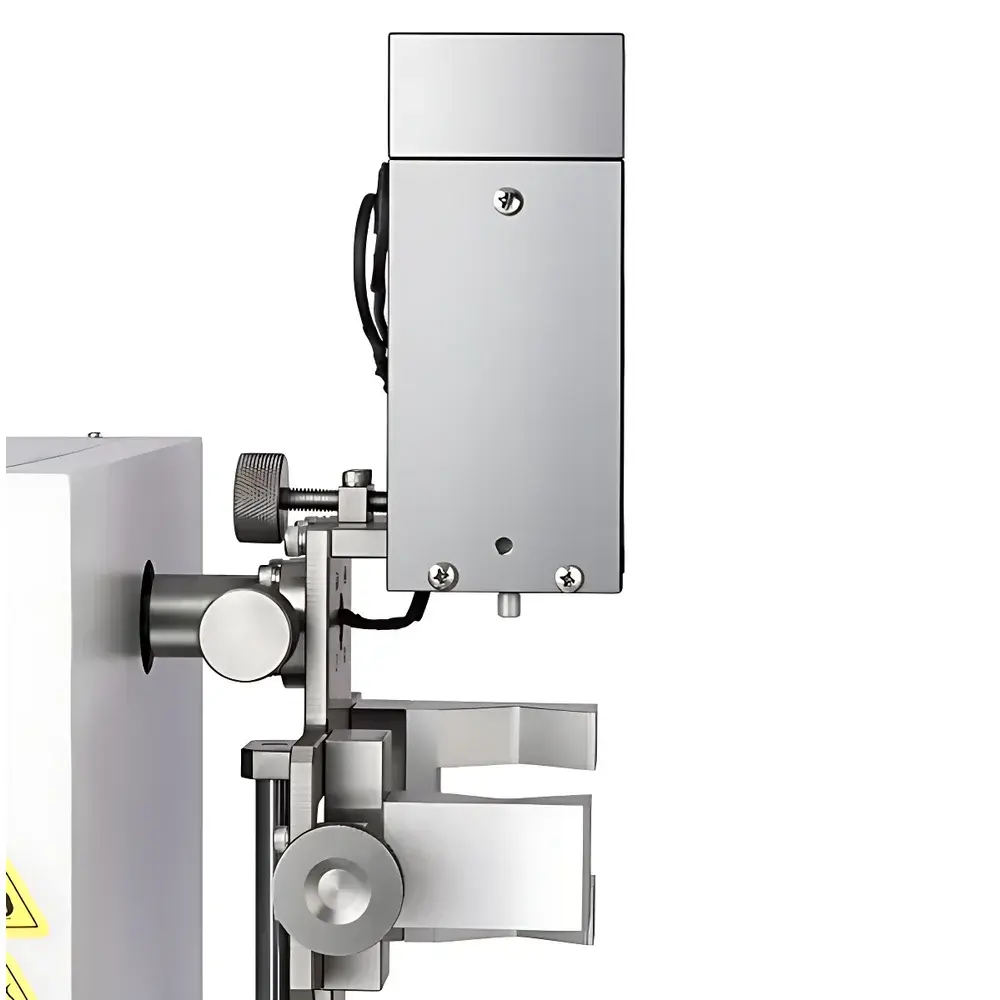
| Aerosol Can Orientation | Motorized dual-axis positioning (vertical/inverted) |
| Compatible Can Dimensions | Height 120–400 mm, Diameter 30–80 mm |
| Nozzle-to-Chamber Distance | Adjustable from 25 to 100 mm |
| Residual Liquid Collection Tray | Removable stainless-steel drip pan |
Overview
The Young Instruments HWP10-10S Closed-Space Ignition Tester is an engineered solution for the standardized evaluation of flammability hazards associated with pressurized aerosol products under confined atmospheric conditions. It operates on the fundamental principle of controlled ignition and combustion dynamics monitoring within a geometrically defined, thermally stable 200 dm³ cylindrical test chamber. The instrument implements the internationally recognized closed-space ignition test protocol—specifically aligned with the United Nations Manual of Tests and Criteria, Section 31.5—as well as its nationally adopted equivalents including GB/T 21631-2008, GAT 536, and NY/T 1860 Part 27. By replicating real-world scenarios where aerosol discharge occurs in poorly ventilated or enclosed environments (e.g., vehicle interiors, storage cabinets, or industrial enclosures), the HWP10-10S delivers quantifiable, repeatable data on ignition propensity, flame propagation onset, and overpressure generation—critical inputs for hazard classification, safety data sheet (SDS) authoring, and regulatory compliance under UN TDG, CLP, GHS, and transport classification frameworks.
Key Features
- Automated dual-axis aerosol can handling system enabling precise vertical and inverted orientation—essential for simulating realistic discharge configurations per test standards;
- Integrated dual-sensor combustion detection architecture: high-speed near-infrared photodetector (760–1100 nm, 5 kHz sampling) synchronized with differential pressure transducers (±0.1% FS accuracy) to capture both optical flame signature and transient pressure rise indicative of deflagration;
- Real-time environmental monitoring with calibrated temperature (±0.5 °C) and humidity (±5.0% RH) sensors, logged alongside test events to satisfy GLP traceability requirements;
- Dedicated ventilation subsystem with programmable post-test purge cycle, ensuring rapid removal of residual propellant vapors and combustion byproducts to maintain chamber baseline integrity across sequential tests;
- Embedded Windows CE platform with 8-inch resistive touchscreen interface, supporting intuitive navigation, parameter configuration, and on-device result review without external computing dependencies;
- Configurable operational modes: “Standard Mode” executes fully compliant sequences per GB/T 21631-2008 or UN 31.5; “Custom Mode” permits user-defined spray duration, nozzle distance (25–100 mm), and orientation logic for method development or comparative studies;
- Modular mechanical design featuring a removable stainless-steel liquid collection tray and standardized candle flame source with 20 mm height-adjustable spacers—ensuring long-term reproducibility and ease of maintenance.
Sample Compatibility & Compliance
The HWP10-10S accommodates a broad range of commercial and industrial aerosol containers, supporting can heights from 120 mm to 400 mm and diameters from 30 mm to 80 mm. Its motorized positioning system ensures consistent nozzle alignment relative to the chamber axis, minimizing geometric variability that could affect flame kernel development. All test procedures conform to the physical and procedural constraints defined in ISO/IEC 17025-accredited laboratories. The instrument’s measurement traceability chain adheres to national metrological standards for pressure, temperature, time, and optical response. Data acquisition meets audit-ready criteria for FDA 21 CFR Part 11-compliant environments when deployed with optional networked data export modules and electronic signature workflows.
Software & Data Management
Test execution, parameter logging, and report generation are managed through the onboard Windows CE application, which stores timestamped raw sensor streams (pressure, IR intensity, ambient T/RH), event markers (spray initiation, ignition detection, pressure peak), and operator metadata. Export formats include CSV and PDF, compatible with LIMS integration and statistical process control platforms. Audit trails record all parameter modifications, user logins, and test completions with immutable timestamps. Optional firmware updates support evolving regulatory language—such as recent revisions to GAT 536 Annex B or harmonized EU CLP Annex VI adaptations—without hardware modification.
Applications
- Hazard classification of pharmaceutical, cosmetic, household, and agricultural aerosols for UN transport class assignment (Class 2.1 Flammable Gas or Class 3 Flammable Liquid);
- Formulation screening during product development to assess impact of propellant blend, valve design, or concentrate composition on ignition risk;
- Quality control verification for batch release in GMP-regulated manufacturing facilities;
- Technical support for SDS Section 9 (Physical and Chemical Properties) and Section 14 (Transport Information) documentation;
- Research into combustion kinetics of hydrocarbon and dimethyl ether (DME) propellants under sub-atmospheric oxygen conditions;
- Validation of explosion suppression strategies in confined-space industrial safety engineering.
FAQ
Does the HWP10-10S comply with UN Manual of Tests and Criteria, Section 31.5?
Yes—the instrument implements the exact chamber geometry, ignition source specification, environmental conditioning, and detection thresholds required by UN ST/SG/AC.10/11/Rev.6, Section 31.5.
Can test data be exported for regulatory submission?
Yes—CSV and PDF reports include full metadata, raw sensor traces, and digital signatures, satisfying documentation requirements for ECHA, Health Canada, and U.S. CPSC submissions.
Is calibration certification included with delivery?
Each unit ships with a factory calibration certificate covering pressure, temperature, humidity, and timing subsystems, traceable to NIM (National Institute of Metrology, China) standards.
What maintenance is required for sustained compliance?
Annual verification of candle flame geometry, IR sensor responsivity, and pressure transducer linearity is recommended; consumables include replacement wicks, drip pan liners, and calibration gas standards for optional ambient air composition validation.
Can the system be integrated into an existing laboratory network?
Yes—Ethernet and USB interfaces support remote monitoring, centralized data aggregation, and scheduled firmware updates via secure protocols.





