
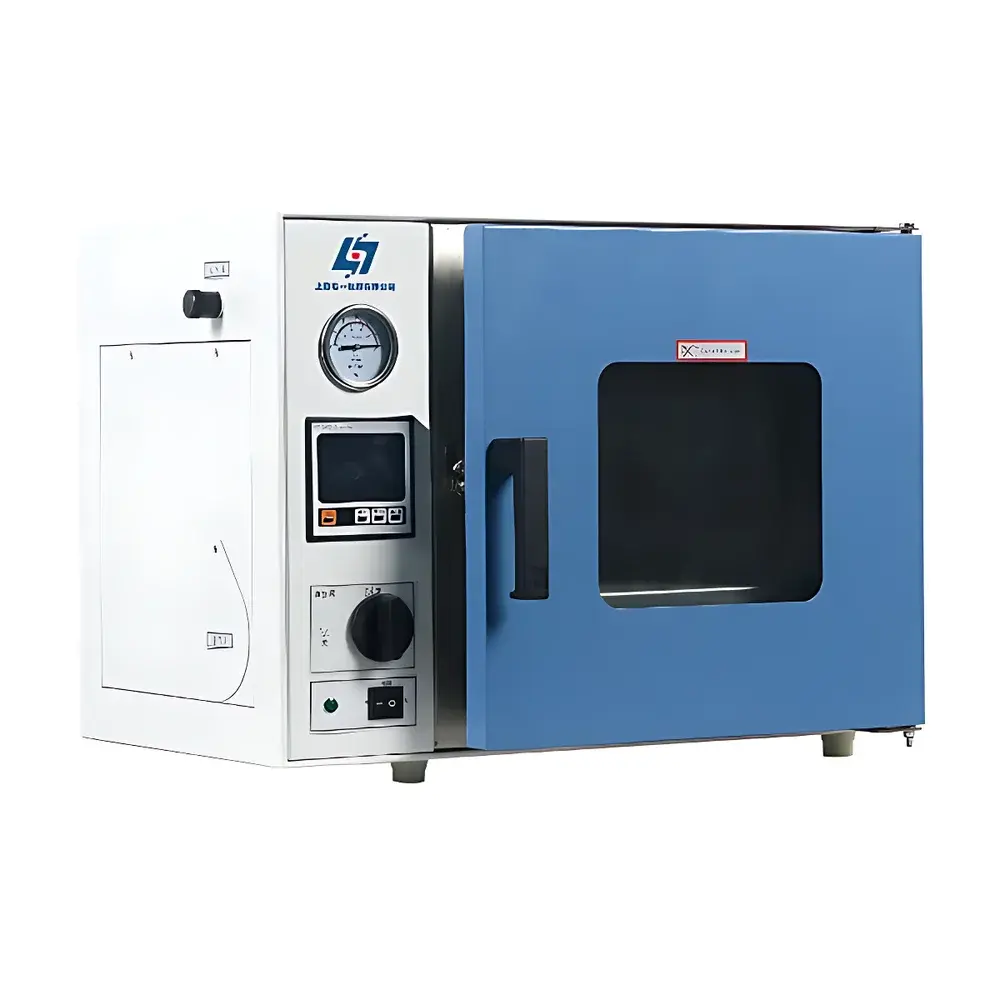
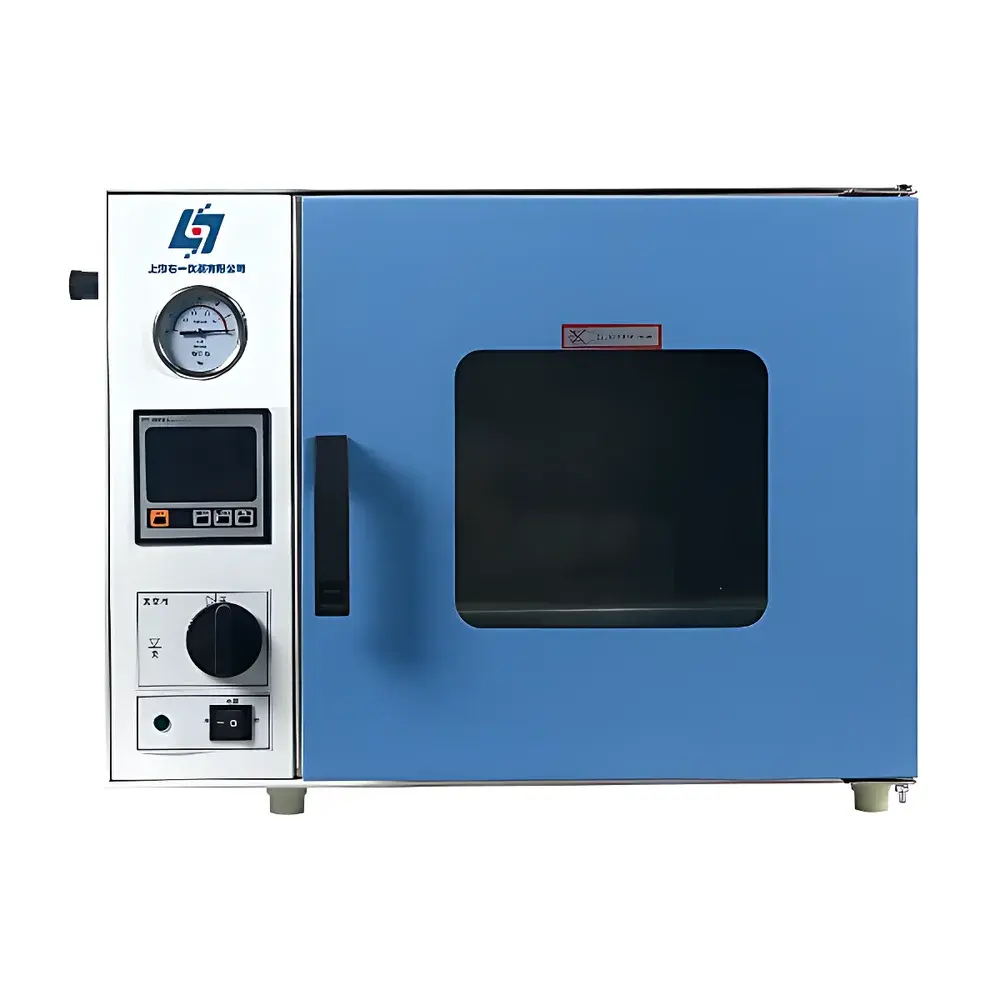
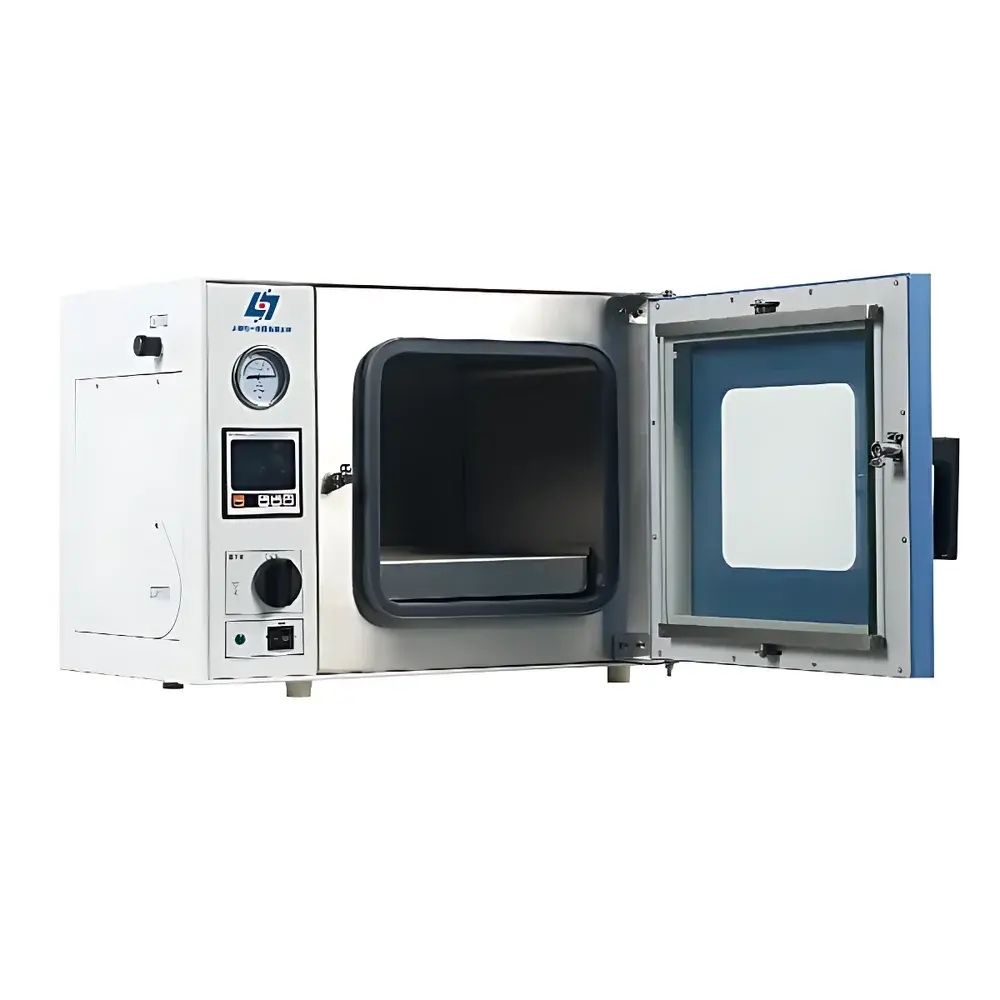
Yoyi DZF-6030C Nitrogen-Purged Vacuum Drying Oven
| Brand | Yoyi |
|---|---|
| Origin | Shanghai, China |
| Manufacturer Type | Direct Manufacturer |
| Product Category | Domestic |
| Model | DZF-6030C |
| Instrument Type | Vacuum Oven |
| Temperature Range | RT+10°C to 250°C |
| Temperature Uniformity | ±1°C |
| External Dimensions | 635 × 490 × 495 mm |
| Internal Chamber Dimensions | 320 × 320 × 300 mm |
| Temperature Resolution | 0.1°C |
| Chamber Material | Stainless Steel (SUS304) |
| Ultimate Vacuum Level | ≤133 Pa |
| Power Input | 450 W |
| Timer Range | 1–9999 min |
| Vacuum Gauge | Analog Pointer-Type (Stainless Steel Housing) |
| Inert Gas Inlet | Φ10 mm Quick-Connect Fitting |
| Gas Flow Control | Manual Float-Type Flowmeter (0–10 L/min) |
| Insulation | Ceramic Fiber Blanket Between Chamber and Outer Shell |
| Door Seal | Molded Silicone Rubber Gasket |
| Shelf Configuration | 2 Adjustable Aluminum Shelves (Non-Removable, High-Thermal-Conductivity Anodized Surface) |
| Heating Method | Internal Heating (Heating Elements Embedded in Chamber Walls) |
Overview
The Yoyi DZF-6030C Nitrogen-Purged Vacuum Drying Oven is an engineered solution for controlled thermal processing under reduced pressure and inert atmospheres. It operates on the principle of vacuum-assisted moisture removal—lowering the boiling point of solvents and volatile components—while simultaneously preventing oxidative degradation through nitrogen purging. This dual-mode capability makes it especially suitable for drying heat-sensitive, oxygen-labile, or chemically unstable samples including pharmaceutical intermediates, polymer precursors, catalysts, biological extracts, and nanomaterials. Unlike conventional convection ovens, the DZF-6030C eliminates convective heat transfer, relying instead on conductive and radiative heating within a sealed, evacuated chamber. Its design conforms to fundamental requirements outlined in ISO 17025 for laboratory equipment qualification and supports GLP-compliant workflows where environmental control, traceability, and process repeatability are critical.
Key Features
- Microprocessor-based PID temperature controller with real-time digital display, offering precise setpoint regulation (±1°C uniformity) and 0.1°C resolution across the full operating range (RT+10°C to 250°C).
- Dual-mode operation: independent vacuum evacuation (≤133 Pa ultimate vacuum) and regulated nitrogen gas introduction via a dedicated quick-connect port (Φ10 mm) and calibrated float-type flowmeter (0–10 L/min).
- Robust chamber construction using SUS304 stainless steel interior and cold-rolled steel exterior with electrostatic powder coating; double-layer tempered glass door with integrated silicone gasket ensures vacuum integrity and visual monitoring.
- High-efficiency thermal insulation utilizing ceramic fiber blanket between inner chamber and outer shell—minimizing heat loss and improving energy efficiency by up to 35% compared to standard air-oven designs.
- Intelligent safety architecture includes over-temperature alarm, power-failure data retention, auto-restart functionality, and programmable timer (1–9999 minutes) with end-of-cycle audible alert.
- Two high-conductivity anodized aluminum shelves optimized for rapid, uniform heat distribution; non-removable design prevents misalignment and maintains chamber vacuum integrity during operation.
Sample Compatibility & Compliance
The DZF-6030C accommodates a broad spectrum of sample forms—including powders, granules, thin films, coated substrates, lyophilized pellets, and small-volume liquid residues—without risk of oxidation, decomposition, or surface hardening. Its inert-gas-compatible chamber meets essential prerequisites for ASTM E145 (Standard Specification for Gravity-Convection and Forced-Ventilation Ovens) and aligns with ISO 5725 (accuracy and precision of measurement methods) when used with validated vacuum pumps and calibration protocols. While not inherently 21 CFR Part 11 compliant, the unit supports integration into auditable systems via external data loggers and can be qualified per IQ/OQ/PQ protocols for regulated environments in pharmaceutical R&D and QC labs.
Software & Data Management
The DZF-6030C features a stand-alone microcontroller interface with no embedded software or network connectivity. All operational parameters—including set temperature, elapsed time, vacuum status, and alarm history—are displayed locally on a backlit LCD screen. For traceable recordkeeping, users may connect third-party USB or RS485 data loggers compatible with Modbus RTU protocol. The system retains user-defined settings after power interruption and supports manual documentation workflows aligned with paper-based GLP practices. Optional external validation kits enable periodic verification of temperature uniformity and vacuum decay rate per ISO/IEC 17025 clause 6.5.
Applications
- Pharmaceutical: Residual solvent removal from APIs and excipients without thermal degradation; stability testing under inert conditions.
- Materials Science: Drying of metal-organic frameworks (MOFs), battery electrode slurries, and perovskite precursors prior to sintering.
- Environmental Testing: Moisture content analysis of soil, sediment, and filter media per EPA Method 505.
- Electronics Manufacturing: Degassing of encapsulants, conformal coatings, and PCB substrates prior to lamination.
- Academic Research: Controlled dehydration of hydrogels, biopolymers, and enzyme-loaded microcarriers for structural characterization.
FAQ
What vacuum pump is recommended for optimal performance?
A two-stage rotary vane pump with ultimate vacuum ≤5 Pa and pumping speed ≥2 L/s is advised to achieve and maintain ≤133 Pa within the specified chamber volume.
Can the DZF-6030C be used for vacuum baking of semiconductor wafers?
Yes—provided the nitrogen purity is ≥99.999% and dew point is controlled below –40°C; however, wafer-specific fixtures and custom shelf configurations require OEM consultation.
Is the chamber pressure monitored digitally or analogically?
It uses a front-mounted analog pointer-type vacuum gauge with stainless steel housing and metric scale (0–760 Torr); digital vacuum transducers may be added externally via optional ports.
Does the unit support continuous nitrogen purge during vacuum hold?
Yes—the inert gas inlet remains active during vacuum operation, enabling dynamic pressure balancing and maintaining positive nitrogen flow even at sub-atmospheric pressures.
What maintenance intervals are recommended for long-term reliability?
Silicone door gasket inspection every 6 months; vacuum gauge calibration annually; chamber cleaning with ethanol or isopropanol after each use involving organic residues.



