
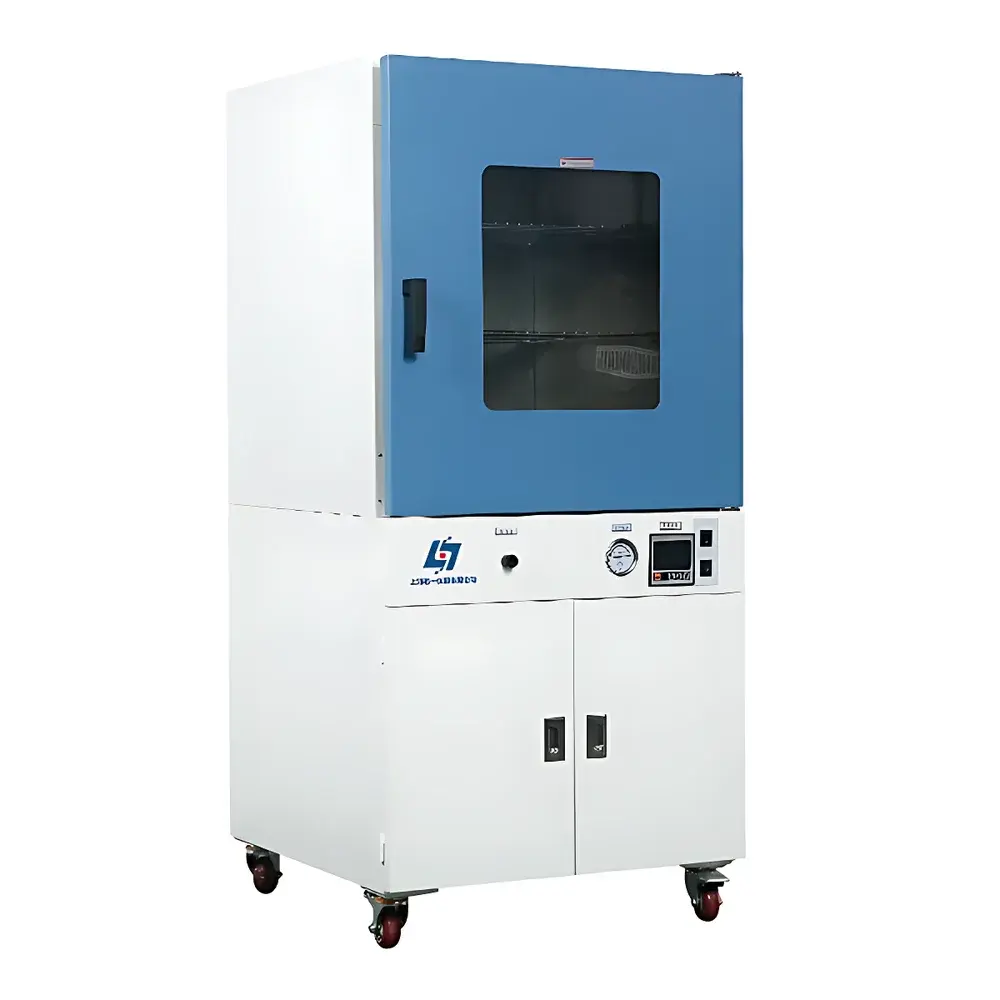
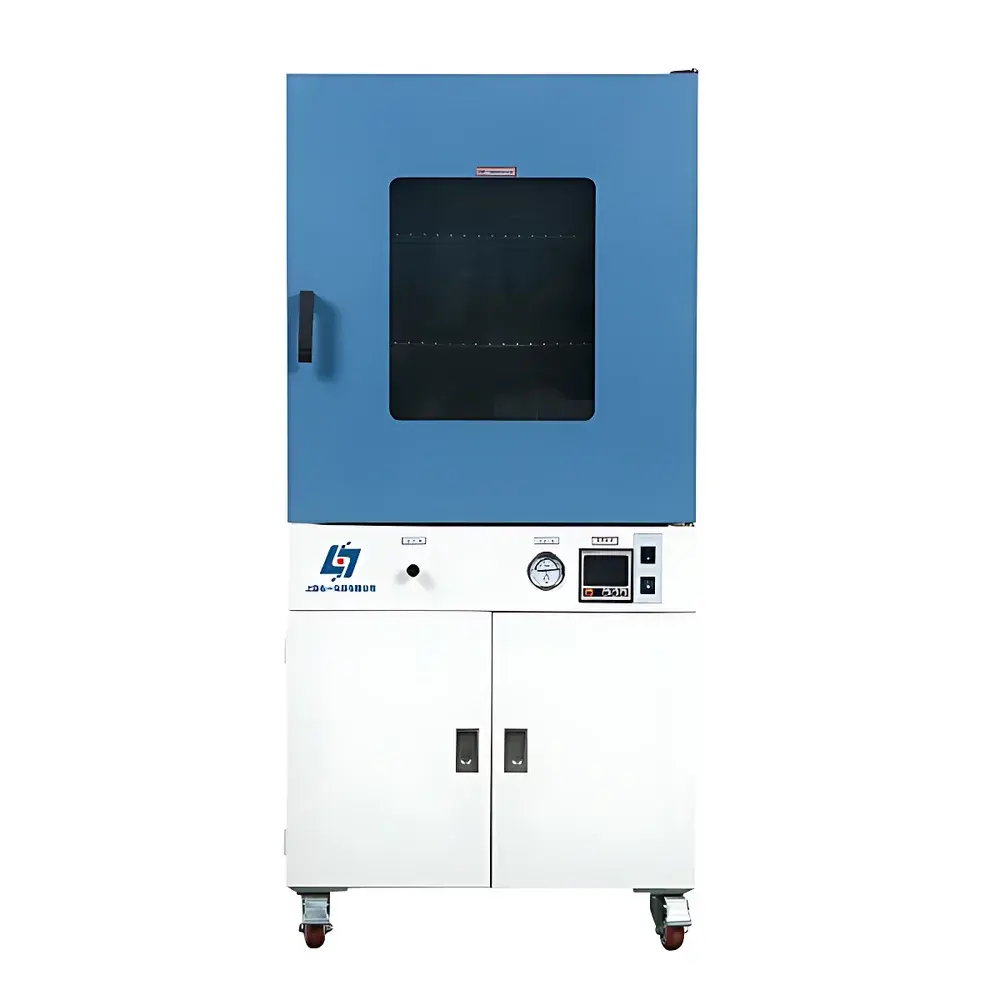
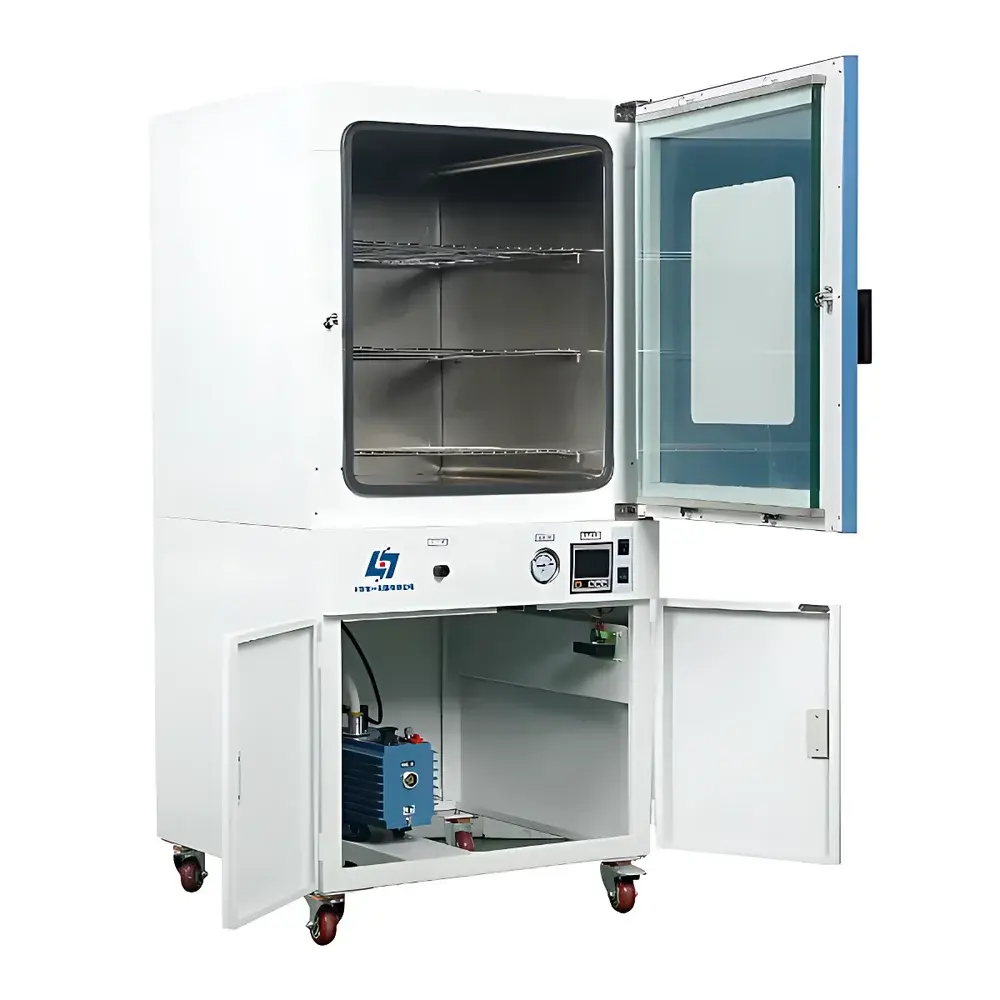
Yoyi DZF-6210C Vertical Nitrogen-Purged Vacuum Oven
| Brand | Yoyi |
|---|---|
| Origin | Shanghai, China |
| Manufacturer Type | Direct Manufacturer |
| Model | DZF-6210C |
| Instrument Type | Vacuum Oven |
| Temperature Range | RT+10°C to 250°C |
| Temperature Uniformity | ±1°C |
| Temperature Resolution | 0.1°C |
| External Dimensions | 720 × 805 × 1680 mm |
| Internal Chamber Dimensions | 560 × 600 × 640 mm |
| Chamber Material | Stainless Steel (SUS304) |
| Ultimate Vacuum | ≤133 Pa |
| Nitrogen Inlet | Φ10 mm quick-connect fitting with float-type flow control valve (0–10 L/min) |
| Heating Method | Internal heating (non-removable aluminum shelves) |
| Insulation | Ceramic fiber blanket between chamber and outer casing |
| Vacuum Gauge | Analog stainless-steel vacuum gauge (embedded mount) |
| Power Supply | AC 220 V, 50 Hz |
| Rated Power | 2200 W |
| Timer Range | 1–9999 min |
| Standard Configuration | Integrated vacuum pump + lower cabinet |
Overview
The Yoyi DZF-6210C Vertical Nitrogen-Purged Vacuum Oven is an engineered solution for controlled thermal processing under reduced-pressure and inert-atmosphere conditions. Designed around a dual-mode operational principle—vacuum-assisted moisture removal combined with nitrogen purging—the system eliminates oxidative degradation pathways during drying, annealing, or degassing of thermally sensitive materials. Unlike conventional convection ovens, this unit operates by lowering the partial pressure of water vapor within the chamber while simultaneously displacing ambient oxygen with high-purity nitrogen (≥99.998%), thereby suppressing oxidation, hydrolysis, and thermal decomposition reactions. Its vertical architecture maximizes floor-space efficiency while accommodating larger sample loads—particularly relevant for R&D labs handling bulk powders, coated substrates, or multi-layered composites in electronics, pharmaceutical, and advanced materials development.
Key Features
- Stainless steel (SUS304) interior chamber with seamless welded construction ensures corrosion resistance, ease of cleaning, and long-term vacuum integrity.
- High-efficiency ceramic fiber insulation layer between inner chamber and cold-rolled steel outer shell achieves low thermal loss and energy consumption—verified per ISO 8502-11 thermal performance benchmarks.
- Microprocessor-based PID temperature controller delivers stable setpoint maintenance (±1°C uniformity) across the full operating range (RT+10°C to 250°C), with 0.1°C resolution and programmable ramp/soak profiles.
- Dual-seal design: integrally molded silicone gasket + adjustable door-tightening mechanism enables reliable sealing down to ≤133 Pa ultimate vacuum—compatible with standard two-stage rotary vane vacuum pumps (e.g., Edwards RV8, Leybold TRIVAC D).
- Front-access quick-connect nitrogen inlet (Φ10 mm) with calibrated float-type flowmeter (0–10 L/min) allows precise inert gas dosing; flow rate remains stable under variable backpressure conditions typical in vacuum transitions.
- Tempered double-layer glass observation window provides real-time visual monitoring without compromising vacuum or thermal stability.
- Non-removable, die-formed aluminum shelves offer rapid heat transfer and resistance to high-temperature oxidation—critical for consistent thermal exposure across heterogeneous samples.
- Power-fail recovery function retains user-defined parameters (set temperature, timer, gas flow status) and resumes operation upon grid restoration—supporting GLP-compliant unattended runs.
Sample Compatibility & Compliance
The DZF-6210C accommodates diverse sample forms—including hygroscopic powders, solvent-cast films, metal-organic frameworks (MOFs), lithium-ion battery cathode precursors, and lyophilized biologics—without cross-contamination or structural collapse. Its nitrogen-purged vacuum environment meets ASTM E145-22 requirements for precision drying apparatus and supports compliance with USP (Sterile Product Preparation), ISO 14644-1 (cleanroom-compatible operation), and ICH Q5C (stability testing of biopharmaceuticals). The absence of internal air circulation prevents particle dispersion, making it suitable for Class 1000 cleanroom integration when installed with HEPA-filtered nitrogen supply lines. All electrical components conform to IEC 61010-1 safety standards for laboratory equipment.
Software & Data Management
While the DZF-6210C operates via standalone microcontroller interface, its analog vacuum gauge output (0–100 kPa scale) and RS485 communication port (optional upgrade) enable integration into centralized lab data acquisition systems. When paired with third-party SCADA software (e.g., LabVIEW, Ignition), users can log temperature, vacuum level, nitrogen flow rate, and elapsed time with timestamped audit trails—fully compliant with FDA 21 CFR Part 11 requirements for electronic records and signatures. Optional data logging modules provide CSV export capability and configurable alarm thresholds (e.g., vacuum breach >200 Pa, overtemperature >255°C).
Applications
- Drying of oxygen-sensitive catalysts and nanomaterials without surface passivation.
- Removal of residual solvents from polymer electrolytes prior to electrochemical cell assembly.
- Thermal stabilization of pharmaceutical intermediates prone to Maillard reactions or epimerization.
- Outgassing of optical components and vacuum-compatible sensor housings.
- Accelerated aging studies of encapsulated photovoltaic materials under inert atmosphere.
- Pre-conditioning of moisture-absorbing desiccants and molecular sieves.
FAQ
What vacuum pump is recommended for optimal performance?
A two-stage oil-sealed rotary vane pump with ≥4 m³/h pumping speed and ultimate vacuum ≤5 Pa is advised—ensuring rapid evacuation to ≤133 Pa within 15 minutes for the 213.6 L chamber volume.
Can the oven be used without nitrogen purging?
Yes—it functions as a standard vacuum oven; however, nitrogen purging is required to achieve oxygen levels below 100 ppm for oxidation-prone applications.
Is the chamber pressure monitored digitally?
Standard configuration includes an analog stainless-steel vacuum gauge; digital vacuum transducers (e.g., capacitance manometers) are available as field-installable options with 0.1 Pa resolution.
How often should the silicone door seal be replaced?
Under continuous use at 150°C and daily cycling, replacement is recommended every 18–24 months to maintain leak rates below 5×10⁻³ Pa·m³/s per ISO 2859-1 sampling plans.
Does the unit support remote monitoring via Ethernet or Wi-Fi?
Not natively—but RS485-to-Ethernet gateways (e.g., Moxa NPort) enable secure network integration for supervisory control and historical trend analysis.



