
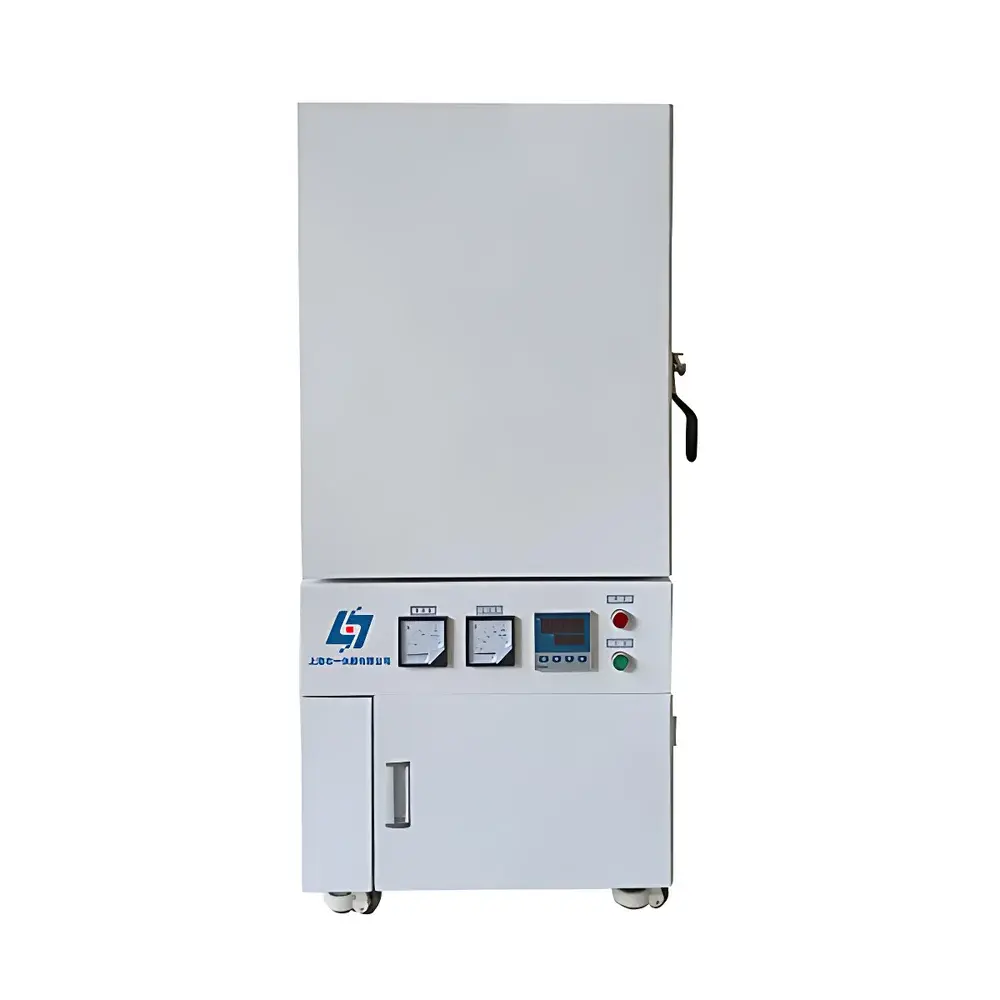
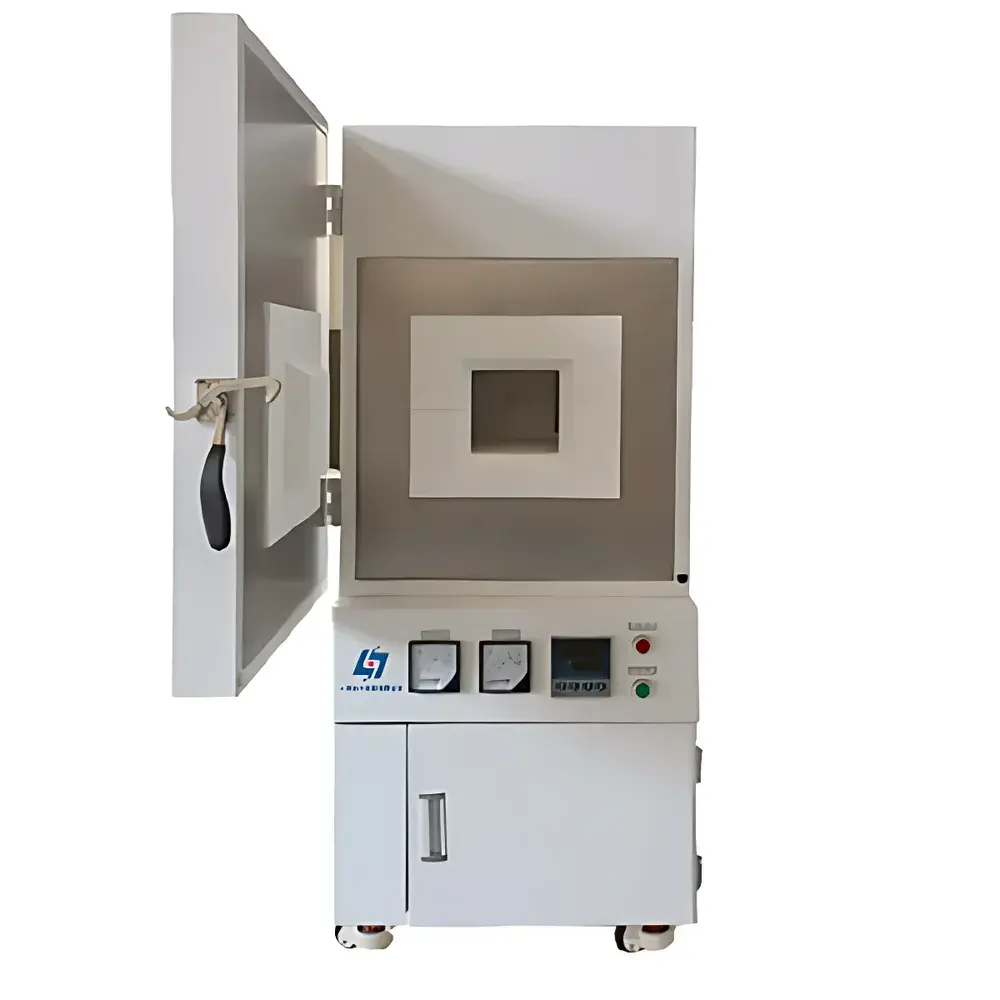
Yoyi SX2-12-17A High-Temperature Ceramic Fiber Muffle Furnace
| Brand | Yoyi |
|---|---|
| Origin | Shanghai, China |
| Manufacturer Type | Direct Manufacturer |
| Model | SX2-12-17A |
| Max Temperature | 1700 °C |
| Temperature Control Accuracy | ±1 °C |
| Rated Power | 12 kW |
| Heating Element | Silicon-Molybdenum (MoSi₂) Rods |
| Internal Chamber Dimensions | 200 × 300 × 200 mm |
| Nominal Volume | 12 L |
| Control System | PID Programmable Temperature Controller |
| Heating Method | Resistive Radiant Heating |
Overview
The Yoyi SX2-12-17A is a high-performance, laboratory-grade ceramic fiber muffle furnace engineered for precise thermal processing up to 1700 °C. Designed around the fundamental principle of resistive radiant heating—where silicon-molybdenum (MoSi₂) rods generate uniform infrared radiation within an insulated cavity—the furnace delivers rapid, reproducible heating profiles essential for advanced materials synthesis and thermal analysis. Unlike traditional brick-lined furnaces, its lightweight ceramic fiber insulation enables faster ramp rates (up to 2× faster than conventional refractory units), reduced thermal mass, and superior energy efficiency—consuming approximately 60% less power during equivalent duty cycles. The unit complies with standard laboratory safety architecture requirements for Class II electrical equipment and is suitable for continuous operation under GLP-compliant environments when integrated with validated procedures.
Key Features
- High-purity alumina-silica ceramic fiber chamber (density ~128 kg/m³) offering low thermal conductivity (<0.15 W/m·K at 1000 °C) and minimal heat storage;
- Robust MoSi₂ heating elements rated for stable operation at 1700 °C in oxidizing atmospheres, with proven service life exceeding 1,500 hours under controlled cycling;
- PID-based programmable temperature controller with multi-segment ramp/soak capability, real-time deviation monitoring, and auto-tuning functionality;
- Dual-layer thermal barrier design: outer cold-rolled steel shell with phosphate conversion coating and electrostatic epoxy finish; inner ceramic fiber board lining backed by reflective aluminum foil;
- Integrated safety circuitry including over-temperature cut-off (independent of main controller), phase-loss protection, ground-fault detection, and short-circuit current limiting;
- Intelligent data retention system preserving setpoints, program sequences, and alarm logs during unexpected power interruption;
- Backlit LCD interface supporting simultaneous display of setpoint, actual chamber temperature, elapsed time, remaining soak duration, and active segment number.
Sample Compatibility & Compliance
The SX2-12-17A accommodates crucibles and sample holders made from high-purity alumina, zirconia, silicon carbide, or platinum group metals—compatible with ASTM C865, ISO 5659-2, and USP thermal stability testing protocols. Its sealed muffle configuration prevents direct flame contact and minimizes atmospheric contamination, making it appropriate for ashing organic matrices (per AOAC 943.01), sintering oxide ceramics (e.g., YSZ, Al₂O₃), and pre-conditioning reference standards used in TGA calibration. While not intrinsically rated for inert or reducing atmospheres, optional quartz tube inserts (sold separately) enable limited nitrogen or argon purging. The furnace meets CE marking requirements for electromagnetic compatibility (EN 61326-1) and low-voltage directive (2014/35/EU), and supports audit-ready documentation when paired with external validation hardware.
Software & Data Management
An RS485 serial interface (Modbus RTU protocol) is available as a factory-installed option, enabling integration with LabVIEW, MATLAB, or custom SCADA platforms for remote parameter setting, real-time telemetry streaming, and automated log export. The included communication software provides timestamped CSV output with configurable sampling intervals (1–60 seconds), digital signature support for electronic records, and basic compliance features aligned with FDA 21 CFR Part 11 Annex 11 expectations—including user-level access control, audit trail generation, and immutable event logging. All firmware updates are delivered via signed binary packages verified against SHA-256 checksums.
Applications
- High-temperature sintering of advanced ceramics (e.g., SiC, BaTiO₃, hydroxyapatite) and powder metallurgy compacts;
- Thermal gravimetric analysis (TGA) sample pre-treatment and residue quantification;
- Crucible calcination for ICP-OES/MS sample preparation per EPA Method 3050B;
- Controlled oxidation studies of transition metal alloys and catalyst supports;
- Crystal growth annealing and microstructural homogenization of single-crystal substrates;
- Development and qualification of refractory coatings and thermal barrier systems;
- Calibration of thermocouples (Types B, R, S) and pyrometers using fixed-point cells (e.g., Pd, Ni, Co-C).
FAQ
What atmosphere types can be used inside the SX2-12-17A?
The furnace is designed for ambient air operation only. For inert or reducing atmospheres, users must install a sealed quartz or alumina tube with gas inlet/outlet ports—and ensure proper venting and oxygen monitoring.
Is the temperature uniformity profile certified?
Uniformity is specified as ±5 °C across the working zone at 1700 °C under steady-state conditions (per internal verification per ISO/IEC 17025-aligned methodology); formal certification requires third-party validation using NIST-traceable sensors.
Can this furnace be used for melting precious metals?
Yes—provided appropriate high-melting-point crucibles (e.g., Pt/Rh, W, or Mo) are used and thermal shock is minimized via controlled ramp rates below 5 °C/min above 1200 °C.
Does the PID controller support custom ramp/soak programs?
Yes—the standard controller stores up to 30 segments with independent rate limits (0.1–30 °C/min), dwell times (1–9999 min), and loop logic (e.g., conditional jumps based on temperature thresholds).
What maintenance is required for MoSi₂ heating elements?
No periodic replacement is needed under normal use; however, visual inspection every 200 operating hours is recommended to detect surface oxidation scaling or mechanical deformation. Avoid thermal shock and physical contact during loading/unloading.



