
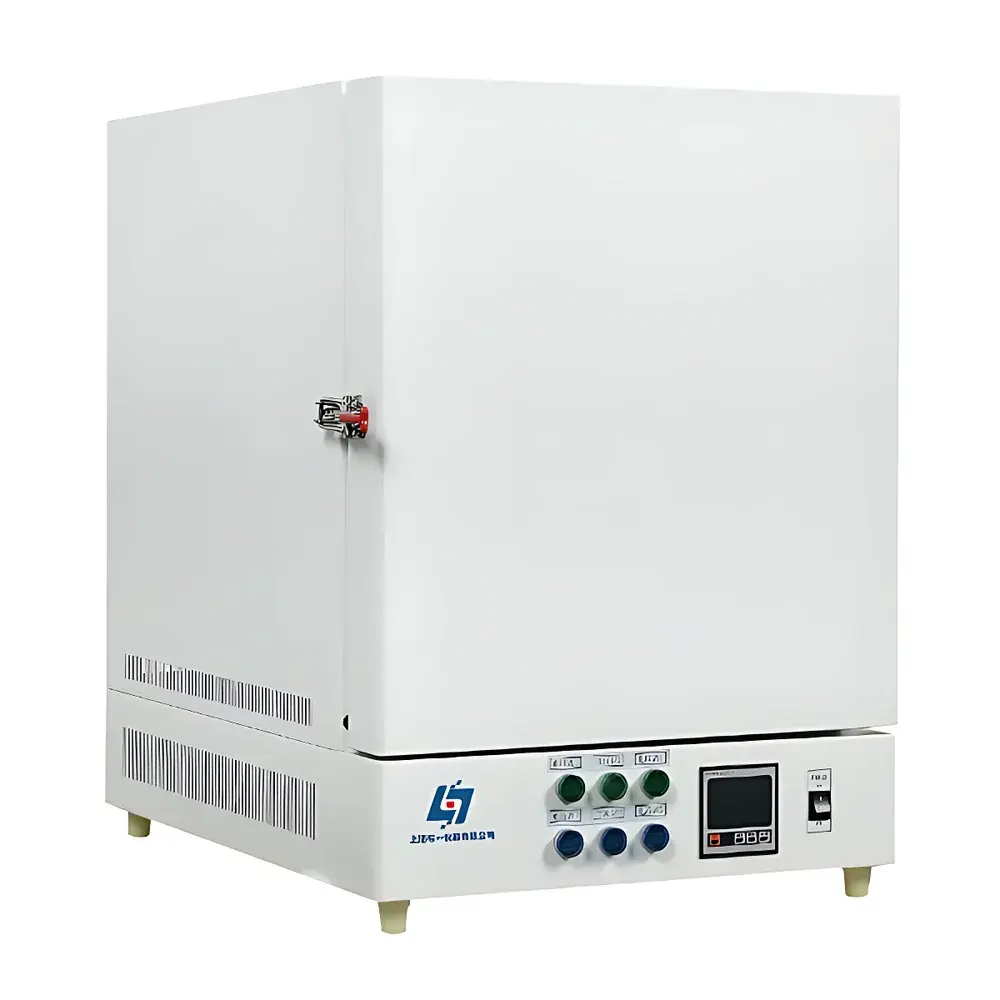
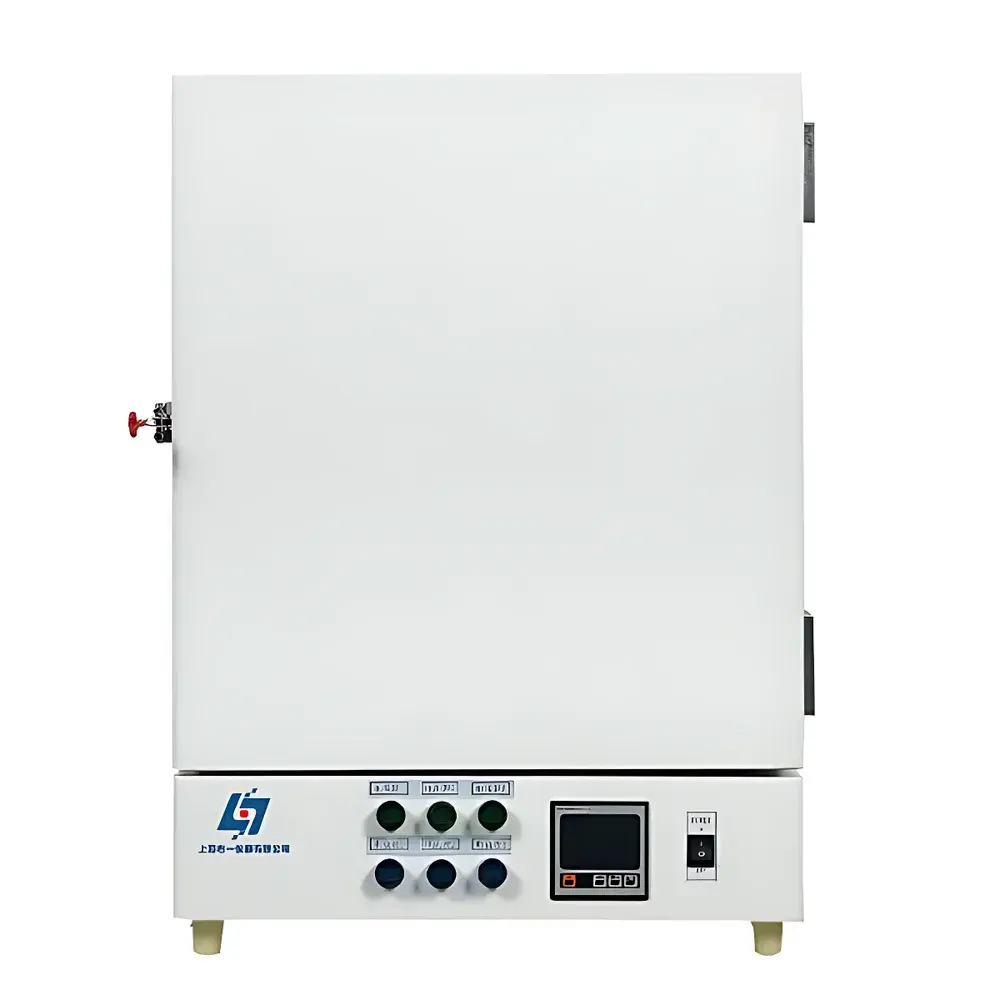
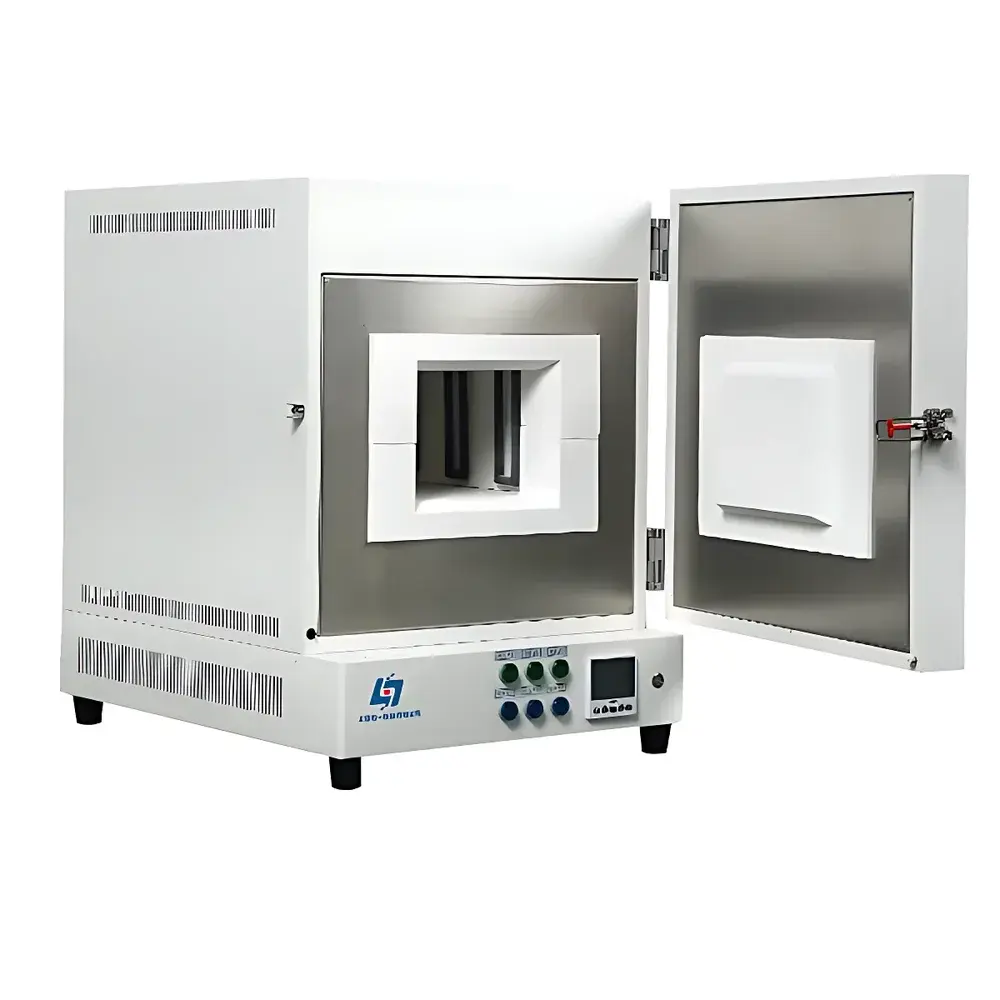
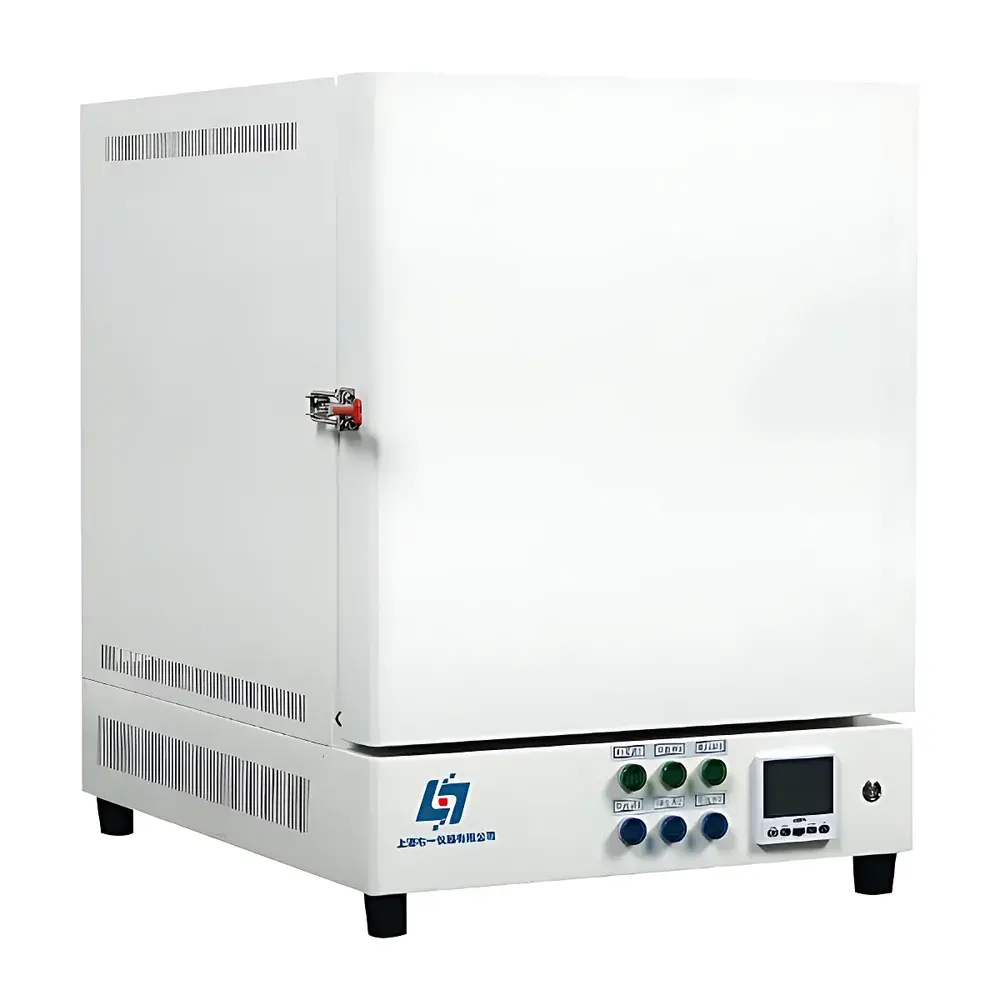
Yoyi SX2-6-13A Ceramic Fiber Muffle Furnace
| Brand | Yoyi |
|---|---|
| Origin | Shanghai, China |
| Manufacturer Type | Direct Manufacturer |
| Product Category | Domestic |
| Model | SX2-6-13A |
| Instrument Type | Box-Type Muffle Furnace |
| Maximum Temperature | 1300 °C |
| Temperature Control Accuracy | ±1 °C |
| Rated Power | 6 kW |
| Heating Element | Silicon Carbide Rod (SiC) |
| Internal Chamber Dimensions | 150 × 300 × 150 mm |
| Nominal Volume | 6.8 L |
Overview
The Yoyi SX2-6-13A is a high-performance ceramic fiber box-type muffle furnace engineered for precise, repeatable thermal processing in research laboratories, materials science facilities, and quality control environments. It operates on the principle of resistive heating via silicon carbide (SiC) rods, delivering uniform radiant heat distribution within an insulated chamber. Designed to meet demanding applications—including ashing, calcination, sintering, annealing, and heat treatment of ceramics, metals, and advanced powders—the furnace achieves stable operation up to 1300 °C with minimal thermal lag and excellent temperature homogeneity across its 6.8 L working volume. Its lightweight ceramic fiber insulation (Al₂O₃–SiO₂ composite, ≥95% alumina content) enables rapid ramp rates—typically 2–3× faster than conventional brick-lined furnaces—while maintaining surface temperatures below 50 °C at 1000 °C internal setpoint, ensuring operator safety and energy efficiency.
Key Features
- High-efficiency ceramic fiber insulation reduces power consumption by ~60% compared to traditional refractory brick furnaces, achieving typical energy savings of 40% over equivalent-duty units.
- Robust dual-layer chamber construction: outer shell fabricated from cold-rolled steel with phosphate conversion coating and electrostatic epoxy-polyester powder finish; inner lining composed of low-density, high-purity ceramic fiber boards and modules.
- Intelligent microprocessor-based PID temperature controller with LCD menu-driven interface, supporting real-time display of setpoint, process temperature, and remaining hold time.
- Comprehensive safety architecture including over-temperature cutoff (with independent mechanical limit switch), over-current protection, ground-fault detection, short-circuit interruption, and automatic restart suppression after power interruption.
- Non-volatile memory retains all user-defined parameters—including ramp/soak profiles, alarm thresholds, and calibration offsets—in the event of unexpected power loss or system reset.
- Silicon carbide heating elements provide superior oxidation resistance and thermal stability at 1300 °C, with service life exceeding 2,000 hours under continuous operation and uniform axial heat distribution.
Sample Compatibility & Compliance
The SX2-6-13A accommodates a broad range of sample forms—powders, pellets, crucibles (alumina, quartz, graphite), metal foils, and ceramic substrates—within its 150 × 300 × 150 mm chamber. Its muffle design isolates samples from direct contact with heating elements and combustion byproducts, making it suitable for ASTM E1111 (ash content determination), ISO 562 (coal and coke ashing), and USP <231> heavy metal testing protocols. While not certified to UL/CSA standards out-of-the-box, the unit complies with IEC 61000-6-3 (EMC emission limits) and IEC 61000-6-2 (immunity requirements) when installed per manufacturer guidelines. Optional RS485 interface supports integration into GLP/GMP-compliant data acquisition systems with audit-trail-capable software (e.g., compliant with FDA 21 CFR Part 11 when paired with validated third-party platforms).
Software & Data Management
The standard controller supports manual temperature programming with up to 30 segment ramp-soak cycles. For advanced process documentation, the optional RS485 communication module (Modbus RTU protocol) enables bidirectional data exchange with PC-based SCADA or LIMS systems. Accompanying Windows-compatible software provides real-time graphing, CSV export, alarm logging, and electronic signature support. All temperature logs include timestamp, setpoint, actual reading, and status flags (e.g., “HEATING”, “SOAKING”, “COOLING”), satisfying traceability requirements for ISO/IEC 17025 accredited laboratories.
Applications
- Thermal analysis pre-treatment: ash residue quantification (ASTM D3174, ISO 1171), loss-on-ignition (LOI) assays, and gravimetric moisture determination.
- Materials synthesis: solid-state reaction of oxide precursors, ceramic glaze firing, nanoparticle calcination, and precursor decomposition for battery cathode materials.
- Metallurgical processing: stress-relief annealing of tool steels, austenitizing of stainless components, and controlled oxidation studies of alloys.
- Quality assurance: binder burnout in investment casting molds, sintering profile validation for additive-manufactured parts, and thermal stability screening of polymer composites.
- Academic research: phase transformation kinetics in perovskites, crystallization behavior of chalcogenide glasses, and redox-controlled synthesis of transition-metal oxides.
FAQ
What is the maximum recommended continuous operating temperature?
The SX2-6-13A is rated for continuous operation at 1250 °C; 1300 °C is the absolute upper limit and should be used only intermittently with reduced dwell times.
Can this furnace be used under inert or reducing atmospheres?
No—it is designed strictly for air atmosphere operation. Introduction of N₂, Ar, or H₂ requires retrofitting with gas inlet/outlet ports, sealed feedthroughs, and oxygen monitoring; such modifications void the warranty and require engineering review.
Is calibration certificate included with shipment?
A factory-as-tested temperature uniformity report (per ASTM E220) is provided. NIST-traceable calibration certification is available as a paid option upon order.
How often should the ceramic fiber insulation be inspected or replaced?
Under normal use (≤10 cycles/week at ≤1200 °C), visual inspection every 6 months is sufficient. Replacement is only necessary if physical damage, compression-set >15%, or visible cracking occurs near element mounting zones.
Does the furnace support programmable multi-step thermal profiles?
Yes—the standard controller supports up to 30 segments; the optional programmable controller upgrade extends this to 99 segments with slope limiting, dwell logic, and conditional branching.



