
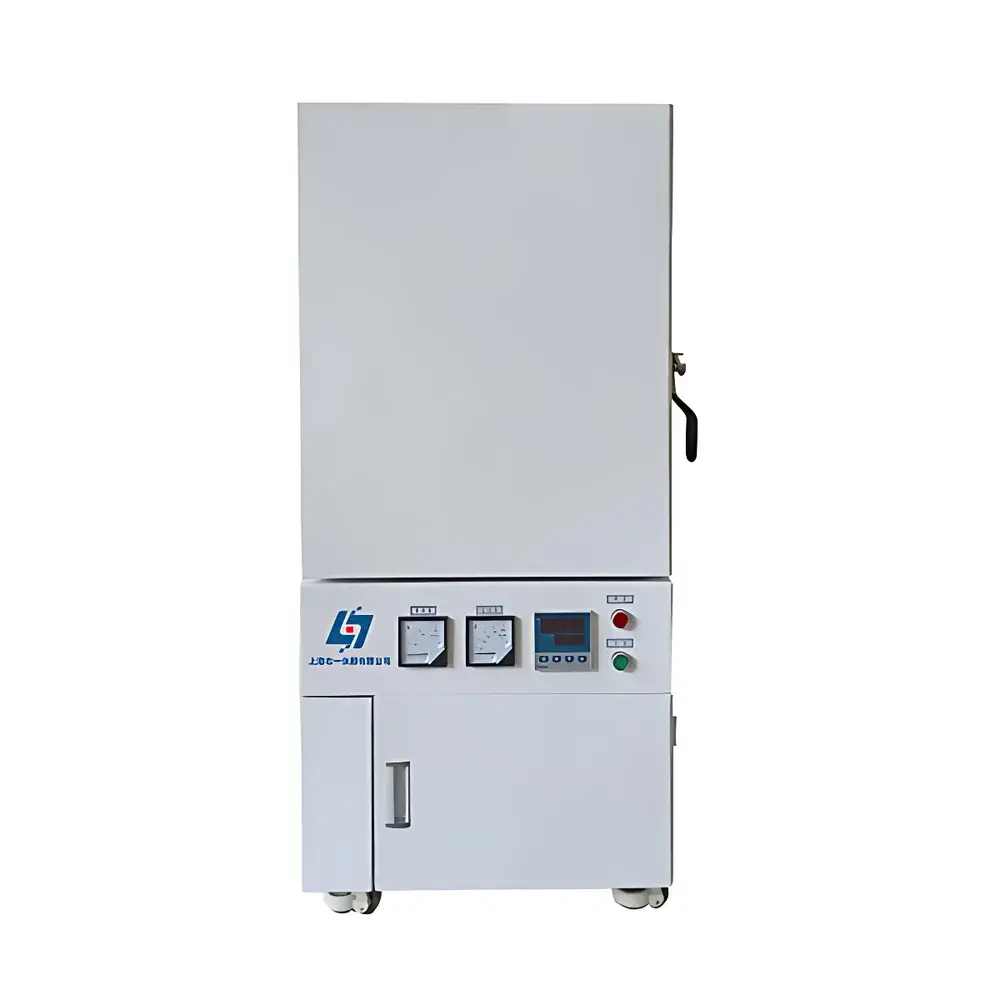
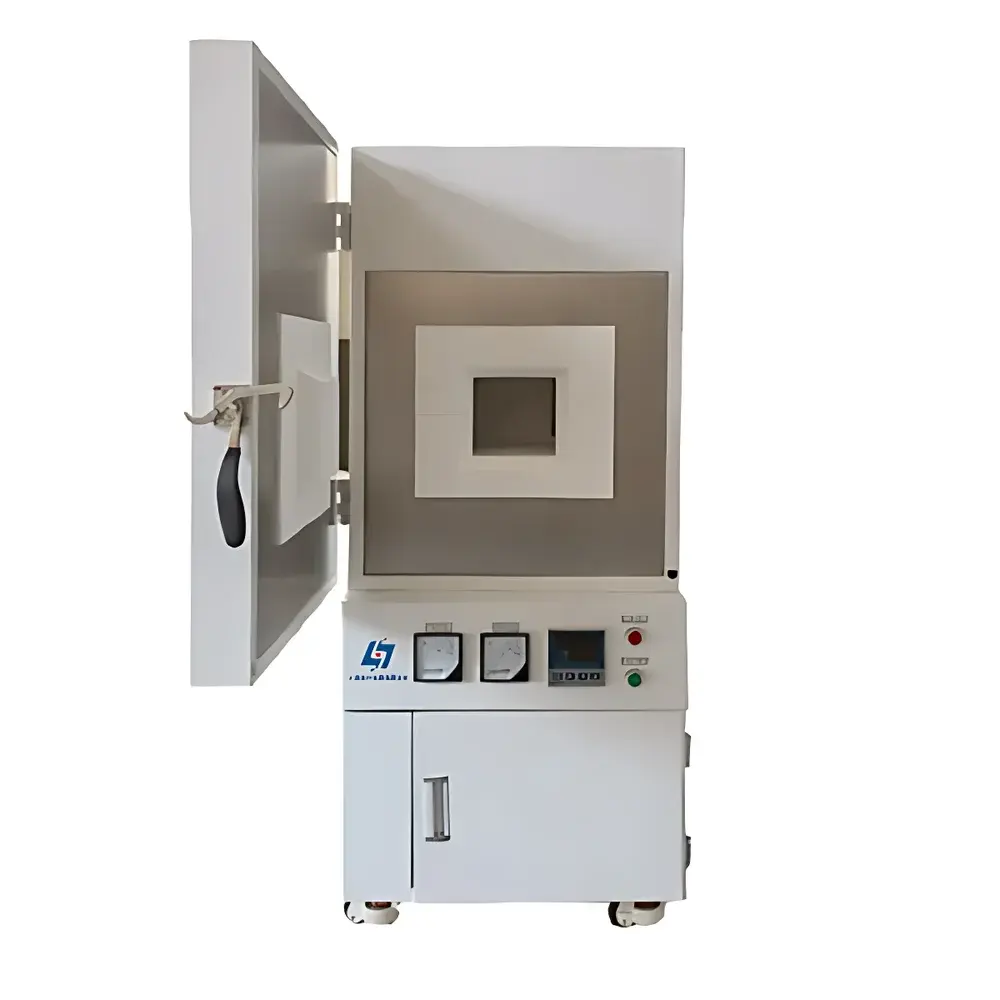
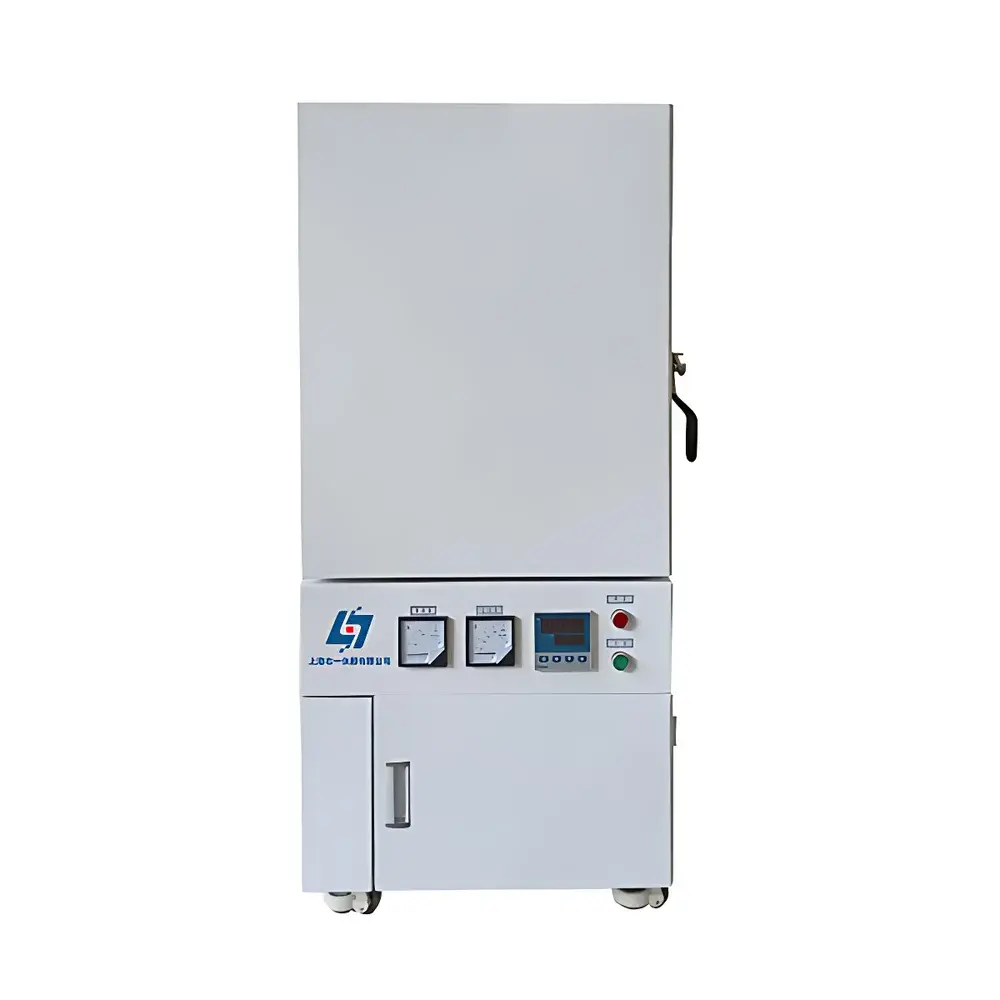
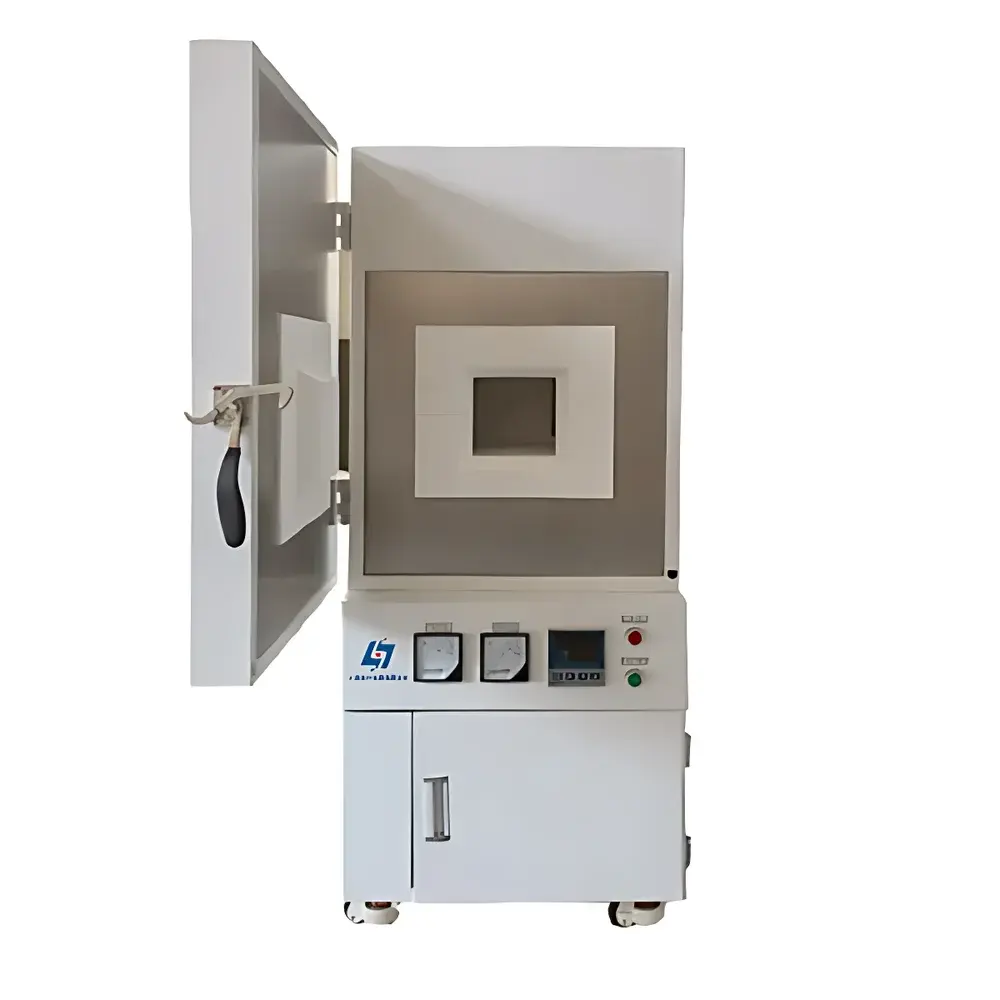
Yoyi SX2-8-16A Ceramic Fiber Box-Type Muffle Furnace (1600 °C)
| Brand | Yoyi |
|---|---|
| Origin | Shanghai, China |
| Manufacturer Type | Direct Manufacturer |
| Instrument Type | Box-Type Muffle Furnace |
| Max Temperature | 1600 °C |
| Temperature Control Accuracy | ±1 °C |
| Rated Power | 8 kW |
| Heating Element | Silicon-Molybdenum (MoSi₂) Rods |
| Internal Chamber Dimensions | 150 × 300 × 120 mm |
| Nominal Volume | 5.4 L |
| Control System | Microprocessor-Based PID Controller with LCD Interface |
| Insulation | Dual-Layer Ceramic Fiber Board |
Overview
The Yoyi SX2-8-16A is a high-temperature ceramic fiber box-type muffle furnace engineered for precision thermal processing in research laboratories, materials science departments, and quality control environments. Operating on the principle of resistive heating via silicon-molybdenum (MoSi₂) rods, it delivers stable, uniform temperature distribution across its insulated chamber up to 1600 °C — suitable for sintering advanced ceramics, heat-treating refractory metals, ashing high-purity samples, and performing controlled annealing of crystalline and nanomaterial systems. Its design adheres to fundamental thermodynamic requirements for reproducible thermal treatment: low thermal mass, minimal thermal lag, and symmetrical radiant/convective heat transfer within the muffle zone. Unlike traditional brick-lined furnaces, the SX2-8-16A employs a monolithic ceramic fiber insulation architecture that reduces thermal inertia and enables rapid ramp rates while maintaining structural integrity under repeated thermal cycling.
Key Features
- Ceramic fiber furnace chamber with dual-layer insulation structure — achieves surface temperatures ≤50 °C at 1000 °C internal setpoint, minimizing operator hazard and ambient heat load
- High-efficiency MoSi₂ heating elements rated for continuous operation at 1600 °C; exhibit superior oxidation resistance and thermal stability compared to Fe-Cr-Al or Ni-Cr alloys
- Microprocessor-based PID temperature controller with LCD interface — supports real-time display of setpoint, actual temperature, and elapsed/remaining hold time
- Programmable memory function retains user-defined parameters during power interruption; automatic recovery upon re-energization ensures process continuity
- Integrated safety system includes over-temperature cutoff, over-current protection, ground-fault detection, and short-circuit monitoring per IEC 61000-4-5 compliance
- Robust cold-rolled steel outer casing with phosphated substrate and electrostatic epoxy coating — resistant to corrosion and mechanical abrasion in shared lab environments
Sample Compatibility & Compliance
The SX2-8-16A accommodates crucibles and sample holders made from alumina, zirconia, graphite, and platinum-group metals — compatible with ASTM C865 (sintering of advanced ceramics), ISO 5660-1 (fire testing calorimetry), and USP (heavy metal residue ashing). Its muffle geometry isolates samples from direct contact with heating elements and combustion byproducts, fulfilling GLP requirements for trace-metal-free thermal decomposition. The furnace meets CE marking directives for electromagnetic compatibility (EMC Directive 2014/30/EU) and low-voltage safety (LVD Directive 2014/35/EU). Optional RS485 interface supports integration into centralized lab management systems compliant with FDA 21 CFR Part 11 for audit-trail-enabled temperature logging.
Software & Data Management
While the standard configuration features an embedded LCD controller with manual parameter entry, optional RS485 communication enables bidirectional data exchange with third-party SCADA or LIMS platforms. The included PC software permits remote setup of multi-segment thermal profiles (up to 32 segments), real-time temperature graphing, and CSV export of time-stamped thermocouple readings. All logged data include timestamps, operator ID fields, and event markers for calibration verification, maintenance scheduling, and regulatory reporting. Firmware updates are performed via USB port without requiring disassembly — ensuring long-term maintainability and alignment with evolving digital lab standards.
Applications
- Sintering of oxide and non-oxide ceramics (Al₂O₃, SiC, Si₃N₄, ZrO₂)
- Heat treatment of tungsten, molybdenum, and niobium alloys under inert or reducing atmospheres
- Thermal gravimetric analysis (TGA) sample preparation and pre-ashing prior to ICP-MS quantification
- Crystallization studies of glass-ceramic systems and phase transformation kinetics in metastable oxides
- Calcination of catalyst precursors and battery electrode materials (e.g., LiCoO₂, NMC cathodes)
- Residue analysis in pharmaceutical excipients per USP and EP 2.4.16
FAQ
What type of thermocouple is used for temperature sensing?
Type S (Platinum/Rhodium) thermocouple, calibrated to NIST-traceable standards and housed in a protective ceramic sheath for long-term stability at >1400 °C.
Can this furnace operate under vacuum or controlled atmosphere?
No — the SX2-8-16A is designed exclusively for ambient air operation. For inert or reducing atmospheres, a dedicated tube furnace with gas inlet/outlet ports and pressure-rated seals is recommended.
Is the furnace suitable for GMP-regulated environments?
Yes — when equipped with the RS485 option and validated temperature mapping protocol, it supports IQ/OQ documentation and satisfies Annex 15 requirements for equipment qualification in pharmaceutical manufacturing.
How often does the ceramic fiber insulation require replacement?
Under normal usage (≤10 cycles/week at ≤1500 °C), the insulation maintains dimensional stability and thermal performance for ≥5 years; visual inspection for cracking or compression is advised annually.
What is the recommended warm-up and cool-down protocol?
For optimal element longevity, ramp rates above 1200 °C should not exceed 5 °C/min; natural cooling below 800 °C is preferred to avoid thermal shock-induced MoSi₂ embrittlement.



