
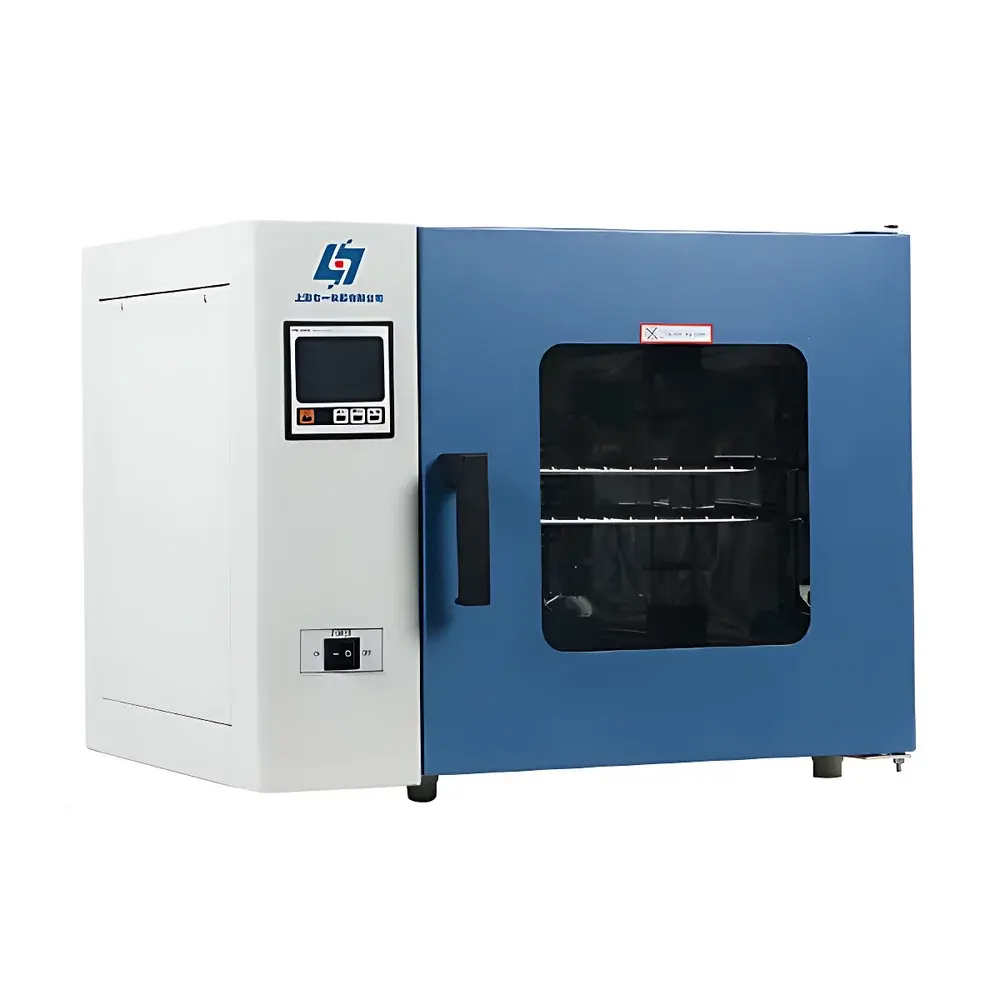
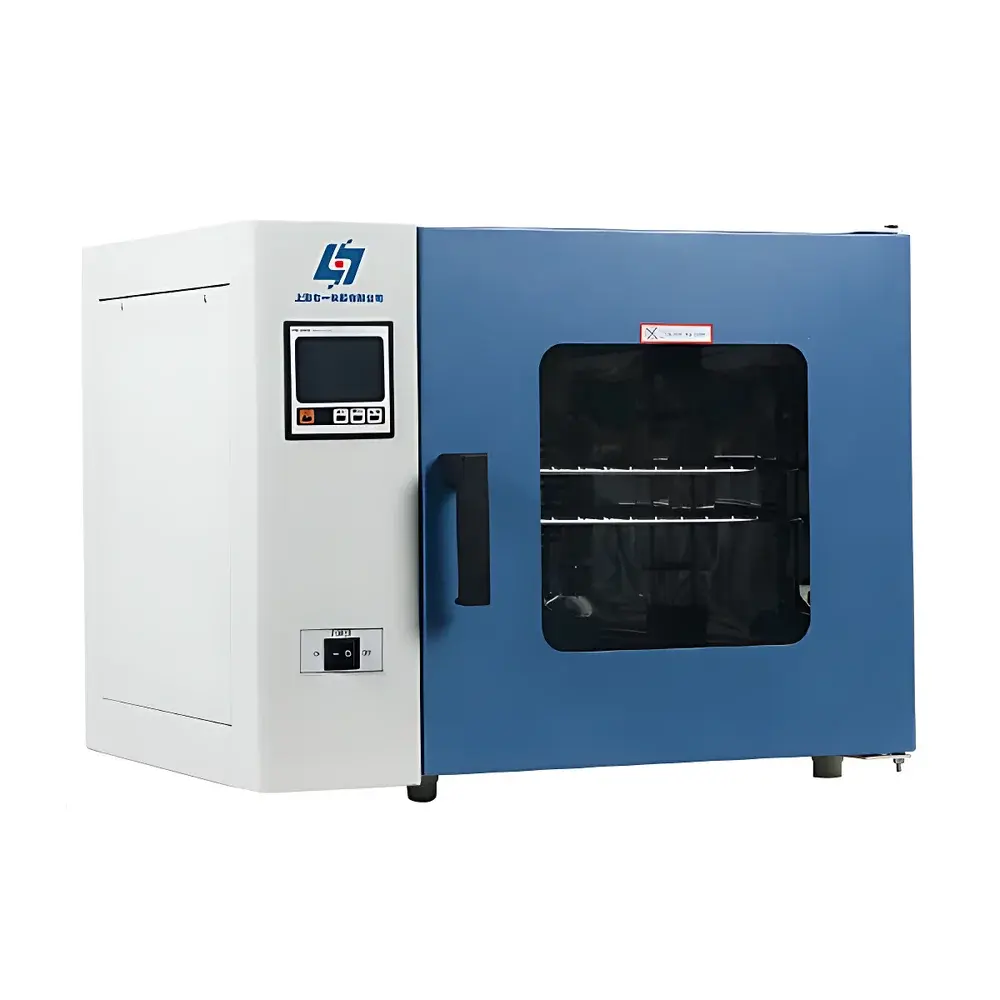
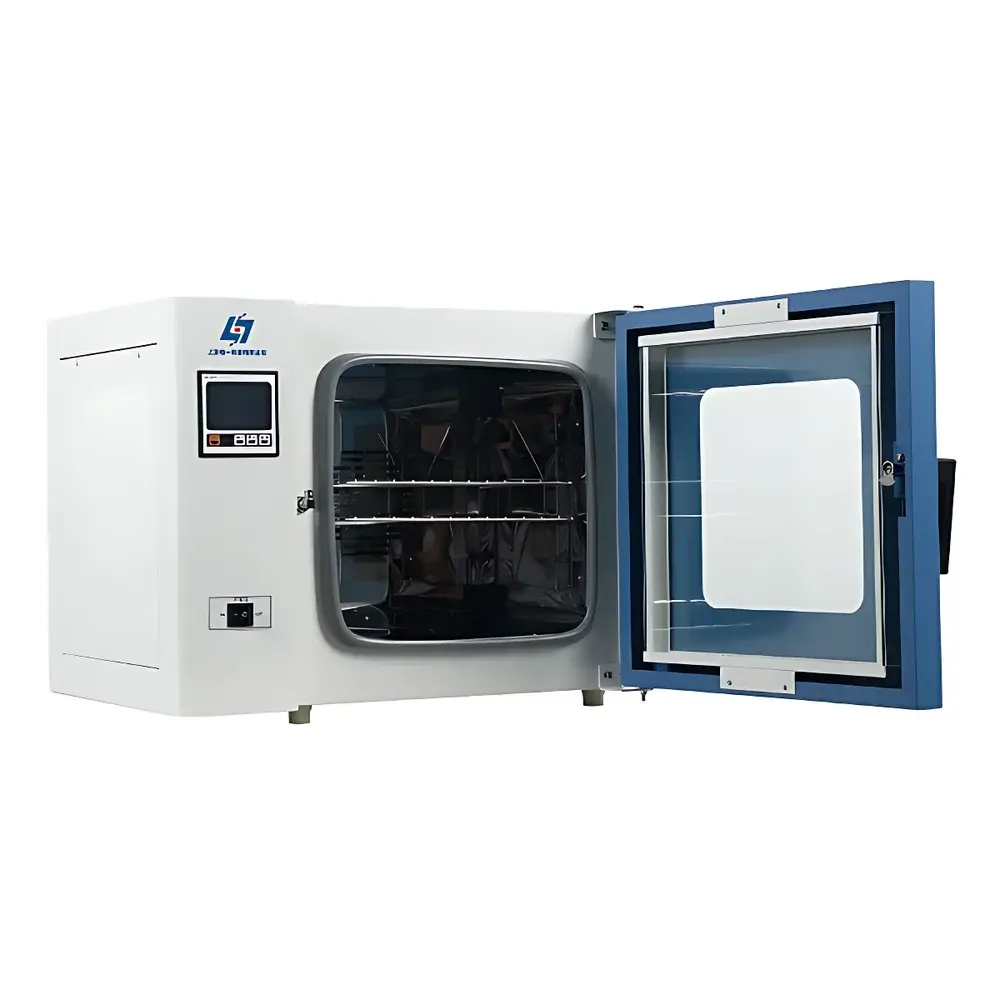
Yoyilab DHG-9203A Precision Forced-Air Constant-Temperature Drying Oven
| Brand | Yoyilab |
|---|---|
| Origin | Shanghai, China |
| Manufacturer Type | Direct Manufacturer |
| Product Category | Domestic |
| Model | DHG-9203A |
| Temperature Range | RT+10°C to 280°C |
| Temperature Fluctuation | ±1°C |
| External Dimensions | 880×800×830 mm |
| Internal Chamber Dimensions | 600×595×650 mm |
| Interior Material | Mirror-Finish Stainless Steel |
| Heating Method | Forced-Air Circulation Heating |
| Compliance | GB/T 30435–2013 |
Overview
The Yoyilab DHG-9203A is a precision-grade forced-air drying oven engineered for laboratory and industrial applications requiring stable, uniform thermal environments. It operates on the principle of convection-based heat transfer, utilizing an integrated centrifugal blower and optimized air duct architecture to ensure consistent airflow distribution across the entire working chamber. Designed in strict accordance with GB/T 30435–2013 (the Chinese national standard for electric heating drying ovens), the DHG-9203A delivers reliable performance in drying, baking, sterilization, polymer curing, moisture removal, and pre-conditioning of samples prior to analytical testing. Its operational temperature range spans from ambient +10°C to 280°C, supporting both low-temperature desiccation and high-temperature thermal treatment protocols without compromising thermal stability or repeatability.
Key Features
- Microprocessor-based PID temperature control system with 0.1°C resolution, real-time digital display, and programmable timer (1–9999 minutes)
- Intelligent power-loss recovery function: automatically resumes operation with previously stored parameters after unexpected shutdown or power interruption
- Large dual-pane observation window with tempered glass enables continuous visual monitoring without thermal disturbance
- High-efficiency forced-air circulation system featuring rear-mounted intake/exhaust ports and directional air channels to minimize vertical/horizontal temperature gradients
- Robust construction: cold-rolled steel exterior with electrostatic epoxy coating; mirror-finish 304 stainless steel interior chamber resistant to corrosion and oxidation
- Adjustable stainless steel shelving (2 standard trays included); reinforced door seal using high-temperature silicone rubber ensures long-term integrity and energy efficiency
- Dual safety architecture: primary PID controller + independent mechanical over-temperature cutoff (optional, configurable per IEC 61000-4-2 compliance requirements)
Sample Compatibility & Compliance
The DHG-9203A accommodates a broad spectrum of sample types—including glassware, metal components, ceramic substrates, polymer films, biological specimens (post-fixation), pharmaceutical excipients, and electronic assemblies—without risk of cross-contamination or surface degradation. Its stainless-steel chamber and absence of volatile organic coatings meet basic GLP-compliant material handling prerequisites. While not certified to ISO/IEC 17025 or FDA 21 CFR Part 11 out-of-the-box, the unit supports audit-ready documentation when paired with optional RS485 interface and validated data logging software. All electrical design adheres to GB 4793.1–2007 (safety requirements for electrical equipment for measurement, control, and laboratory use), and thermal performance validation follows procedures aligned with ASTM E145–22 (Standard Specification for Gravity-Convection and Forced-Ventilation Ovens).
Software & Data Management
The DHG-9203A’s embedded controller provides local parameter management via intuitive LCD menu navigation. Optional connectivity modules enable integration into centralized lab infrastructure: an RS485 serial interface (with Modbus RTU protocol support) allows bidirectional communication with SCADA systems or LIMS platforms; an embedded thermal printer (optional) generates time-stamped hardcopy records of setpoint, actual temperature, and elapsed cycle duration. For regulated environments, the optional multi-segment programmable controller supports up to 30 ramp-hold cycles with user-defined slopes and dwell times—facilitating complex thermal profiles required in materials aging studies or accelerated stability testing per ICH Q1A(R3). Audit trail functionality (including operator ID, timestamp, and parameter change history) is available when deployed with compliant third-party software solutions.
Applications
This drying oven serves critical roles across multiple technical domains: moisture content determination in food and agricultural products (AOAC 950.46); residual solvent removal in pharmaceutical tablet granulation; pre-baking of PCB substrates prior to solder paste application; thermal conditioning of calibration standards in metrology labs; depyrogenation of glass vials at ≥250°C for parenteral manufacturing; and controlled dehydration of botanical specimens in herbarium preparation. Its ±1°C temperature fluctuation and ±2.5% uniformity (at 100°C, empty chamber) make it suitable for QC/QA workflows where inter-laboratory reproducibility is essential. In R&D settings, its wide operating range supports exploratory studies involving thermoset polymer crosslinking, catalyst activation, or ceramic sintering precursor treatments.
FAQ
What is the maximum allowable load volume for optimal temperature uniformity?
For guaranteed compliance with ±2.5% uniformity specification, loading should not exceed 60% of internal chamber volume (i.e., ≤132 L for the DHG-9203A). Overloading may impede airflow and increase thermal gradient deviation.
Can this oven be used for sterilization of medical devices?
It meets dry-heat sterilization parameters per ISO 17665–1 when operated at ≥160°C for ≥120 minutes or ≥170°C for ≥60 minutes; however, formal validation (including biological indicator challenge tests) must be performed per facility SOPs.
Is the inert gas purging option compatible with nitrogen and argon?
Yes—the standard inert gas inlet includes a calibrated rotameter and quick-connect fitting rated for non-corrosive gases up to 0.6 MPa, supporting both N₂ and Ar purge protocols for oxygen-sensitive materials.
Does the unit include factory calibration documentation?
A traceable temperature verification report (NIST-traceable reference sensor, 3-point check at 50°C/100°C/200°C) is provided with each shipment; full IQ/OQ documentation packages are available upon request.
What maintenance intervals are recommended for sustained accuracy?
Blower filter inspection every 3 months; door gasket integrity check semiannually; annual recalibration of temperature sensor and controller against certified reference standards per ISO/IEC 17025 guidelines.



