
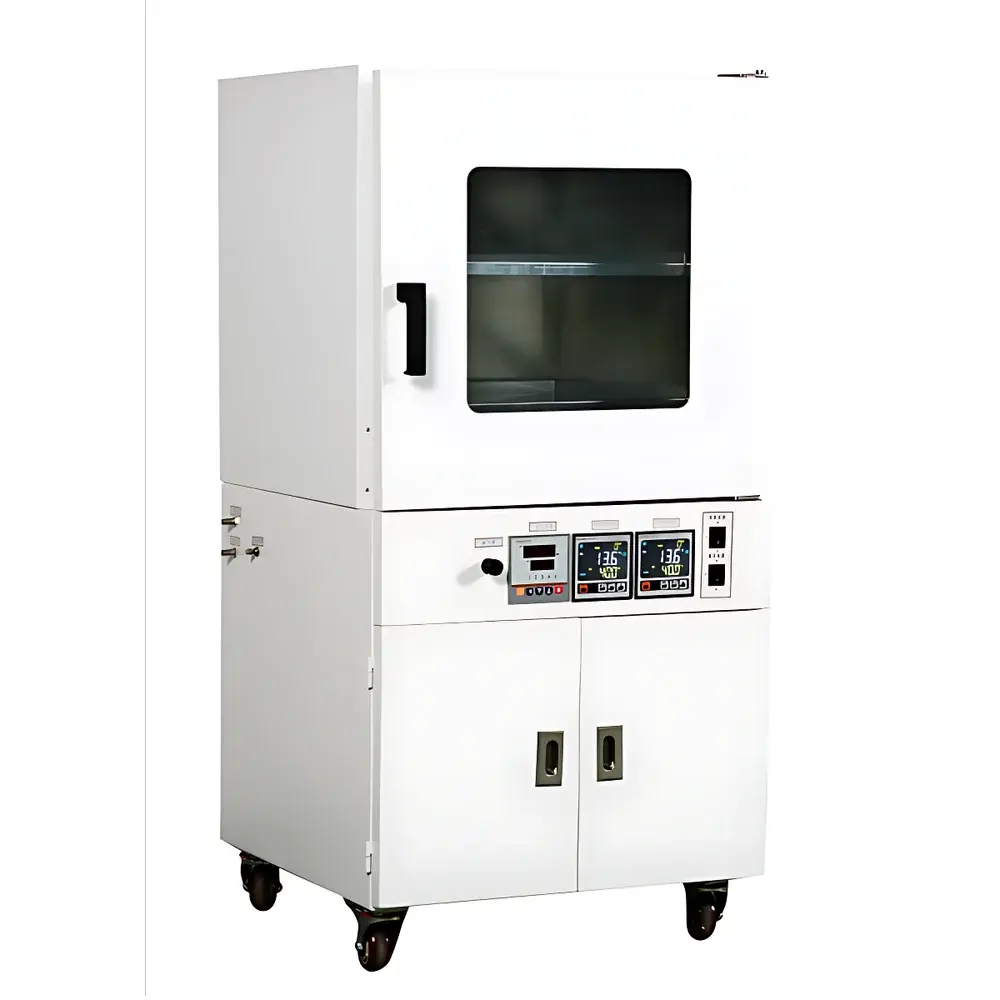
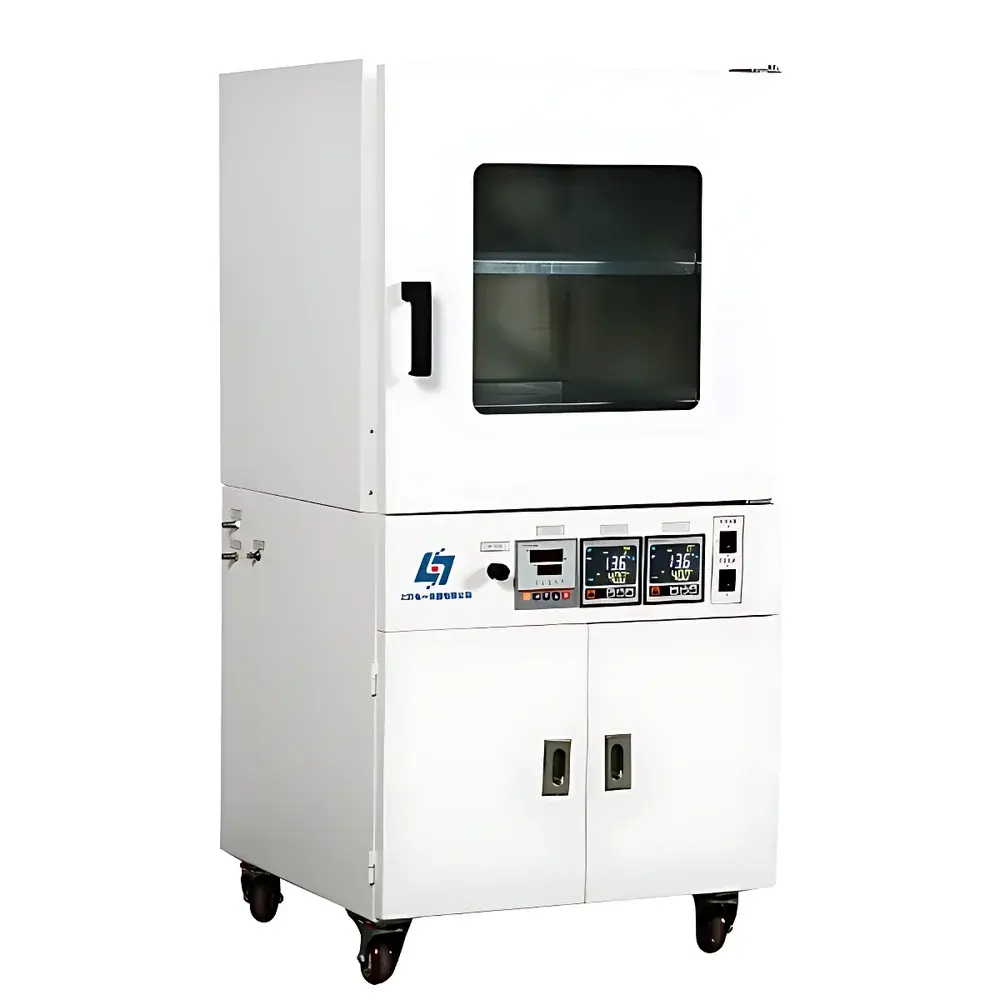
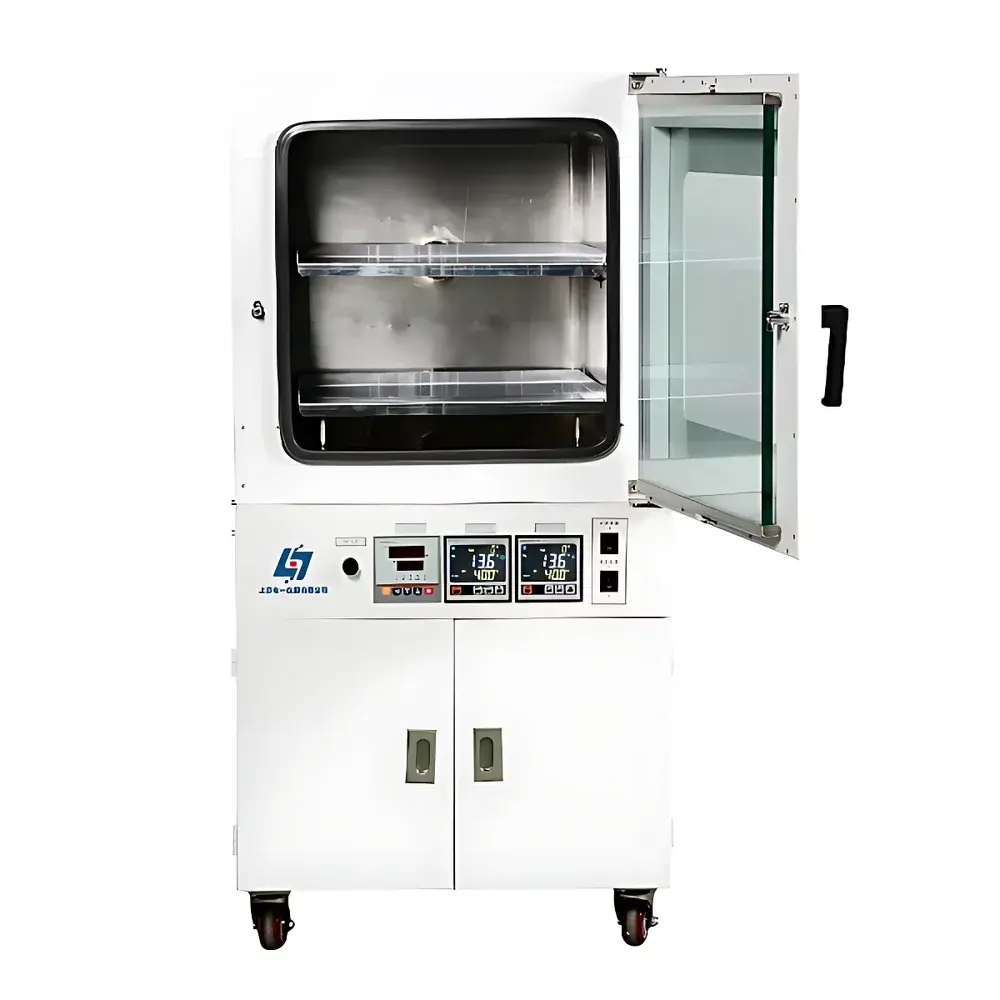
Yoyilab DZF-6020S Digital Vacuum Drying Oven with Auto-Controlled Vacuum Regulation
| Brand | Yoyilab |
|---|---|
| Origin | Shanghai, China |
| Manufacturer Type | Direct Manufacturer |
| Model | DZF-6020S |
| Instrument Type | Vacuum Oven |
| Temperature Range | RT+10°C to 250°C |
| Temperature Uniformity | ±1°C |
| External Dimensions | 590×470×1370 mm |
| Internal Chamber Dimensions | 300×300×275 mm |
| Temperature Resolution | 0.1°C |
| Chamber Material | Stainless Steel (SUS304) |
| Heating Method | Electric Resistive Heating |
| Vacuum Control Range | 1.0×10⁻¹ Pa to 1.0×10⁵ Pa |
| Vacuum Regulation Accuracy | ±1% of setpoint |
| Vacuum Sensor Type | Silicon Piezoresistive Pressure Transducer |
| Power Input | 450 W |
| Standard Accessories | 1 stainless steel shelf, integrated lower cabinet, and external vacuum pump |
Overview
The Yoyilab DZF-6020S Digital Vacuum Drying Oven is an engineered solution for thermal processing under reduced-pressure environments. It operates on the principle that lowering ambient pressure reduces the boiling point of volatile components—enabling moisture and solvents to evaporate at significantly lower temperatures than atmospheric drying. This physical behavior is essential for preserving thermolabile compounds, preventing oxidative degradation, and minimizing structural or chemical alteration in sensitive samples. Designed for routine use in analytical laboratories, quality control units, and R&D facilities, the DZF-6020S integrates microprocessor-based temperature regulation with real-time digital vacuum monitoring and closed-loop pressure control. Its chamber maintains a stable vacuum level down to ≤133 Pa (equivalent to ~1 Torr), verified per ISO 27874:2017 guidelines for vacuum system performance validation. The unit complies with IEC 61010-1 safety standards for laboratory electrical equipment and incorporates fail-safe logic for power interruption recovery.
Key Features
- Microcontroller-driven dual-parameter control system managing both chamber temperature and vacuum level independently
- High-stability silicon piezoresistive vacuum transducer with linear output across 1×10⁻¹ Pa to 1×10⁵ Pa range; calibrated traceable to NIST-standard references
- 0.1°C temperature resolution and ±1°C uniformity across the full 300×300×275 mm stainless steel (SUS304) chamber
- Double-layer tempered glass observation door with silicone gasket compression seal, achieving >99.9% vacuum integrity per ASTM E557-21 leak rate specifications
- Aluminum alloy shelving fabricated via precision stamping and anodized surface treatment—resistant to oxidation up to 250°C and optimized for rapid thermal equilibration
- Non-volatile memory retention for all operational parameters (setpoints, timers, vacuum profiles); automatic restoration after power loss per GLP-compliant data integrity requirements
- Backlit LCD interface with intuitive menu navigation, supporting multi-step vacuum ramping and hold protocols
Sample Compatibility & Compliance
The DZF-6020S accommodates a broad spectrum of sample formats including powdered pharmaceutical intermediates, lyophilized biological reagents, polymer thin films, ceramic precursors, and analytical reference standards. Its inert stainless steel interior and absence of internal air circulation eliminate convective oxidation pathways—making it suitable for ASTM D2879 (vapor pressure of liquids), USP (plastic packaging evaluation), and ISO 11358-1 (thermal degradation kinetics) applications. The chamber supports optional inert gas purging (N₂ or Ar) via dedicated inlet port, enabling controlled-atmosphere drying aligned with FDA 21 CFR Part 11 audit trail prerequisites when paired with validated software. All electrical components meet CE marking directives (2014/30/EU EMC and 2014/35/EU LVD), and mechanical construction follows EN 60529 IP20 enclosure classification.
Software & Data Management
While the DZF-6020S operates as a standalone instrument with embedded firmware, its RS-232 serial interface enables integration into centralized lab management systems (LIMS) or SCADA platforms via Modbus RTU protocol. Time-stamped vacuum and temperature logs can be exported in CSV format for post-processing in MATLAB, Python Pandas, or JMP. Optional PC-based configuration software provides password-protected parameter locking, electronic signature capture for method changes, and automated generation of IQ/OQ documentation templates compliant with ISO/IEC 17025 clause 7.8. Audit trails record operator ID, timestamp, and modification type—fully satisfying ALCOA+ principles (Attributable, Legible, Contemporaneous, Original, Accurate, Complete, Consistent, Enduring, Available) for regulated environments.
Applications
- Drying heat-sensitive APIs without decomposition or racemization (e.g., peptides, monoclonal antibodies)
- Removing residual solvents from coated substrates prior to SEM/EDS analysis
- Conditioning hygroscopic calibration standards (e.g., potassium hydrogen phthalate, sodium chloride)
- Pre-treating ceramic green bodies before sintering to prevent blistering
- Stabilizing nanomaterial dispersions by eliminating interfacial water layers
- Accelerated aging studies under low-oxygen conditions per ISO 11357-6 protocols
FAQ
What vacuum level can the DZF-6020S achieve, and how is it measured?
The unit achieves a base vacuum of ≤133 Pa using the integrated resistive silicon sensor, which provides continuous real-time feedback with ±1% repeatability over its full operating range.
Is the chamber volume sufficient for standard 100 mm Petri dishes or 250 mL Erlenmeyer flasks?
Yes—the 300×300×275 mm internal dimensions accommodate up to six 100 mm Petri dishes stacked vertically or four 250 mL flasks placed side-by-side with adequate clearance for heat transfer.
Can the oven be operated under nitrogen purge while maintaining vacuum control?
Yes—via the rear-mounted inert gas inlet, users may introduce N₂ at regulated flow rates while simultaneously controlling absolute pressure; this mode supports ASTM D3530-20 procedures for moisture-sensitive composites.
Does the device support programmable multi-stage drying cycles?
Yes—the timer function allows sequential segments (up to 9999 minutes total) with independent vacuum and temperature setpoints per stage, enabling complex protocols such as solvent removal → intermediate hold → final desiccation.
What maintenance is required for long-term vacuum stability?
Annual verification of door seal compression force and sensor zero-point drift is recommended; replacement of the silicone gasket every 24 months ensures sustained leak-tight performance per ISO 10648-2 Class 3 specifications.



