
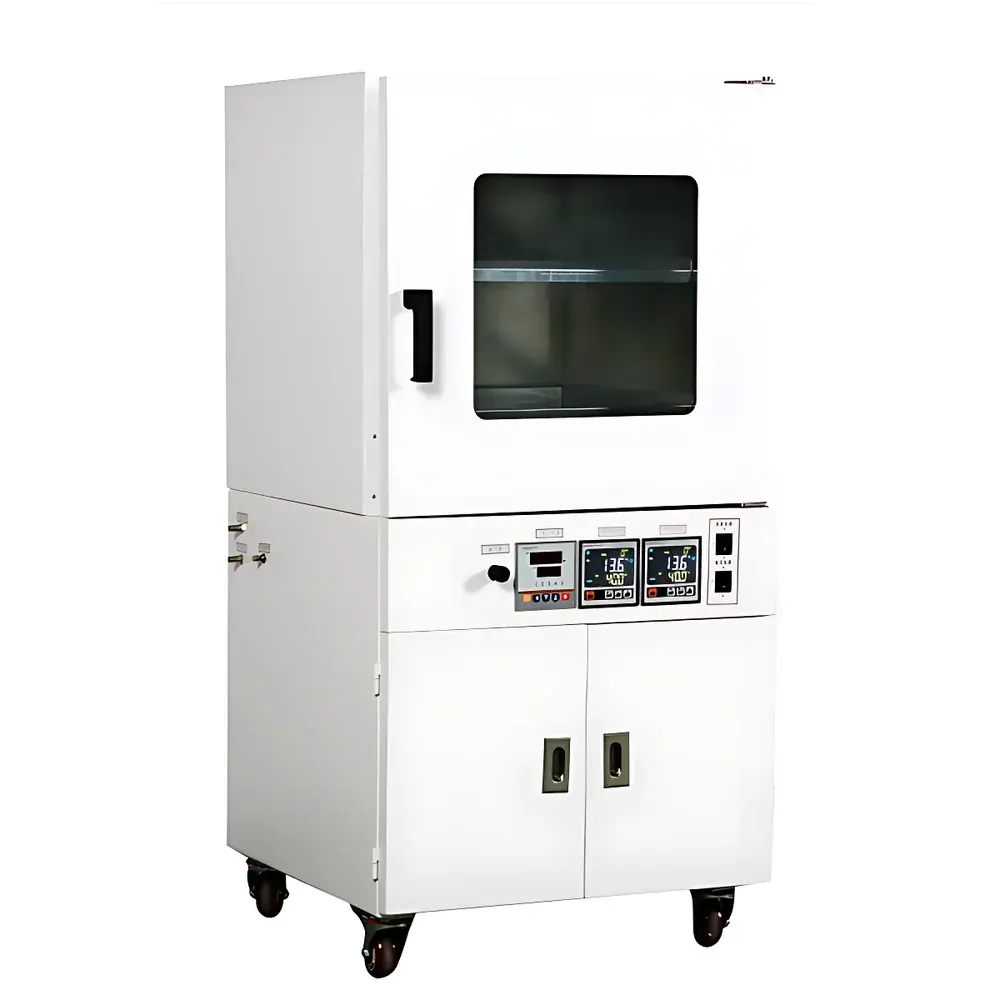
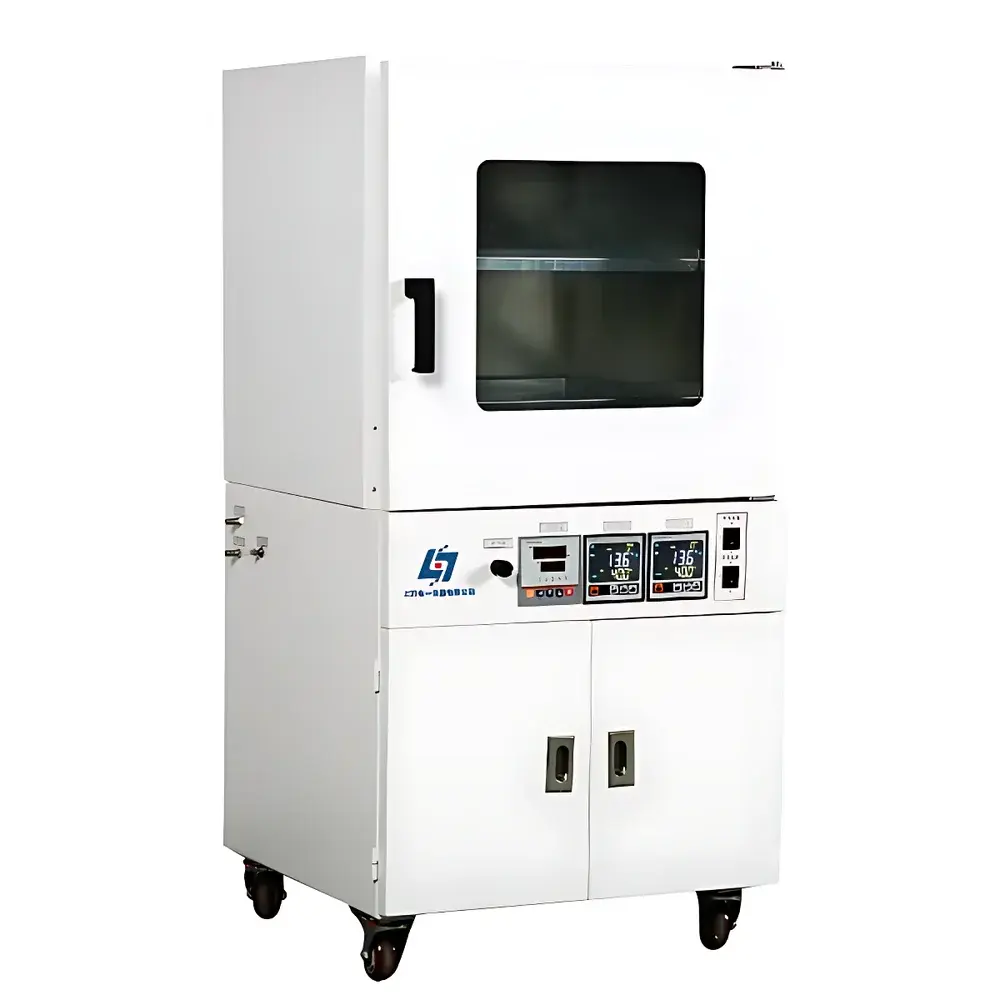
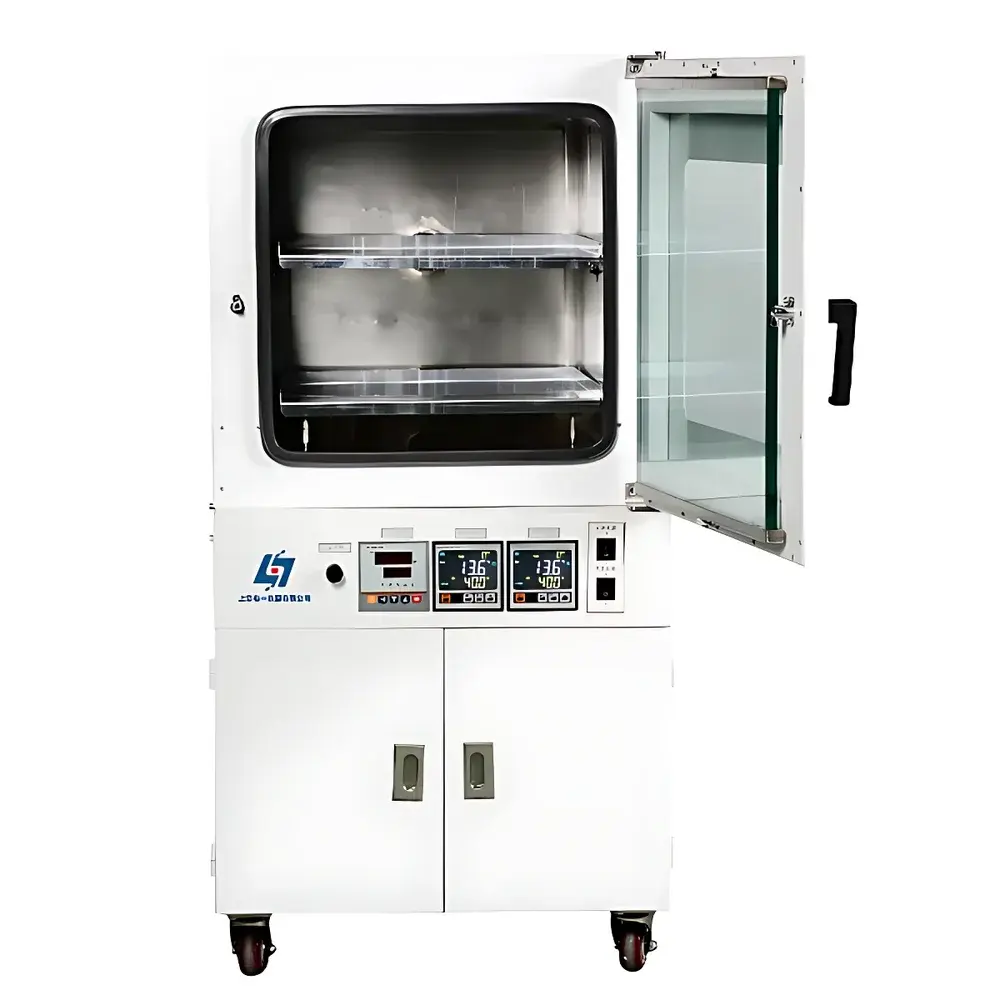
Yoyilab DZF-6090S Digital Vacuum Drying Oven with Automatic Vacuum Control and Resistive Silicon Pressure Sensor
| Brand | Yoyilab |
|---|---|
| Origin | Shanghai, China |
| Manufacturer Type | Direct Manufacturer |
| Model | DZF-6090S |
| Instrument Type | Vacuum Oven |
| Temperature Range | RT+10°C to 250°C |
| Temperature Uniformity | ±1°C |
| Temperature Resolution | 0.1°C |
| Vacuum Degree | ≤133 Pa (digital display) |
| Internal Chamber Dimensions | 450 × 450 × 450 mm |
| External Dimensions | 615 × 660 × 1440 mm |
| Chamber Material | Stainless Steel (SUS304) |
| Heating Method | Electric Resistance Heating |
| Input Power | 1400 W |
| Standard Accessories | 3 pcs aluminum alloy shelves, integrated lower cabinet, vacuum pump included |
| Vacuum Control Range | 1.0×10⁻¹ Pa to 1.0×10⁵ Pa (adjustable setpoint with ±1% control accuracy) |
| Door Seal | Molded silicone gasket with adjustable torque latch |
| Viewing Window | Double-layer tempered glass |
| Timer Range | 1–9999 minutes |
| Safety Features | Power-loss data retention & auto-recovery function |
Overview
The Yoyilab DZF-6090S Digital Vacuum Drying Oven is an engineered solution for thermal processing under reduced-pressure environments. It operates on the principle of vacuum-assisted drying—lowering the ambient pressure inside the chamber to reduce the boiling point of solvents and moisture, thereby enabling gentle, uniform dehydration of thermally sensitive, oxidation-prone, or compositionally complex samples without structural degradation. Designed for laboratories requiring precise, repeatable, and contamination-free drying protocols, the DZF-6090S integrates a high-stability resistive silicon pressure sensor for real-time vacuum monitoring and closed-loop digital control—ensuring consistent process conditions across extended operation cycles. Its microprocessor-based temperature controller maintains setpoints within ±1°C uniformity over the full operating range (RT+10°C to 250°C), while the 0.1°C resolution allows fine-tuned thermal profiling. The unit complies with fundamental design requirements for GLP-compliant sample preparation workflows and supports inert gas purging (e.g., N₂ or Ar) via dedicated inlet ports—critical for preventing oxidative decomposition during drying of pharmaceutical intermediates, polymer precursors, or biological extracts.
Key Features
- Digitally regulated vacuum system with resistive silicon pressure transducer, enabling programmable setpoint control between 1.0×10⁻¹ Pa and 1.0×10⁵ Pa at ±1% accuracy
- Stainless steel (SUS304) interior chamber (450 × 450 × 450 mm) and cold-rolled steel exterior with electrostatic powder coating for corrosion resistance and mechanical durability
- Three standard anodized aluminum alloy shelves—engineered for high-temperature stability, rapid thermal response, and minimal oxidation up to 250°C
- Double-layer tempered glass observation window with reinforced sealing; enables visual monitoring without compromising vacuum integrity
- Adjustable silicone door gasket and multi-point latching mechanism ensure long-term vacuum retention (<133 Pa typical base pressure)
- Microcomputer PID temperature controller with power-loss memory and automatic recovery—retains user-defined parameters after unexpected shutdown
- Integrated lower cabinet housing for built-in vacuum pump (oil-lubricated rotary vane type, ultimate vacuum ≤10⁻¹ Pa), minimizing footprint and installation complexity
- Backlit LCD interface with menu-driven navigation; displays real-time temperature, vacuum level, timer status, and fault codes simultaneously
Sample Compatibility & Compliance
The DZF-6090S accommodates a broad spectrum of sample formats—including Petri dishes, weighing boats, glass desiccators, ampoules, and custom stainless steel trays—without risk of cross-contamination due to its seamless, non-porous chamber construction. Its inert-gas compatibility supports ASTM E2913-22 (Standard Guide for Handling Moisture-Sensitive Materials) and aligns with USP requirements for sterile drying environments when used with validated purge cycles. While not certified for Class I Division 1 hazardous locations, the unit meets IEC 61010-1:2010 safety standards for laboratory electrical equipment. Vacuum performance is traceable per ISO 27874:2015 (Vacuum technology — Vocabulary), and temperature uniformity validation follows ISO/IEC 17025:2017 guidelines for calibration laboratories conducting in-house verification.
Software & Data Management
The DZF-6090S operates as a standalone instrument with embedded firmware—no external PC or proprietary software required. All operational parameters (set temperature, target vacuum, timer duration, alarm thresholds) are stored in non-volatile memory and retain configuration through power cycling. The system logs up to 100 event timestamps (e.g., door opening, vacuum deviation, over-temperature alert) with UTC timestamps for internal audit purposes. For integration into LIMS or ELN platforms, optional RS-485 Modbus RTU output (available via accessory module) permits read-only access to live temperature and pressure values, supporting 21 CFR Part 11–compliant data capture when paired with validated third-party acquisition software.
Applications
- Drying heat-labile pharmaceutical actives (e.g., peptides, monoclonal antibodies) without denaturation
- Removing residual solvents from synthesized organic compounds per ICH Q3C(R8) guidelines
- Dehydrating soil, sediment, or plant tissue samples prior to elemental analysis (ICP-MS, AAS)
- Conditioning hygroscopic reference standards and calibration materials under controlled low-humidity vacuum
- Sterilizing glassware and stainless steel tools via dry-heat vacuum cycles (160°C/2 h per ISO 17664)
- Pre-treating battery electrode coatings and ceramic green bodies prior to sintering
FAQ
What vacuum level can the DZF-6090S achieve without external pumping enhancement?
The integrated oil-sealed rotary vane pump achieves a base pressure of ≤133 Pa under standard conditions (25°C ambient, clean chamber). With optional vacuum gauge calibration and periodic oil maintenance, stable operation down to 10 Pa is attainable.
Is the chamber suitable for acidic vapor exposure during solvent removal?
The SUS304 stainless steel interior resists mild organic vapors but is not recommended for prolonged contact with concentrated HCl, HF, or strong oxidizers. Optional electropolished or Hastelloy C-276 lining kits are available upon request.
Can the timer function be synchronized with vacuum ramping profiles?
No—the timer operates independently as a total dwell duration counter. Vacuum and temperature are controlled separately; multi-step programs require manual stage transitions.
Does the unit support nitrogen purging during cooling phases?
Yes. A dedicated inert gas inlet port (¼” BSP) allows continuous or pulsed N₂ flow during cooldown to prevent rehydration or oxidation of cooled samples.
What maintenance intervals are recommended for the vacuum pump?
Oil should be replaced every 500 operating hours or semiannually, whichever occurs first. Filter elements require inspection every 200 hours; full pump service is advised at 2000-hour intervals.



