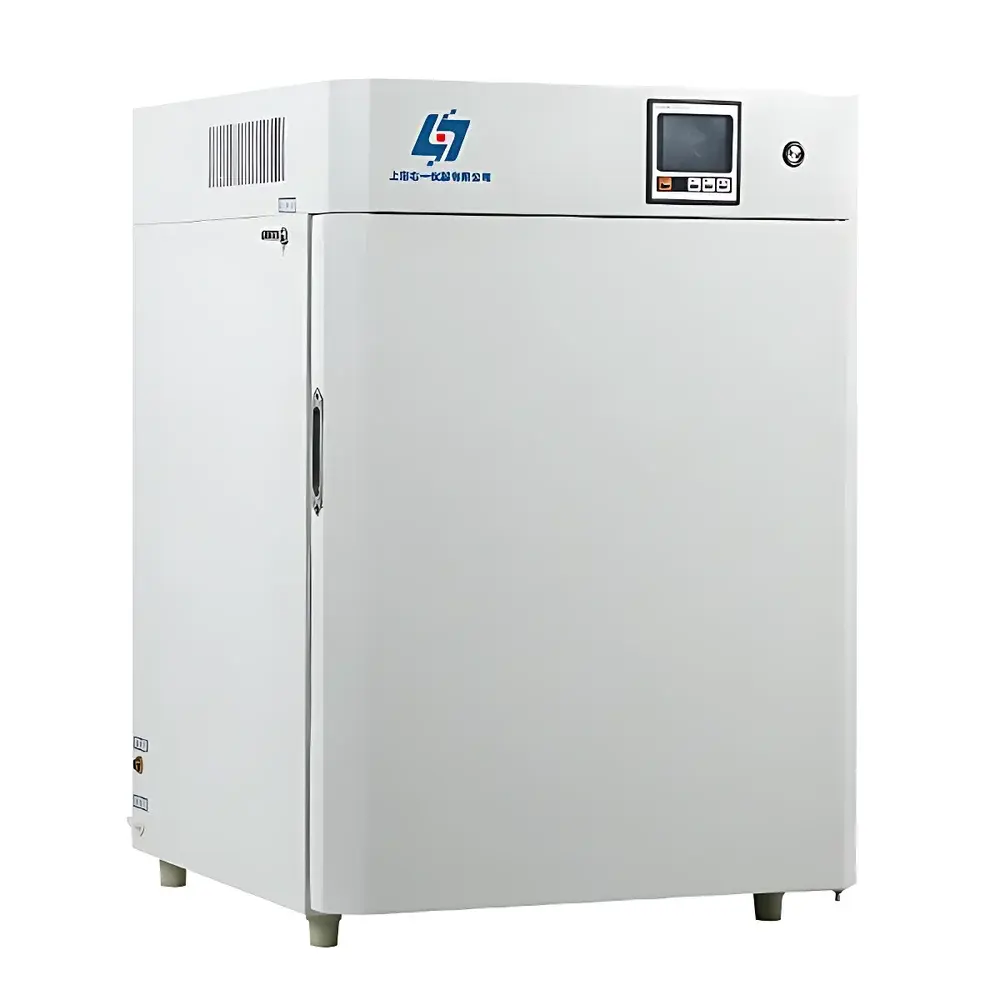
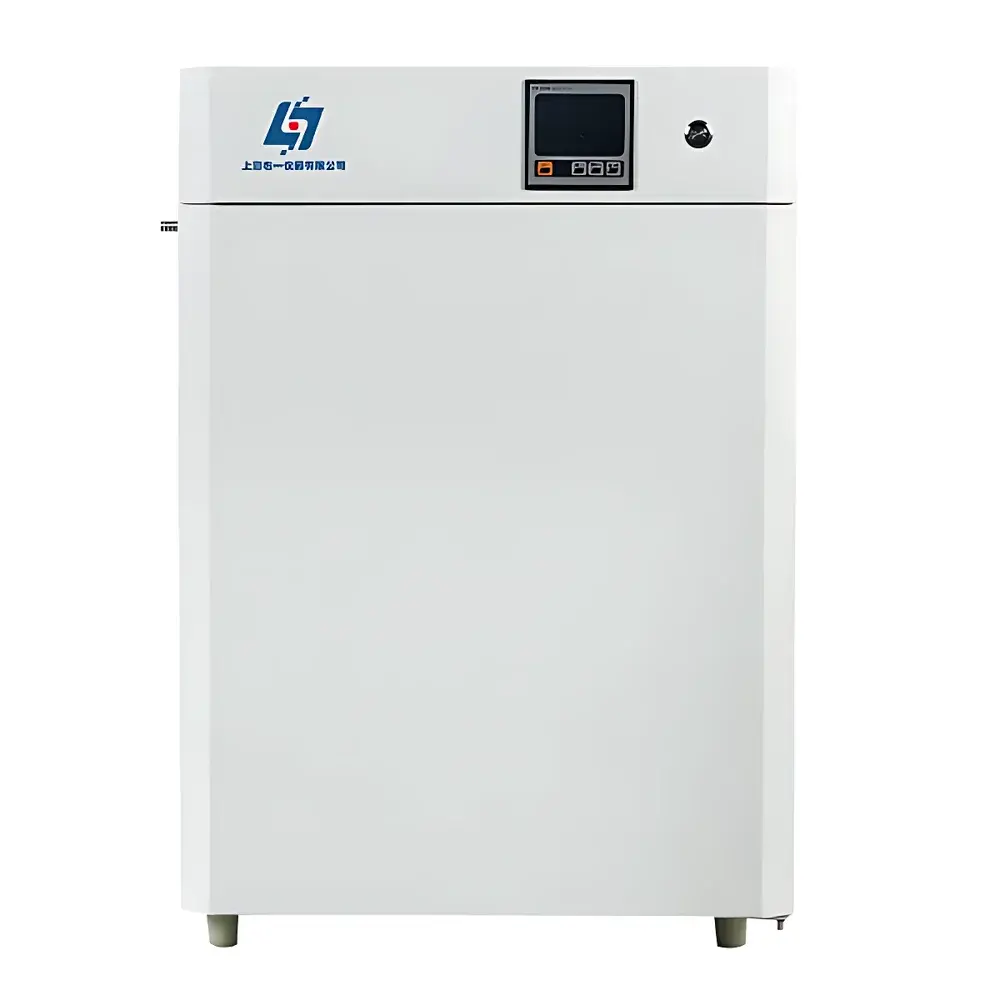
Yoyilab GHP-9050 Water-Jacketed Constant Temperature Incubator
| Brand | Yoyilab |
|---|---|
| Origin | Shanghai, China |
| Manufacturer | Yoyilab Instruments Co., Ltd. |
| Model | GHP-9050 |
| Air Circulation | Forced convection |
| Temperature Control Method | Digital PID control |
| Temperature Range | RT+5°C to 65°C |
| Temperature Resolution | 0.1°C |
| Temperature Fluctuation | ±0.5°C |
| Temperature Uniformity | ±1.0°C (at 37°C) |
| Chamber Capacity | 50 L |
| External Dimensions (W×D×H) | 545 × 465 × 710 mm |
| Input Power | 450 W |
| Chamber Dimensions (W×D×H) | 345 × 350 × 410 mm |
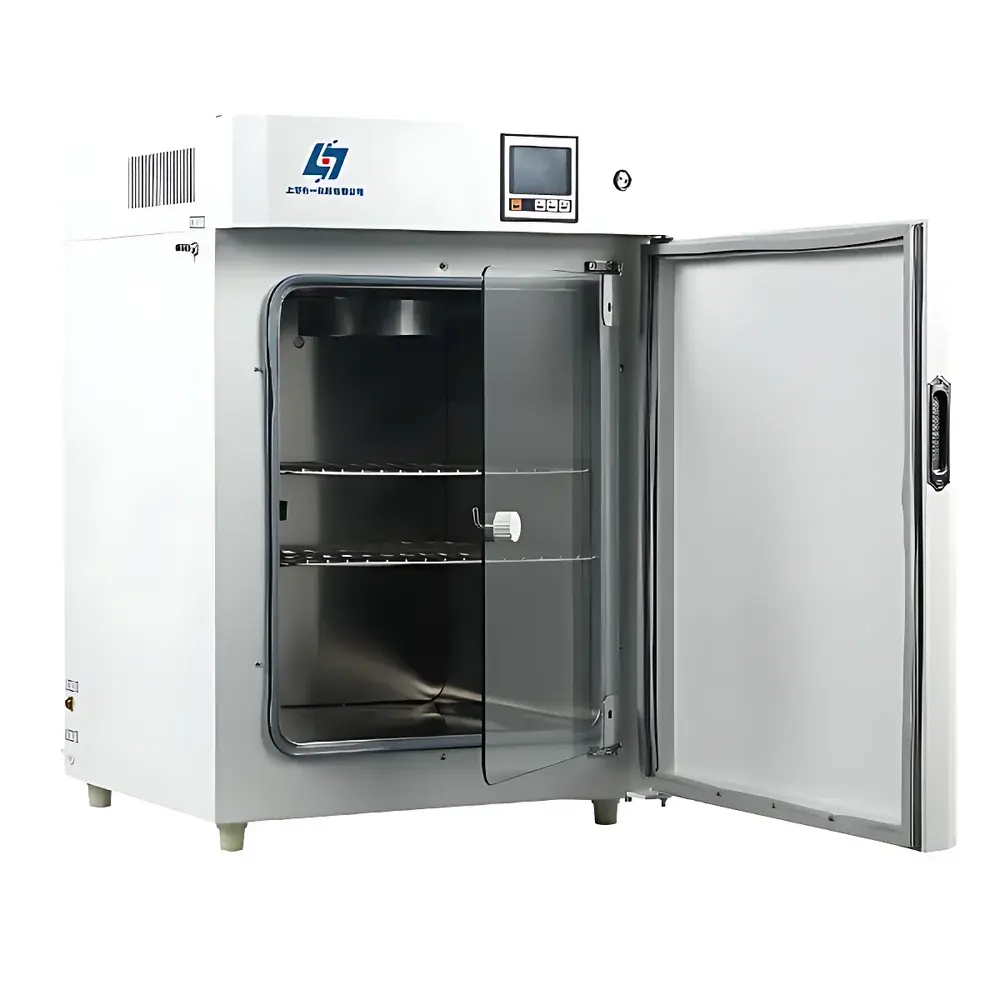
| Shelf Quantity | 2 adjustable stainless-steel shelves |
| Water-Level Alarm | Yes |
| Power Failure Recovery | Yes |
| Optional Features | Multi-segment programmable controller, independent over-temperature limiter, inert gas inlet with flowmeter, RS485 interface, embedded printer |
Overview
The Yoyilab GHP-9050 is a precision-engineered water-jacketed constant temperature incubator designed for reliable, stable thermal environments essential in cell culture, microbiological growth, and biological storage applications. Unlike air-jacketed units, the GHP-9050 employs a double-walled chamber with a surrounding water jacket—providing superior thermal inertia, minimized temperature gradients, and extended heat retention during brief power interruptions. Its operating range spans from ambient +5°C to 65°C, making it suitable for mammalian cell culture (typically at 37°C), bacterial propagation, enzyme assays, and long-term strain preservation. The unit complies with fundamental design principles outlined in ISO 13408-1 (aseptic processing of health products) and supports GLP-compliant workflows through stable thermal performance, traceable calibration readiness, and configurable data logging interfaces.
Key Features
- Water-jacketed thermal architecture ensures high thermal mass and exceptional temperature stability—±0.5°C fluctuation and ±1.0°C uniformity (measured at 37°C under no-load conditions).
- Microprocessor-based PID temperature controller with digital display and intuitive menu-driven interface; supports real-time monitoring of setpoint, actual temperature, and system status.
- Double-door design: outer door with powder-coated cold-rolled steel frame and inner tempered glass door with independent silicone gasket seal—enabling non-intrusive observation without compromising chamber integrity or thermal equilibrium.
- Corrosion-resistant mirror-finish stainless-steel interior with radius-rounded corners and removable, height-adjustable shelves—facilitating thorough cleaning and validation-compatible maintenance.
- Intelligent water-level monitoring system with audible/visual alarms triggered by low or overflow conditions in the water jacket—preventing dry-heating damage and ensuring operational safety.
- Power-loss recovery function retains user-defined parameters and resumes operation automatically after interruption—critical for unattended overnight or weekend experiments.
- Pressure-balanced water inlet prevents back-siphoning during refilling, eliminating risk of contamination or water displacement into the chamber.
- High-efficiency insulation using environmentally compliant polyurethane foam and dual-layer door sealing—achieving low standby energy consumption (450 W nominal input) and extended service life.
Sample Compatibility & Compliance
The GHP-9050 accommodates standard cell culture vessels—including T-flasks (up to T-75), Petri dishes, multi-well plates, and cryovial racks—within its 50 L working volume (345 × 350 × 410 mm). Its forced-air convection system ensures homogeneous airflow distribution across all shelf levels without turbulence-induced shear stress on adherent cultures. The unit meets general laboratory equipment requirements per IEC 61010-1 (safety of electrical equipment for measurement, control, and laboratory use) and is compatible with facility-wide validation protocols including IQ/OQ/PQ documentation. While not certified as Class II biological safety equipment, it is routinely deployed in ISO Class 7/8 cleanroom-adjacent environments when paired with external laminar flow hoods. Optional inert gas inlet (N₂ or CO₂) enables hypoxic or anaerobic adaptation—supporting applications aligned with USP sterility assurance and ASTM E2924-18 (microbiological incubation practices).
Software & Data Management
The GHP-9050 supports optional RS485 serial communication (Modbus RTU protocol) for integration into centralized lab monitoring systems (e.g., LabVantage, Thermo Fisher SampleManager). When equipped with the optional embedded thermal printer, it generates time-stamped hardcopy records of temperature profiles—fulfilling basic ALCOA+ data integrity criteria for non-GMP research settings. The multi-segment programmable controller (GHP-9050P variant) allows up to 30 ramp-hold cycles with user-defined slope rates and dwell times—enabling simulation of physiological thermal transitions or accelerated stability testing per ICH Q1A(R2). All configurations maintain full audit trail capability for parameter changes, alarm events, and manual interventions—aligning with FDA 21 CFR Part 11 readiness when used with validated third-party software platforms.
Applications
- Mammalian and insect cell line propagation under tightly controlled 37°C/5% CO₂-equivalent conditions (when used with external CO₂ module)
- Bacterial and fungal culture maintenance for QC microbiology labs (e.g., ATCC strain storage, media performance testing)
- Enzyme kinetics studies requiring precise thermal staging across multiple temperatures
- Vaccine stability assessment during early-phase formulation development
- Agricultural seed germination trials and aquatic organism rearing (e.g., zebrafish embryos, algae cultures)
- Pharmaceutical excipient compatibility screening under accelerated aging conditions
FAQ
What is the difference between water-jacketed and air-jacketed incubators?
Water-jacketed models like the GHP-9050 provide greater thermal stability and longer hold times during power loss due to the high specific heat capacity of water. Air-jacketed units respond faster to setpoint changes but exhibit higher sensitivity to ambient fluctuations.
Can the GHP-9050 be used for CO₂-controlled cell culture?
No—the base model lacks integrated CO₂ sensors or gas mixing hardware. However, an optional inert gas inlet port (with flowmeter) allows external CO₂ or N₂ supply for modified-atmosphere applications when paired with standalone gas regulators.
Is the unit suitable for GLP or GMP environments?
Yes—its repeatable thermal performance, parameter memory, alarm logging, and optional data export capabilities support GLP documentation. For full GMP compliance, pairing with validated software, calibrated probes, and formal IQ/OQ documentation is required.
How often should the water jacket be refilled and maintained?
Under normal operation, distilled water should be topped up every 2–4 weeks depending on ambient humidity and usage frequency. Annual descaling and inspection of heating elements and seals are recommended to ensure longevity and accuracy.
Does the GHP-9050 support remote monitoring via Ethernet or Wi-Fi?
Not natively—the standard configuration includes only RS485 serial output. Ethernet/Wi-Fi connectivity requires integration via an external industrial gateway or third-party IoT adapter compatible with Modbus TCP conversion.
Related Products