
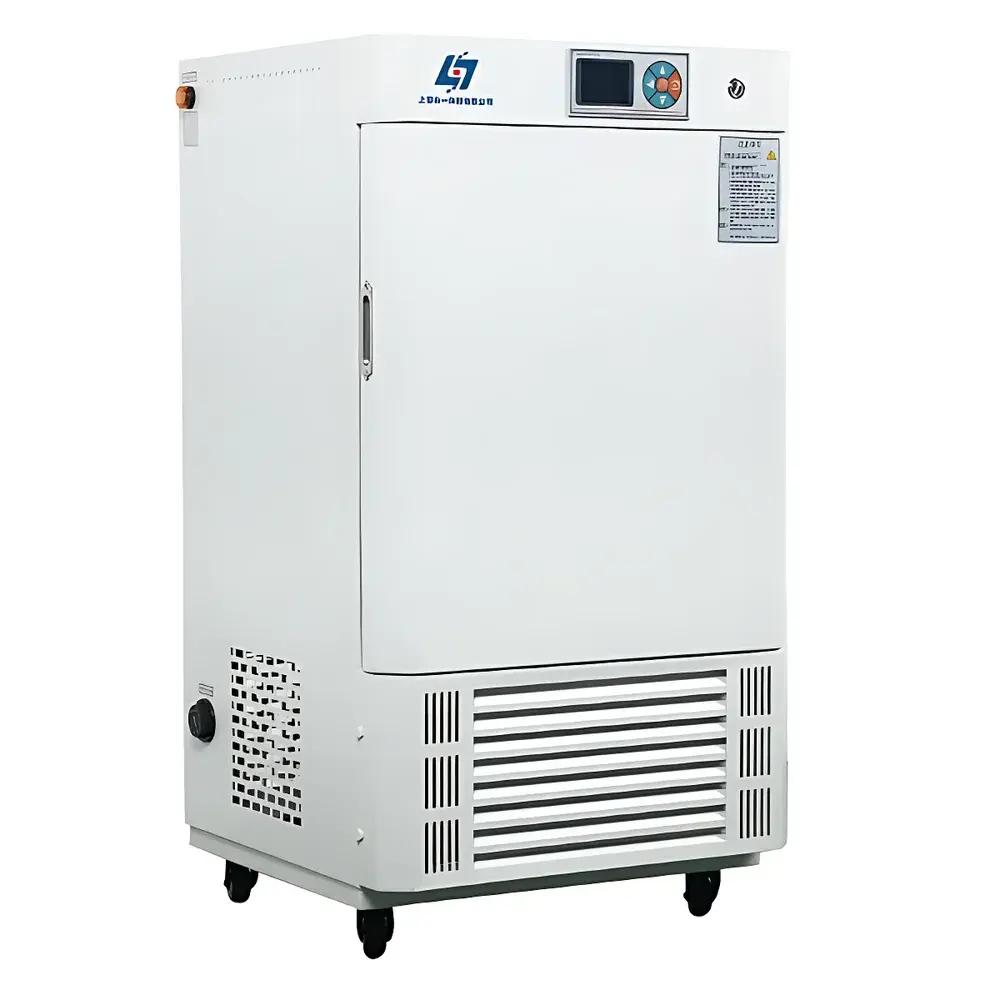
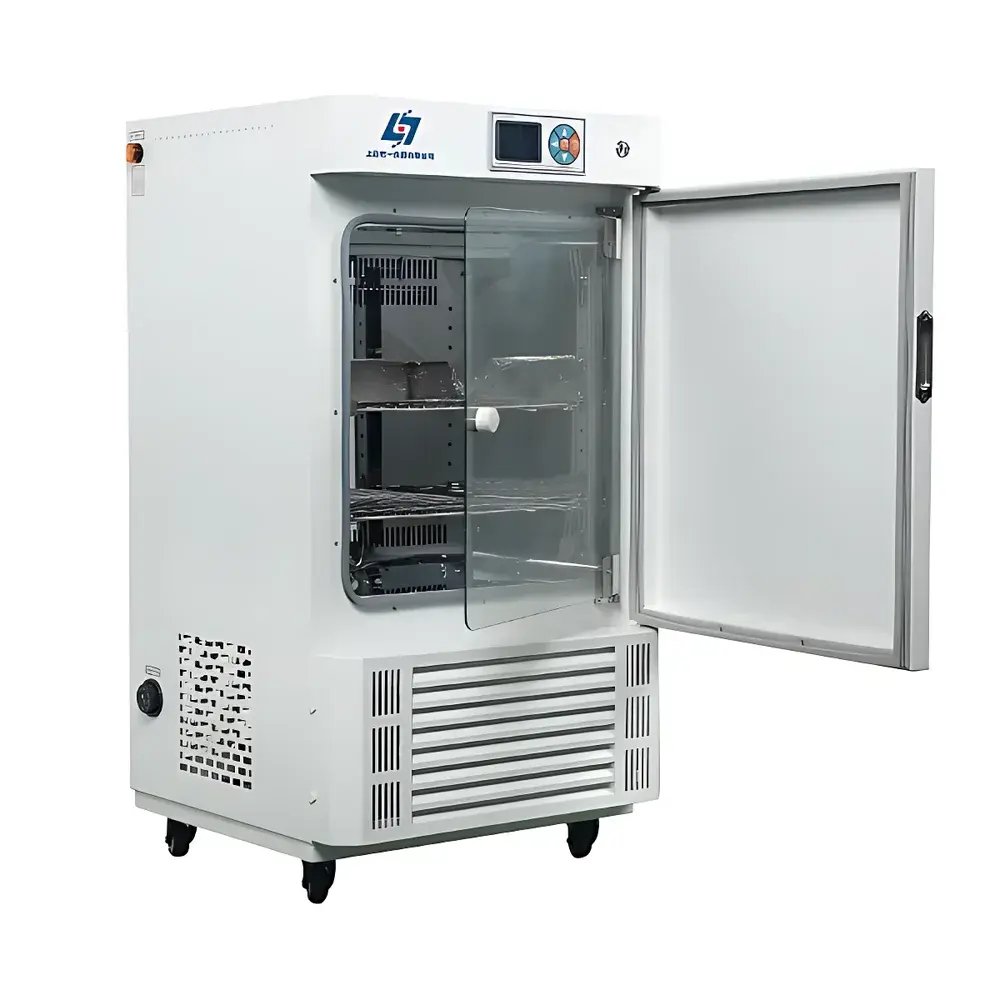
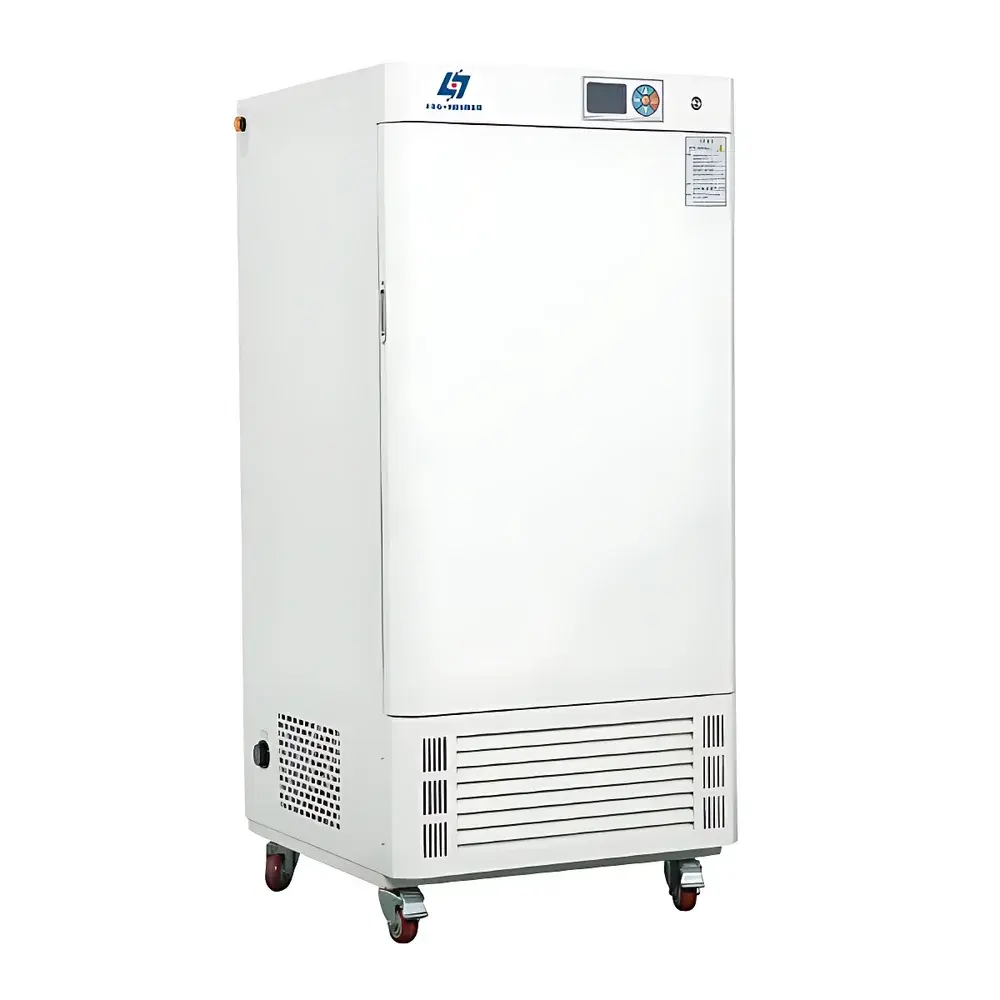
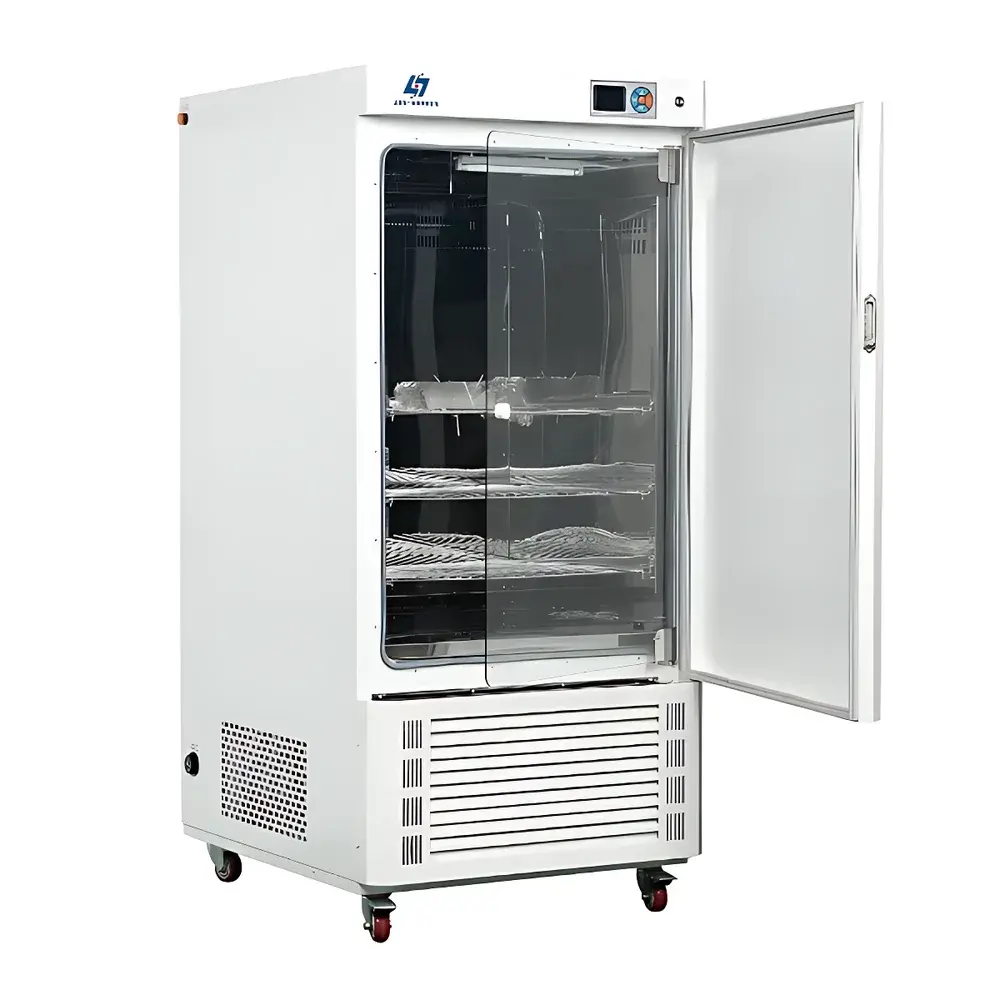
Yoyilab LRH-100 Biochemical Incubator
| Brand | Yoyilab |
|---|---|
| Origin | Shanghai, China |
| Manufacturer Type | Direct Manufacturer |
| Model | LRH-100 |
| Cooling Method | Compressor-based Refrigeration |
| Air Circulation | Forced Convection |
| Temperature Range | 0–65 °C |
| Temperature Resolution | 0.1 °C |
| Temperature Uniformity | ±1.5 °C (at 25 °C test point) |
| Temperature Fluctuation | ±0.5 °C (high-temp), ±1.0 °C (low-temp) |
| Chamber Capacity | 100 L |
| External Dimensions (W×D×H) | 575×605×1160 mm |
| Power Supply | AC 220 V, 50 Hz |
| Input Power | 900 W |
| Operating Ambient Temperature | +5 to +30 °C |
| Timer Range | 1–9999 min |
| Display | 5.7-inch LCD menu interface |
| Safety Features | Over-temperature deviation protection, power-failure data retention, auto-restart on power recovery |
| Construction | Cold-rolled steel exterior with electrostatic powder coating |
Overview
The Yoyilab LRH-100 Biochemical Incubator is a precision-engineered, microprocessor-controlled environmental chamber designed for stable, long-term cultivation and preservation of bacteria, molds, yeasts, and other microorganisms under static (non-shaking) conditions. It operates on a dual-mode thermoregulation principle—integrating both Peltier-free compressor-based refrigeration and resistive heating—to deliver bidirectional temperature control across a broad operational range of 0 °C to 65 °C. Unlike ambient-only or heater-only incubators, the LRH-100 maintains thermal stability during seasonal ambient fluctuations, making it suitable for BOD testing, microbial viability studies, pharmaceutical stability trials, and seed germination protocols where reproducible thermal environments are critical. Its forced-air convection system ensures rapid thermal equilibration and minimizes vertical/horizontal gradients—essential for multi-layer shelf experiments requiring inter-sample consistency.
Key Features
- Intelligent PID temperature control algorithm with 0.1 °C resolution and real-time feedback loop adjustment
- Dual-door structure with high-efficiency thermal insulation, reducing heat loss during observation and improving energy efficiency
- Electropolished 304 stainless-steel interior chamber with seamless, radius-rounded corners for complete cleanability and compliance with ISO 14644-1 Class 8 (cleanroom-compatible) maintenance standards
- Three independently adjustable stainless-steel shelves (standard configuration), supporting flexible load distribution and ergonomic sample access
- 5.7-inch backlit LCD touchscreen interface displaying setpoint, actual chamber temperature, elapsed/remaining timer, and system status in a single-view layout
- Comprehensive safety architecture including over-temperature deviation alarm, automatic cut-off at ≥68 °C, non-volatile memory for parameter retention after power interruption, and auto-resume functionality upon grid recovery
- Modular base frame with four swivel casters (two lockable) and adjustable leveling feet for vibration-dampened placement on laboratory benches or mobile carts
Sample Compatibility & Compliance
The LRH-100 accommodates standard microbiological culture formats—including Petri dishes (90 mm and 150 mm), test tubes (13 × 100 mm and 16 × 150 mm), Erlenmeyer flasks (up to 1000 mL), and multi-well plates—without airflow obstruction. Its uniform temperature field (±1.5 °C at 25 °C per ISO 15189 Annex A.3 verification protocol) supports GLP-compliant colony-forming unit (CFU) enumeration, antimicrobial susceptibility testing (AST), and media performance qualification per CLSI M44-A3 guidelines. The unit complies with IEC 61010-1:2010 for laboratory electrical safety and meets CE marking requirements for electromagnetic compatibility (EN 61326-1). Optional RS485 communication enables integration into centralized lab monitoring systems compliant with FDA 21 CFR Part 11 for electronic record integrity.
Software & Data Management
While the LRH-100 operates as a standalone instrument with embedded firmware, optional RS485 interface and proprietary PC software (sold separately) support time-stamped logging of temperature profiles, alarm events, and user operations. Data export is available in CSV format for traceability audits. The system records up to 30 days of continuous temperature history in non-volatile memory—even during mains failure—satisfying internal QA requirements for temperature excursion documentation. When paired with the optional programmable temperature controller, users can define up to 30 segmented ramp-hold cycles, enabling simulation of diurnal temperature shifts in ecological or fermentation studies.
Applications
- Biochemical oxygen demand (BOD5) determination per APHA Standard Methods 5210B
- Mycological culture maintenance and sporulation induction at sub-ambient temperatures (e.g., 4–8 °C for Aspergillus spp.)
- Pharmaceutical raw material stability testing per ICH Q1A(R2) guidelines
- Environmental water quality assessment, including coliform enumeration using membrane filtration (ISO 9308-1)
- Plant tissue culture initiation and callus proliferation under controlled photoperiod-independent conditions
- Diagnostic microbiology workflows requiring ISO/IEC 17025-accredited incubation environments
FAQ
What is the minimum operating temperature and how is sub-ambient cooling achieved?
The LRH-100 achieves a verified lower limit of 0 °C using a sealed R134a compressor refrigeration circuit—no dry ice or liquid nitrogen required.
Does the unit meet regulatory requirements for GMP or GLP laboratories?
Yes—its over-temperature alarm, parameter memory, and optional audit-trail-capable software support compliance with WHO TRS 986 Annex 9 and EU GMP Annex 15 validation expectations.
Can humidity be controlled in this model?
No—the LRH-100 is a temperature-only incubator; relative humidity is unregulated and follows ambient lab conditions (typically 30–70% RH at 20–25 °C).
Is calibration certificate included with shipment?
A factory calibration report (traceable to NIM China) is provided; full ISO/IEC 17025 calibration by an accredited third party is available upon request.
What maintenance intervals are recommended?
Compressor oil and refrigerant pressure should be verified annually; condenser coil cleaning is advised every six months in dust-prone environments.
Related Products




