
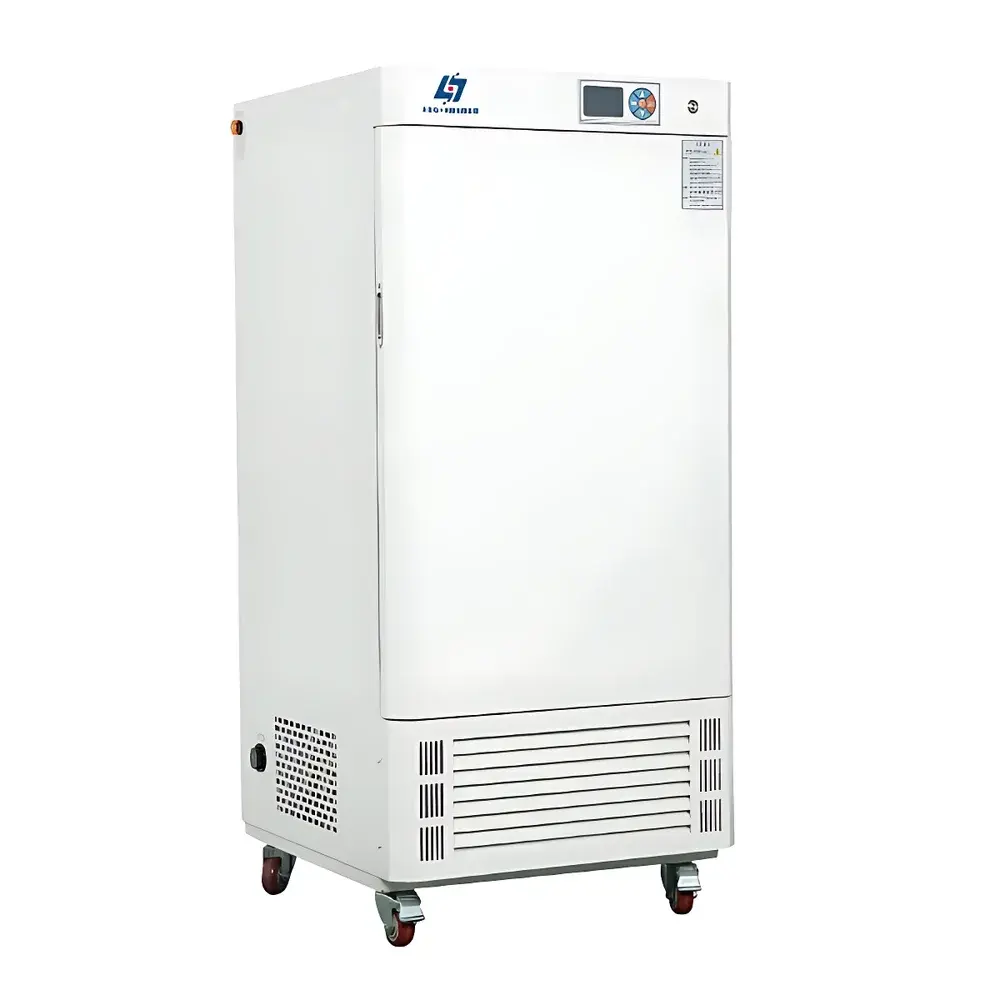
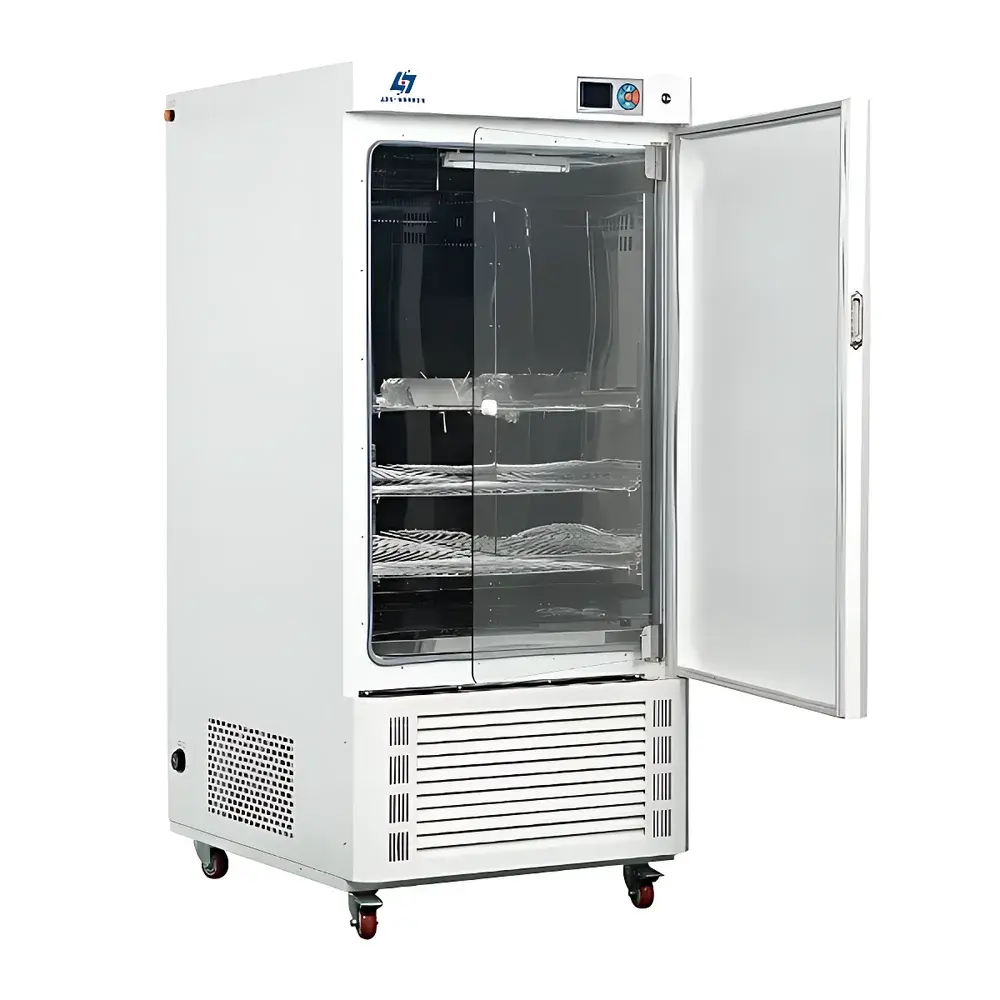
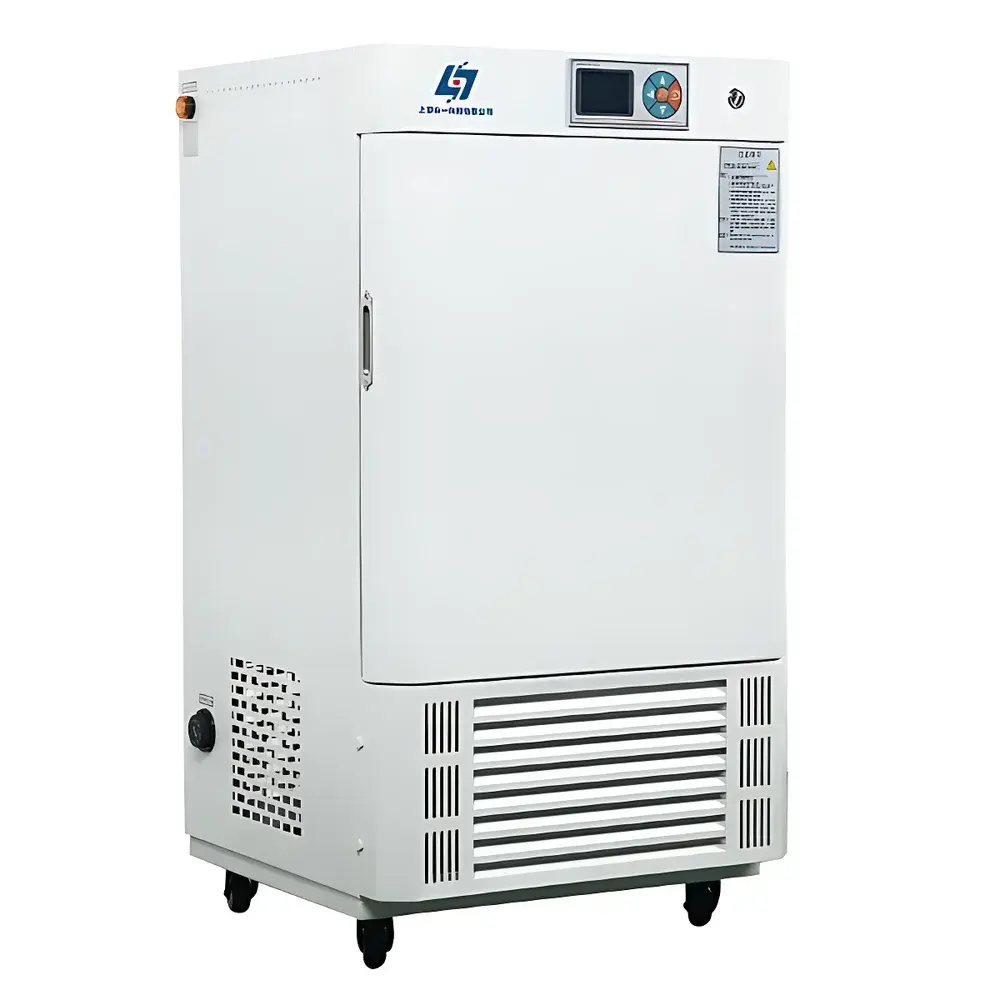
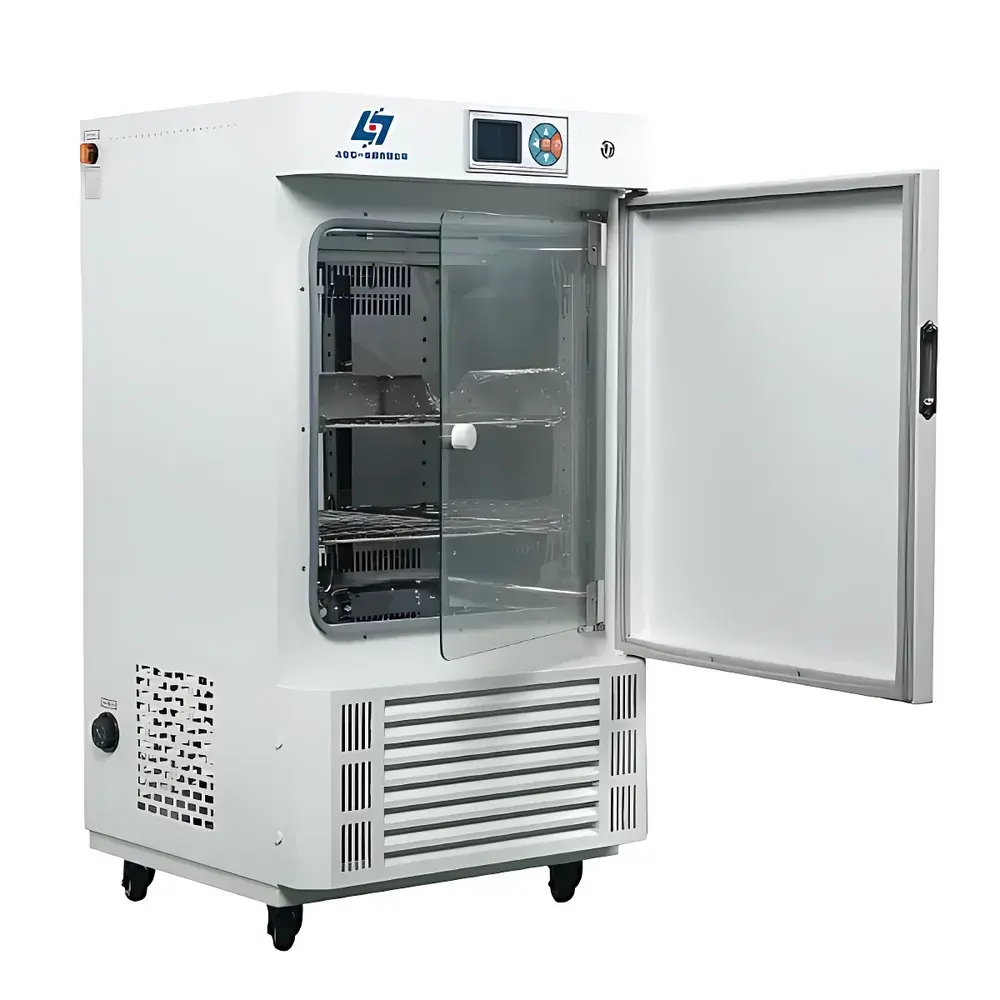
Yoyilab LRH-250F Biochemical Incubator
| Brand | Yoyilab |
|---|---|
| Origin | Shanghai, China |
| Manufacturer Type | Direct Manufacturer |
| Country of Origin | China |
| Model | LRH-250F |
| Cooling Method | Compressor-based cooling |
| Temperature Range | 0–65 °C |
| Temperature Accuracy | ±0.1 °C |
| Temperature Uniformity | ±1.5 °C (at 25 °C test point) |
| Temperature Fluctuation | ±0.5 °C (high-temp), ±1.0 °C (low-temp) |
| Chamber Capacity | 250 L |
| External Dimensions (W×D×H) | 705×725×1525 mm |
| Power Supply | AC 220 V, 50 Hz |
| Input Power | 1650 W |
| Working Environment | +5–30 °C ambient |
| Display | 5.7″ LCD menu-driven interface |
| Control System | Microprocessor-based PID temperature controller with timer, power-failure memory, and over-temperature protection |
| Construction | Cold-rolled steel exterior with electrostatic powder coating |
| Environmental Compliance | R-134a or R-600a refrigerant (F-model = CFC-free) |
Overview
The Yoyilab LRH-250F Biochemical Incubator is a precision-engineered, dual-mode (heating/cooling) environmental chamber designed for stable, long-term cultivation and preservation of microorganisms—including bacteria, yeasts, molds, and fungi—as well as for plant tissue culture, seed germination, BOD testing, and biochemical stability studies. Operating on the principle of active thermoregulation via a hermetically sealed compressor-based refrigeration system coupled with PTC heating elements, the LRH-250F delivers precise thermal control across a wide operational range (0–65 °C), enabling both ambient-subzero chilling and elevated incubation conditions within a single unit. Its robust architecture ensures minimal thermal drift under variable ambient loads, making it suitable for GLP-compliant laboratories where reproducibility and traceability are critical.
Key Features
- Microprocessor-controlled PID temperature regulation with 0.1 °C resolution and real-time digital feedback loop for high reproducibility
- Dual-zone thermal management: independent compressor cooling and resistive heating circuits ensure rapid setpoint acquisition and low hysteresis
- Mirror-polished 304 stainless-steel interior chamber with rounded corners and removable, height-adjustable shelves for full cleanability and flexible sample arrangement
- Double-glazed, insulated observation door with low-conductivity silicone gasket minimizes heat loss during visual inspection without disturbing internal thermal equilibrium
- 5.7-inch backlit LCD touchscreen interface supporting multi-parameter display: set temperature, actual chamber temperature, elapsed time, remaining timer duration, and alarm status—all simultaneously visible
- Comprehensive safety architecture including over-temperature cut-off, power-loss parameter retention, auto-restart after interruption, and audible/visual alarm activation
- Mobile base with four swivel casters (two lockable) and leveling feet for stable positioning on uneven laboratory floors
- CFC-free refrigerant (R-134a or R-600a, model-dependent) compliant with Montreal Protocol standards and EU F-Gas Regulation (EU No 517/2014)
Sample Compatibility & Compliance
The LRH-250F accommodates standard microbiological vessels—Petri dishes, test tubes, flasks (up to 2 L), and multi-well plates—across its 250 L working volume (interior dimensions: 900×850×1050 mm). The uniform temperature distribution (±1.5 °C at 25 °C per ISO 15212-1:2021 Annex B) supports consistent growth kinetics across spatially distributed samples. The unit meets key international performance benchmarks for incubators used in regulated environments: ASTM E171-22 (Standard Specification for Environmental Chambers), ISO 13408-1:2018 (Aseptic processing of health care products), and EN 61000-6-3:2019 (EMC emission requirements). While not inherently 21 CFR Part 11 compliant, optional RS485 serial interface enables integration with validated LIMS or ELN systems supporting electronic audit trails when paired with appropriate software validation packages.
Software & Data Management
Equipped with embedded firmware supporting programmable timing (1–9999 minutes), the LRH-250F allows unattended operation cycles for overnight cultures or timed recovery protocols. Optional accessories extend data integrity capabilities: the RS485 communication module (with Modbus RTU protocol) permits remote monitoring and logging via third-party SCADA or LabVIEW environments; an embedded thermal printer provides hard-copy output of temperature logs and alarm events; and the multi-segment programmable controller enables complex thermal ramp/soak profiles (e.g., circadian simulation or stress-acclimation assays). All configuration parameters—including calibration offsets, alarm thresholds, and timer presets—are retained in non-volatile memory during power failure, eliminating reconfiguration overhead after outages.
Applications
- Biochemical oxygen demand (BOD5) analysis per APHA Standard Methods 5210B and ISO 5815-1:2019
- Microbial enumeration and viability assessment (ISO 4833-1:2013, USP )
- Fungal and yeast propagation for bioprocess development and antifungal susceptibility testing
- Plant seed germination and callus induction under controlled photoperiod-agnostic conditions
- Stability testing of pharmaceutical excipients and diagnostic reagents per ICH Q1A(R2)
- Environmental monitoring of water and soil samples in public health and regulatory labs
- Cell line maintenance (non-CO2, non-humidified) for adherent or suspension cultures requiring only thermal control
FAQ
What refrigerant does the LRH-250F use?
The “F” suffix indicates compliance with ozone-depleting substance phase-out regulations; units ship with either R-134a or R-600a refrigerant depending on regional certification requirements and batch configuration.
Is the chamber humidity-controlled?
No—the LRH-250F is a dry incubator. Humidity control is not integrated; users requiring >60% RH must employ external humidification solutions or select a dedicated CO2/humidity incubator model.
Can the LRH-250F be validated for GMP use?
Yes—its stable thermal performance, alarm logging capability, and optional data export features support IQ/OQ/PQ protocols. Full qualification requires user-defined SOPs, third-party sensor mapping (per ISO 14644-3), and periodic recalibration against NIST-traceable references.
What is the maximum load weight per shelf?
Each adjustable stainless-steel shelf is rated for 15 kg uniformly distributed load; total payload capacity is limited by airflow constraints—not structural limits—to maintain specified temperature uniformity.
Does the unit include calibration documentation?
Factory calibration certificates (as-found/as-left) are provided upon request at no additional cost; field calibration services and annual verification programs are available through authorized Yoyilab service partners in EMEA and APAC regions.




