
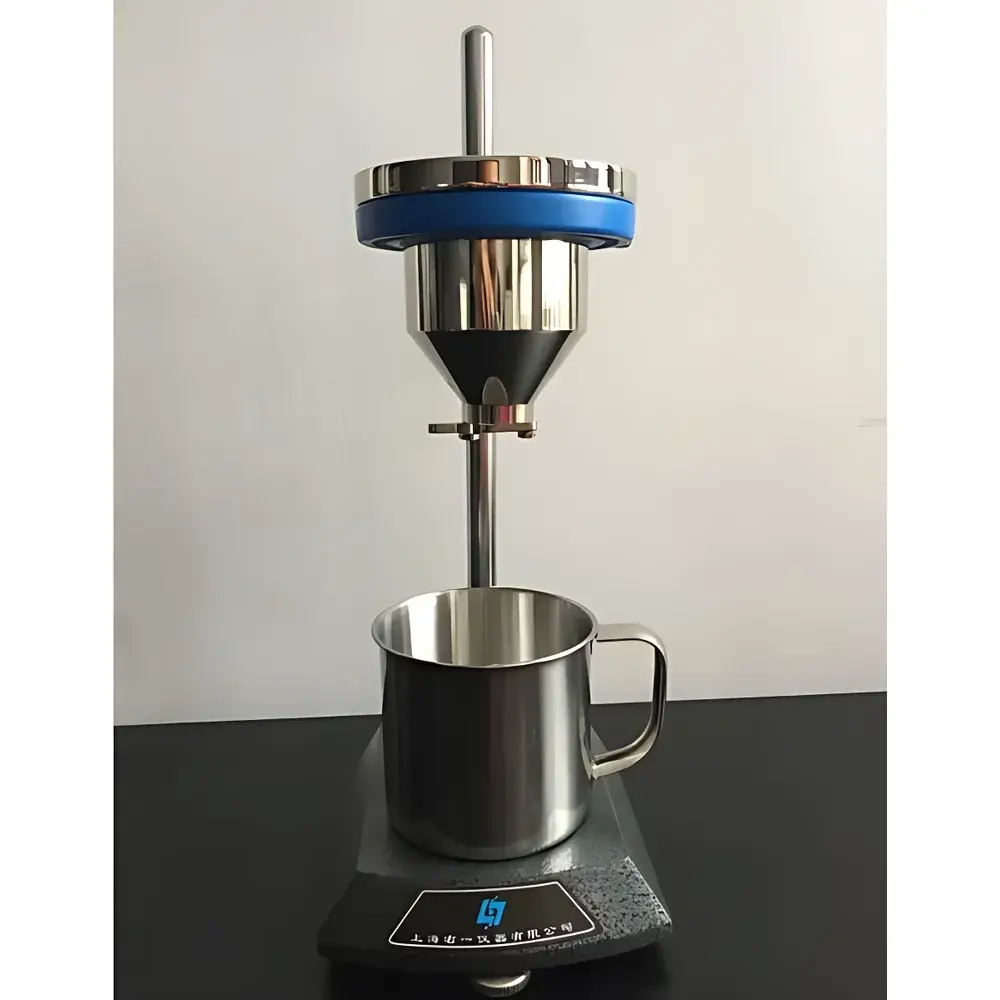
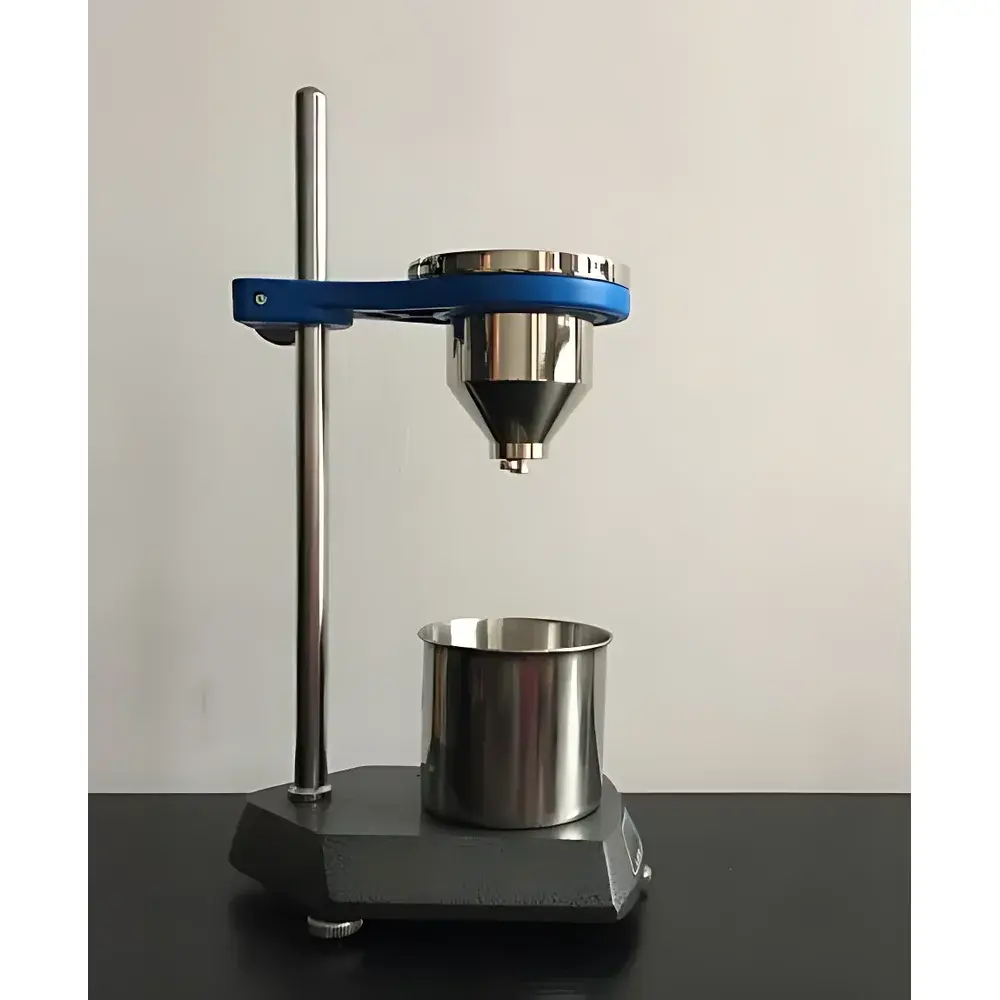
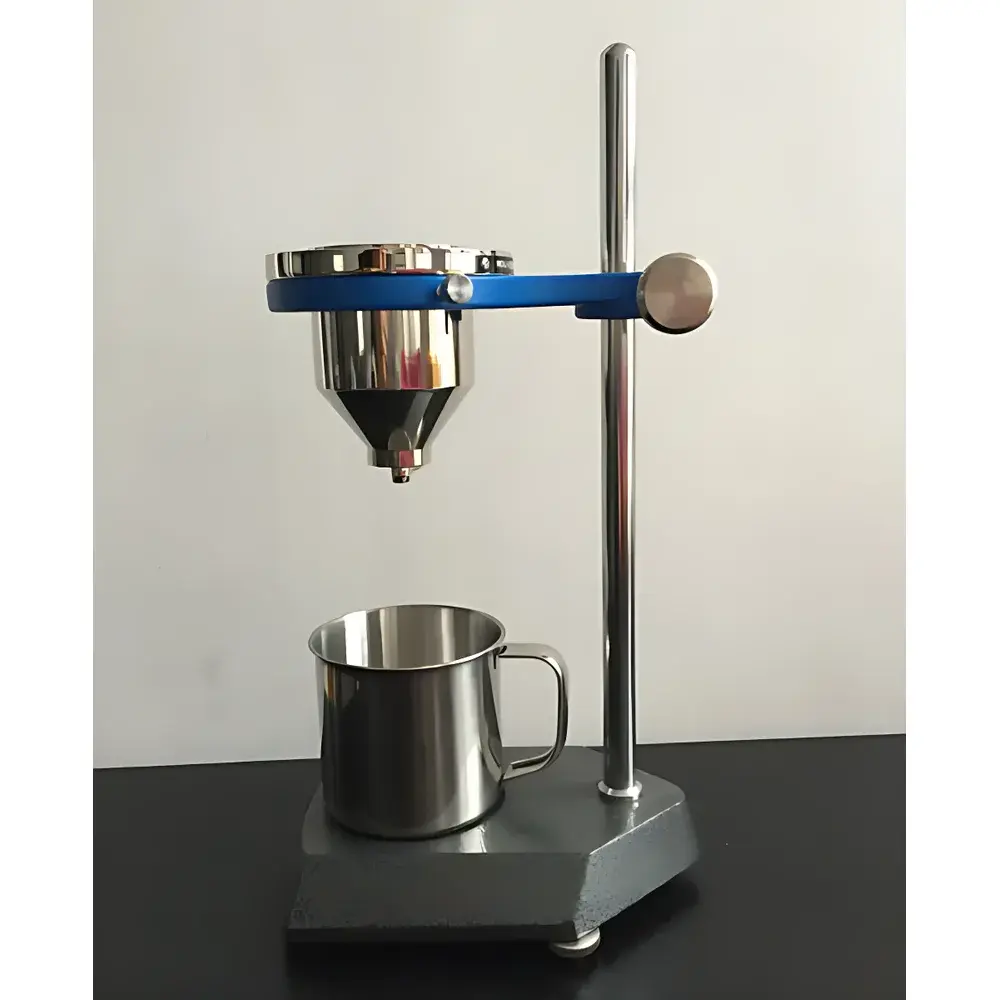
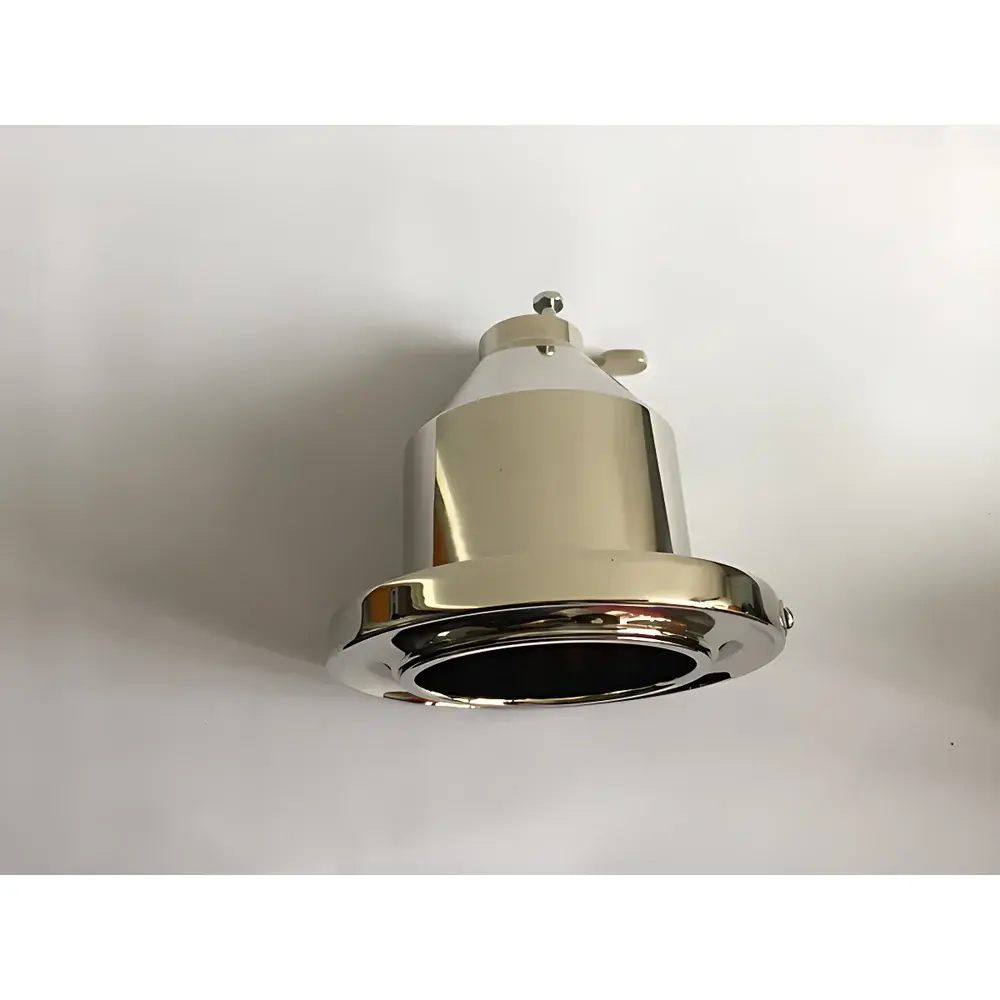
Yoyilab NDJ-5 Flow Cup Viscometer (ISO 2431 / ASTM D1200 Type “Ford Cup No. 4” Equivalent)
| Brand | Yoyilab |
|---|---|
| Origin | Shanghai, China |
| Manufacturer | Yoyilab |
| Model | NDJ-5 |
| Instrument Type | Efflux Viscometer (Flow Cup) |
| Viscosity Range | 23 s ≤ t ≤ 150 s (kinematic viscosity calculated per empirical calibration) |
| Cup Capacity | 100 mL |
| Operating Temperature | 25 ± 1 °C |
| Accuracy | ±3% of reading (per ISO 2431 repeatability criteria) |
| Compliance | Designed to meet functional equivalence with ISO 2431 and ASTM D1200 for Ford Cup No. 4 geometry |
Overview
The Yoyilab NDJ-5 Flow Cup Viscometer is a manually operated efflux viscometer engineered for rapid, field-deployable kinematic viscosity assessment of low-to-medium viscosity Newtonian and near-Newtonian liquids—primarily coatings, inks, varnishes, lacquers, and thin solvent-based formulations. Based on the standardized geometry of the ISO 2431 “Type 4” flow cup (functionally equivalent to ASTM D1200 Ford Cup No. 4), this instrument measures the time required for a fixed volume (100 mL) of sample to drain through a precisely dimensioned orifice under gravity at controlled temperature (25 ± 1 °C). The measured efflux time (t, in seconds) is converted to kinematic viscosity (ν, in mm²/s) using empirically validated calibration equations. Unlike rotational or capillary viscometers, the NDJ-5 delivers immediate pass/fail screening and comparative quality control without electronics or moving parts—making it ideal for production line checks, QC labs with limited infrastructure, and regulatory-compliant batch release where ISO/ASTM traceability is required.
Key Features
- Stainless steel and corrosion-resistant alloy construction for long-term stability and chemical compatibility with organic solvents and aggressive coating media
- Precision-machined orifice (diameter: 4.0 ± 0.02 mm; length: 10.0 ± 0.05 mm) conforming to ISO 2431 geometric tolerances
- Integrated leveling platform with adjustable feet and spirit level for gravitational alignment—ensuring consistent hydrostatic head during efflux
- 100 mL calibrated cup volume with clearly marked fill line and beveled upper rim to facilitate meniscus control
- No internal electronics or power supply required—operates exclusively with a certified mechanical or digital stopwatch (not included)
- Empirically validated conversion equations: ν = (t − 6.0)/0.223 mm²/s for 23 s ≤ t < 150 s; validation range excludes t < 23 s due to laminar flow instability
- Designed for repeatable manual operation per ISO 2431 procedural requirements—including bubble removal via glass plate leveling and strict temperature conditioning
Sample Compatibility & Compliance
The NDJ-5 is validated for use with Newtonian and weakly shear-thinning fluids exhibiting minimal thixotropy within the specified efflux time window (23–150 s). It is routinely applied in paint and ink manufacturing per ISO 9001 and ISO/IEC 17025-accredited laboratories. While not a primary metrology standard, its geometry and operational protocol align with ISO 2431:2019 (“Paints and varnishes — Determination of flow time using flow cups”) and ASTM D1200-22 (“Standard Test Method for Kinematic Viscosity of Transparent and Opaque Liquids (the Calculation of Dynamic Viscosity)”). Calibration verification must be performed at least daily using certified reference oils (e.g., NIST SRM 2782 series), and correction factor K must remain within 0.95–1.05; deviation beyond this range indicates orifice wear or cup deformation requiring replacement.
Software & Data Management
The NDJ-5 operates as a standalone analog instrument and does not incorporate embedded firmware, connectivity, or data logging. All timing measurements are recorded externally using a Class 1 stopwatch compliant with ISO 9241-410 (timing resolution ≤ 0.01 s, drift < 0.5 s/day). For GLP/GMP environments, users must maintain written records including operator ID, ambient temperature, sample lot number, raw efflux times (minimum n = 2), mean t-value, calculated ν, and calibration verification logs. Electronic data capture may be implemented via LIMS integration using scanned forms or structured CSV uploads—but no proprietary software is supplied or required.
Applications
- Routine QC testing of architectural paints, automotive basecoats, and industrial primers prior to canning or spray application
- Batch-to-batch consistency verification in ink formulation and gravure printing facilities
- In-process monitoring during resin synthesis or solvent dilution steps where rapid feedback is critical
- Supplier qualification testing against contractual viscosity specifications (e.g., “28–32 s @ 25 °C per NDJ-5”)
- Educational demonstrations of Newtonian fluid behavior and empirical viscosity correlation methods
- Pre-screening tool prior to advanced rheological analysis using rotational viscometers or capillary systems
FAQ
What standards does the NDJ-5 comply with?
It is functionally equivalent to ISO 2431 Type 4 and ASTM D1200 Ford Cup No. 4, and its geometry, procedure, and reporting follow ISO 2431:2019 requirements.
Why is temperature control strictly 25 ± 1 °C?
Kinematic viscosity is highly temperature-dependent; deviations >±1 °C introduce non-linear errors exceeding ±5% in calculated ν—hence thermostatic baths or climate-controlled rooms are mandatory.
Can the NDJ-5 measure non-Newtonian fluids?
No. It assumes constant viscosity under defined shear rate (governed by orifice geometry and head pressure); significant shear-thinning or yield stress behavior invalidates the t→ν conversion.
How often must calibration be verified?
Before first use each shift, after any physical impact to the cup, and whenever measured t-values deviate >3% from historical control limits—using traceable reference oils.
Is cleaning solvent specified in the standard?
ISO 2431 recommends volatile, residue-free solvents such as acetone, methyl ethyl ketone (MEK), or xylene—followed by thorough air-drying to prevent orifice blockage or meniscus distortion.



