
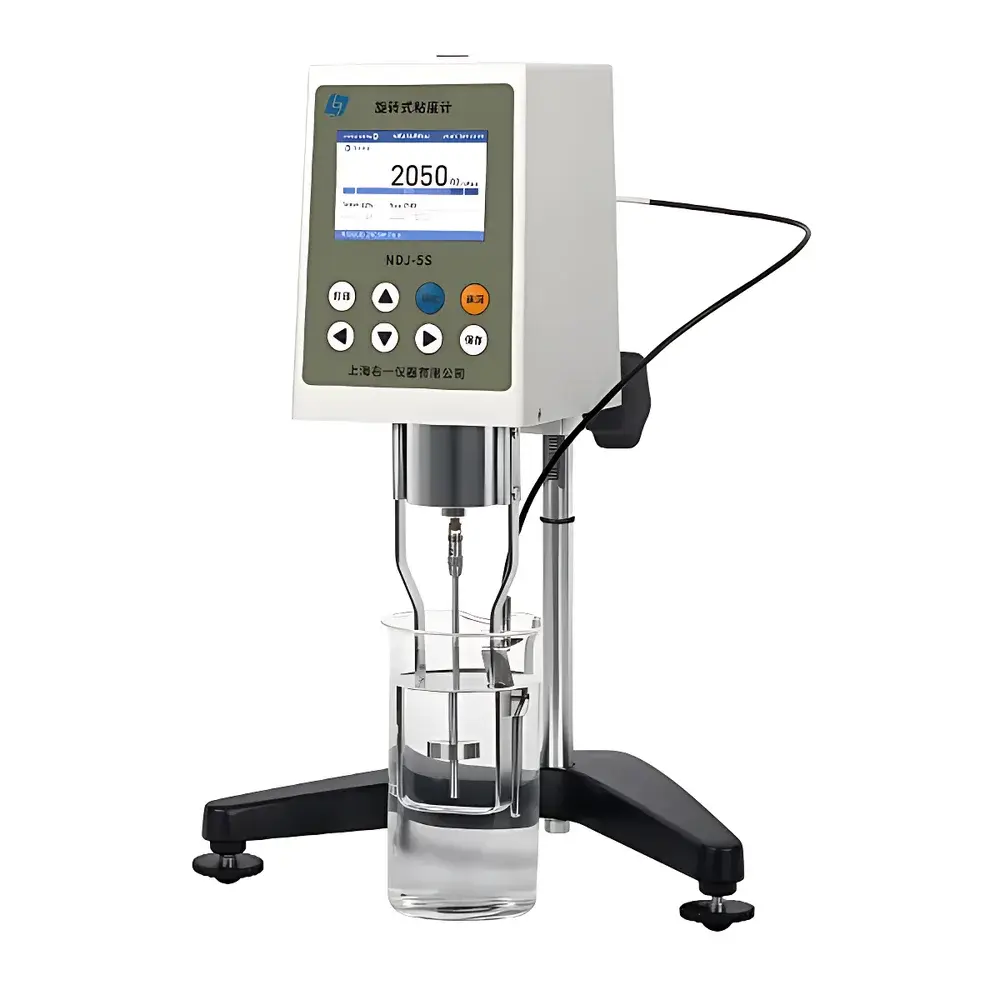
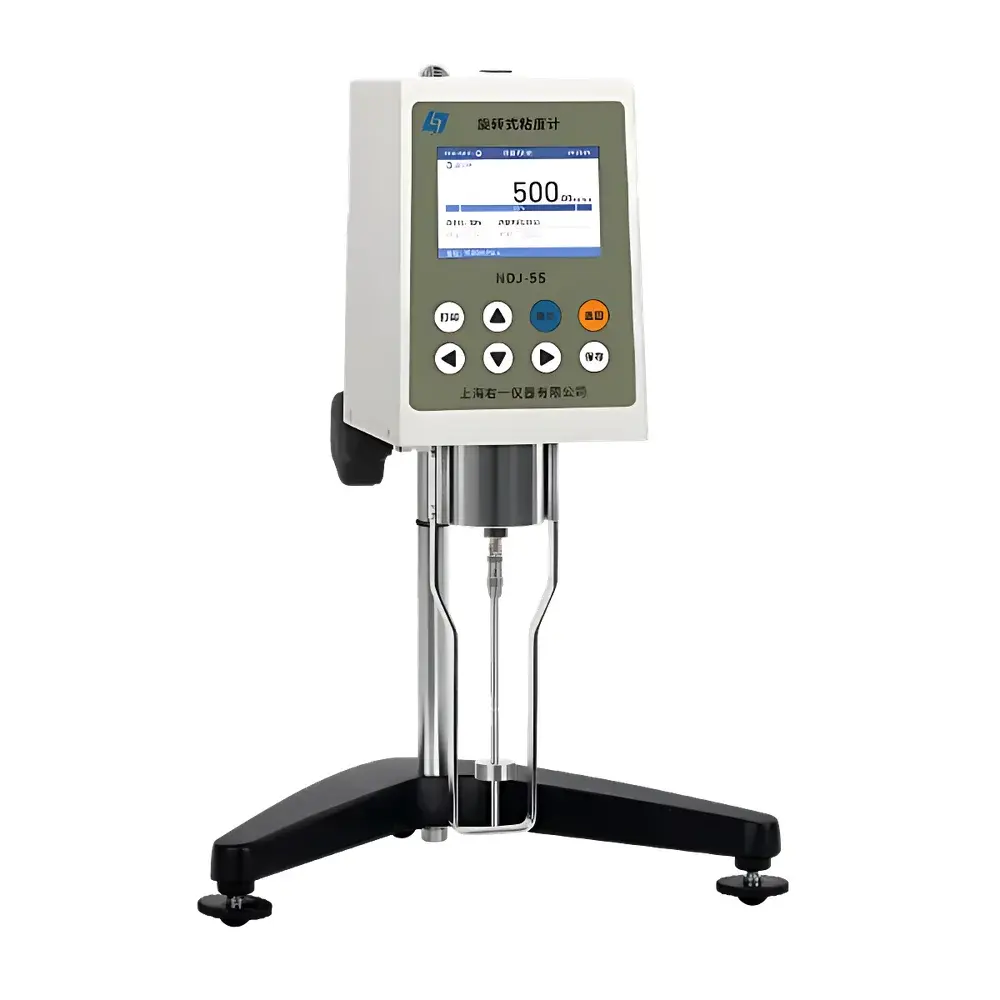
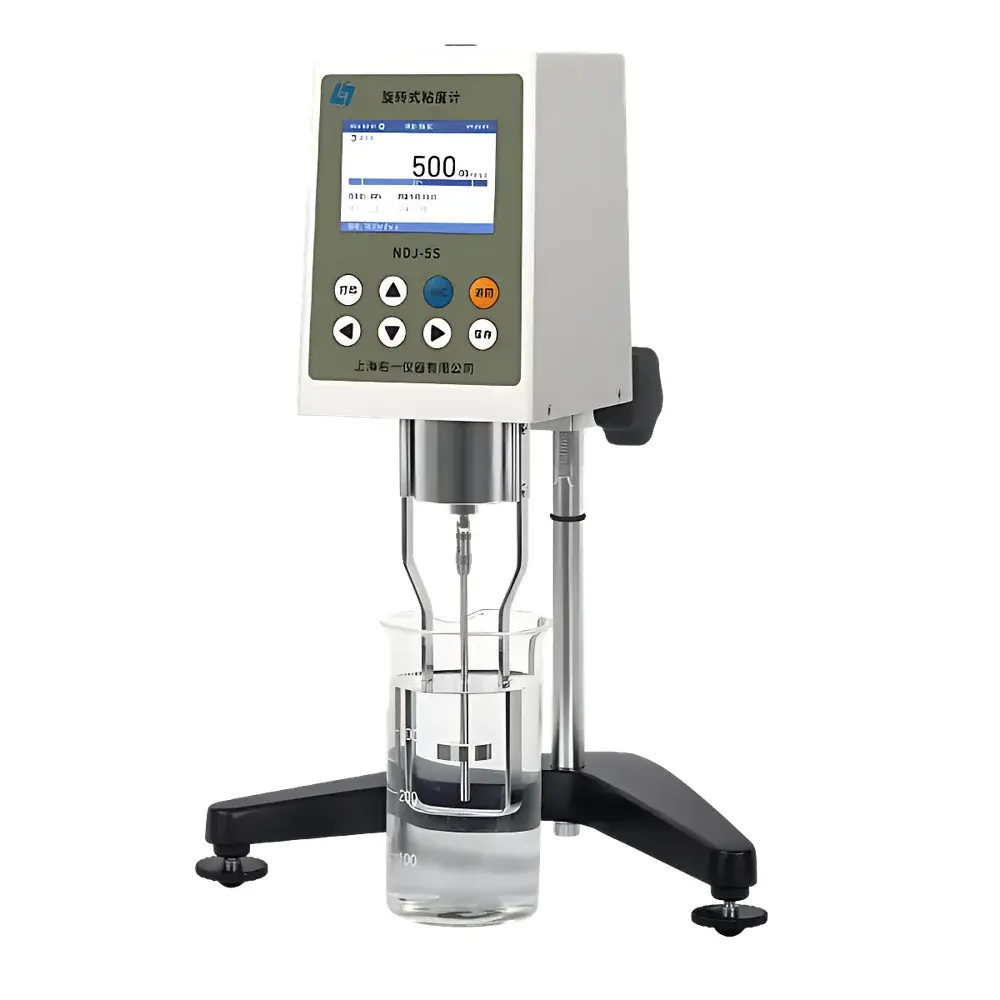
Yoyilab NDJ-8S Advanced Rotational Viscometer with 3.5″ IPS Color Display
| Brand | Yoyilab |
|---|---|
| Origin | Shanghai, China |
| Manufacturer Type | Direct Manufacturer |
| Model | NDJ-8S |
| Instrument Type | Rotational Viscometer |
| Operating Environment | Ambient Temperature |
| Viscosity Range | 1–2×10⁶ mPa·s |
| Temperature Range | 0–150 °C |
| Display | 3.5" IPS High-Resolution Color LCD |
| Speed Settings | 8 speeds (0.3, 0.6, 1.5, 3, 6, 12, 30, 60 rpm) |
| Standard Spindles | #1–#4 (0# optional) |
| Accuracy | ±2% for Newtonian fluids |
| Repeatability | ±1% for Newtonian fluids |
| Data Storage | 50 measurement records |
| Communication Interfaces | USB, RS-232, temperature probe input |
| Power Supply | 100–240 VAC, 50 Hz ±10% |
| Dimensions | 280 × 260 × 290 mm |
| Net Weight | 6.8 kg |
Overview
The Yoyilab NDJ-8S is a precision-engineered rotational viscometer designed for laboratory and quality control environments requiring reliable, repeatable viscosity measurements across a broad dynamic range. Based on the Couette principle, it measures the torque required to rotate a spindle immersed in a fluid at a defined angular velocity—enabling direct determination of dynamic viscosity (mPa·s) under controlled shear conditions. Unlike capillary or falling-ball methods, rotational viscometry supports both Newtonian and non-Newtonian fluid characterization, making it suitable for routine QC testing as well as preliminary rheological screening. The instrument operates within a temperature range of 0–150 °C when paired with an optional PT100 temperature probe, supporting thermal stability assessments critical for polymer melts, hot-melt adhesives, and high-temperature process fluids.
Key Features
- 3.5-inch high-resolution IPS color display with intuitive menu navigation and real-time visualization of viscosity, spindle number, rotational speed, measured temperature, torque percentage, and maximum measurable viscosity for the selected spindle/speed combination
- Eight programmable rotational speeds (0.3, 0.6, 1.5, 3, 6, 12, 30, and 60 rpm), enabling fine-grained shear rate control and extended low-shear sensitivity—particularly valuable for weak gels, suspensions, and shear-thinning formulations
- Microprocessor-based control system with integrated data acquisition; supports three measurement modes: rapid stabilization detection (auto-stop upon signal convergence), timed measurement (up to 99 minutes), and intelligent auto-scan (algorithm-driven spindle/speed recommendation based on preliminary torque feedback)
- Robust all-in-one chassis with electromagnetic shielding, adjustable-height support column (250 mm travel), and built-in bubble-level base with leveling feet for stable operation on non-uniform surfaces
- Comprehensive data handling: stores up to 50 full measurement records locally; supports kinematic viscosity conversion (via user-input density); optional #0 spindle extends low-viscosity capability down to 1 mPa·s
- Dual communication interfaces (USB and RS-232) enable direct connection to printers or PCs for traceable reporting—including timestamp, spindle ID, speed, viscosity, temperature, torque %, and measurement duration
Sample Compatibility & Compliance
The NDJ-8S accommodates a wide spectrum of industrial and research-grade fluids—including solvent-based adhesives, pharmaceutical suspensions, food emulsions, architectural coatings, chemical intermediates, and advanced composite resins. Its modular spindle design (standard #1–#4, optional #0) conforms to ISO 2555 and ASTM D2196 standards for rotational viscosity testing. While not certified for GLP/GMP-regulated production environments out-of-the-box, the instrument’s audit-ready data export, consistent repeatability (±1%), and configurable measurement protocols support alignment with internal SOPs and FDA 21 CFR Part 11–compatible workflows when deployed with validated software and procedural controls.
Software & Data Management
No proprietary PC software is bundled; however, raw ASCII-formatted output via RS-232 or USB CDC serial emulation enables seamless integration with third-party lab information management systems (LIMS), Excel-based analysis tools, or custom Python/Matlab scripts. All exported records include metadata essential for traceability: date/time stamp, spindle identifier, rotational speed (rpm), dynamic viscosity (mPa·s), temperature (°C), torque (%), and elapsed measurement time. Internal memory retains 50 entries with overwrite protection and manual recall functionality—sufficient for shift-based QC logging without external storage dependency.
Applications
- Quality assurance of industrial coatings and inks—monitoring batch-to-batch consistency and thixotropic recovery behavior
- Routine viscosity verification of pharmaceutical syrups, ointments, and injectable suspensions per USP guidelines
- Process development support for thermoplastic polymers and reactive resins, especially during cure profiling and melt index correlation studies
- Food R&D applications including dairy product texture analysis, starch gelatinization monitoring, and plant-based beverage stability assessment
- Educational laboratories requiring a cost-effective, serviceable platform for teaching fundamental rheological concepts and Newtonian/non-Newtonian fluid behavior
FAQ
Does the NDJ-8S support temperature-controlled measurements?
Yes—when used with an optional external PT100 temperature probe (sold separately), the instrument displays and logs real-time sample temperature across the 0–150 °C range.
Can measurement data be exported in CSV format?
Yes—the RS-232 and USB serial outputs transmit ASCII-delimited fields compatible with direct import into spreadsheet applications without intermediate conversion.
Is calibration verification supported?
The unit includes a zero-torque calibration check function; users are advised to perform periodic verification using NIST-traceable silicone oil standards (e.g., Cannon N47, N100) following ISO 17025-aligned procedures.
What is the minimum measurable viscosity with the standard spindle set?
With #1 spindle at 60 rpm, the lower limit is ~10 mPa·s; with optional #0 spindle at 0.3 rpm, the effective lower bound extends to 1 mPa·s.
Are firmware updates available?
Firmware upgrades are distributed free-of-charge via Yoyilab’s technical support portal and applied through USB mass-storage mode—no external programmer required.



