
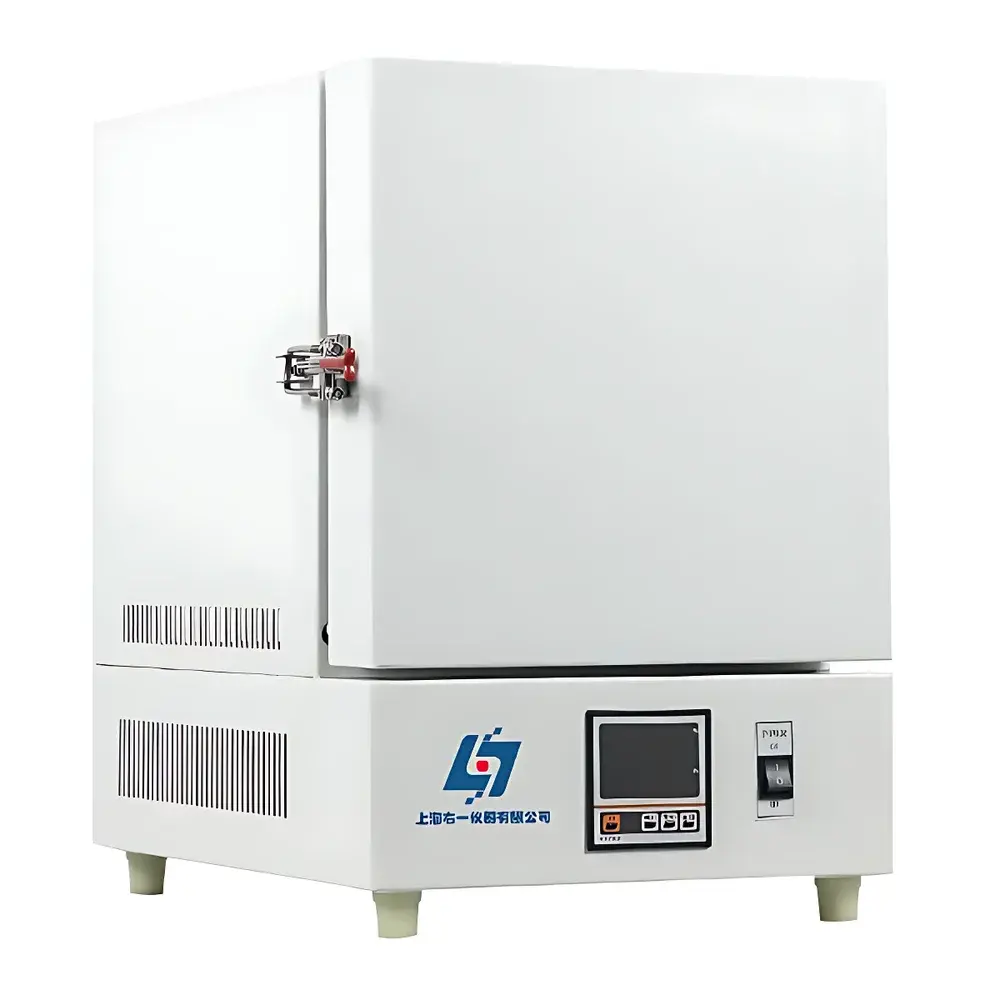
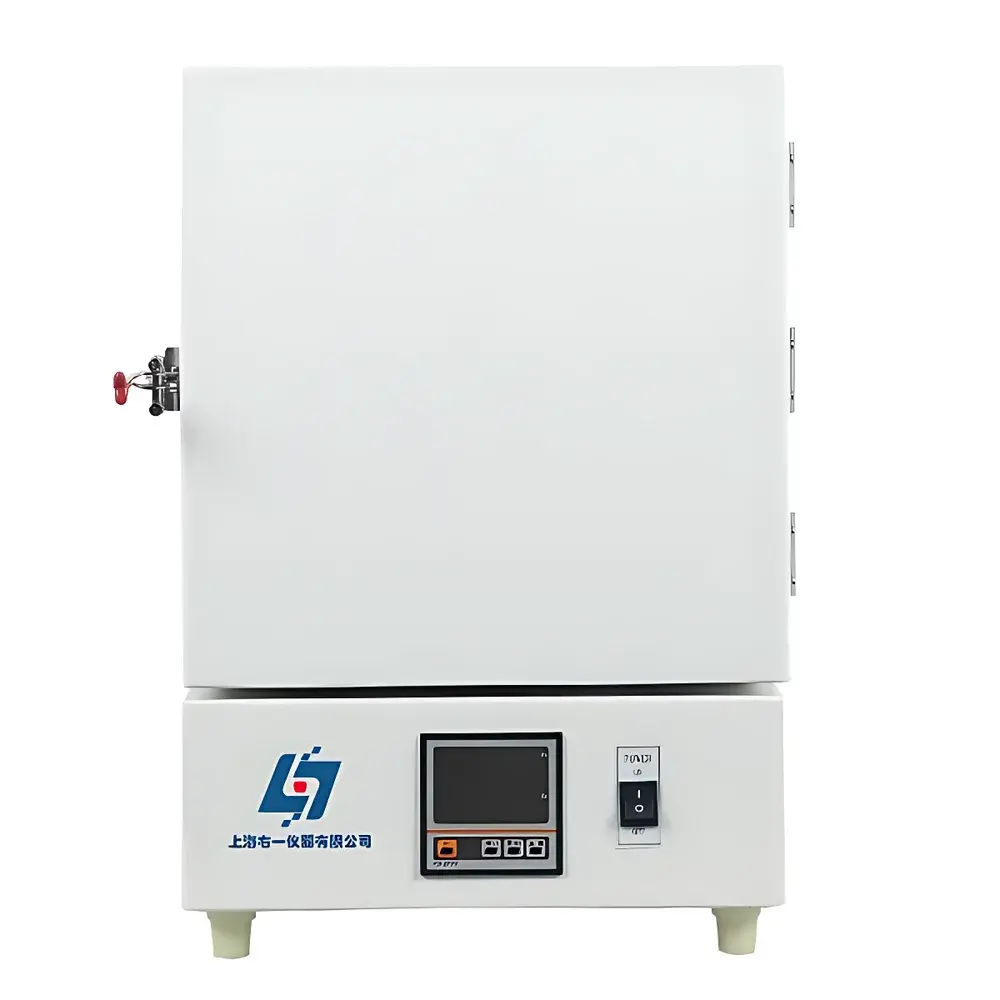
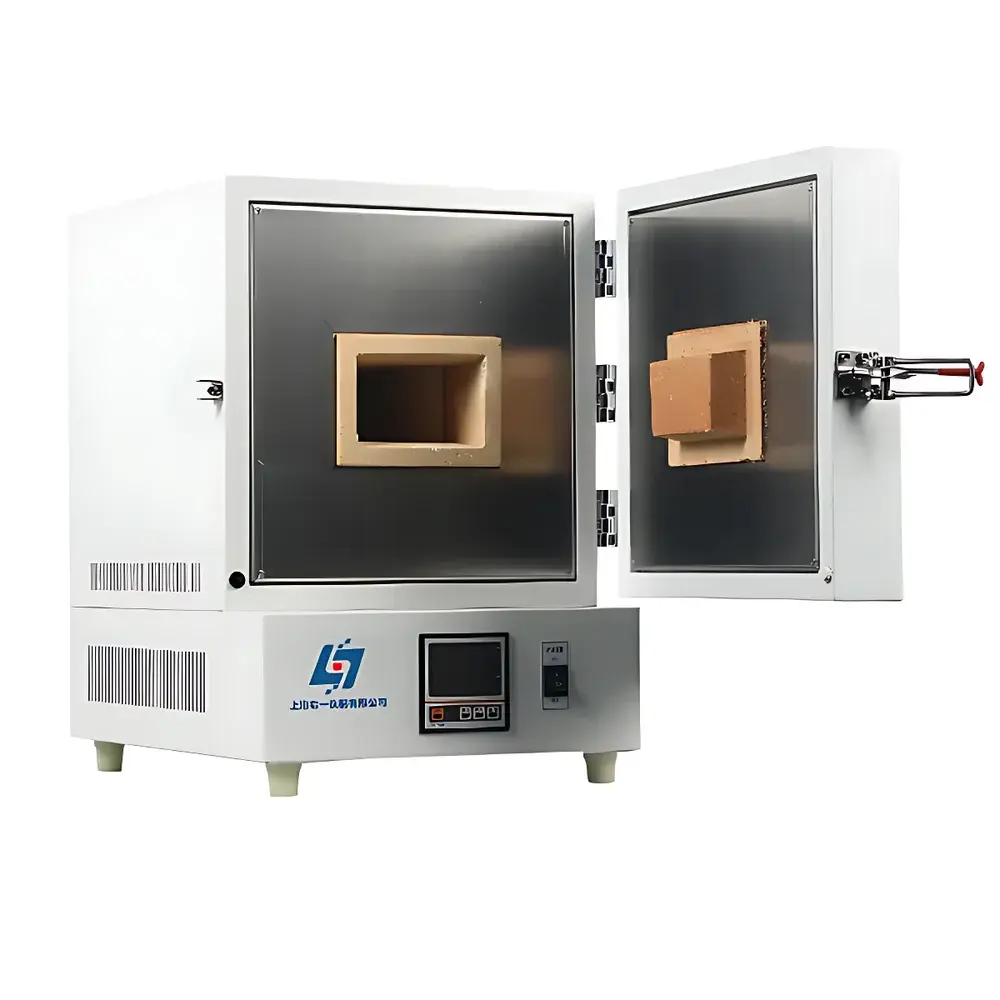
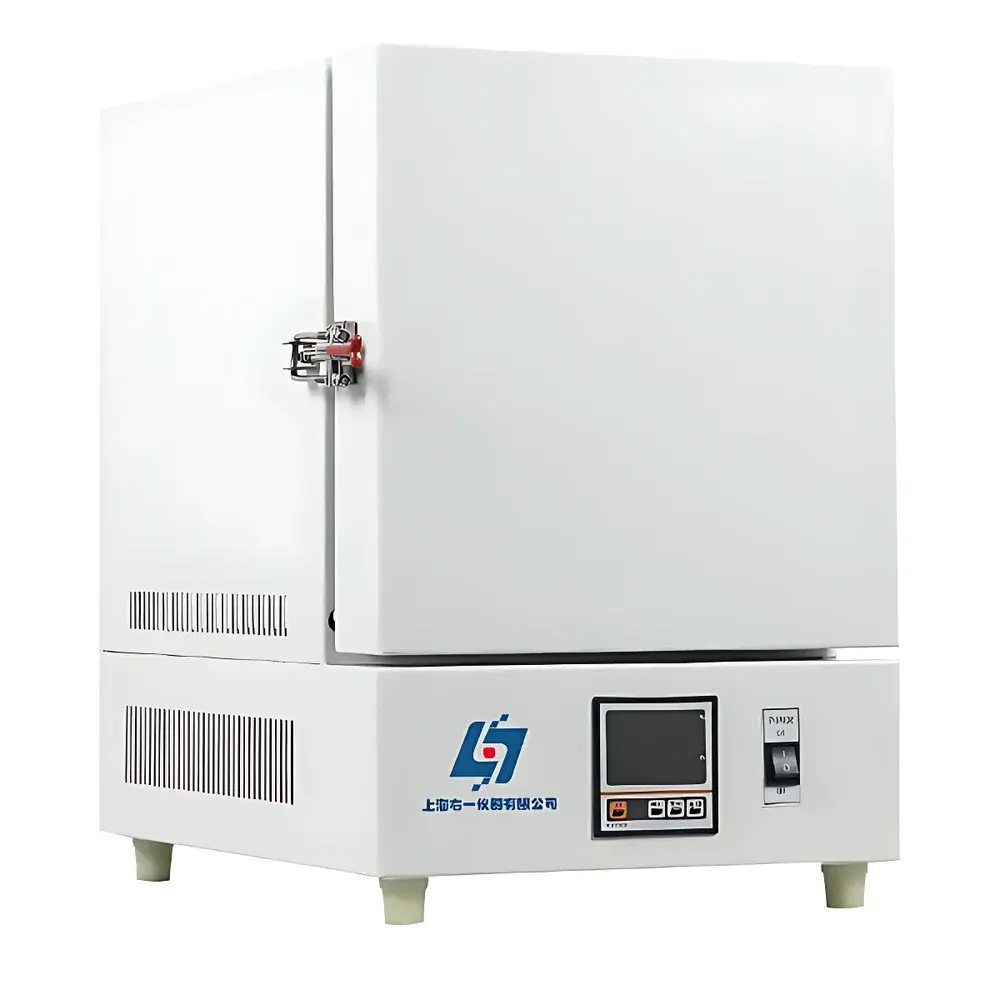
Yoyilab SX2-12-10 Benchtop Muffle Furnace (Box-Type Resistance Furnace)
| Brand | Yoyilab |
|---|---|
| Origin | Shanghai, China |
| Manufacturer Type | Direct Manufacturer |
| Model | SX2-12-10 |
| Instrument Type | Box-Type Muffle Furnace |
| Max Temperature | 1000 °C |
| Temperature Control Accuracy | ±3 °C |
| Rated Power | 12 kW |
| Heating Method | Electric Resistance Heating |
| Internal Chamber Dimensions | 300 × 500 × 200 mm |
| Nominal Volume | 30 L |
| Controller | 4.3-inch LCD with Microcomputer PID Algorithm |
| Temperature Resolution | 1 °C |
| Timer Range | 1–9999 min |
| Thermocouple Type | K-type |
| Heating Element | Nickel-Chromium Alloy Wire |
| Chamber Lining | Refractory Brick |
| Safety Features | Over-Temperature Alarm, Door-Interlocked Power Cut-off, Leakage Current Protection, Over-Current/Over-Voltage/Over-Heat Protection |
| Power Supply | 380 V / 50 Hz |
Overview
The Yoyilab SX2-12-10 is a benchtop muffle furnace engineered for precise, repeatable high-temperature thermal processing in research laboratories, quality control environments, and small-scale industrial R&D settings. Operating on the principle of resistive heating via embedded nickel-chromium alloy elements, it delivers uniform thermal distribution across its 30 L refractory brick-lined chamber—critical for applications demanding spatial temperature homogeneity, such as ashing, calcination, sintering, annealing, and heat treatment of metallic and ceramic samples. With a maximum operating temperature of 1000 °C and a control accuracy of ±3 °C, the furnace meets foundational requirements for ASTM E1112 (standard practice for calibration of laboratory furnaces), ISO/IEC 17025-compliant thermal validation protocols, and routine GLP/GMP thermal process documentation. Its compact footprint (610 × 870 × 690 mm) and integrated controller design enable efficient use of limited lab space without compromising thermal performance or operational safety.
Key Features
- Microcomputer-based PID temperature control system with 4.3-inch backlit LCD interface—enabling intuitive menu-driven operation, real-time display of setpoint, actual temperature, and remaining hold time.
- Integrated safety architecture: door-activated power cutoff prevents accidental exposure during operation; over-temperature alarm triggers audible/visual alerts and automatic heater deactivation; leakage current protection complies with IEC 61000-4-5 surge immunity standards.
- Robust chamber construction using high-density refractory brick lining ensures long-term dimensional stability and thermal insulation efficiency at sustained 1000 °C operation.
- Intelligent power management: auto-recovery function retains user-defined parameters (setpoint, ramp rate, dwell time) after unexpected power interruption or system reset.
- Optimized airflow design within the sealed muffle chamber minimizes convective gradients, supporting consistent thermal profiles required for quantitative gravimetric analysis (e.g., ASTM D3174 for ash content in coal).
- Modular electrical architecture with dual-stage over-current and over-voltage protection safeguards internal circuitry and extends service life under continuous duty cycles.
Sample Compatibility & Compliance
The SX2-12-10 accommodates standard crucibles (alumina, porcelain, quartz, and stainless steel), petri dishes, and custom sample holders up to 300 × 500 × 200 mm in dimension. It supports inert-atmosphere adaptations via optional gas inlet ports (N₂, Ar), enabling controlled oxidation studies and reduction annealing. The furnace conforms to general laboratory safety directives outlined in ANSI Z9.14 and CE Machinery Directive 2006/42/EC (as applied to Class II electrical heating equipment). While not intrinsically rated for hazardous area use, its leakage current protection and reinforced grounding meet EN 61010-1:2010 safety requirements for laboratory electrical equipment.
Software & Data Management
The furnace operates autonomously via its onboard PID controller but supports external data logging through optional RS485 serial interface (Modbus RTU protocol), compatible with LabVIEW, MATLAB, and SCADA platforms. An optional PC software package enables full programmable profile definition—including multi-segment ramps, dwells, and cooling rates—with timestamped export of temperature vs. time datasets in CSV format. Audit-trail functionality (when paired with compliant software) records operator ID, parameter changes, alarm events, and runtime logs—supporting 21 CFR Part 11 readiness when deployed in regulated QC/QA workflows.
Applications
- Gravimetric analysis: ash residue determination per ASTM D2974, ISO 1171, or USP <281>.
- Ceramic and glass processing: glaze firing, devitrification studies, and controlled nucleation annealing.
- Materials science: powder metallurgy sintering, nanomaterial crystallization, and metal oxide phase transformation.
- Thermal pre-treatment: sample conditioning prior to XRD, SEM-EDS, or TGA characterization.
- Heat treatment validation: hardening, tempering, and stress-relief cycles for small tooling and prototype components.
- Environmental testing: loss-on-ignition (LOI) assays for soil, sludge, and sediment matrices per EPA Method 9080.
FAQ
What is the recommended maintenance schedule for the SX2-12-10?
Inspect heating elements and thermocouple seating every 200 operating hours; clean chamber interior with non-abrasive brush after each high-ash-content run; verify calibration annually using NIST-traceable reference thermocouples.
Can this furnace be used under inert gas flow?
Yes—optional gas inlet/outlet fittings allow connection to regulated N₂ or Ar supply lines; ensure chamber seal integrity and vent exhaust externally per local ventilation codes.
Is the temperature uniformity validated across the working zone?
Per manufacturer specifications, radial and axial uniformity is ±5 °C within the central 70% volume at 1000 °C, verified by 9-point mapping per ASTM E220 methodology.
Does the unit support programmable multi-step thermal profiles?
The base controller supports single-setpoint operation with timer hold; multi-segment programming requires the optional RS485 interface and dedicated software module.
What electrical infrastructure is required for safe installation?
A dedicated 380 V / 50 Hz three-phase circuit with minimum 32 A breaker rating, grounded TN-S earthing system, and upstream isolation switch meeting IEC 60947-3 standards.
Related Products



