
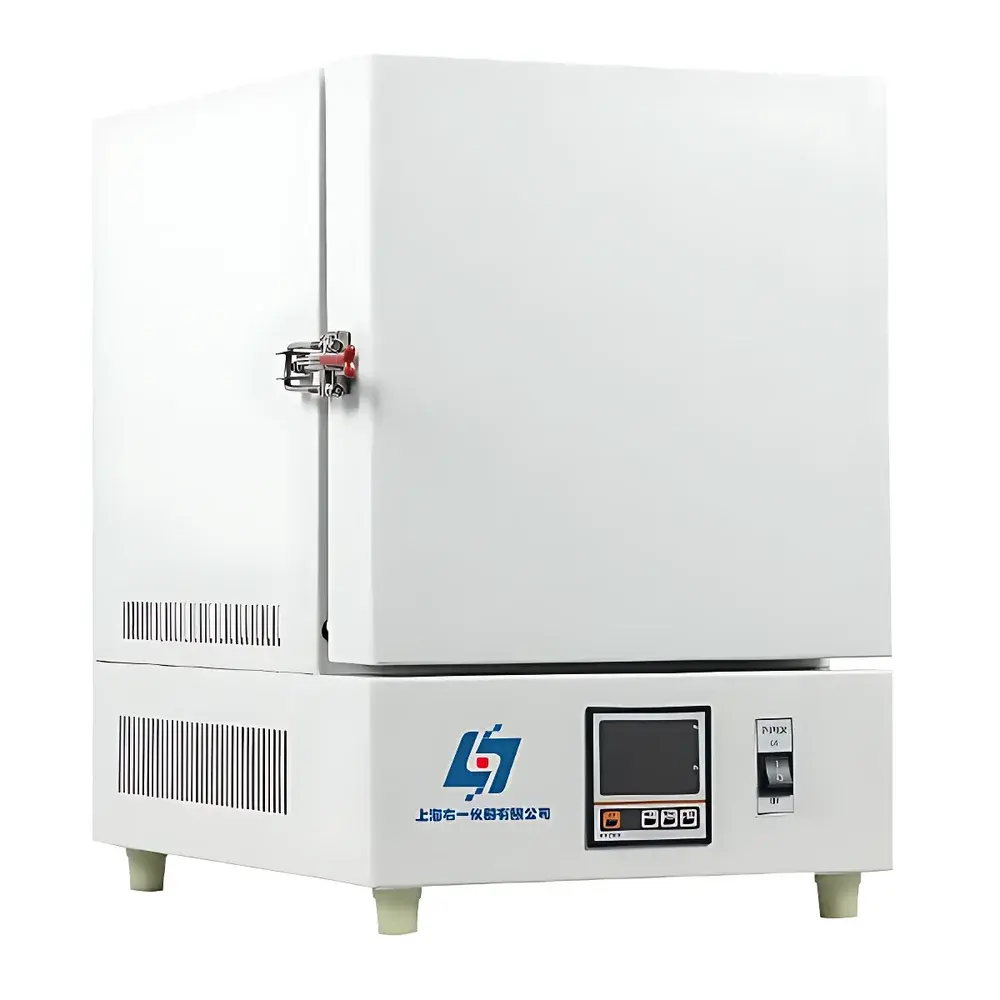
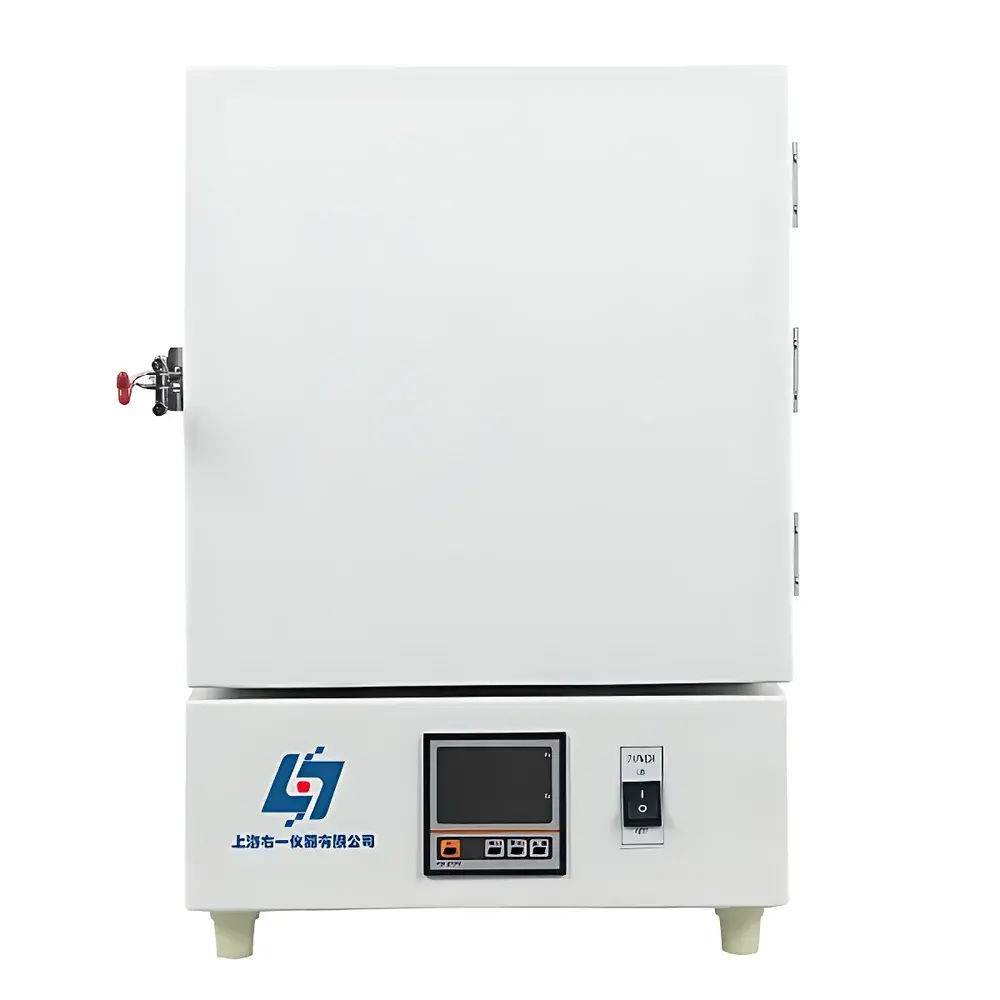
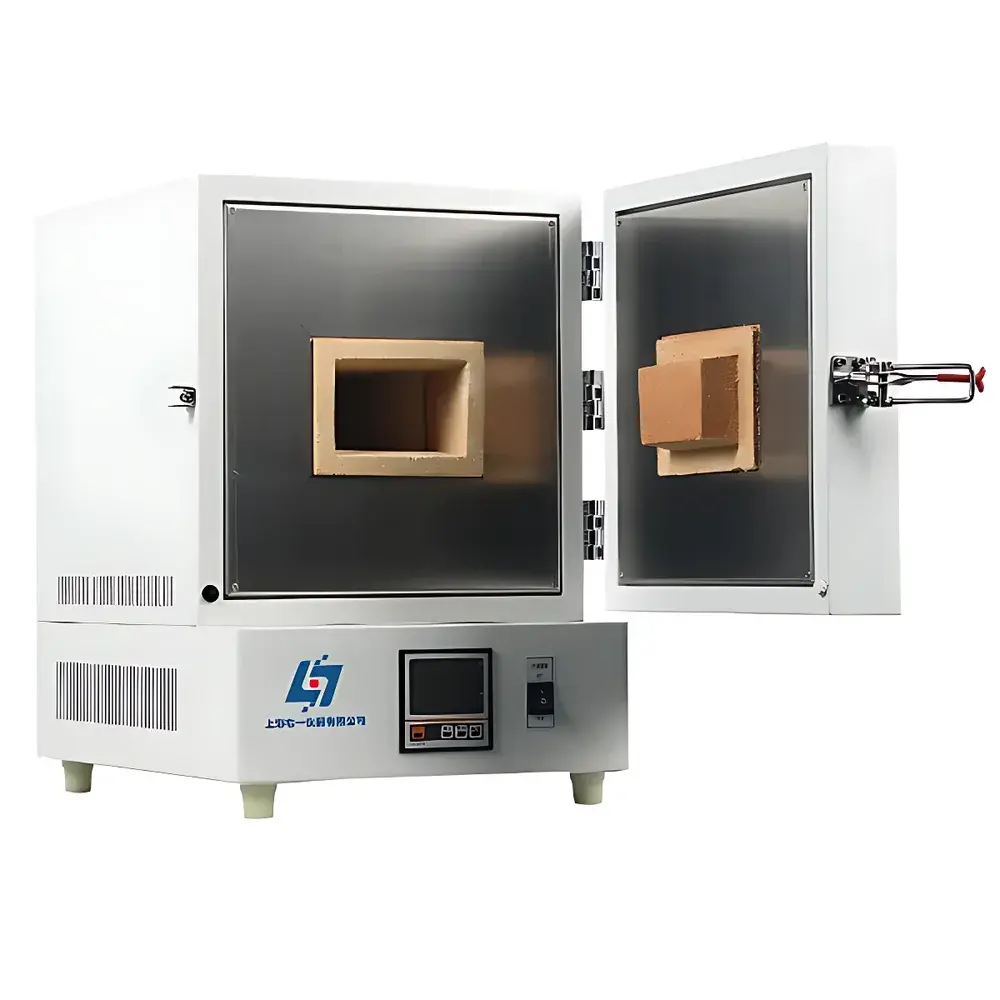
Yoyilab SX2-5-12 Benchtop Muffle Furnace (1200 °C)
| Brand | Yoyilab |
|---|---|
| Origin | Shanghai, China |
| Manufacturer Type | Direct Manufacturer |
| Region Classification | Domestic (China) |
| Model | SX2-5-12 |
| Instrument Type | Box-Type Resistance Furnace |
| Max Temperature | 1200 °C |
| Temperature Control Accuracy | ±3 °C |
| Rated Power | 5 kW |
| Heating Method | Electrical Resistance Heating |
| Internal Chamber Dimensions | 200 × 300 × 120 mm |
| Nominal Volume | 7 L |
| Controller | 4.3-inch LCD with PID Algorithm |
| Temperature Resolution | 1 °C |
| Timer Range | 1–9999 min |
| Thermocouple Type | K-type |
| Heating Element | Nichrome Wire |
| Chamber Lining Material | Refractory Brick |
| Safety Features | Over-temperature alarm, door-interlock power cutoff, earth leakage protection, over-current/over-voltage protection |
| Power Supply | 220 V / 50 Hz |
| Data Retention | Power-failure parameter memory with auto-restart function |
Overview
The Yoyilab SX2-5-12 is a compact, benchtop muffle furnace engineered for precise thermal processing in research laboratories, quality control environments, and small-scale industrial R&D settings. Operating on the principle of resistive heating via embedded nichrome wire elements, it delivers uniform temperature distribution across its insulated refractory brick chamber—critical for reproducible heat treatment outcomes. With a maximum operating temperature of 1200 °C and a nominal chamber volume of 7 liters (200 × 300 × 120 mm internal dimensions), this furnace supports applications requiring rapid ramp rates, stable soak conditions, and repeatable thermal profiles. Its integrated microprocessor-based PID controller ensures thermal stability within ±3 °C of setpoint under steady-state conditions, meeting essential requirements for ASTM E1112 (standard practice for calibration of laboratory furnaces) and ISO/IEC 17025-compliant thermal validation protocols.
Key Features
- Benchtop form factor with optimized footprint (460 × 630 × 500 mm external dimensions), suitable for space-constrained lab benches or fume hood integration.
- Robust cold-rolled steel outer casing finished with high-temperature baked enamel coating for long-term corrosion resistance and mechanical durability.
- One-piece monolithic refractory chamber construction eliminates joint gaps, minimizing thermal leakage and enhancing temperature homogeneity across the working zone.
- Intelligent safety architecture including door-actuated power cutoff, real-time earth leakage detection, over-temperature cut-off, and automatic reset prevention after fault events.
- 4.3-inch backlit LCD interface supporting intuitive menu-driven operation: simultaneous display of setpoint, real-time chamber temperature, elapsed time, and remaining hold duration.
- Power-loss recovery function retains user-defined parameters—including target temperature, ramp rate, dwell time, and segment count—enabling uninterrupted process continuation after unexpected outages.
Sample Compatibility & Compliance
The SX2-5-12 accommodates crucibles, ceramic boats, quartz trays, and metal sample holders up to 100 mm in height and 280 mm in diagonal span. It is routinely employed in ashing organic matrices (e.g., food, pharmaceuticals, environmental filters) per AOAC 943.01 and EPA Method 3010A; sintering ceramic precursors and oxide powders; annealing semiconductor substrates; and conducting loss-on-ignition (LOI) assays in geotechnical and cementitious material testing. The furnace complies with IEC 61000-6-3 (EMC emissions) and IEC 61000-6-2 (immunity), and its electrical insulation meets IP20 enclosure rating per IEC 60529. While not certified for GMP manufacturing use out-of-the-box, its programmable logic, audit-trail-capable data logging (when paired with optional RS485 interface), and deterministic thermal response support qualification under FDA 21 CFR Part 11 when deployed with validated software systems.
Software & Data Management
The base unit operates autonomously via front-panel controls; however, optional digital interfaces expand traceability and automation capability. The RS485 communication module (available as accessory) enables bidirectional serial communication with host PCs running custom SCADA platforms or third-party LabVIEW/Python-based acquisition scripts. When combined with the supplied Windows-compatible software package, users can define multi-segment temperature programs (up to 32 segments), export timestamped CSV logs with 1-second resolution, and generate PDF-formatted calibration reports. Optional thermal printer integration provides hard-copy records aligned with GLP documentation standards. All firmware updates are delivered via USB flash drive—no internet connectivity required—ensuring secure, air-gapped system maintenance.
Applications
- Quantitative ash content determination in biological tissues, feedstuffs, and polymer composites.
- Thermal decomposition studies of catalysts, battery cathode materials, and MOFs under controlled oxidative or inert atmospheres (when used with purge gas adapters).
- Pre-sintering of dental porcelain, zirconia blanks, and alumina substrates prior to HIP or hot pressing.
- Heat treatment of small metallic components: stress relief, normalizing, and tempering of tool steels and stainless alloys.
- Calibration reference source for thermocouple verification labs (in conjunction with NIST-traceable reference probes).
- Material compatibility screening: evaluating dimensional stability, phase transitions, and weight loss behavior via TGA-style step-heating protocols.
FAQ
What is the recommended maintenance interval for the SX2-5-12?
Perform visual inspection of heating elements and chamber lining every 200 operational hours; clean dust accumulation from ventilation grilles monthly; verify thermocouple calibration annually using a certified reference source.
Can this furnace be operated under inert or reducing atmospheres?
The standard configuration is designed for ambient air operation only. For controlled-atmosphere use, an external gas manifold with flow meter and sealed flange adapter must be installed—consult technical support for compatible retrofit kits.
Is the PID controller field-tunable for custom gain values?
Yes—advanced tuning parameters (P, I, D coefficients) are accessible via service mode password, allowing optimization for specific load mass or thermal inertia profiles.
Does the furnace meet UL or CE safety certification requirements?
It carries CCC (China Compulsory Certification) and conforms to GB/T 13384-2008 (general technical conditions for electrical equipment). CE marking is available upon request for EU-bound units with modified power input modules.
What is the typical warm-up time from ambient to 1000 °C?
Approximately 45–55 minutes under no-load conditions, depending on ambient temperature and line voltage stability.



