
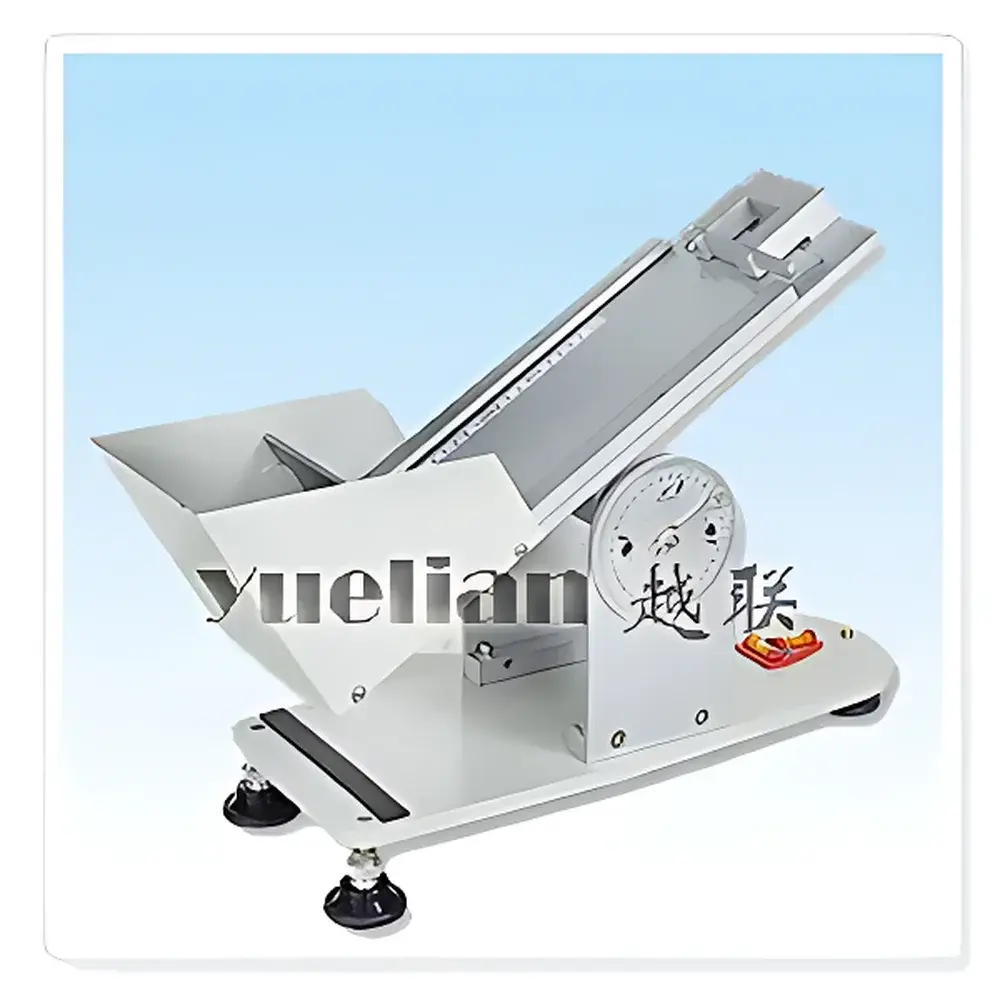
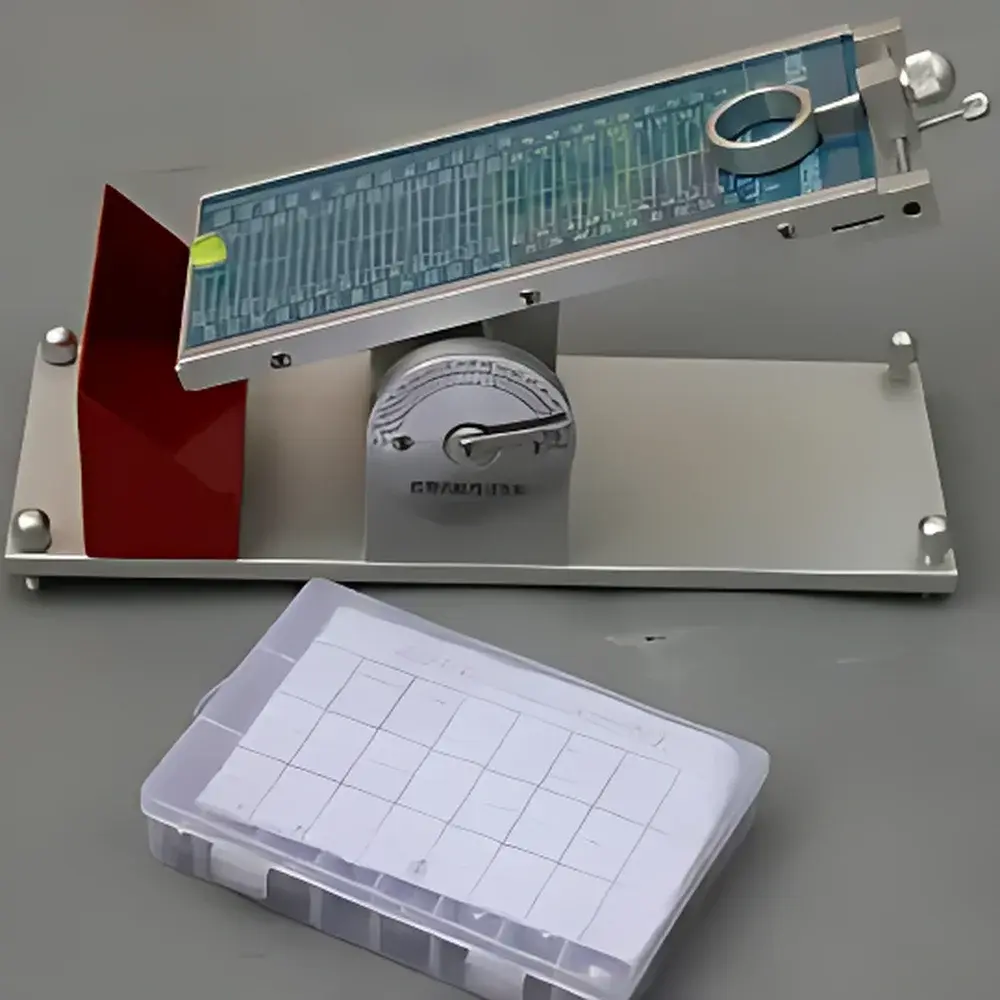
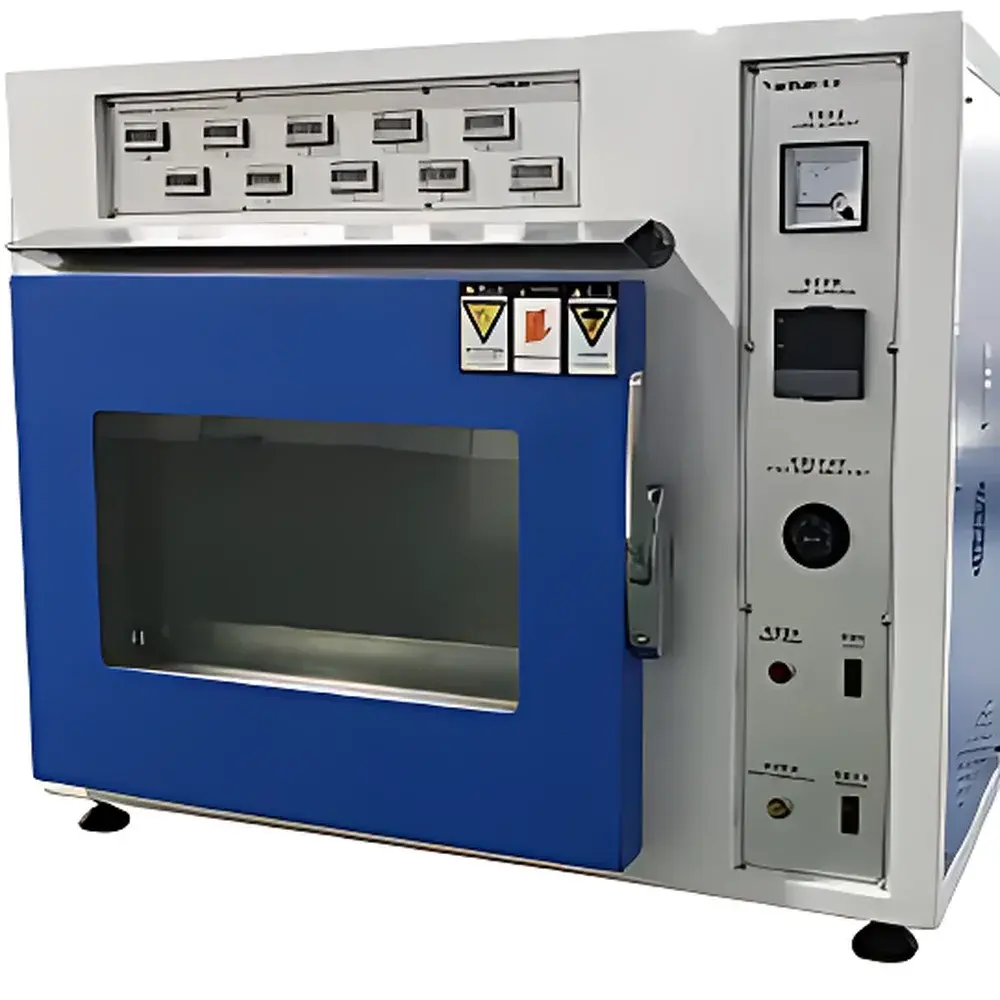
Yuelian PW-8801A Rolling Ball Initial Adhesion Tester
| Brand | Yuelian |
|---|---|
| Origin | Guangdong, China |
| Model | PW-8801A |
| Test Angle Range | 20°–40° (adjustable) |
| Run-up Distance | 100 mm |
| Standard Steel Balls | ISO 3290 Grade 10, Sizes #2–#32 (1 set) |
| Load Mass | 500 g (1 piece) |
| Dimensions (W×D×H) | 60 × 20 × 45 cm |
| Weight | 25 kg |
| Compliance | GB/T 4852–2002, CNS 11888 |
Overview
The Yuelian PW-8801A Rolling Ball Initial Adhesion Tester is a precision mechanical instrument engineered for the quantitative assessment of initial tack—defined as the instantaneous, low-resistance adhesion developed upon brief contact between a pressure-sensitive adhesive (PSA) tape and a standard substrate. It operates on the well-established rolling ball method, a standardized physical test principle rooted in kinetic energy dissipation and interfacial adhesion mechanics. As a steel ball rolls down an inclined plane over a defined run-up distance (100 mm), it transitions from inertial motion to adhesive arrest upon contacting the adhesive surface. The largest ball diameter that stops within a specified zone—or the stopping distance of a fixed-diameter ball—serves as the primary metric for comparative initial tack evaluation. This method is widely adopted in R&D laboratories, quality control departments, and manufacturing facilities producing masking tapes, medical tapes, labeling films, and protective films where rapid, reproducible tack screening is essential prior to peel or shear testing.
Key Features
- Adjustable inclination angle (20°–40°) calibrated via precision protractor and locking mechanism to ensure repeatable test geometry across operator shifts and laboratory environments.
- Stainless-steel inclined track with polished surface finish (Ra ≤ 0.4 µm) to minimize rolling resistance variability and eliminate surface contamination effects.
- Integrated 500 g counterweight assembly for consistent vertical load application during auxiliary calibration or optional static hold verification procedures.
- Full set of ISO 3290 Grade 10 hardened steel balls (#2–#32, nominal diameters 1.588 mm to 25.400 mm), traceably certified per ASTM E527 and supplied in labeled, anti-static storage tray.
- Modular base frame constructed from 12-mm thick anodized aluminum alloy, providing dimensional stability under ambient thermal fluctuations and long-term mechanical loading.
- No electrical components or software dependencies—designed for intrinsic operational reliability, minimal maintenance, and compliance with ISO/IEC 17025 metrological traceability requirements for manual mechanical testers.
Sample Compatibility & Compliance
The PW-8801A accommodates standard PSA tape specimens measuring 100 mm × 25 mm, mounted on clean, flat glass or stainless-steel backing plates per GB/T 4852–2002 Section 5.2. Substrate conditioning (23 ± 2 °C, 50 ± 5 % RH, ≥4 h) is required prior to testing to ensure moisture equilibrium and interfacial consistency. The instrument conforms fully to the geometric, material, and procedural specifications outlined in GB/T 4852–2002 (identical technical basis to ASTM D3121–18 Annex A1) and CNS 11888 (Chinese National Standard equivalent to JIS Z 0237). While not a regulated device under FDA 21 CFR Part 11, its mechanical design supports GLP-compliant documentation workflows when paired with controlled test logs, operator sign-offs, and instrument calibration records maintained per ISO/IEC 17025 Clause 6.4.
Software & Data Management
The PW-8801A is a purely mechanical tester with no embedded electronics, firmware, or digital interface. All test data—including ball size, stopping position (measured manually with ±0.5 mm resolution steel ruler), ambient temperature/humidity, operator ID, and substrate lot number—are recorded in paper-based or LIMS-integrated electronic lab notebooks (ELN). Its design intentionally avoids software validation burdens, making it suitable for regulated environments where audit trails for mechanical instrumentation are managed through procedural controls rather than electronic system qualification. Calibration verification is performed semiannually using certified angle gauges (±0.1° accuracy) and NIST-traceable steel ball diameter sets.
Applications
- Comparative ranking of acrylic, rubber, and silicone-based PSA formulations during early-stage polymer synthesis and compounding trials.
- In-process quality gate check for roll-to-roll coating lines producing double-sided tapes, transfer tapes, and foam tapes.
- Supplier qualification testing against contractual tack specifications (e.g., “must stop ≤ #18 ball at 30° incline”).
- Stability studies assessing tack degradation after accelerated aging (70 °C/95 % RH, 7 days) per ASTM D1876.
- Educational use in polymer science and materials engineering curricula to demonstrate interfacial energy–viscoelasticity relationships in soft matter adhesion.
FAQ
What standards does the PW-8801A comply with?
GB/T 4852–2002, CNS 11888, and technically aligned with ASTM D3121–18 (Annex A1) and JIS Z 0237.
Is calibration certification included with shipment?
A factory calibration report documenting angle adjustment verification and steel ball set traceability is provided; end-user calibration interval is recommended every six months.
Can the tester accommodate non-standard substrates?
Yes—flat, rigid substrates up to 12 mm thickness and 110 mm width may be clamped; however, results must be interpreted relative to reference glass per standard methodology.
Does the instrument require electrical power or compressed air?
No—operation is entirely manual and gravity-driven; no utilities or consumables beyond steel balls and mounting tape are required.
How is repeatability ensured across different operators?
Through standardized specimen mounting procedure (per GB/T 4852 Section 6.3), fixed dwell time (60 s post-application), and dual-operator verification protocol embedded in internal QC SOPs.



