
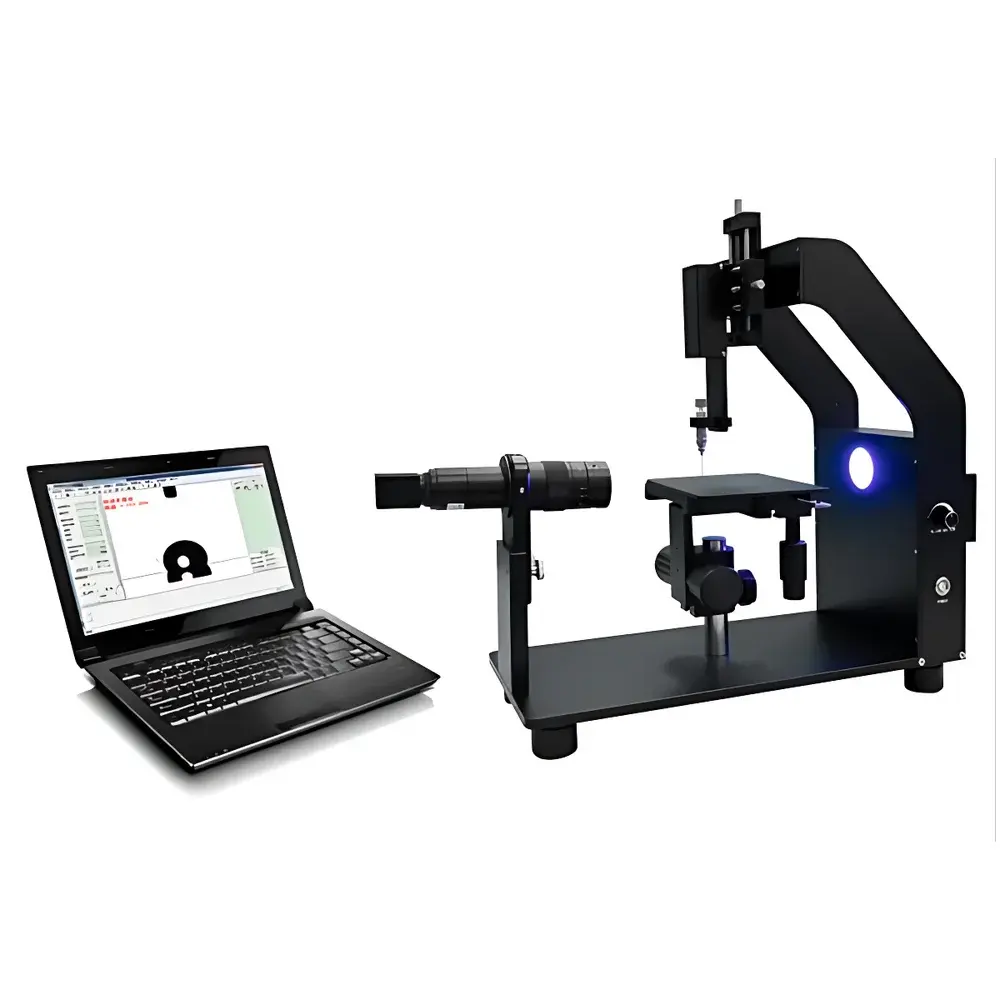
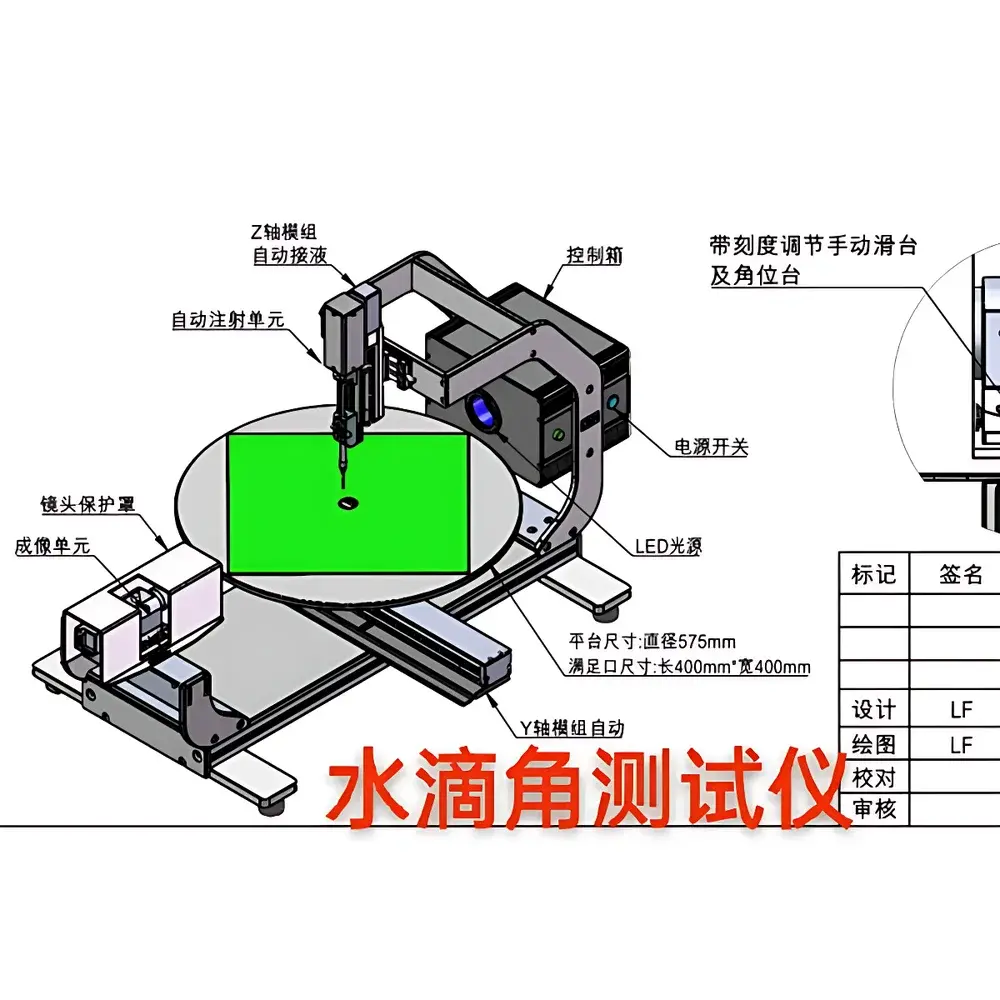
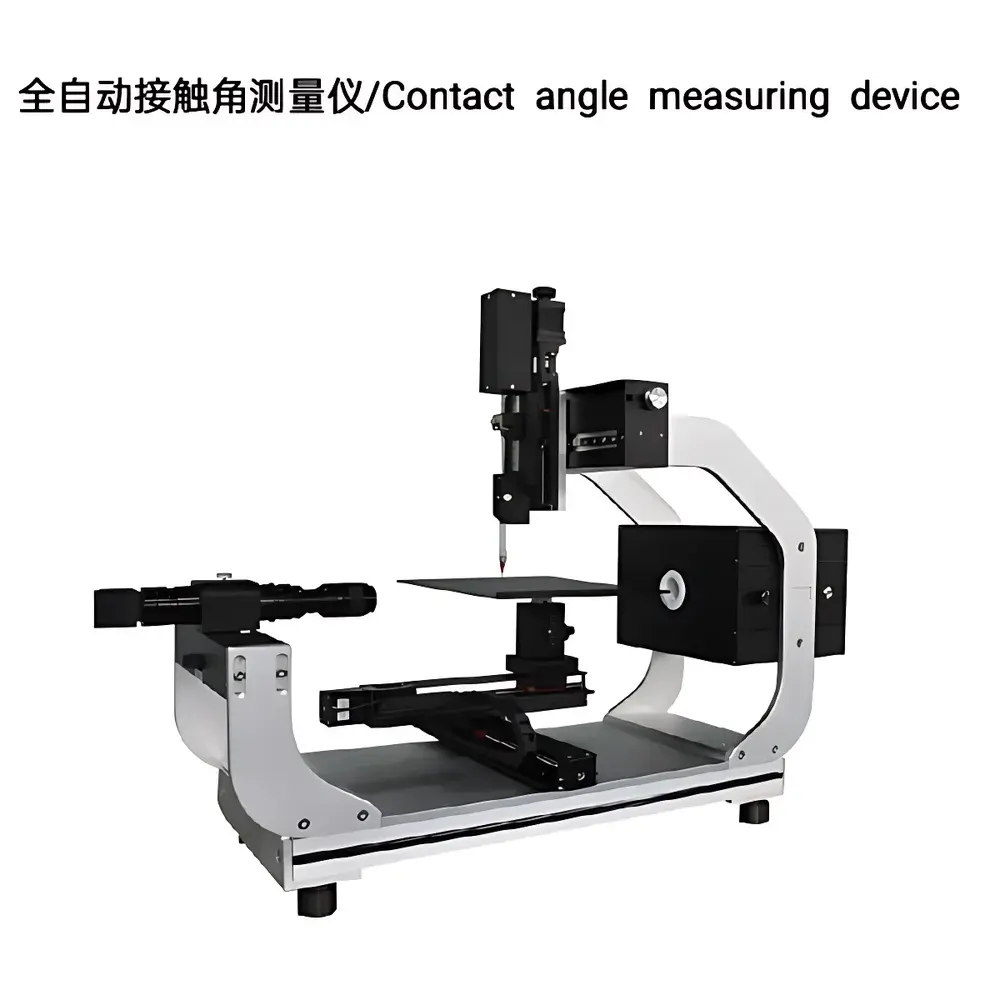
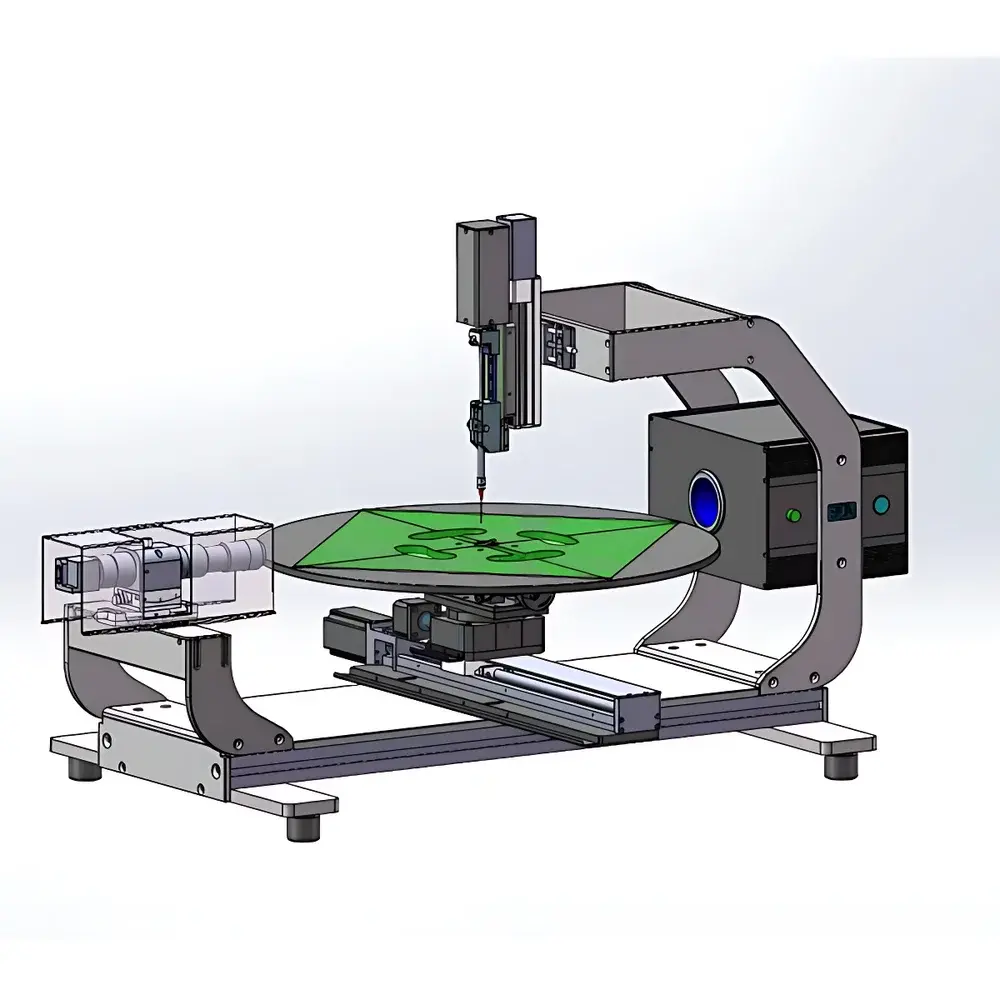
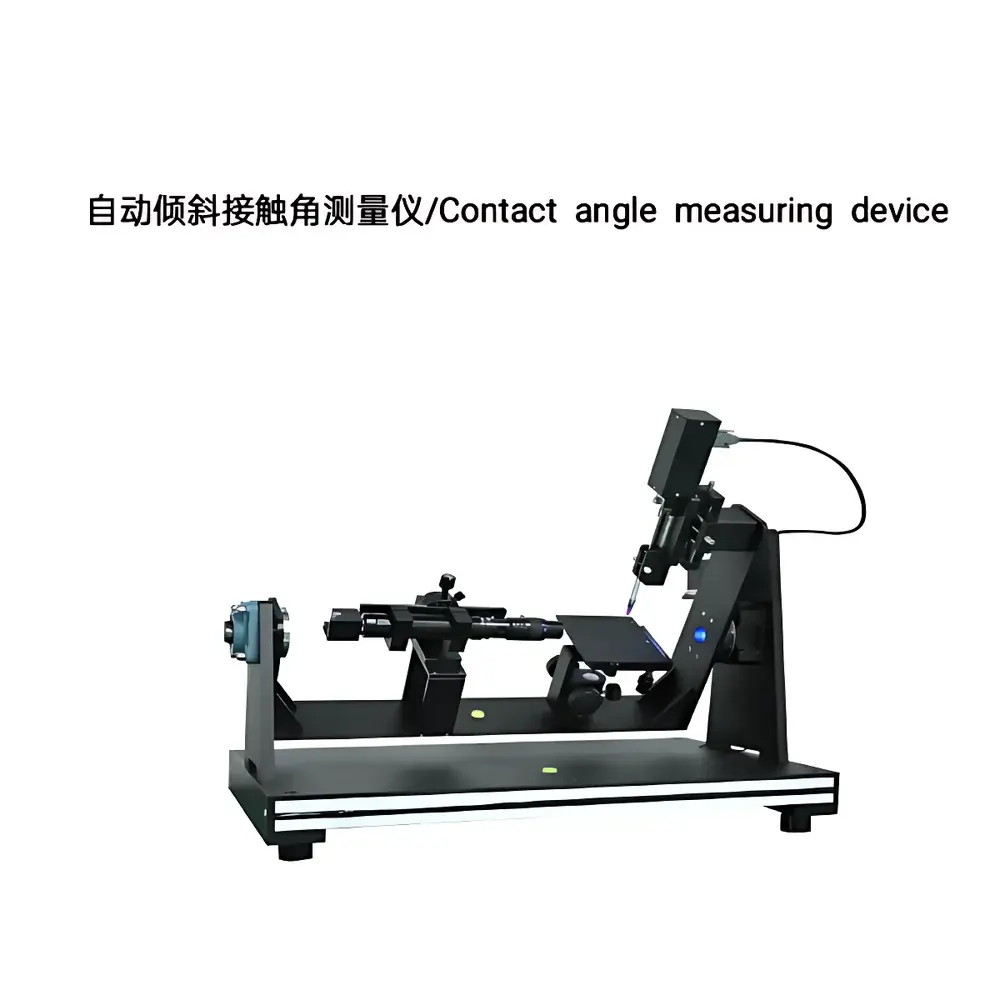
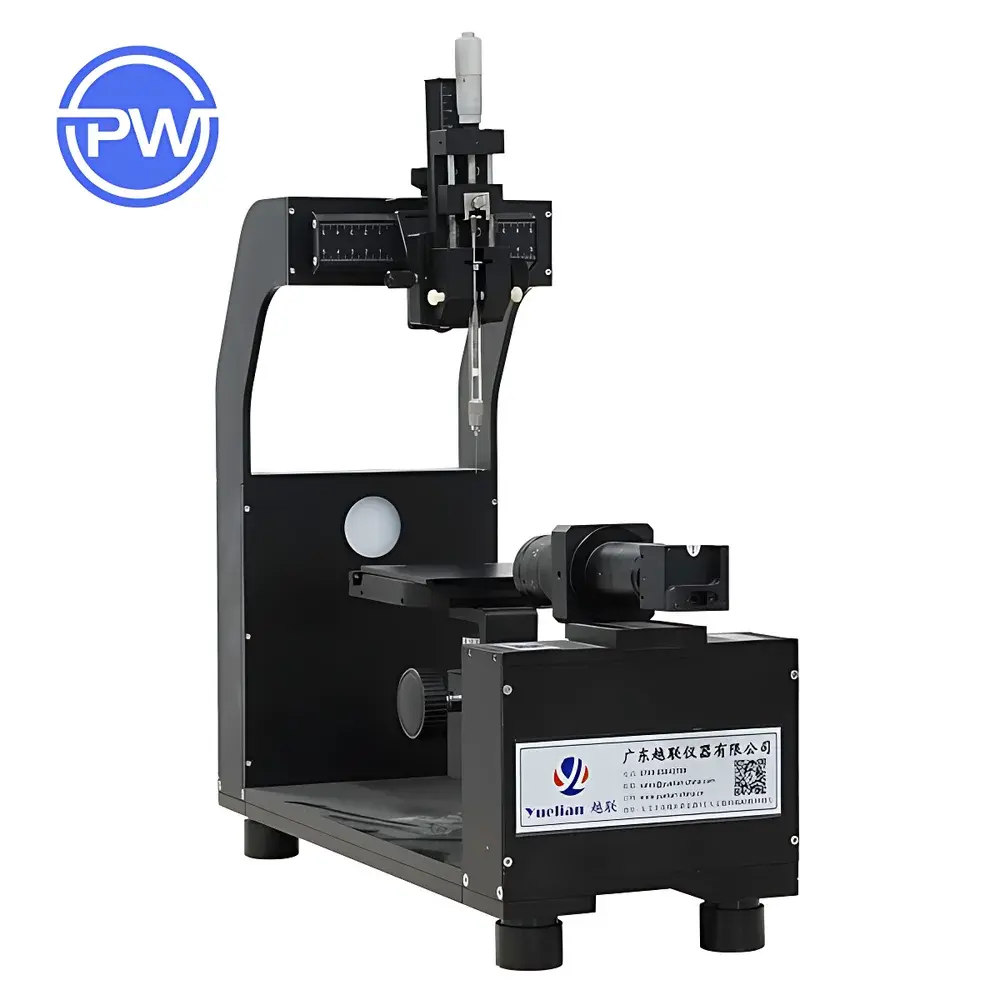
YUELIAN PW-D200 Fully Automated Optical Contact Angle Goniometer
| Brand | YUELIAN / PW |
|---|---|
| Origin | Guangdong, China |
| Manufacturer Type | Authorized Distributor |
| Country of Origin | China |
| Model | PW-D200 |
| Price Range | USD 2,800 – 28,000 |
Overview
The YUELIAN PW-D200 Fully Automated Optical Contact Angle Goniometer is an advanced surface characterization instrument engineered for precision measurement of static and dynamic contact angles, surface free energy, and wetting behavior at solid–liquid–vapor interfaces. Based on high-resolution optical imaging and contour-based droplet profile analysis, the system quantifies the contact angle θ—the angle formed between the tangent to the liquid–vapor interface and the solid surface at the three-phase boundary point. This parameter serves as a fundamental metric in interfacial science, directly correlating with surface energy, hydrophobicity/hydrophilicity, cleanliness, coating uniformity, and functionalization efficacy. The PW-D200 integrates a modular mechanical architecture, thermally stable LED illumination, motorized fluid dispensing, and a calibrated industrial-grade optical train to ensure repeatable, operator-independent measurements under ambient laboratory conditions. Its design adheres to core principles of optical goniometry as defined in ISO 19403 and ASTM D7334, supporting both research-grade investigation and routine QC/QA workflows across R&D and production environments.
Key Features
- Modular aerospace-grade aluminum frame with vibration-damped base, ensuring mechanical stability during high-magnification imaging and long-duration dynamic tests
- Adjustable cold-white/blue-tinted LED illumination system (≥25,000 h lifetime) providing uniform, low-heat irradiance—minimizing evaporation artifacts in micro-liter droplets
- Automated syringe pump module with ±0.1 µL dispensing resolution, software-triggered drop deposition, and real-time volume feedback
- High-fidelity optical path: USB 2.0 industrial camera (130 MP, 30 fps), continuous zoom microscope (0.6×–5×), distortion-corrected optics, and adjustable working distance
- Three-axis manual precision sample stage (X/Y/Z: 60/30/80 mm travel; 0.1 mm resolution) accommodating substrates up to 150 × 130 mm and 5 kg load capacity
- Comprehensive analytical software featuring fully automated Young–Laplace, ellipse, and circle fitting algorithms—including bilateral contact angle extraction and real-time video batch processing
- Pre-calibrated contact angle reference slides (5°–180°, NIST-traceable certification optional) for daily system validation and GLP-compliant calibration logging
Sample Compatibility & Compliance
The PW-D200 accommodates rigid and flexible substrates—including wafers, polymer films, textiles, metal foils, glass slides, biomaterials, and porous membranes—without requiring vacuum or environmental chamber integration. Sample mounting is tool-free and adaptable via customizable stage inserts. The instrument complies with multiple international standards governing surface wettability assessment: GB/T 24368–2009 (hydrophobic contaminant detection on glass), SY/T 5153–2007 (reservoir rock wettability), ASTM D724–99(2003) (paper surface wettability), ASTM D5946–2004 (contact angle of plastic films), and ISO 15989 (corona-treated film evaluation). All measurement protocols support audit-ready data export (CSV, TIFF, AVI) with embedded metadata (timestamp, operator ID, environmental T/RH if logged externally), aligning with GLP documentation requirements and FDA 21 CFR Part 11 readiness when paired with validated user access controls.
Software & Data Management
The proprietary analysis suite provides ISO/IEC 17025-aligned measurement traceability through timestamped, version-controlled analysis logs. It supports dual-angle simultaneous fitting (left/right), dynamic contact angle tracking via sequential frame capture, and automated surface free energy calculation using OWRK, Wu, Fowkes, Zisman, and Antonow models. Batch processing enables concurrent analysis of ≥100 frames with configurable ROI masking and outlier rejection. Export formats include PDF reports (with annotated images), Excel-compatible CSV tables (angle, diameter, height, surface tension-derived energy), and raw image sequences. Software updates are delivered via secure HTTPS channel with SHA-256 integrity verification. Audit trail functionality records all parameter modifications, fit method selections, and manual corrections—enabling full reprocessing reproducibility per ISO/IEC 17025 clause 7.7.
Applications
The PW-D200 is routinely deployed in semiconductor fabrication labs for plasma-clean verification and photoresist adhesion screening; in display manufacturing for ITO/glass hydrophobicity mapping prior to OLED encapsulation; in biomedical device development for assessing protein adsorption resistance on PTFE or silicone surfaces; in coatings R&D for optimizing fluorinated additive dispersion in automotive clearcoats; and in packaging R&D for validating corona treatment efficacy on PE/PP films. Academic users apply it to nanomaterial self-assembly studies, stimuli-responsive hydrogel swelling kinetics, and bio-inspired superhydrophobic surface design. Its robustness and repeatability (RSD < 0.3° for repeated water drops on silicon wafer) make it suitable for ISO 9001-certified production line release testing.
FAQ
What is the minimum measurable droplet volume?
The system reliably dispenses and analyzes droplets from 0.5 µL to 10 µL, with optimal accuracy achieved between 1–3 µL on flat, non-porous substrates.
Can the PW-D200 measure advancing and receding contact angles?
Yes—via automated sequential deposition and withdrawal cycles using the integrated syringe pump, with software-supported tangent-line extrapolation and hysteresis calculation.
Is the software compatible with Windows 10/11 64-bit systems?
Yes—certified for Windows 10 Pro and Windows 11 Enterprise (version 22H2+), requiring .NET Framework 4.8 and DirectX 12.
Does the system support external environmental control (e.g., humidity or temperature chambers)?
The base configuration operates at ambient lab conditions (15–30°C, 30–60% RH); optional chamber adapters are available for integration with third-party environmental enclosures.
How is calibration verified and maintained?
Users perform daily verification using certified reference slides (5°–180°); annual factory recalibration includes lens MTF verification, stage encoder linearity testing, and illumination uniformity mapping per ISO 10110-5.




